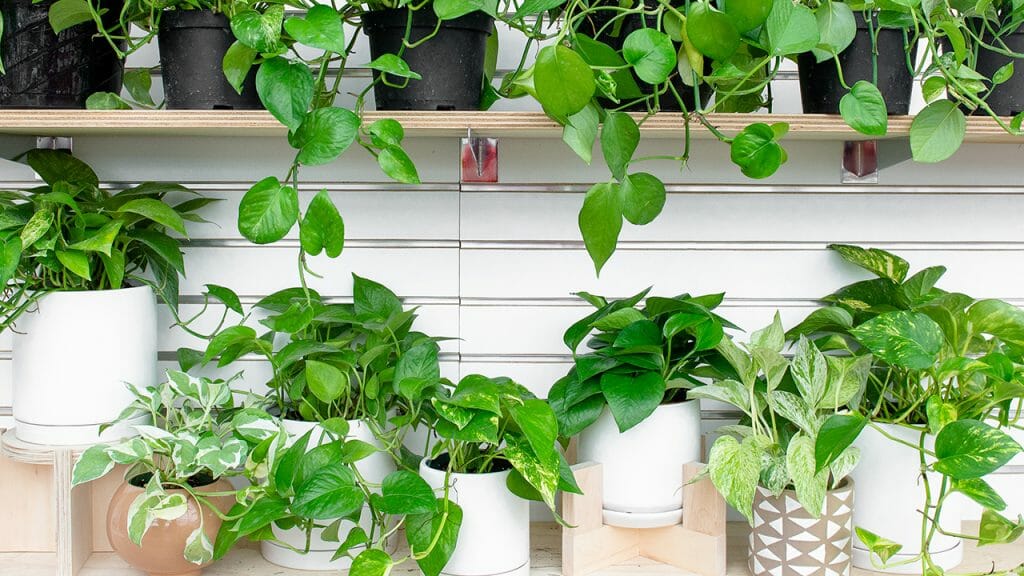

A lush room starts with matching each plant to the spot where you’ll grow it. Your sunny windowsill suits different plants than your shaded bookshelf, and a fern needs more attention to moisture than a succulent. Choose a few plants you’ll enjoy caring for, then build your collection as you learn their habits.
⭐ Quick picks
- Best statement plant: Monstera deliciosa for large leaves and vertical growth.
- Best beginner vine: Golden pothos for adaptable, easy-to-propagate greenery.
- Best pet-friendly choice: Spider plant for arching foliage and hanging baskets.
- Best for infrequent watering: ZZ plant for sturdy, upright growth.
Monstera Deliciosa
Monstera deliciosa
🐾 Toxic to pets
Choose monstera deliciosa when you want a leafy focal point beside your sofa or a low wooden cabinet. With good light and maturity, you’ll get the familiar split and perforated leaves that suit relaxed boho rooms.
Give yours bright, indirect light and water when the upper potting mix dries. Ordinary household humidity is workable, although very dry air encourages brown edges. Add a sturdy climbing support early and reserve a generous floor area for spreading leaves.
Slip the nursery pot into a lined rattan basket, keeping the drainage holes clear. You’ll need a pet-inaccessible location because chewing the foliage causes mouth irritation.
Golden Pothos
Epipremnum aureum
🐾 Toxic to pets
For an easy trailing plant, start with golden pothos and let its yellow-marbled leaves soften a shelf edge. You’ll get fuller growth in bright, indirect light, though yours will tolerate a dimmer position with slower growth and less variegation.
Water after the upper mix dries, and empty the saucer afterward. Your normal indoor humidity should suit it. Expect long vines that need occasional trimming, or guide them up a support for a more upright display.
A macrame hanger keeps the trailing stems visible without using floor space. Keep every reachable vine away from pets because the foliage contains irritating calcium oxalate crystals.
Snake Plant
Dracaena trifasciata
🐾 Toxic to pets
A snake plant gives your room strong vertical lines with a small floor footprint. Tuck yours beside a woven chair or use a compact variety on a bright side table.
Provide indirect light, including some gentle direct sun after gradual acclimation. Although your plant will tolerate lower light, growth slows there. Let the potting mix dry throughout before watering, and use a freely draining mix.
You won’t need extra humidity, making this a practical choice for dry apartments. Check the variety before buying because mature height varies considerably. Keep yours away from pets that chew plants; ingestion causes digestive upset.
String of Pearls
Curio rowleyanus
🐾 Toxic to pets
String of pearls brings a delicate, beadlike cascade to your sunniest hanging display. Choose it when you have strong window light and feel comfortable letting succulent soil dry between waterings.
Position yours so light reaches the top of the pot as well as the hanging stems. Give it gentle direct sun, introduced gradually, and a gritty succulent mix. Water thoroughly once the mix dries, then drain completely.
Your plant stays shallow-rooted while its strands lengthen below the container. Ordinary dry indoor air suits it. Hang yours securely beyond pet access because ingestion is harmful.
Fiddle-Leaf Fig
Ficus lyrata
🐾 Toxic to pets
Choose a fiddle-leaf fig for a tall, sculptural statement when your room has dependable bright light. Its broad leaves stand out against textured walls, while a simple pot keeps your arrangement from feeling crowded.
Give yours bright, indirect light with gentle direct sun after acclimation. Water when the upper mix dries, and keep it away from heating vents or cold drafts. Moderate humidity and a stable location help limit leaf damage.
Plan for a substantial indoor tree with room above and around it. You’ll need to wipe dust from the leaves and keep pets away from the irritating sap and foliage.
Rubber Plant
Ficus elastica
🐾 Toxic to pets
Your rubber plant brings glossy, substantial leaves to a boho room without the spreading habit of a monstera. Choose deep green or burgundy foliage to add contrast beside pale wood and cream textiles.
Place yours in bright, indirect light; variegated forms need especially good light to retain their markings. Let the upper mix dry before watering. Average household humidity works, provided you keep the leaves away from hot, drying airflow.
As yours develops into a tall woody plant, leave room for branching. Wear gloves when pruning because the milky sap irritates skin, and prevent pets from chewing it.
Spider Plant
Chlorophytum comosum
🐾 Pet safe
A spider plant gives you soft, arching foliage and a pet-friendly option for a hanging basket. You’ll also get dangling plantlets once yours is established and growing well.
Offer bright, indirect light and water when the surface begins to dry. Keep the root ball lightly moist during active growth without leaving it soggy. Your plant will handle ordinary household humidity, though dry air and mineral-heavy water contribute to brown tips.
Allow room around the pot for the mature leafy clump and trailing offsets. Nest yours in a ceramic cachepot with a removable inner container for easy draining.
Heartleaf Philodendron
Philodendron hederaceum
🐾 Toxic to pets
Choose heartleaf philodendron when you want soft green vines that weave easily through a shelf display. Its heart-shaped leaves suit a loose, leafy arrangement beside books or handmade pottery.
Keep yours in moderate to bright indirect light, and water after the upper mix dries. Average indoor humidity is adequate; avoid a position directly above a radiator.
Your plant will produce long trailing stems, which you can trim for a fuller pot or train upward. Check that you’re buying Philodendron hederaceum, since several different plants share similar common names. Keep the foliage beyond pet reach because chewing it causes oral irritation.
Areca Palm
Dypsis lutescens
🐾 Pet safe
An areca palm gives your room feathery height and suits you best if you have a bright, roomy position. Its arching fronds pair well with a broad woven basket and low furniture.
Provide bright, indirect light and water when the surface starts drying. Keep the root zone evenly moist while avoiding standing water. You’ll need to pay closer attention in dry homes because low humidity encourages crisp tips and spider mites.
Reserve a wide floor area for the mature clump, including space beyond the pot’s edge. Your areca palm is considered non-toxic to cats and dogs, though chewing still damages the fronds.
Bird of Paradise
Strelitzia reginae
🐾 Toxic to pets
For large, upright leaves in a sunny room, choose bird of paradise. You’ll need strong light and substantial floor space to keep this dramatic plant looking good indoors.
Place yours close to a very bright window, introducing direct sun gradually. Water when the upper mix dries, and provide moderate humidity with good airflow. Expect a tall plant with broad leaves that reach well beyond its container.
Choose yours for foliage, since indoor flowering is uncommon without excellent conditions. Some leaf splitting develops naturally as the leaves move. Keep pets from chewing the plant because ingestion causes gastrointestinal upset.
Boston Fern
Nephrolepis exaltata
🐾 Pet safe
A Boston fern gives your hanging display dense, finely textured fronds, provided you’re ready for regular moisture checks. Choose yours for a bright bathroom or another humid room with indirect light.
Keep the potting mix consistently moist and let excess water drain away. Drying the root ball thoroughly leads to shedding and brittle fronds. You’ll also need to protect yours from harsh sun and drying vents.
Allow space for a broad, arching mound with fronds hanging below the pot. Your Boston fern is considered non-toxic to cats and dogs, making it a useful option for a pet-conscious collection.
Wax Plant (Hoya Carnosa)
Hoya carnosa
🐾 Pet safe
Choose hoya carnosa for sturdy trailing stems and thick leaves that suit a sunny shelf. With maturity and suitable conditions, yours will reward you with clusters of fragrant, waxy flowers.
Give it bright, indirect light and some gentle direct sun. Let much of the airy potting mix dry between thorough waterings. Your hoya will manage average household humidity, though moderate humidity supports comfortable growth.
Train the lengthening stems around a small hoop or let them trail. Keep the short flowering spurs after blooms fade because future flowers develop there. Hoya carnosa is considered non-toxic to cats and dogs.
ZZ Plant
Zamioculcas zamiifolia
🐾 Toxic to pets
Your ZZ plant suits a low-maintenance collection thanks to its thick, water-storing underground stems. The glossy, upright leaf stalks look especially good in a matte clay or stoneware pot.
Provide moderate to bright indirect light for steady growth. Yours will tolerate lower light, with slower growth and a longer drying time. Allow the potting mix to dry throughout before watering, and skip added humidity.
Leave space for a widening clump as new stalks emerge. Keep the plant away from pets and wear gloves if you’re dividing it, since its tissues contain irritating calcium oxalate crystals.
Ponytail Palm
Beaucarnea recurvata
🐾 Pet safe
A ponytail palm gives you a sculptural trunk and a fountain of narrow leaves with relatively little watering. Despite its common name, you’re caring for a drought-adapted succulent tree.
Choose your brightest suitable window and introduce direct sun gradually. Let the mix dry thoroughly between waterings, using a draining container and gritty potting medium. Dry household air suits it well.
A young plant fits on a sturdy table, while an older specimen needs floor space around its expanding base and spreading leaves. Your ponytail palm is considered non-toxic to cats and dogs, although the dangling foliage invites playful swats.
Rattlesnake Plant
Goeppertia insignis
🐾 Pet safe
Choose a rattlesnake plant when you want patterned foliage in a compact, leafy display. You’ll get narrow, wavy leaves with dark markings and purple undersides, especially striking beside an unglazed terracotta-colored cachepot.
Give yours medium to bright indirect light and keep the mix lightly moist. Higher humidity helps prevent crispy margins. If your tap water leaves heavy mineral deposits, try filtered or rainwater.
Allow room for an expanding tabletop clump. You’ll find this plant under Goeppertia insignis and the older name Calathea lancifolia. It is considered non-toxic to cats and dogs, but its moisture needs make it a more attentive choice.
Chinese Money Plant
Pilea peperomioides
🐾 Pet safe
Your Chinese money plant adds rounded leaves and a tidy silhouette to a small-space collection. Set yours on a bright side table where you can appreciate the coin-shaped foliage from above.
Provide bright, indirect light and rotate the pot regularly for balanced growth. Water after the upper mix dries, allowing the excess to escape. Average household humidity is suitable.
Expect a compact upright plant that gradually produces offsets around its base. Remove established offsets with roots if you want separate plants for other shelves. Your Chinese money plant is considered non-toxic to cats and dogs.
String of Hearts
Ceropegia woodii
🐾 Pet safe
For a light, airy trailing effect, choose string of hearts. Its small silver-marked leaves give your shelf a softer outline without the visual weight of a dense pothos.
Offer bright light with gentle direct sun after acclimation. Let the mix dry well between waterings, and use an airy, fast-draining medium. You won’t need to raise your room’s humidity for this drought-tolerant vine.
The roots occupy little space while the stems grow long, so choose a perch with clear hanging room. Your string of hearts is considered non-toxic to cats and dogs. Trim sparse strands to encourage a neater display.
Staghorn Fern
Platycerium bifurcatum
🐾 Pet safe
A staghorn fern gives you an unusual wall-mounted plant with antler-shaped fronds. Choose yours when you have bright, indirect light and easy access for watering.
Grow it on a suitable mount or in a very airy medium. Water the root pad thoroughly when it approaches dryness, then let excess moisture drain. Mounted plants dry faster than potted ones, and you’ll need to check them more closely in dry weather.
Leave the brown shield fronds in place because they protect the roots. Plan for outward growth and use wall fixings suited to the wet mount’s weight. Your staghorn fern is considered non-toxic to pets.
Tradescantia Zebrina
Tradescantia zebrina
🐾 Irritant to pets
Tradescantia zebrina brings purple and silver stripes to your collection with quick, trailing growth. You’ll get stronger color in bright, indirect light, with gentle sun introduced gradually.
Water when the surface dries and keep the container draining freely. Ordinary indoor humidity suits yours. Pinch back growing tips to encourage branching, and replant healthy cuttings when older stems become bare near the pot.
Allow room for a spreading or trailing plant that benefits from regular grooming. Use gloves if the sap irritates your skin, and keep yours away from pets because contact or chewing causes irritation.
Mexican Snowball (Echeveria Elegans)
Echeveria elegans
🐾 Pet safe
Choose Mexican snowball for a compact rosette on your sunniest windowsill. Its pale, powdery leaves pair naturally with a small terracotta pot and coarse mineral top dressing.
Give yours strong light with direct sun introduced gradually. Without enough light, the rosette stretches and loses its tight shape. Let the gritty potting mix dry completely before watering, directing water onto the soil and draining thoroughly.
Your plant stays low and gradually forms offsets around the main rosette. Dry indoor air suits it, so keep it separate from humidity-loving displays. Mexican snowball is considered non-toxic to cats and dogs.
Choose your plants by matching their light and moisture needs to conditions you already have. Use this comparison to narrow your shortlist before buying a pot or choosing a shelf.
| Plant | Light to provide | Watering trigger | Mature space to reserve | Pet safety |
|---|---|---|---|---|
| Monstera Deliciosa | Bright indirect | Upper mix dry | Large floor area | Keep away |
| Golden Pothos | Medium to bright indirect | Upper mix dry | Long trailing space | Keep away |
| Snake Plant | Bright indirect; tolerates lower | Mix fully dry | Upright floor space | Keep away |
| String of Pearls | Bright; gentle direct sun | Mix dry | Cascading shelf space | Keep away |
| Fiddle-Leaf Fig | Bright indirect; gentle sun | Upper mix dry | Tall tree space | Keep away |
| Rubber Plant | Bright indirect | Upper mix dry | Tall, branching space | Keep away |
| Spider Plant | Bright indirect | Surface drying | Arching hanging space | Non-toxic |
| Heartleaf Philodendron | Medium to bright indirect | Upper mix dry | Trailing or climbing space | Keep away |
| Areca Palm | Bright indirect | Surface drying | Wide floor area | Non-toxic |
| Bird of Paradise | Very bright; acclimated sun | Upper mix dry | Large, tall floor area | Keep away |
| Boston Fern | Bright indirect | Surface approaching dry | Broad hanging space | Non-toxic |
| Wax Plant (Hoya Carnosa) | Bright; gentle direct sun | Mix mostly dry | Trailing or trellis space | Non-toxic |
| ZZ Plant | Medium to bright indirect | Mix fully dry | Upright clump space | Keep away |
| Ponytail Palm | Very bright; acclimated sun | Mix fully dry | Floor space over time | Non-toxic |
| Rattlesnake Plant | Medium to bright indirect | Surface approaching dry | Tabletop clump space | Non-toxic |
| Chinese Money Plant | Bright indirect | Upper mix dry | Compact tabletop space | Non-toxic |
| String of Hearts | Bright; gentle direct sun | Mix well dried | Long trailing space | Non-toxic |
| Staghorn Fern | Bright indirect | Root pad nearly dry | Wall or basket clearance | Non-toxic |
| Tradescantia Zebrina | Bright indirect; gentle sun | Surface dry | Trailing shelf space | Irritating |
| Mexican Snowball (Echeveria Elegans) | Strong light; direct sun | Mix fully dry | Small windowsill space | Non-toxic |
How Much Natural Light Does Your Room Receive?
Check your intended spot at different times of day before choosing a plant. In the US, an unobstructed south-facing window supplies strong light, while a north-facing window offers gentler conditions. Trees, screens, and neighboring buildings change what reaches your leaves.
Choose echeveria or ponytail palm for a sunny position. Give pothos and heartleaf philodendron indirect light near a window, and use a grow light where daylight is inadequate. A dim corner will slow even your most shade-tolerant plant.
Which Plants Match Your Care Routine and Humidity Levels?
Choose ZZ plants or snake plants if you prefer longer gaps between watering checks. Pick a Boston fern or rattlesnake plant only if you’re comfortable monitoring moisture frequently and managing dry indoor air.
Check the potting mix with your finger or a wooden skewer before watering. Adjust to seasonal changes, especially during heated winters when light falls and indoor air dries. If your tropical plants need higher humidity, use a humidifier and maintain airflow; repeated misting provides only brief moisture.
Which Choices Are Suitable for Homes With Pets?
Start your pet-conscious shortlist with spider plant, areca palm, hoya carnosa, or ponytail palm. Check the botanical name on the nursery label because common names sometimes refer to different species.
Treat “non-toxic” as a toxicity classification, not permission for chewing. Plant material still causes stomach upset, and pots create tipping hazards. Keep fertilizers and pest treatments inaccessible, secure hanging containers, and contact your veterinarian promptly if your pet eats a potentially harmful plant.
How Much Space Will Mature Plants Need?
Reserve space for the leaves and stems as well as the container. Your monstera needs sideways clearance, while your bird of paradise needs headroom and room for broad leaves near the window.
Check that your chosen spot leaves walkways clear and allows access for watering. For shelves, consider the combined weight of the pot, wet soil, and saucer. Choose compact plants for narrow surfaces, and guide long vines where they’ll stay clear of doors, heaters, and curious pets.
Build your display around suitable growing positions, then add woven textures and handmade-looking containers. Your collection will feel relaxed when each plant has room to grow and every pot is easy to water.
How Can You Layer Plant Heights and Leaf Textures?
Place a tall plant near the back of a bright grouping, then use a smaller upright plant at furniture height. Add a trailing plant where its stems have clear space below the pot.
Pair your monstera’s broad leaves with a finer texture such as a spider plant, provided both receive suitable light. Leave gaps between leaves so you can inspect for pests and turn pots. Use a stable plant stand to adjust height without crowding every container onto the floor.
Which Planters Combine Natural Materials With Proper Drainage?
Use rattan baskets and decorative ceramics as outer cachepots around removable nursery pots. Take your plant out for watering, let it drain fully, and return it once water stops dripping.
Protect wood and woven materials with a waterproof liner or saucer, and empty collected water promptly. Choose terracotta for plants that benefit from faster drying, including your echeveria. Keep drainage holes open; a layer of stones at the bottom does not provide a substitute for them.
How Can You Build a Lush Display on a Budget?
Start with small, healthy plants and grow your collection through propagation. Pothos stem cuttings need a node, the joint where leaves and roots develop, while established spider plantlets offer another approachable starting point.
Spend first on suitable light, draining pots, and secure supports. Reuse sound nursery containers inside secondhand cachepots after cleaning them, and inspect new plants before adding them to your collection. Keep recent arrivals apart while you check leaf undersides and growing tips for pests.