There is a specific moment, about three weeks after you shut a flower inside a heavy book, when you open it again and find out whether you wasted your time. 🌸
Sometimes you lift the paper and there it is, flat and bright and somehow more beautiful than it was in the yard. Other times you find a brown smudge that used to be a peony.
The difference is almost never your technique. It is the flower you picked.
Some flowers were practically designed for pressing. Others fight you the whole way and lose their color no matter how careful you are. Below are 36 that press beautifully, sorted so you can find what is blooming in your yard right now, plus six that will disappoint you every single time. 🍂
The short version: thin petals with strong color press well. Thick centers and high water content turn brown. If you only remember one thing, remember that petal thickness matters far more than flower size.

What Makes a Flower Press Well
Once you understand why some flowers work, you can judge anything growing in your yard without looking it up. There are three things going on.
Flatness. A press applies even pressure from above. Anything with depth, like a rose or a dahlia, holds moisture in its middle long after the outer petals have dried. That trapped moisture is what causes browning and mold.
Water content. The faster a flower dries, the better its color survives. Thin, papery petals give up their moisture in days. Fleshy petals take weeks, and every extra day is another day for the pigment to break down.
Pigment strength. Blues, purples, deep yellows and hot oranges hold up remarkably well. Whites and pale pinks tend to drift toward beige. This surprises people, because white flowers look so clean and simple that they seem like the obvious choice.
The Best Flowers to Press
I have grouped these by type rather than listing 36 names in a row, partly because it is easier to read and partly because you probably want to know what to grab today.
Naturally Flat and Nearly Foolproof
Start here if you have never pressed anything. These are flat to begin with, so the press barely has to do any work.
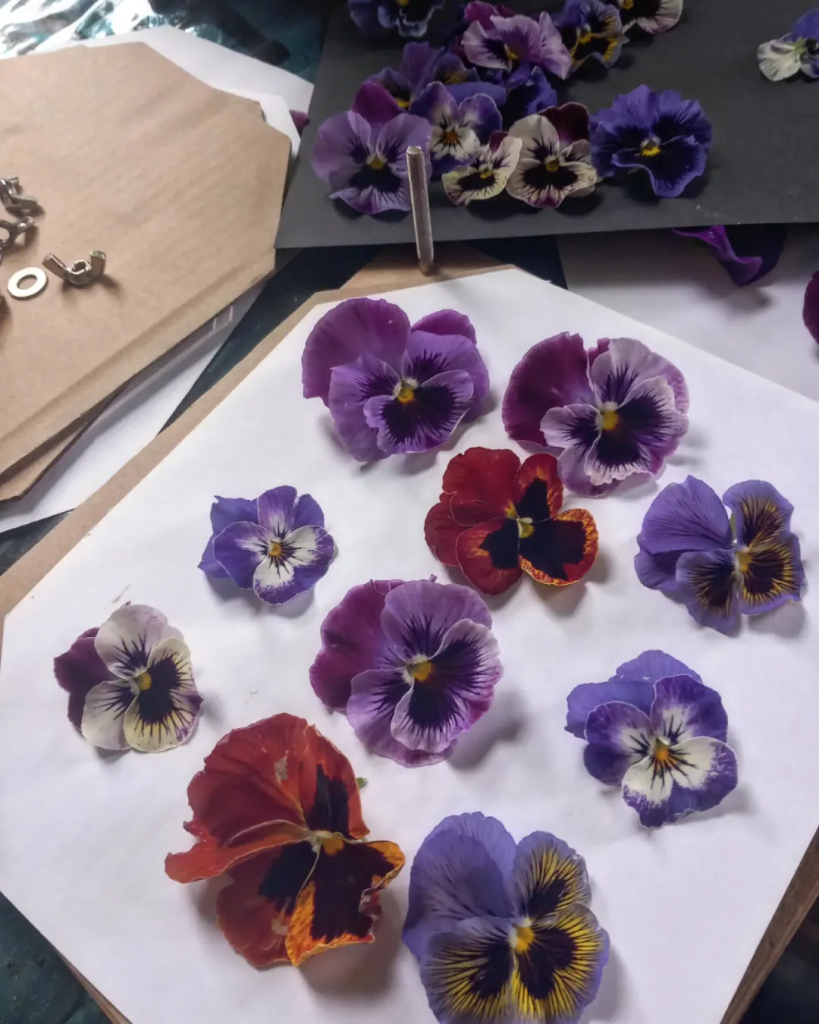
- Pansies. The gold standard. They press in about two weeks, keep almost all their color, and the face markings stay crisp. Pick ones that have just opened fully.
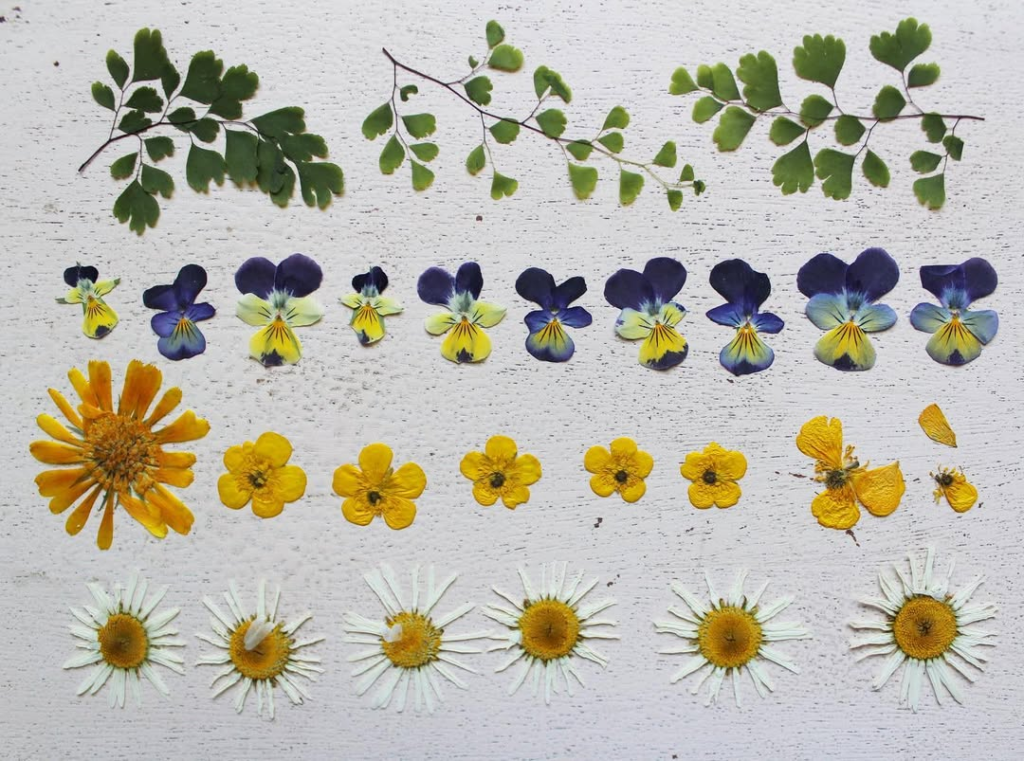
- Violas. Smaller than pansies and even easier. They dry in around ten days and you can fit a dozen on a single sheet.
- Cosmos. Thin, silky petals that flatten with no effort. The pinks fade slightly. The deep magentas hold beautifully.
- Larkspur. Strip individual florets off the stem rather than pressing the whole spike. The blues are some of the truest colors you can get.
- Delphinium florets. Same approach as larkspur. The color is extraordinary, and it barely shifts over a year.
- Forget-me-nots. Tiny, effortless, and they keep that soft blue. Press the whole cluster on one sheet.
- Phlox. Flat five-petal faces that need almost no coaxing. Good for filling gaps in a composition.
- Alyssum. Press it in clusters. Individually the flowers are too small to matter, but a whole sprig makes lovely filler.
Ferns and Foliage
Do not skip this section. Foliage is what turns a handful of pressed flowers into something that looks composed rather than scattered.
- Maidenhair fern. Delicate, layered, and it dries in about a week. Probably the single most useful thing on this entire list.
- Japanese maple leaves. Fall is exactly the right time. The reds hold well if you catch them before they go crisp on the tree.
- Boston fern fronds. Cut into shorter sections. A full frond is unwieldy and tends to curl at the tip.
- Dusty miller. That silvery gray reads as almost white once pressed, which makes it a good contrast against dark petals.
- Eucalyptus. Worth the wait, but it is slow. Give it four to five weeks and change the paper more often than usual.
- Ginkgo leaves. The fan shape is unmistakable and the yellow is stunning. Collect them the week they drop.
Fall tip: October is peak foliage pressing season and most people miss it entirely because they are thinking about flowers. Leaves that have just turned but have not dried on the branch are the ones you want. Once they crackle underfoot, it is too late.
Wildflower and Meadow Types
These grow along roadsides and in unmowed corners, so you can often collect a season’s worth without touching your own beds.
- Queen Anne’s lace. The lacy structure presses into something that looks like frost. Press it face down on a flat sheet so the umbel does not fold.
- Yarrow. Sturdy, forgiving, and it holds its shape well. The yellow varieties keep more color than the white ones.
- Black-eyed Susan. That dark center is thick, so slice the flower in half vertically and press each side separately. It works far better than it sounds.
- Coreopsis. Bright golden yellow that barely fades. One of the best value flowers for pressing, and it blooms for months.
- Buttercup. Glossy petals that keep an almost metallic sheen. They dry fast, usually inside a week.
- Verbena. Press the whole flower head. The purple is deep enough to survive without shifting.
- Feverfew. Small white daisies with yellow centers. These are the exception to the white-flower rule, mostly because the yellow center carries the interest.
Herbs and Aromatics
The bonus here is that many keep their scent for months, which nobody warns you about the first time.
- Lavender. Press the stems whole. The color holds, the fragrance lingers, and the shape is instantly recognizable.
- Borage. Those star-shaped blue flowers press to a vivid, almost electric blue. Genuinely one of the most striking results you can get.
- Sage leaves. Soft gray-green with a texture that stays visible after pressing. Good structural filler.
- Mint. Press the leaves rather than the flowers. They stay green longer than you would expect.
- Chamomile. Small and cheerful. Press the whole flower and accept that the white petals will warm slightly.
Flowers That Need Splitting or Petal Pulling First
These will not work whole. Take them apart and they become some of the best material you have.
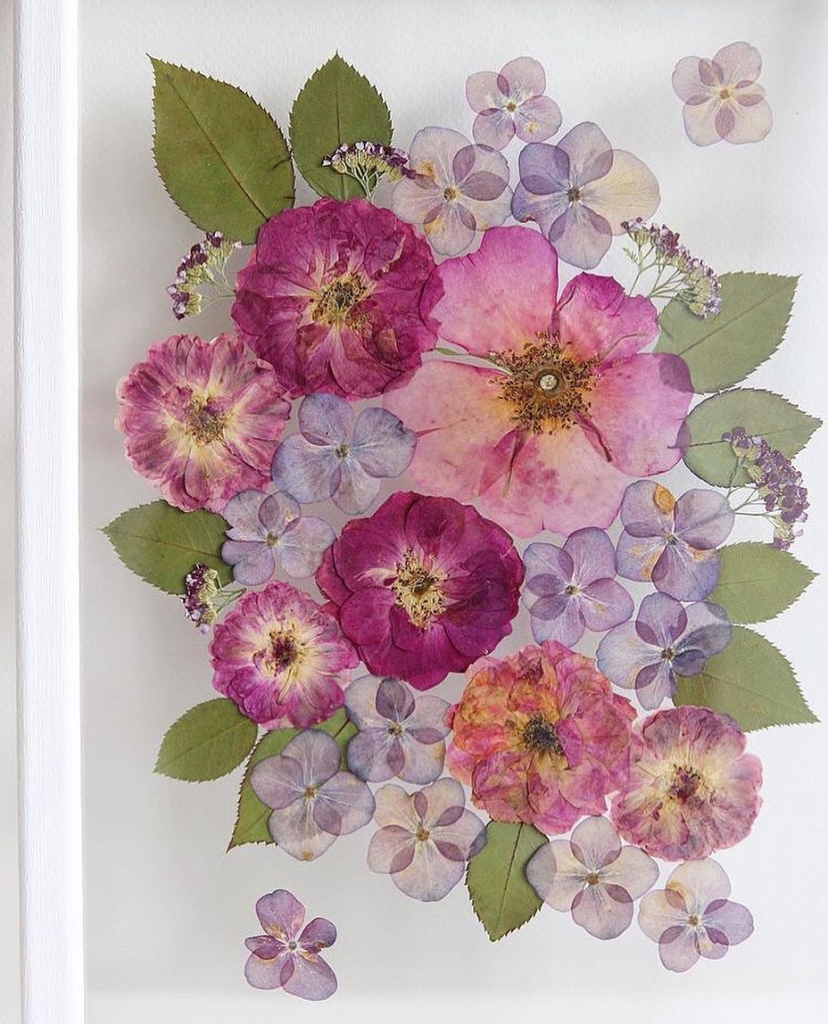
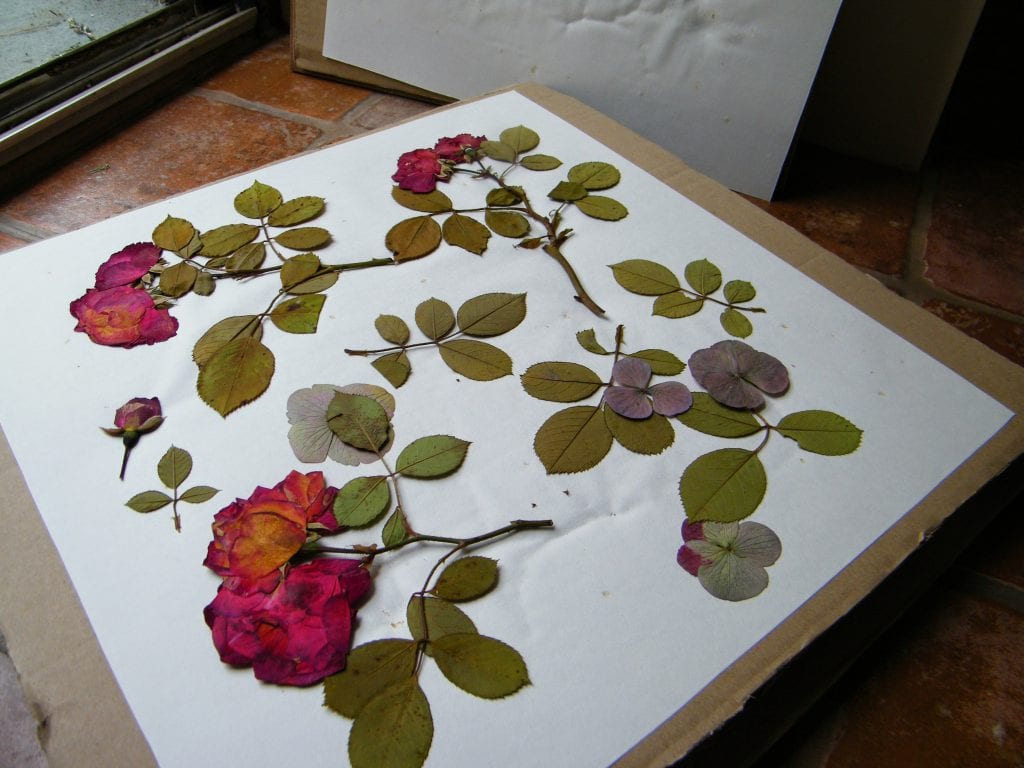
- Roses. Individual petals only. Pressed rose petals keep a deep, saturated color and you can rebuild a rose shape later if you want one.
- Zinnia. Pull the petals or slice the head in half. The colors are among the boldest available.
- Snapdragon florets. Remove them from the spike and press them individually. The shape is unusual enough to be worth the fiddling.
- Columbine. Those spurs need flattening deliberately. Lay the flower face down and press gently before it goes into the book.
- Clematis. Large flat faces that press well once you remove the thicker central boss.
- Sweet pea. Ruffled petals need arranging before pressing, otherwise they dry in awkward folds. Spread each one out with your fingers first.
The Color Keepers
If you want something that still looks alive a year from now, press these.
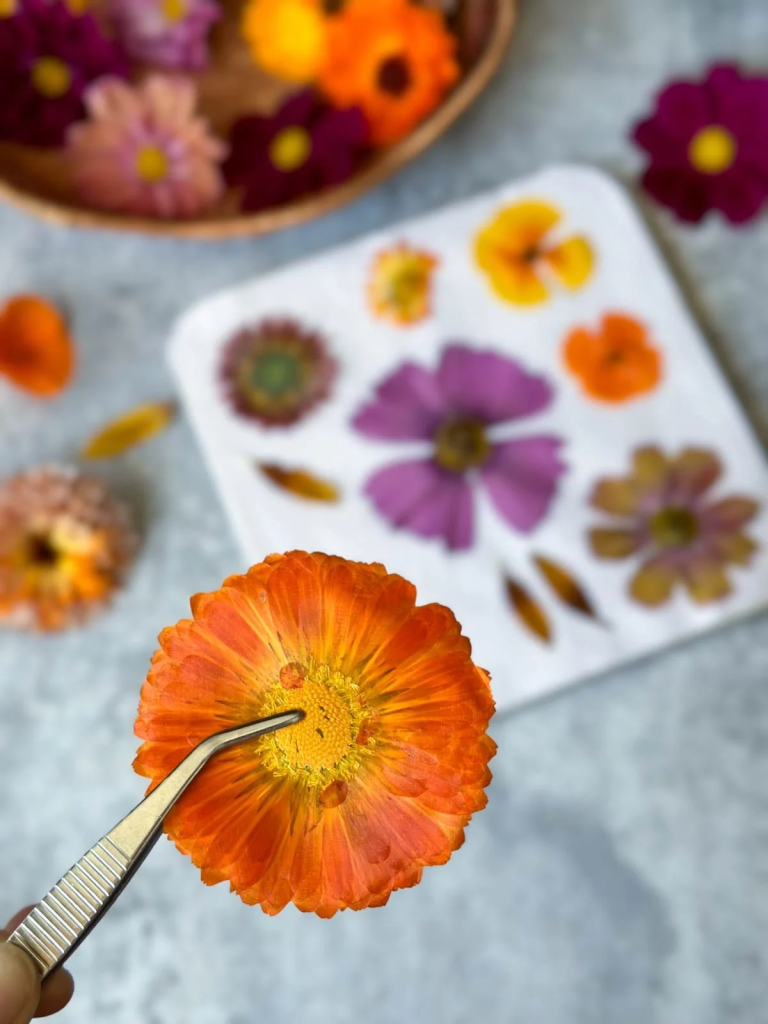
- Calendula. Orange that refuses to fade. Split thicker heads in half.
- Statice. Papery to begin with, so it is basically half-dried before you start. Colors are essentially permanent.
- Bougainvillea bracts. Not technically flowers, which is exactly why they press so well. Thin, colorful, and quick.
- Hydrangea florets. Separate them from the head. The blues and purples stay remarkably true, and they make wonderful scattered filler.
6 Flowers That Turn Brown
Every one of these looks like it should work. That is the problem.
1. Whole roses. The petals are fine. The center is not. A rose has dozens of layers packed tightly around a thick base, and the moisture in that base has nowhere to go. It browns from the inside outward, and by the time you notice, the whole flower has gone. Press the petals separately and you get a completely different result.
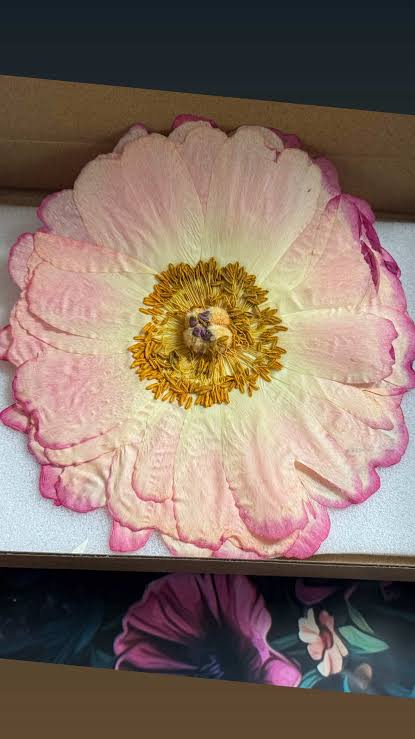
2. Peonies. Beautiful, enormous, and roughly ninety percent water. A peony in a press will still be damp three weeks later. The color washes out to a dull tan and the petals often stick together into a solid mass.
3. Tulips. These do something particularly disappointing. Rather than browning, tulip petals go translucent and grayish, so they look faded and slightly slimy. The waxy petal surface does not release moisture the way thinner petals do.
4. Sunflowers. The petals press fine on their own. That seed head will never flatten, and it is dense enough to hold moisture indefinitely. Some people press sunflower petals individually, which works, though it is a lot of effort for a flower that photographs better fresh.
5. Dahlias. All those packed petal layers rot before the inner ones dry. You will often find mold appearing before the flower is anywhere near flat. If you love the shape, take a single outer row of petals and leave the rest.
6. Succulents. This one catches people constantly. Succulents store water in their leaves as a survival strategy, which means they actively resist drying. They will mold in a press, sometimes within a week, and the smell is memorable in the worst way.
One more warning: white flowers of any variety tend to press toward beige or cream rather than staying white. Gardenias, white roses and white lilies are the worst offenders. If you want white in a finished piece, use silvery foliage like dusty miller instead.
How to Actually Press Them
Three methods, and honestly, the cheapest one works fine.
The heavy book. Free, and it works. Place your flower between two sheets of parchment paper, slide it into a thick book, and stack more books on top. Two to four weeks depending on the flower. The only real downside is that you cannot check without disturbing things.
A flower press. Two to three weeks, and the results are noticeably better because the pressure is even across the whole surface. Worth buying if you plan to do this more than once a season. You can also build one from two squares of plywood, four bolts and some cardboard.
The microwave. Two minutes instead of two weeks. Sandwich the flower between ceramic tiles with paper on either side, and microwave in thirty second bursts. The colors come out brilliantly bright. The trade-off is that the results are brittle and tend to crack when handled.
The one step that fixes browning: change the paper after the first 48 hours. Almost all the moisture leaves in those first two days, and if it stays trapped against the petals, that is when things go brown. Use parchment or blotting paper, never newspaper. The ink transfers.
When to Pick
Mid-morning, once the dew has dried and before the afternoon heat. Wet flowers take longer to press and are far more likely to brown.
Choose blooms that have just opened fully. A flower that has been open for days is already beginning to break down, and pressing will not stop that. If a petal is bruised or the edges have started to curl, leave it.
Right now, in early fall, you can still collect maple and ginkgo leaves, late cosmos, calendula, yarrow, hydrangea florets and anything left on your zinnias. Pansies and violas planted now will give you material through winter in milder zones.
If you want a proper supply next year, sow larkspur, cosmos, statice and calendula in spring. They are all easy, they all press well, and they all bloom long enough that you can harvest repeatedly.
What to Do With Them
Framed arrangements are the obvious answer, but there are better ones. Bookmarks sealed in laminate. Pressed flowers set into candle wax. Clear phone cases with a single fern frond inside. Herbarium sheets with the plant name written underneath in pencil, which look wonderful in a group of three or four. Greeting cards, if you want something to actually give away rather than store.
Common Questions
How long do pressed flowers last? Kept out of direct sunlight, several years. Sunlight is the enemy, not time. A framed piece in a south-facing window will fade noticeably within twelve months, while the same piece on a shaded wall will look fine for a decade.
Why did my flowers turn brown? Almost always trapped moisture. Either the flower was too thick to begin with, it was damp when you pressed it, or the paper was never changed.
Can you press flowers that are already dried? Not really. Dried flowers have become brittle and will shatter under pressure rather than flatten. Press them fresh.
Do you need to spray them with anything? No. Some people use a light coat of clear acrylic sealant on finished pieces for durability, but it is optional and it slightly dulls the color.
Give It a Go
If you have never pressed a flower before, start with pansies or violas. They are almost impossible to get wrong, they dry quickly enough that you will not lose interest, and the results are good enough to make you want to try something harder.
Go and see what is still blooming out there. There is more than you think. 🌼