Cooler mornings mean it’s time to swap out those tired summer pots. A good fall planter gives your porch that warm, welcoming look without much effort. 🍂
The best fall planters follow a simple formula: one tall plant for height, one or two mid-sized bloomers like mums or asters for colour, and something that spills over the edge – all in a container with decent drainage. That mix works whether you’ve got a big urn or a small pot by the door.
You don’t need a green thumb or a big budget to pull this off.
Below you’ll find plant picks that hold up in cooler weather, container ideas for any size porch, and easy ways to add pumpkins and other seasonal touches. 🎃
Choose a Seasonal Color Palette
Picking two or three colors before you shop keeps your planters looking put together instead of random. Your options range from bright oranges and golds to deep plums and burgundies, or a cool mix of green and white that works into winter.

Warm Harvest Tones
This is the classic fall look, and it’s the easiest one to shop for.
Think orange, gold, rust, and buttery yellow. You’ll find these shades in mums, marigolds, and croton, which has leaves streaked with yellow, orange, and red.
Try pairing them like this:
- Tall element: Purple fountain grass or a small croton
- Filler: Orange or bronze mums, yellow pansies
- Spiller: Creeping Jenny in chartreuse green
Add a few small orange or white pumpkins around the base of the pot. Terra-cotta containers work well here because the clay already matches the warm tones.
One tip: pick just two of these colors instead of all four. Too many warm shades at once can look busy.
Moody Autumn Shades
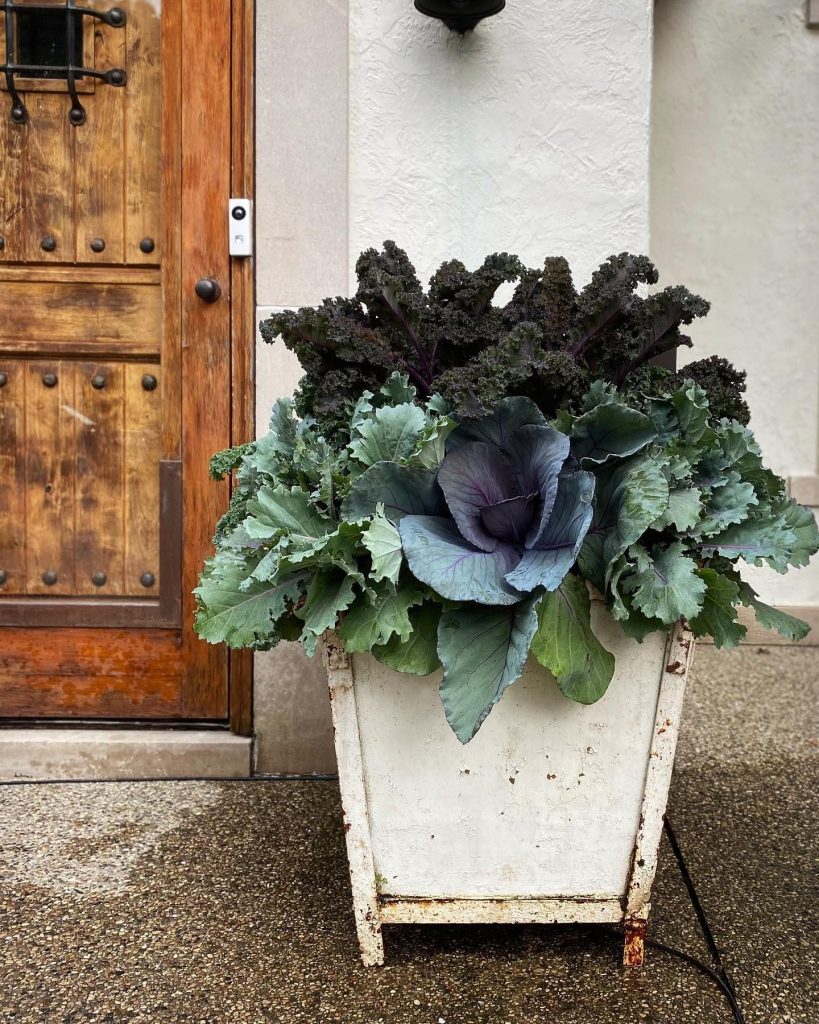
If bright orange isn’t your style, go darker. Deep purple, burgundy, plum, and near-black plants make a richer display.
Good picks include:
| Plant | What it adds |
|---|---|
| Ornamental kale (purple) | Ruffled texture in the middle of the pot |
| Burgundy mums | Deep, rounded color |
| Black Scallop ajuga | Dark, glossy trailing leaves |
| Heuchera ‘Obsidian’ | Near-black foliage that lasts past frost |
Dark colors can disappear against a brick or dark-painted house. Break that up with a lighter accent, like silver dusty miller or a few pale green heirloom pumpkins.
Cream or gray planters help these shades stand out. So does a porch light nearby.
Classic Green And White
Green and white is the most flexible palette, and it stays attractive long after Halloween has passed.
Build it with white mums, white ornamental kale, dusty miller, and boxwood or dwarf conifers. Eucalyptus stems, real or faux, add a soft silvery green.
The real benefit shows up in December. Once the mums fade, you can swap in evergreen branches and white birch logs without changing anything else.
Add texture so it doesn’t look flat. Try pale green Jarrahdale pumpkins, white Baby Boo pumpkins, or a few pinecones tucked between the plants.
This palette suits almost any house color, which makes it a safe pick if you’re unsure.
Select Containers That Suit Your Porch
The right container does two jobs at once: it gives your plants enough room to grow, and it fits the look of your house. Size, material, and drainage are the three things worth checking before you buy.
Matching Pot Size To Plant Growth
A common mistake is buying a pot that looks great but crowds the plants inside it.
For a standard fall display, aim for a container that’s at least 14 to 16 inches wide. That gives you room for a mum, plus a few smaller plants around the edges.
Here’s a quick guide:
| Container Width | What Fits Well |
|---|---|
| 10–12 inches | One small mum or a single ornamental kale |
| 14–16 inches | One large mum plus 2–3 trailing plants |
| 18–24 inches | A layered display with grass, mums, and ivy |
Bigger pots also hold more soil, which means they dry out slower. That’s helpful in early fall when afternoons can still get warm.
Coordinating Materials With Your Home
Your container should feel like it belongs with your house, not fight against it.
Terracotta works well with brick and warm-toned siding. It’s affordable, but it can crack if you leave it outside during a hard freeze.
Glazed ceramic adds color and looks nice on porches with painted trim. Deep blues, greens, and blacks pair well with orange mums.
Galvanized metal buckets and tubs suit farmhouse-style homes. They heat up in the sun, so keep them out of direct afternoon light if you can.
Woven baskets give a soft, casual look. Line them with plastic first so they don’t fall apart when you water.
Wood boxes and resin planters are both good middle-ground choices. Resin is light, easy to move, and holds up through winter.
A simple tip: pick two container colors max, and repeat them on both sides of your steps.
Ensuring Proper Drainage
Fall brings rain, and soggy roots will kill your plants faster than cold weather will.
Every container needs at least one drainage hole. If your pot doesn’t have one, you can drill a hole in plastic, resin, or wood pretty easily.
For ceramic, use a masonry bit and go slow so you don’t crack it.
Don’t put gravel in the bottom. It’s an old tip, but it actually raises the water level in the soil instead of lowering it.
Instead, use a good potting mix and add pot feet or a couple of bricks underneath. Lifting the pot off the porch floor lets water escape and keeps stains off your decking.
Build a Balanced Plant Combination
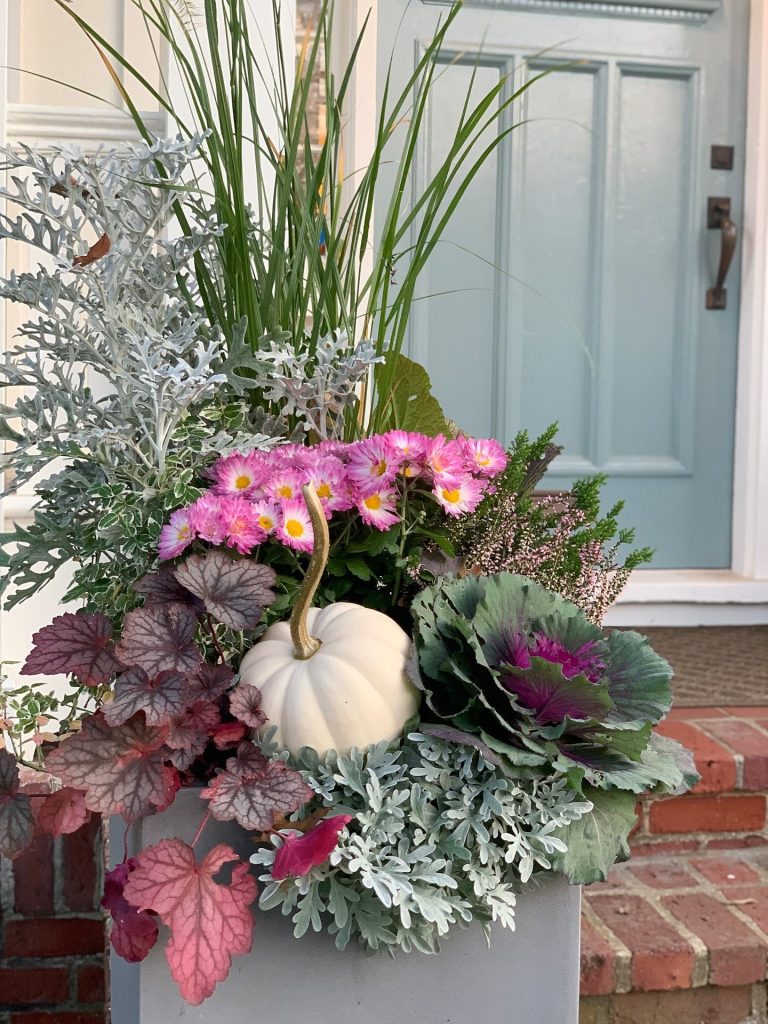
A great fall planter usually mixes three types of plants: something tall in the center or back, something full and rounded in the middle, and something that hangs over the rim. When you layer these together, your container looks full from every angle instead of flat and sparse.
Adding Height With Upright Plants
Start with your tallest plant, since it sets the scale for everything else. A good rule is to pick something that reaches about 1.5 to 2 times the height of your container.
Ornamental grasses are a favorite here. Purple fountain grass, switchgrass, and northern sea oats all catch the light and move in the breeze.
Other solid choices include:
- Ornamental millet for dark, dramatic seed heads
- Cordyline or dracaena spikes for stiff, spiky texture
- Dwarf evergreens like dwarf Alberta spruce, which keep going into winter
- Curly willow or birch branches if you want a no-water option
Place tall plants in the center if your planter sits away from the wall. Put them toward the back if the pot is against your house.
Filling Space With Mounding Varieties
Mounding plants do the heavy lifting. They fill the gap between your tall centerpiece and the edge of the pot, and they bring most of the color.
Garden mums are the classic pick, and they come in rust, burgundy, gold, and cream. Just remember they need regular water, since they wilt fast in a container.
Ornamental kale and cabbage are worth adding too. Their ruffled purple and white centers hold up well after frost, unlike mums.
A few more to consider:
| Plant | Why It Works |
|---|---|
| Heuchera (coral bells) | Colorful foliage in caramel, plum, and lime |
| Asters | Purple and pink blooms that feed late pollinators |
| Pansies and violas | Handle cold nights and keep blooming |
| Croton | Warm orange and red leaves, no flowers needed |
Use two or three mounding plants and repeat them for a tidy look.
Softening Edges With Trailing Plants
Trailing plants cover the rim of your pot so you don’t see a hard line between the container and the plants. They also make the whole arrangement feel more relaxed.
Creeping Jenny is easy to find, and its chartreuse leaves pop against dark mums. Ivy works well too, especially variegated types that lighten up a shady porch.
Try these as well:
- Sweet potato vine in bronze or deep purple
- Trailing verbena for extra late-season blooms
- Vinca vine for silvery-green edges
Tuck two or three of these around the outside of your planter, spacing them evenly. Angle the root balls slightly outward when you plant them, and they’ll spill over the sides faster.
Pick Plants That Thrive in Fall Weather
Cool nights and shorter days can wreck summer annuals, but plenty of plants actually look better once temperatures drop. The best fall containers mix long-blooming flowers, bold leaves, and a few plants that hold their shape well past the first frost.
Reliable Flowering Choices
Mums are the classic pick, and for good reason. Look for tight, unopened buds instead of plants in full bloom, and you’ll get several extra weeks of color.
Asters bring purple and pink flowers that bees still visit in September and October. Pansies and violas handle light frost without complaining, and they often perk back up after a cold snap.
For something less expected, try:
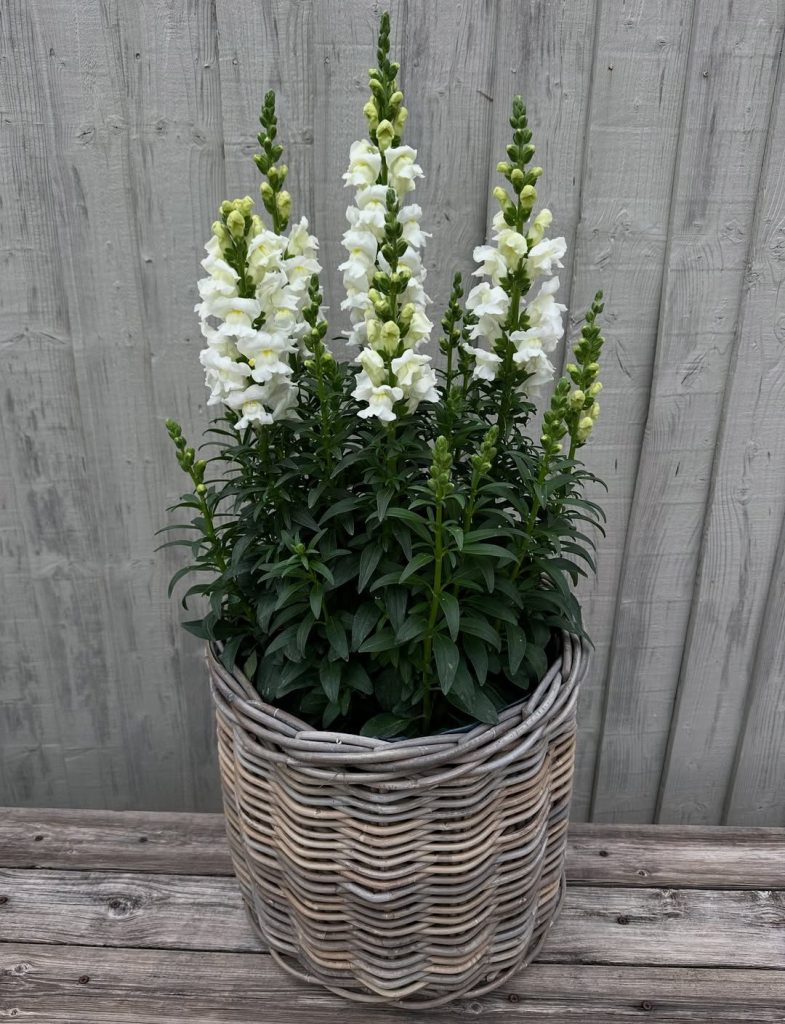
- Snapdragons — cool weather is their favorite season
- Cyclamen — pink or white blooms for shady porches
- Ornamental peppers — small orange and purple fruit that lasts for weeks
- Sedum ‘Autumn Joy’ — rusty pink flower heads that dry in place
Water flowering plants more than you’d expect. Containers dry out fast on a windy porch, even when the air feels cool.
Colorful Foliage Favorites
Flowers fade, but good leaves carry a planter all season. Ornamental kale and cabbage are the workhorses here, with ruffled purple, cream, and blue-green rosettes that deepen in color as nights get colder. They can handle temperatures well below freezing.
Heuchera (coral bells) comes in caramel, plum, and lime, and it’s a perennial you can plant in the ground later. Coleus still works in early fall if frost is a few weeks off.
A few more leaf options worth grabbing:
| Plant | Color | Best Spot |
|---|---|---|
| Swiss chard ‘Bright Lights’ | Red, yellow, pink stems | Full sun |
| Ajuga | Bronze-purple | Edges, spilling over |
| Dusty miller | Silver-gray | Anywhere, cools down oranges |
| Croton | Orange, red, yellow | Warm porches only |
Textural Grasses And Evergreens
Height and texture keep a planter from looking flat. Purple fountain grass is the easy answer for a center plant, with feathery plumes that catch late afternoon light.
Ornamental millet and switchgrass work the same way. For a shorter option, carex in bronze or gold spills nicely over a rim.
Evergreens are your insurance policy. Small dwarf Alberta spruce, boxwood, or juniper stay green when everything else gives up, which means your planter still looks intentional in December.
Try tucking in eucalyptus stems or a few cedar branches too. They add scent and gray-green color, and they dry well right in the pot.
Arrange and Plant Your Display
Once you have your plants and container ready, the way you place everything makes a big difference. A simple plan for height, balance, and layers will help your planter look full and finished instead of thrown together.
Using the Thriller, Filler, and Spiller Method
This method gives you a quick formula for arranging plants at three different heights.
- Thriller: The tall centerpiece. Try ornamental grass, purple fountain grass, a small evergreen, or a bundle of birch branches.
- Filler: The rounded plants that fill the middle space. Mums, ornamental kale, asters, and pansies all work well.
- Spiller: The plants that trail over the rim. Creeping Jenny, ivy, or sweet potato vine soften the edges.
Place the thriller first. If your planter sits against a wall, push it toward the back. If people will see the pot from all sides, put it in the center.
Then tuck fillers around it and add spillers at the very edge.
Creating Symmetry or Asymmetry
Symmetry means two matching planters, one on each side of your door. This look feels neat and traditional, and it works well on porches with a clear center point.
To pull it off, use the same container, the same plants, and the same heights on both sides.
Asymmetry means one large planter placed off to one side, often with a smaller pot or two nearby. This suits porches with uneven space, like a door set close to a corner.
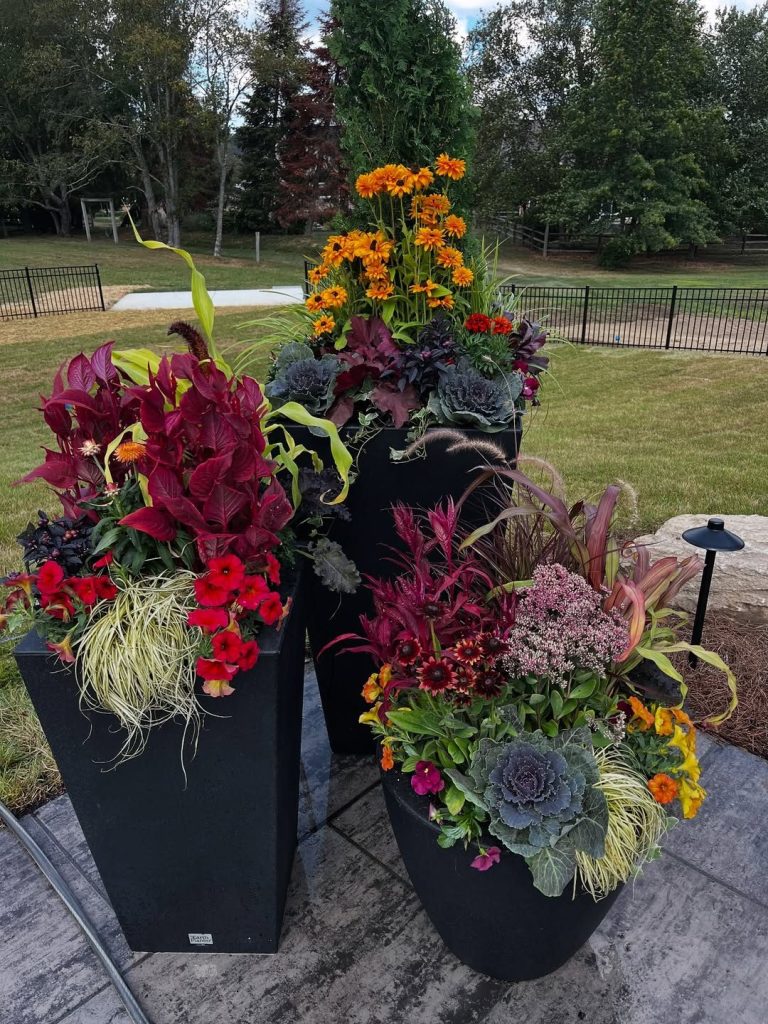
A helpful trick: group odd numbers of pots, such as three, and vary their heights. It looks relaxed but still intentional.
Layering Plants for a Full Look
Gaps are the main thing that makes a fall planter look sparse. Plant closely, since most fall plants will not grow much before frost.
Set your plants in place while they are still in their nursery pots. Move them around until you like the shape, then plant them for real.
Tilt the outer plants slightly outward so their leaves reach past the rim. This hides the container edge and adds fullness.
Fill any leftover holes with small pumpkins, gourds, pinecones, or cut branches. These take up space right away and add color without needing soil.
Keep Porch Planters Looking Fresh All Season
A fall planter can stay full and colorful from September through November, but only if you give it a little attention each week. Watering, trimming spent blooms, and covering plants on cold nights are the three habits that make the biggest difference.
Watering and Feeding Needs
Container plants dry out faster than plants in the ground, even when the weather cools off. Stick your finger about an inch into the soil. If it feels dry, it’s time to water.
Most fall planters need water every two to three days. Mums are thirsty and may need water daily during warm, sunny stretches. Water at the base of the plant until it runs out the drainage holes.
A few things to keep in mind:
- Wind dries pots out fast. Planters on an exposed porch need more frequent checks.
- Skip feeding mums that are already in full bloom. Fertilizer won’t help at that stage.
- Feed pansies and violas every two weeks with a diluted liquid fertilizer to keep them blooming.
- Empty saucers after heavy rain so roots don’t sit in standing water.
Deadheading and Simple Grooming
Pinching off faded flowers keeps your planter looking tidy and encourages plants to keep blooming. Pansies, violas, and snapdragons respond well to regular deadheading.
For mums, use your fingers or small scissors to snap off brown blooms just below the flower head. Do this once or twice a week and the plant will look fresh much longer.
Pull out yellow or crispy leaves as you spot them. Also trim back any trailing plants like sweet potato vine that start covering your steps or walkway.
If a plant gives out completely, don’t feel stuck. Lift it out and drop in a small pumpkin, a gourd, or a new pot of kale to fill the gap.
Protecting Plants From Early Frost
Most fall favorites handle a light frost just fine. Kale, cabbage, pansies, and violas actually look better after a cold snap. Mums are hardier than they look, but their blooms can brown in a hard freeze.
Check your local forecast for nights below 32°F. When one is coming, cover your planters with an old sheet, a towel, or a frost cloth. Drape it over the plants in the evening and remove it in the morning.
You can also move smaller pots against the house wall or under the porch roof. That bit of shelter often keeps them a few degrees warmer.
Water the soil the afternoon before a frost. Moist soil holds heat better than dry soil and helps protect the roots.