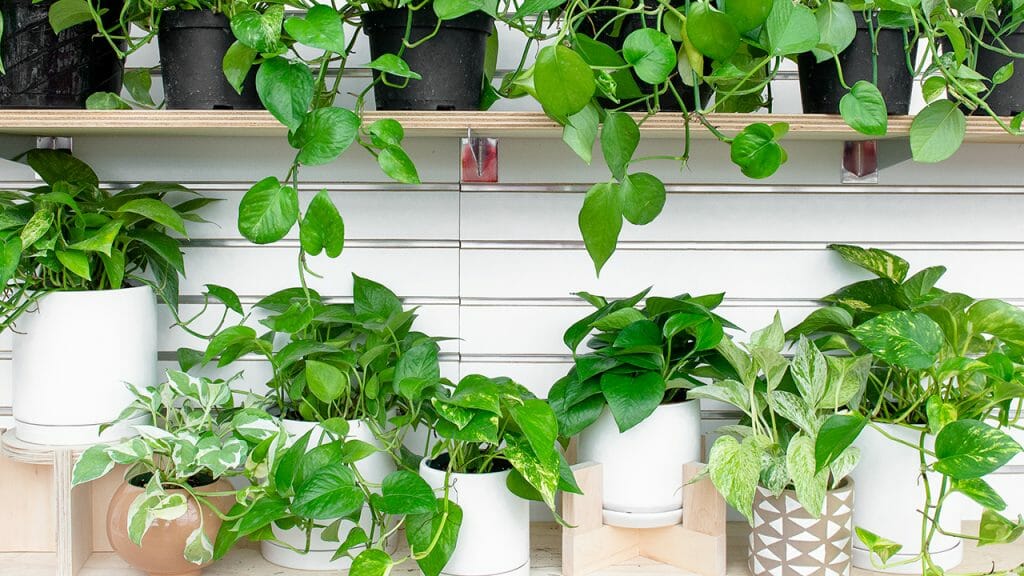
Growing houseplants in water removes the two things that kill most beginner plants: overwatering and forgetting to water. 💧
A jar of water on a windowsill shows you exactly how much liquid the roots have, and roots grown in water never suffocate in compacted potting mix. Realistically, water culture means one water change every week or two and a few drops of diluted fertiliser monthly – far less work than soil, but not literally zero.
There is a real difference between a cutting that roots in a vase and a plant that stays healthy in water for years. Pothos, philodendron, and tradescantia will live in a jar indefinitely. Peace lily and coleus root fast but decline after a few months unless you move them to soil or feed them properly. Every plant below is labelled for which category it falls into.
One caveat applies to nearly everything on this list: water-grown plants grow more slowly and stay smaller than their soil-grown counterparts, because water holds far fewer nutrients than potting mix. That’s often the point in a small flat. 🪴
Quick picks:
- Best overall: Golden pothos, roots in a week and lives in water for years
- Best for low light: Heartleaf philodendron, tolerates a north window
- Best for free plants: Spider plant, pups root without any cutting
- Best statement piece: Lucky bamboo, sold water-grown already
1. Golden Pothos

Golden pothos is the most reliable water-grown houseplant you can buy, and it will live in a jar for years without ever touching soil. Cut a stem below a node (the small bump where a leaf meets the vine), strip the lowest leaf, and submerge only the bare node. Roots appear in 7 to 14 days.
Light: bright indirect. Direct sun scorches the variegated leaves and encourages algae in a clear jar.
Long-term water tolerance: excellent. Water roots are thicker and whiter than soil roots, and once established they resent being moved to soil.
Expect a trailing vine that adds a few inches a month. Trim the tips to keep it bushy and drop those trimmings into the same vessel. A single pothos cutting can fill a 6-inch jar with four or five vines within a year.
2. Heartleaf Philodendron
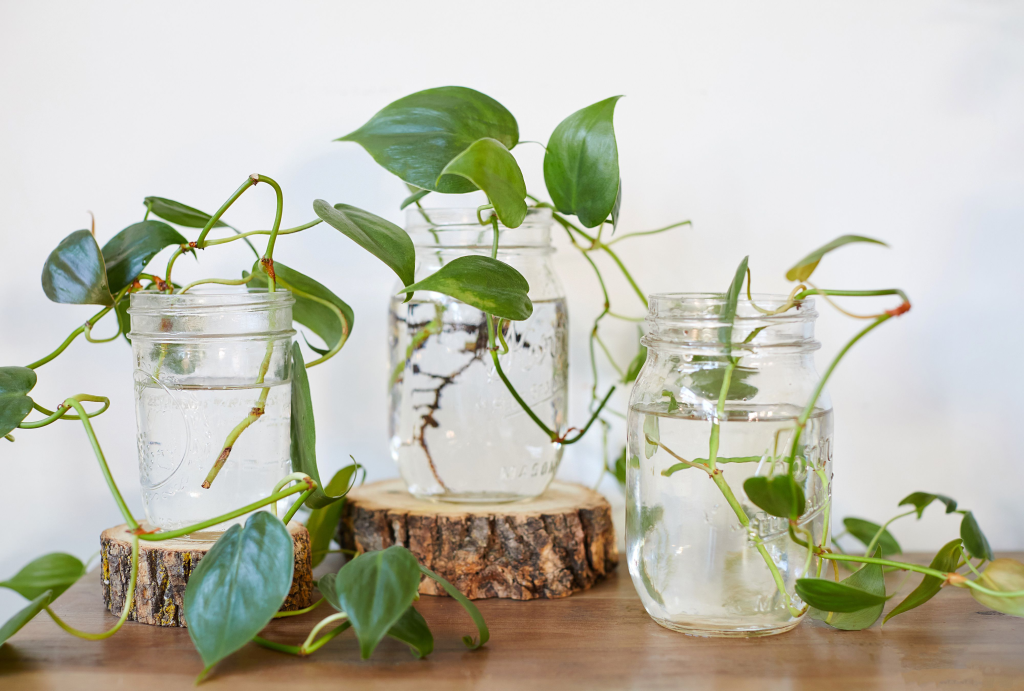
If your only spot is a north-facing window, heartleaf philodendron handles that dim corner better than pothos does. The leaves are thinner and softer, and they stay a deep matte green in low light instead of stretching pale.
Start from a cutting with two or three nodes. Roots emerge within two weeks at room temperature, faster above 70°F.
Long-term water tolerance: excellent, comparable to pothos. Plants stay healthy for years with monthly quarter-strength liquid fertilizer.
The growth habit is a fast trailing vine that will reach 3 feet from a countertop jar. One practical tip: philodendron stems rot if a leaf falls into the water and decomposes there, so fish out any dropped foliage when you notice it.
Keep it away from cats and dogs. All philodendrons contain insoluble calcium oxalate crystals.
3. Spider Plant
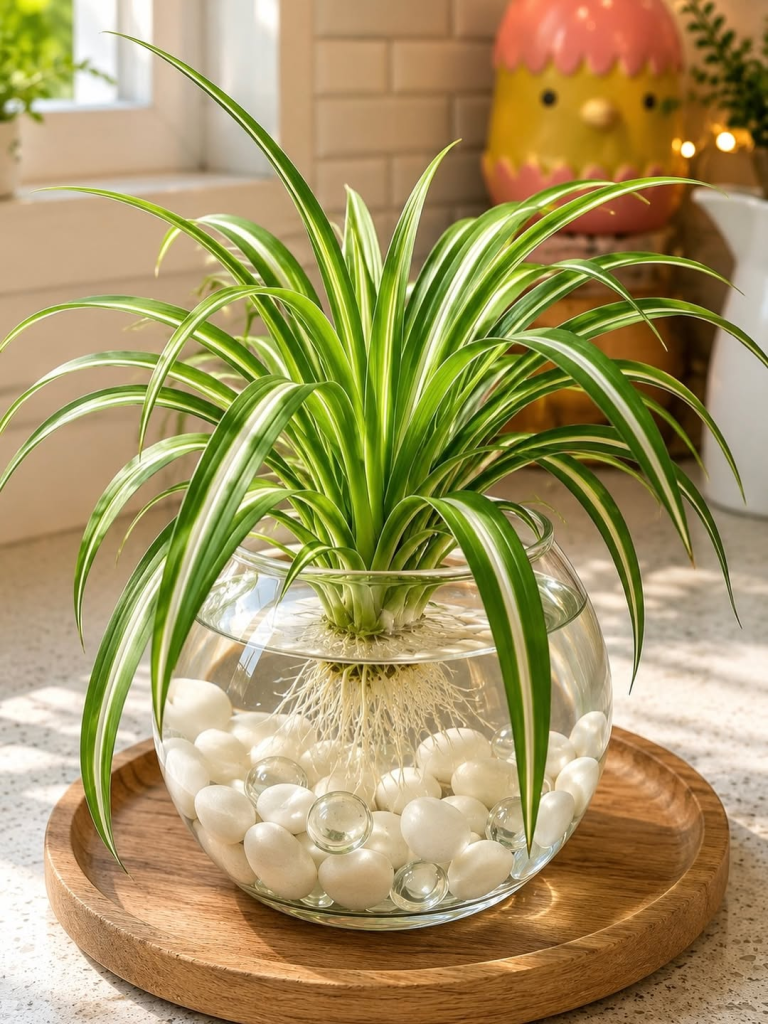
Spider plants give you free water-grown plants without cutting anything: the arching runners produce plantlets, and each pup already has stubby aerial roots ready to hit water. Snip a pup off the runner and set it in a narrow glass so the root base sits just at the waterline.
Light: bright indirect. Variegated forms hold their white stripes best a few feet back from a south or west window.
Long-term water tolerance: good. Spider plants live in water for a year or more, though they eventually want more nutrition than plain water provides. Fertilize monthly at quarter strength.
Fluoride in tap water causes brown leaf tips in this species more than most. Filtered or rainwater helps noticeably, as does letting tap water sit uncovered overnight.
Spider plant is one of the few on this list that is non-toxic to cats and dogs.
4. Lucky Bamboo
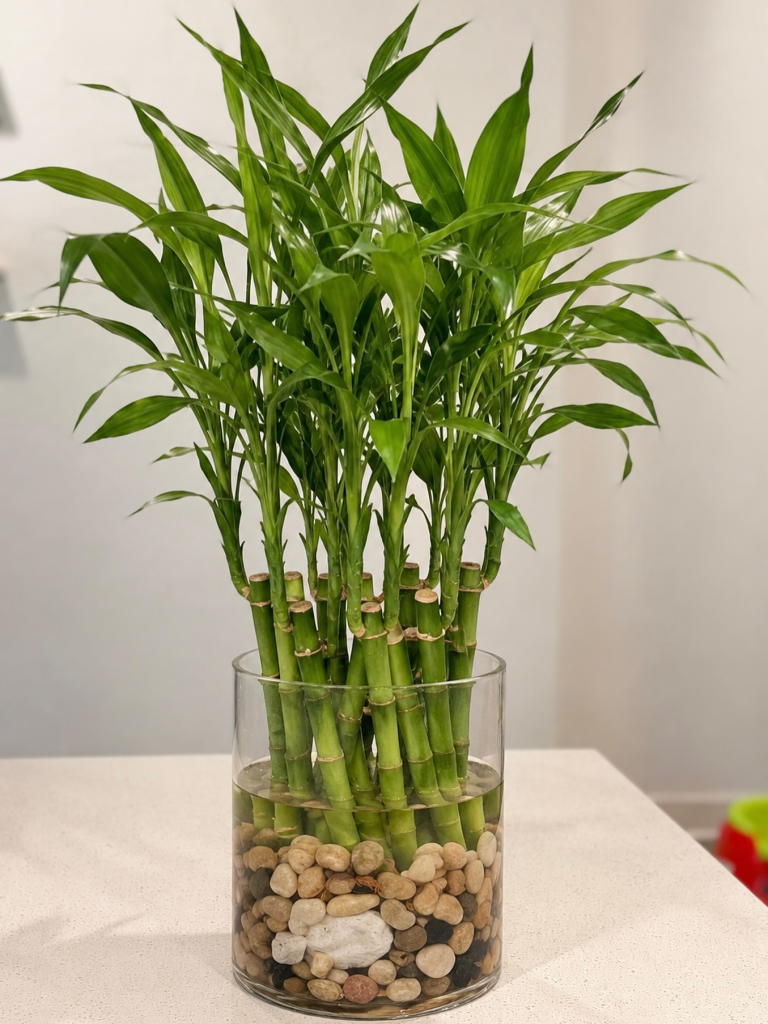
Lucky bamboo is usually sold already growing in water, which makes it the one plant here you can buy and set down with zero transition. It is not bamboo at all but Dracaena sanderiana, and it is happiest with roots submerged and 2 to 3 inches of water around the base of the canes.
Light: moderate indirect. Full sun yellows the canes.
Long-term water tolerance: excellent, often a decade or more in the same vessel.
Two specifics worth knowing. Chlorine and fluoride cause yellowing tips, so use filtered water. And the pebbles most retailers pack around the canes trap debris, so pull them out and rinse them every couple of months.
Toxic to cats and dogs if chewed.
5. Arrowhead Plant
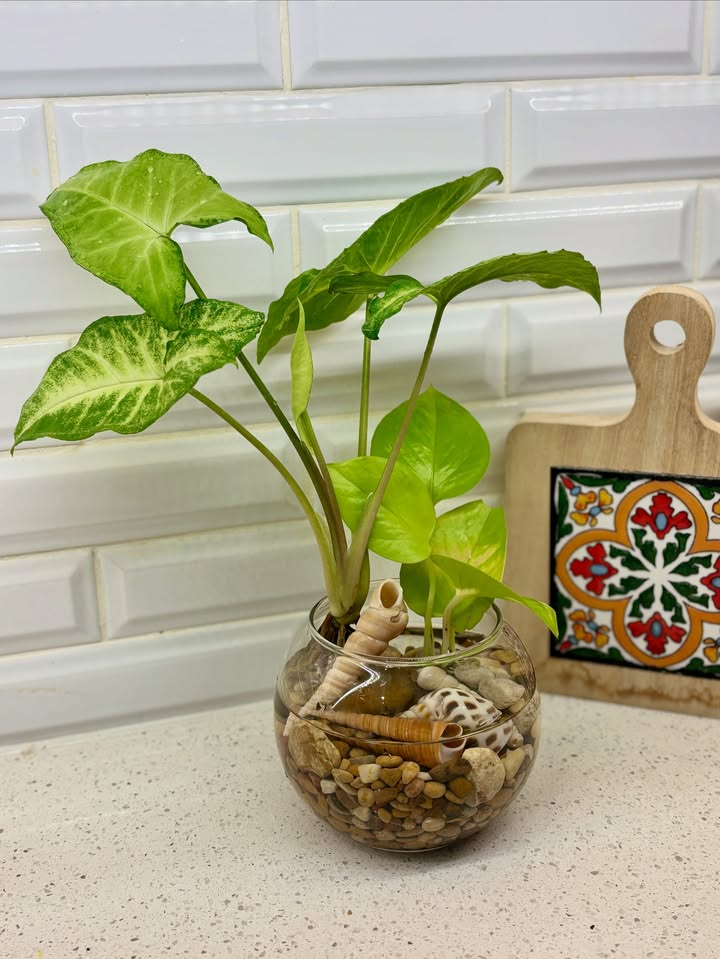
Arrowhead plant (Syngonium podophyllum) roots as easily as pothos and offers colors pothos cannot: pink, cream, and near-white cultivars that hold their tone well in water. Cut a stem with at least one node and submerge it; roots show in about 10 days.
Light: bright indirect for the pink varieties, medium for the plain green.
Long-term water tolerance: good to excellent. Juvenile arrowheads stay compact and bushy in water for years. Once they mature and start vining, they want a trellis and richer feeding.
The stems are thicker and juicier than philodendron, which means a submerged leaf stem will rot quickly. Keep the waterline below every petiole. Arrowhead sap is irritating to pets and skin.
6. Tradescantia Zebrina
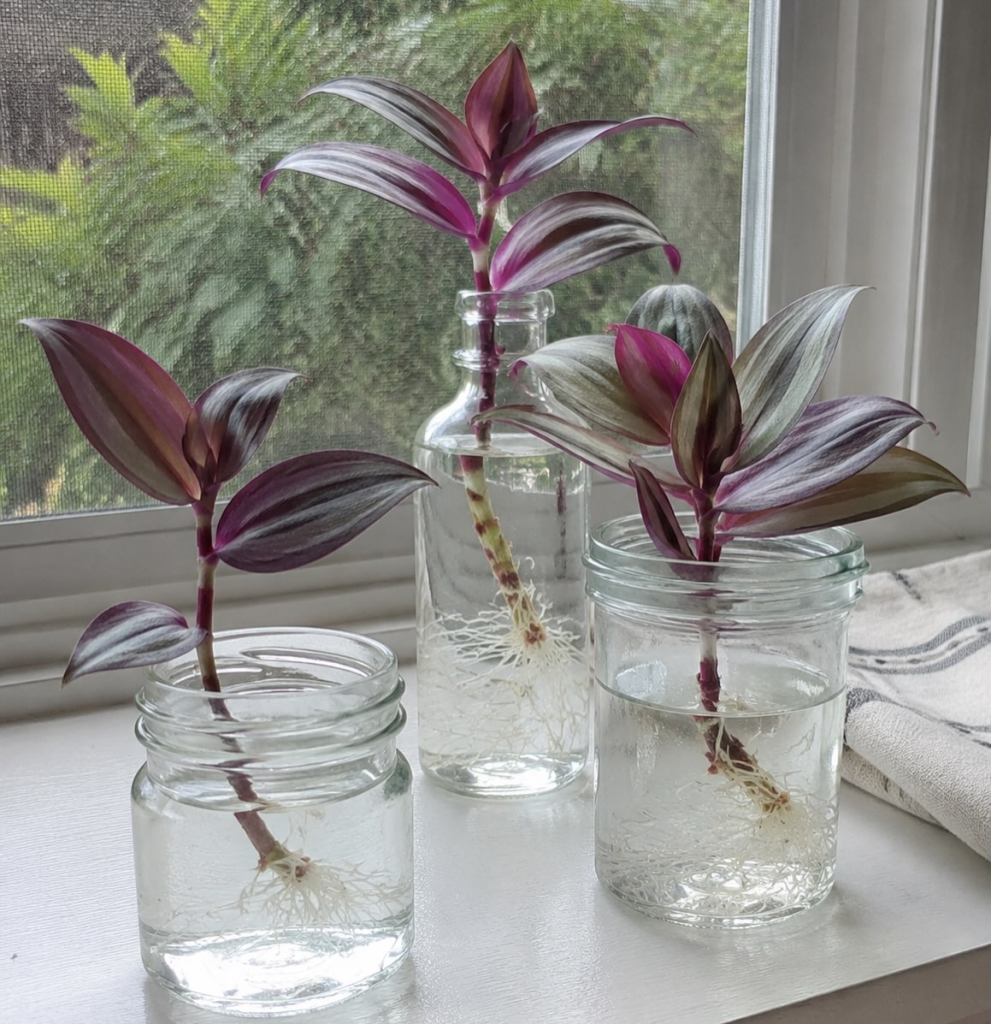
Tradescantia zebrina roots faster than anything else on this list, often showing white root tips within four days. The purple undersides and silver-striped tops make it the most colorful dependable option for water culture.
Break a stem at a node with your fingers and drop it in. No tools needed, no rooting hormone.
Light: the brightest indirect light you have. In dim rooms the purple fades to green and the stems stretch, leaving gaps between leaves.
Long-term water tolerance: good, with a caveat. Individual stems get leggy and shed lower leaves after six to eight months, so the sustainable approach is to pinch the growing tips and root the new pieces in the same jar. You get a permanent supply from one purchase.
Sap causes contact dermatitis in some people and mild irritation in pets.
7. Monstera Adansonii
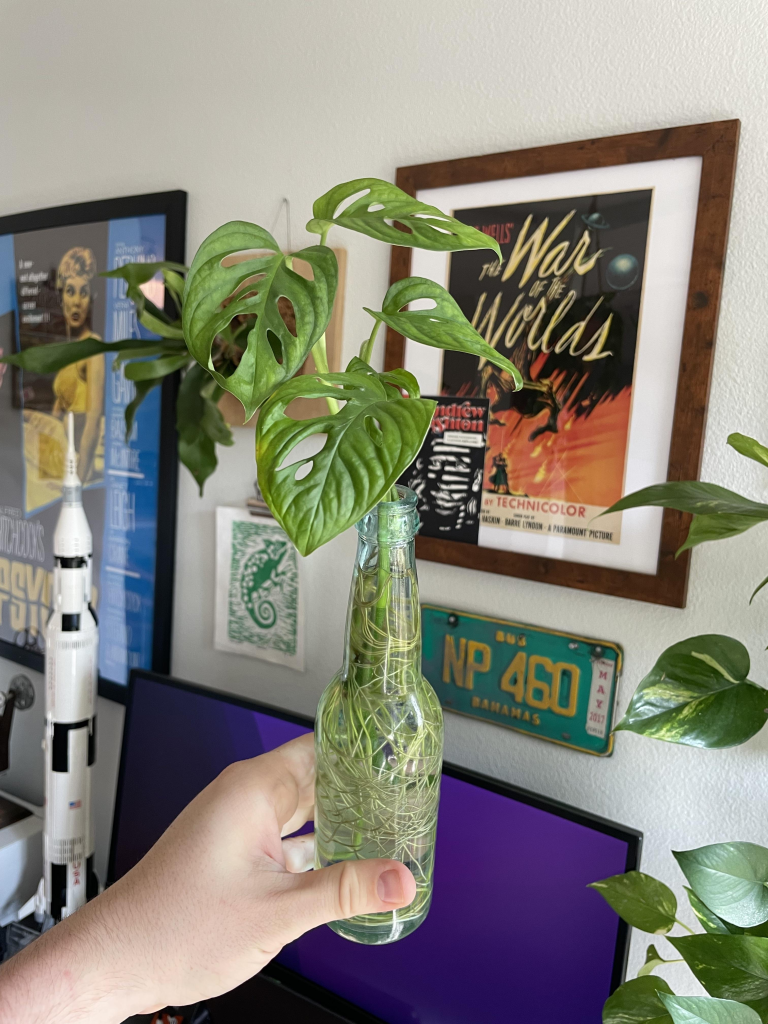
Monstera adansonii holds its perforated leaves better in water than the larger Monstera deliciosa, which quickly outgrows any vessel. Take a cutting with one node and one leaf; the node is the only part that needs to be underwater.
Light: bright indirect, ideally 3 to 5 feet from an east window.
Long-term water tolerance: moderate. Cuttings stay presentable for six months to a year, and new leaves emerge smaller with fewer holes as the plant runs short on nutrients. Diluted fertilizer every three weeks extends that considerably.
If you want full-size fenestrated leaves, plan to pot it in soil eventually. As a jar specimen it reads as a small, elegant vine.
Toxic to pets, like all monsteras.
8. Chinese Evergreen
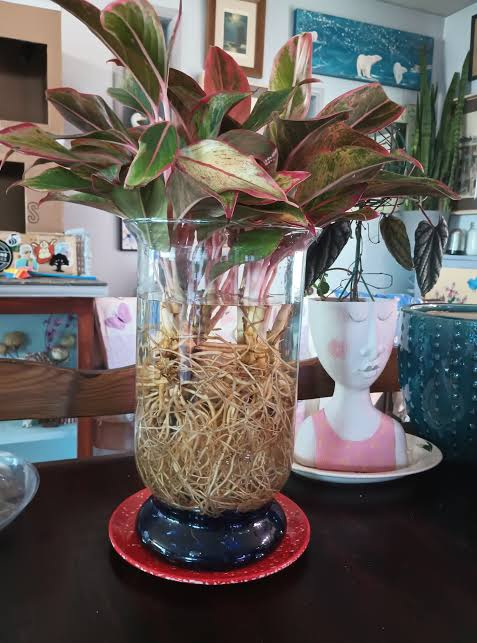
Chinese evergreen (Aglaonema) is the most tolerant of genuinely low light of any plant here, and it grows steadily in water where the trailing vines would stall. The thick stems support upright, patterned foliage in silver, cream, red, or pink.
Cut a stem section with two or three nodes, remove lower leaves, and submerge the bare portion. Rooting is slow: three to five weeks is normal, and the water needs changing weekly during that period.
Long-term water tolerance: good once rooted. Established stems live in water for a year or more, though growth is slow.
Light: low to medium indirect. Red cultivars need more light to keep their color.
Aglaonema stems are prone to soft rot if bruised during cutting, so use a clean, sharp blade. Toxic to cats and dogs.
9. Peace Lily
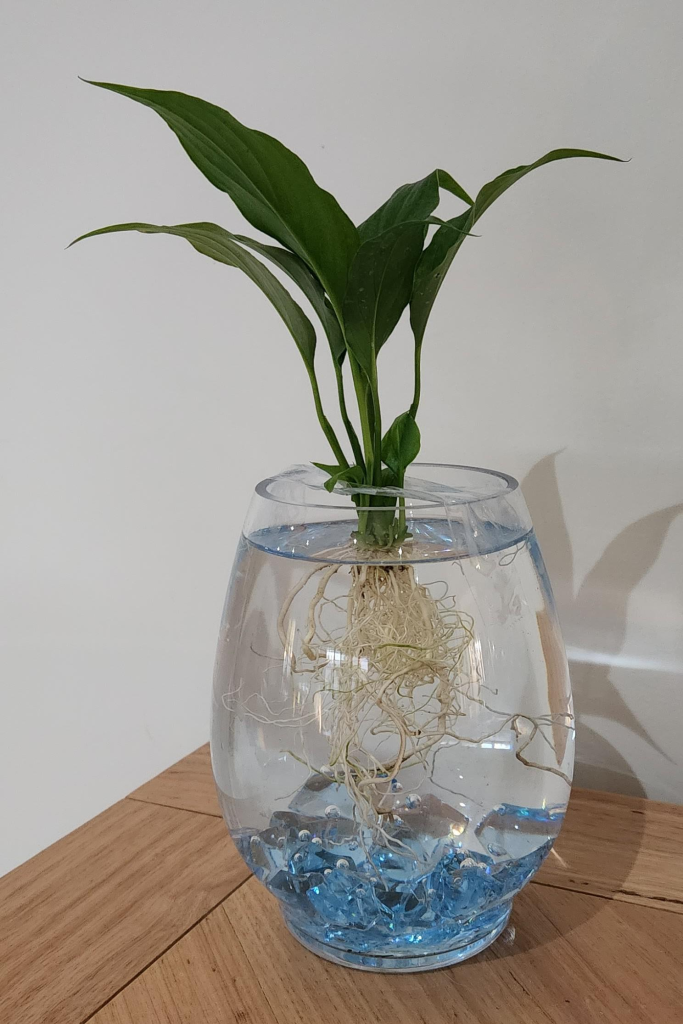
Peace lily is the classic vase plant in decorative water displays, and it works well short to medium term with an important restriction: only the roots go in the water, never the crown where the leaves meet the base. Submerge the crown and the plant rots within weeks.
Start with a soil-grown plant. Rinse every particle of potting mix off the roots under lukewarm water, then suspend the plant so the root mass sits in water and the crown stays dry. A vase with a narrow neck, or a lid with a hole, does this well.
Long-term water tolerance: moderate. Expect healthy foliage for several months to a year; flowering is uncommon in plain water.
Light: medium indirect.
Feed at quarter strength monthly. Toxic to pets.
10. Dracaena Marginata
Dracaena marginata brings height to water culture, which the trailing plants cannot: a rooted cane holds its spiky red-edged rosette 12 to 24 inches above the vessel. Cut a cane section 6 to 8 inches long, strip the bottom leaves, and stand it in 3 inches of water.
Rooting takes four to six weeks. The top of a cut cane will also sprout new growth points, so a single plant yields several.
Long-term water tolerance: good. Marginata is closely related to lucky bamboo and shares its tolerance for permanent water growth.
Light: bright indirect; it survives medium light with slower growth.
Sensitive to fluoride and salt buildup. Use filtered water and rinse the vessel thoroughly rather than just topping it off. Toxic to cats and dogs.
11. Dumb Cane
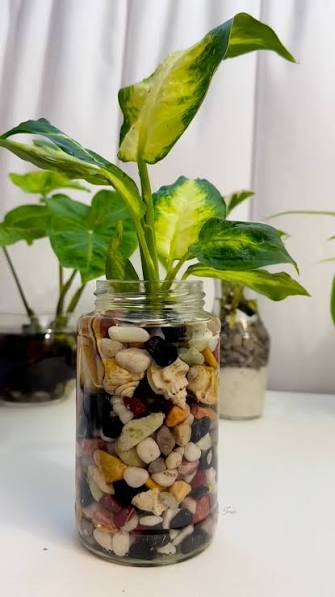
Dumb cane (Dieffenbachia) produces the largest leaves of any plant on this list that will stay in water, with broad cream-and-green blades on thick upright stems. Cut a 4- to 6-inch stem section, let the cut end dry for an hour to reduce sap seepage, then place it in water.
Roots take three to four weeks. Change the water every few days early on, since the sappy cut end clouds it fast.
Long-term water tolerance: moderate to good. Rooted stems hold for a year with regular feeding, then benefit from potting up.
Light: medium indirect. Direct sun bleaches the variegation.
The common name comes from the sap, which causes intense mouth and throat irritation. Keep it well out of reach of children and pets, and rinse your hands after cutting.
12. English Ivy
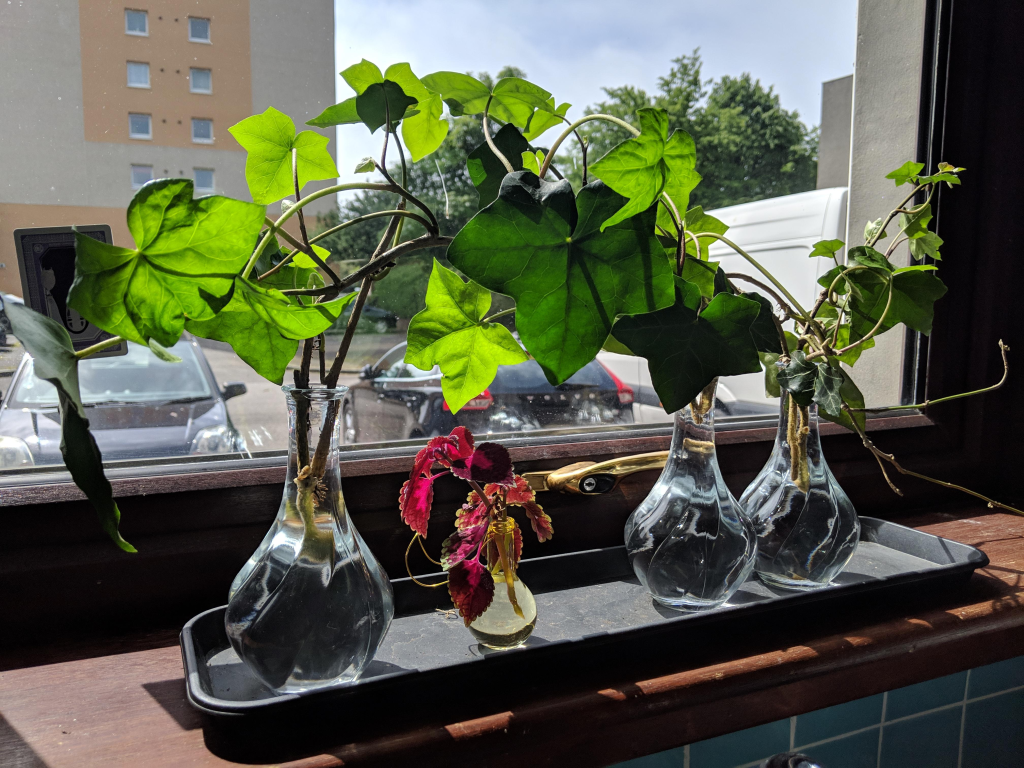
English ivy roots readily in water and makes an excellent trailing jar plant for a cool, bright spot. Take a 4- to 6-inch tip cutting, strip the lower leaves, and submerge the bare stem; roots appear in two to three weeks.
Light: bright indirect. Ivy is one of the few here that accepts a few hours of direct morning sun without scorching.
Long-term water tolerance: good for a year or more, with one specific weakness. Ivy attracts spider mites in dry indoor air, and a water-grown plant offers no soil to buffer the humidity. Rinse the foliage under the tap monthly as prevention.
The dense foliage also traps water in the jar’s neck, so choose a vessel with an opening you can reach into. English ivy is toxic to pets and mildly irritating to skin.
13. Coleus
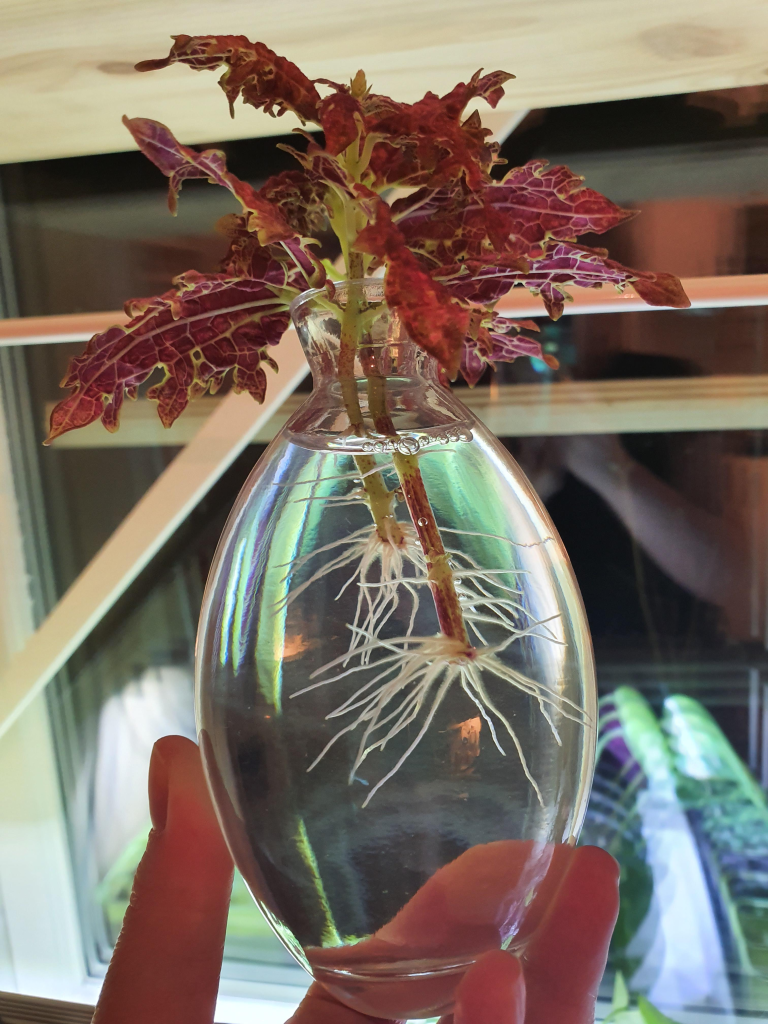
Coleus gives you the brightest color of anything that roots in water: chartreuse, burgundy, hot pink, and near-black cultivars, all from cuttings that root in under a week. Pinch a 4-inch tip, remove the lower pair of leaves, and set it in a jar.
Long-term water tolerance: limited. Coleus is a soft-stemmed annual, and after two to four months in plain water the stems get woody at the base and the plant flops. Treat it as a rotating display: pinch new tips every few weeks and start the cycle again.
Light: bright indirect to a couple of hours of direct sun. Color intensity depends directly on light.
Pinch off flower spikes as they form. Flowering triggers decline in coleus, and the buds appear faster on water-grown stems.
14. Rex Begonia
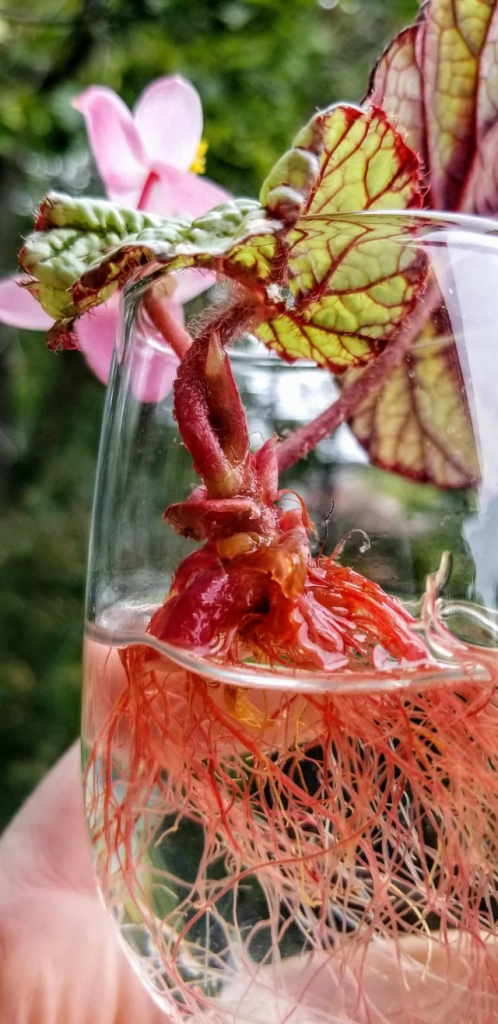
Rex begonia is the one plant here worth growing in water purely for the leaves: metallic silver, deep purple, and spiral patterns that no pothos can match. It roots from a leaf, not a stem. Cut a healthy leaf with an inch of petiole and set the petiole in water.
Long-term water tolerance: limited to moderate. The parent leaf holds for several months and produces tiny plantlets at the cut, but those plantlets need soil or a moist medium to develop into a full plant.
Light: bright indirect, never direct. Rex begonia leaves burn easily.
Humidity matters more than water volume here. Keep the jar away from heating vents, and avoid getting water on the leaf surface, which invites powdery mildew. Mildly toxic to pets.
15. Prayer Plant
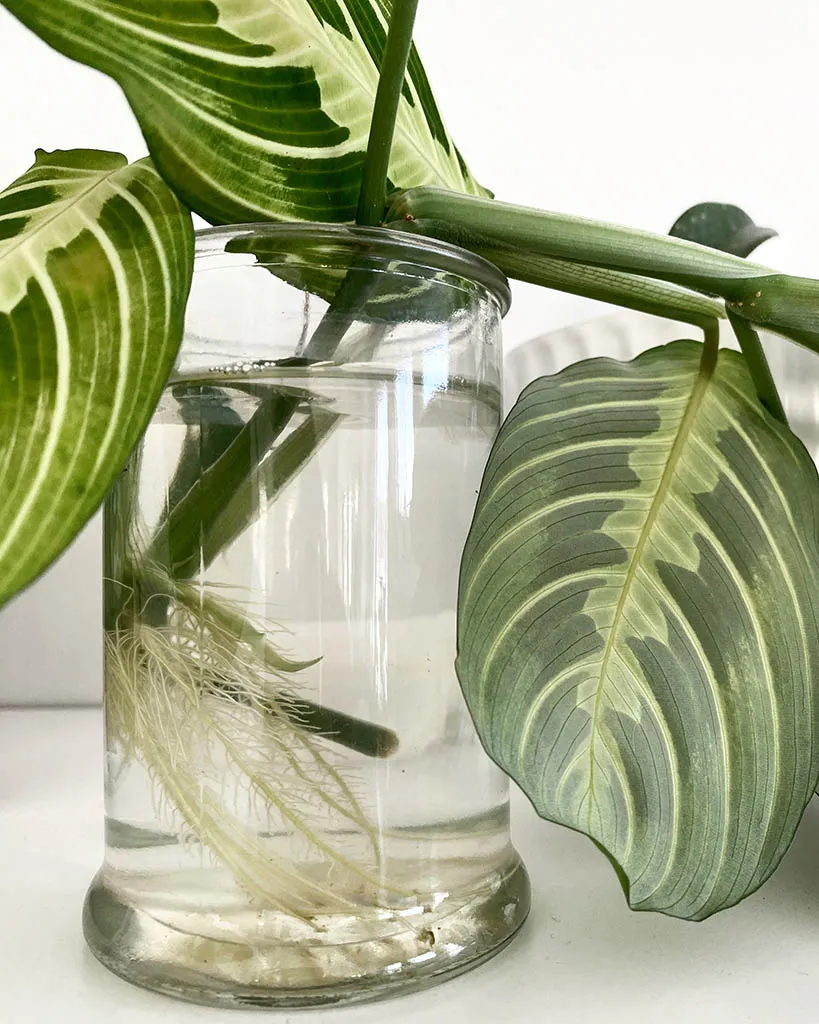
Prayer plant (Maranta leuconeura) roots in water and keeps its painted red-veined leaves for months, making it the most decorative of the conditional options. Cut just below a node on a stem with two or three leaves and submerge that node only.
Roots take two to three weeks, and they are fine and brittle, so handle the cutting as little as possible once they form.
Long-term water tolerance: moderate. Cuttings stay attractive for six months to a year, then decline as nutrient demand outpaces what diluted fertilizer supplies. Potting up before that point gives you a much fuller plant.
Light: medium indirect. Marantas fold their leaves upward at night; that movement continues in water and is a good sign of health.
Sensitive to tap water minerals. Non-toxic to cats and dogs.
16. Wandering Dude
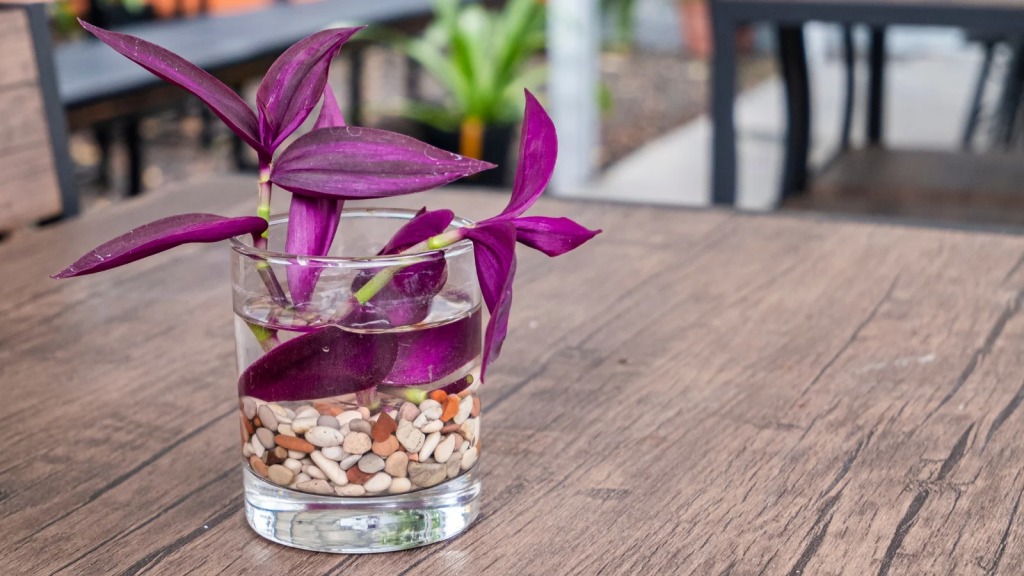
Wandering dude (Tradescantia fluminensis and T. pallida) is the toughest and fastest of the water-grown trailers, and it will root from a stem fragment you snapped off by accident. Green-and-white fluminensis and purple pallida both behave the same way in a jar.
Long-term water tolerance: good. Stems live indefinitely, though the oldest sections go bare from the base up after about six months. Cut the leafy tops off and re-root them in the same vessel to reset the plant.
Light: bright indirect. T. pallida needs the most light of any plant on this list to keep its purple; in medium light it turns green and floppy.
Growth is vigorous enough that you will be pruning monthly. The sap irritates skin on repeated handling.
Your How-to Guide
The whole system comes down to four habits: change the water on a schedule, keep only nodes and roots submerged, feed at a quarter of the label rate, and use a vessel you can reach into to clean.
Get those right and the plants below need attention twice a month.
| Plant | Long-term in water | Light | Start from | Pet safe |
|---|---|---|---|---|
| Golden Pothos | Excellent (years) | Bright indirect | Stem cutting | No |
| Heartleaf Philodendron | Excellent (years) | Low to bright indirect | Stem cutting | No |
| Spider Plant | Good (1+ year) | Bright indirect | Pup | Yes |
| Lucky Bamboo | Excellent (decade+) | Moderate indirect | Sold water-grown | No |
| Arrowhead Plant | Good to excellent | Medium to bright indirect | Stem cutting | No |
| Tradescantia Zebrina | Good, needs renewal | Bright indirect | Stem cutting | No |
| Monstera Adansonii | Moderate (6-12 mo) | Bright indirect | Node cutting | No |
| Chinese Evergreen | Good (1+ year) | Low to medium | Stem cutting | No |
| Peace Lily | Moderate (up to 1 yr) | Medium indirect | Washed root system | No |
| Dracaena Marginata | Good (years) | Bright indirect | Cane cutting | No |
| Dumb Cane | Moderate to good | Medium indirect | Stem cutting | No |
| English Ivy | Good (1+ year) | Bright, some direct | Tip cutting | No |
| Coleus | Limited (2-4 mo) | Bright to part sun | Tip cutting | No |
| Rex Begonia | Limited to moderate | Bright indirect | Leaf cutting | Mildly toxic |
| Prayer Plant | Moderate (6-12 mo) | Medium indirect | Node cutting | Yes |
| Wandering Dude | Good, needs renewal | Bright indirect | Stem cutting | No |
What Is the Difference Between a Cutting in Water and a Plant That Can Live There Long Term?
A cutting in water is living off stored energy in its stem and leaves while it builds roots. A long-term water plant has built a functioning root system adapted to being submerged, with thicker, more porous roots that absorb oxygen directly from the water.
The tell is new growth. A cutting that produces two or three new leaves after rooting has made the transition; one that roots and then stalls is burning through reserves. Pothos, philodendron, dracaena, and tradescantia make that shift reliably. Coleus and begonia usually do not.
How Often Should You Change the Water?
Change it completely every 7 to 14 days for established plants, and every 3 to 5 days for fresh cuttings that have not rooted yet. Topping off is not a substitute, since dissolved minerals and plant waste concentrate as water evaporates.
Rinse the roots gently under the tap while you are at it and scrub the inside of the vessel. Cloudy water, a film on the glass, or a sour smell means you have waited too long.
Let tap water stand uncovered overnight to off-gas chlorine. For spider plant, dracaena, and prayer plant, filtered water prevents the brown tips that fluoride causes.
Do Water-Grown Houseplants Need Fertilizer?
Yes, after the first month. Tap water contains trace minerals but almost no nitrogen, phosphorus, or potassium, so a plant left in plain water eventually produces smaller, paler leaves.
Use a balanced liquid houseplant fertilizer diluted to one quarter of the label rate, added at every second water change (roughly monthly). Full-strength fertilizer burns water roots and fuels algae.
Hydroponic nutrient solutions work well too and are formulated for exactly this, though standard houseplant food is easier to find and sufficient for foliage plants.
Which Container and Water Level Help Prevent Rot?
A narrow-necked vessel that supports the stem upright while holding the leaves clear of the waterline prevents most rot. Recycled bottles, bud vases, and mason jars all work; a jar with a wide mouth needs a few pebbles or a mesh lid to hold cuttings in place.
Fill so that roots and bare nodes are covered and every leaf petiole stays dry. For peace lily and other crown-forming plants, the base of the leaves must sit above the water.
Opaque or amber glass slows algae noticeably. Clear glass looks better and lets you watch the roots, so accept that you will be scrubbing it more often.
Before You Put a Plant in Water
Three things determine whether the switch works: how you handle the roots during the transition, whether the plant is safe in your household, and how quickly you recognize the early symptoms of trouble.
Can You Move a Soil-Grown Plant Directly Into Water?
You can, but soil roots and water roots are structurally different, and most plants lose some of the old roots in the process. Rinse the root ball under lukewarm running water until no particles remain, working the roots apart with your fingers. Any soil left behind will rot and cloud the water.
Trim off mushy or brown roots with clean scissors. Expect a few weeks of stalled growth and possibly a yellowed lower leaf while new water roots form.
A cutting avoids all of this, which is why cuttings are the better starting point for pothos, philodendron, and tradescantia. Reserve the wash-and-transfer method for plants you cannot propagate from a stem, like peace lily and spider plant clumps.
Which Water-Grown Houseplants Are Toxic to Pets?
Most of this list is toxic to cats and dogs. Philodendron, pothos, monstera, arrowhead, dumb cane, peace lily, Chinese evergreen, dracaena, lucky bamboo, English ivy, and tradescantia all contain irritating compounds, mainly insoluble calcium oxalate crystals that cause mouth pain, drooling, and vomiting.
Spider plant and prayer plant are the safe choices here. Rex begonia is mildly toxic.
An open jar of water is also an invitation for a cat to drink from, and fertilizer in that water is a second hazard. If you have a determined chewer, put water-grown plants on a high shelf or stick to spider plant and maranta.
What Are the Signs of Root Rot, Algae, and Nutrient Deficiency?
Root rot shows as brown, mushy, translucent roots and a sour smell. It is caused by a submerged stem or leaf decomposing, or by water left unchanged too long. Cut every soft root back to firm white tissue, rinse the stem, sterilize the vessel, and refill with fresh water.
Algae is green film on the glass or a green tint to the water, caused by light hitting nutrient-rich water. It is unsightly rather than harmful. Move the jar out of direct sun, scrub with a bottle brush, and switch to darker glass if it recurs.
Nutrient deficiency appears as uniformly pale or yellowing lower leaves and new growth noticeably smaller than the old. Start quarter-strength fertilizer monthly. If new leaves are still shrinking after two months of feeding, that plant has reached its limit in water and should be potted in soil.