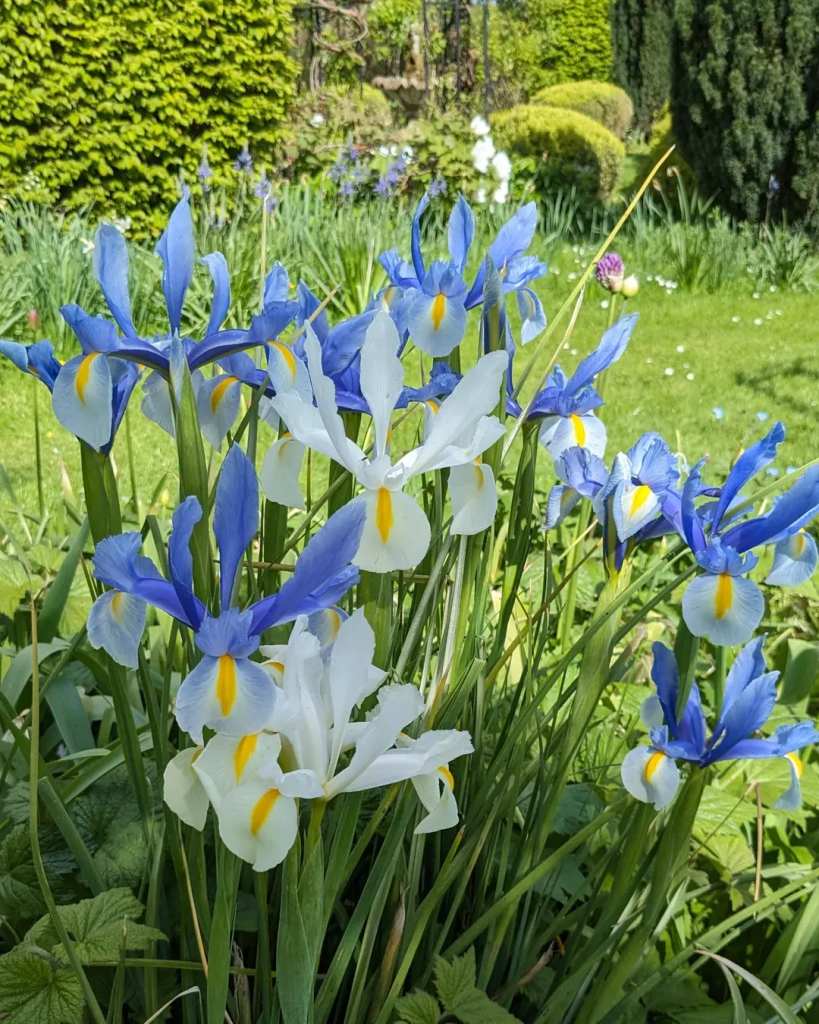
Irises are showstoppers, no argument there. 🌸 Those ruffled, jewel-colored blooms on tall elegant stems are one of the great joys of late spring. But they do have one little flaw.
They bloom hard for just two or three weeks, and then the show is over, leaving those sword-shaped leaves standing around doing not very much for the rest of the season.
That is exactly where good companions come in. The right neighbors stretch the color out for months, quietly hide those tired iris leaves once the flowers fade, and share the same easy-going love of sun and good drainage. 🌿
Below are more than fifteen of the best, sorted by the job they do. But first, one rule that matters more than any plant on the list.
The one golden rule: do not smother the rhizome.
Bearded iris grows from a fat root called a rhizome that sits right at the soil surface, and it needs to bake in the sun to form next year’s flowers. Cover it, shade it or crowd it, and you get lots of leaves and no blooms, plus a real risk of rot. So keep companions from leaning over the crown, and give it airflow. As a rough guide, keep low, non-spreading plants and bulbs 8 to 12 inches away, mid-height perennials 12 to 18 inches back, and big bushy plants like peonies a good two feet off. Get that spacing right and everything below will thrive together.
Plant these for a big late-spring show
These all flower at roughly the same time as your iris, so you get one glorious, coordinated burst of color.
1. Peonies. The classic pairing, and for good reason. Peonies bloom alongside iris with lush, fragrant, romantic flowers and handsome dark foliage that fills the border beautifully. They are slow to establish but live for decades, so plant them once and enjoy them for a lifetime. Just give them room, around two feet from the iris, so they do not crowd the crown.

2. Oriental Poppies. These bloom right with the iris in a deep, clear red, which happens to be the one color bearded iris cannot give you. Tall, showy and easy, they are a perfect partner. They die back in summer, so tuck a later perennial in front to cover the gap they leave.
3. Alliums. If you only add one companion, make it these. Those sculptural purple globes bloom at iris time, pollinators adore them, and best of all they grow from a bulb that clears its own space and never shades the rhizome. They tick every box.
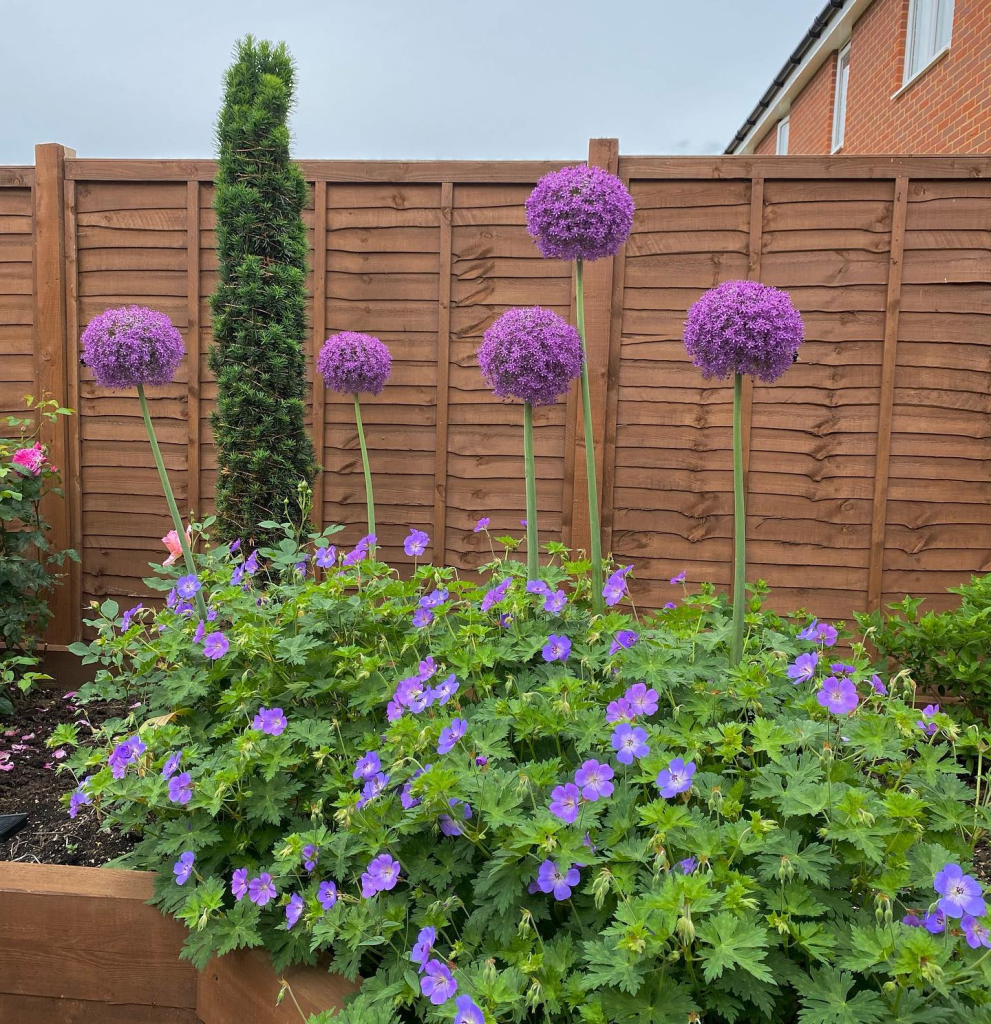
4. Salvia. Perennial salvia sends up spikes of purple and blue that echo so many iris shades, and it flowers for a long stretch while pulling in a parade of bees. The upright spiky shape is a lovely contrast to the iris blooms.
5. Catmint (Nepeta). A soft, sprawling cloud of lavender-blue that spills gently around the base of taller iris and softens the whole planting. It shares the same love of sun and sharp drainage, flowers for ages, and the pollinators cannot get enough of it.
6. Columbine. Dainty, nodding spring flowers on airy stems, in just about every color combination going. Its delicate, open habit contrasts nicely with the bold iris and never crowds it.
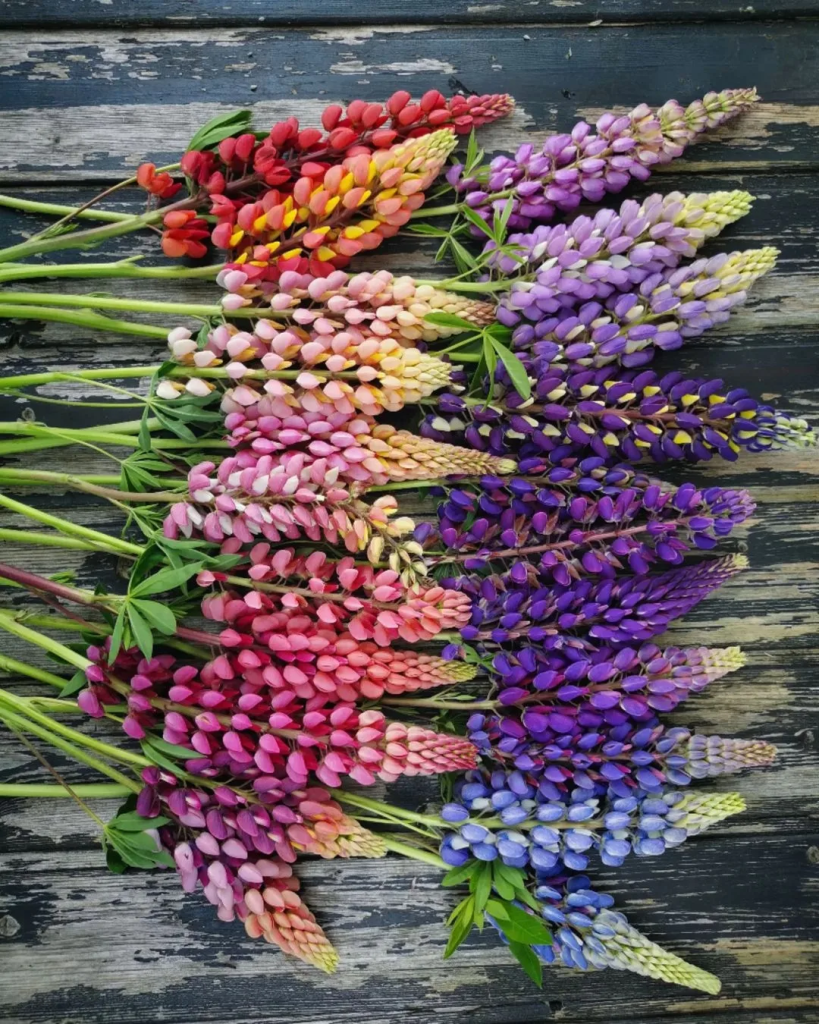
7. Lupines. Tall, colorful flower spikes that give your iris bed a lovely cottage-garden, wildflower feel. They bloom in spring in both warm and cool shades and add real vertical drama.
Plant these to carry the color after the iris fades
This is the clever bit. These bloom later, so they take over the show just as the iris finishes, and their foliage helps disguise those tiring iris leaves.
8. Daylilies. One of the best partners going. Their strappy foliage echoes the iris leaves and helps fill the border, they are tough and drought tolerant once settled, and some even rebloom. Plant them close enough to hide fading iris foliage, but not so dense that they compete.
9. Coneflowers (Echinacea). These take the baton into summer with weeks of pink, purple and white daisy blooms, and they love the same sunny, well-drained spot. Leave the seed heads up in fall and the finches will thank you all winter.
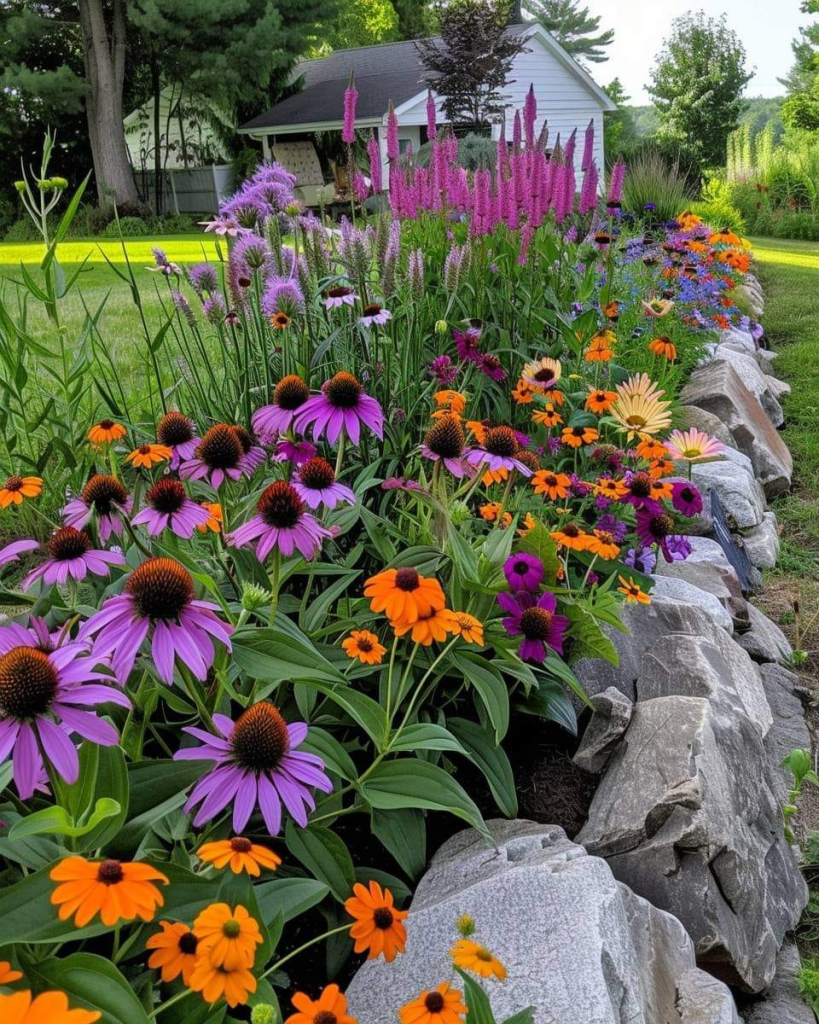
10. Black-Eyed Susans (Rudbeckia). Cheerful golden daisies with dark centers that bloom long into late summer and fall, keeping the color going for months after the iris bows out. Tough, reliable and pure sunshine.
11. Coreopsis. A haze of small yellow or pink flowers that just does not quit all summer. It is drought tolerant, easy, and a brilliant way to keep the bed lively once spring is over.
12. Blanket Flower (Gaillardia). Fiery red-and-gold daisy blooms that thrive in hot, dry, sunny spots, exactly the conditions iris enjoys. It flowers for an incredibly long stretch with almost no fuss.
13. Tall Garden Phlox. Big, fragrant flower heads in pink, white and purple that bring height and scent to the summer border. Keep it a couple of feet back from the iris so its bushy growth never leans over the rhizomes.
Low fillers and edging for the front of the bed
These airy, low growers are perfect right near the base of your iris, softening the edges without ever smothering the crown.
14. Creeping Thyme. A low, fragrant, chartreuse-green mat that suppresses weeds, takes light foot traffic, and sets off the iris foliage without distracting from the flowers. It loves the same dry, well-drained soil, and deer tend to leave it alone.
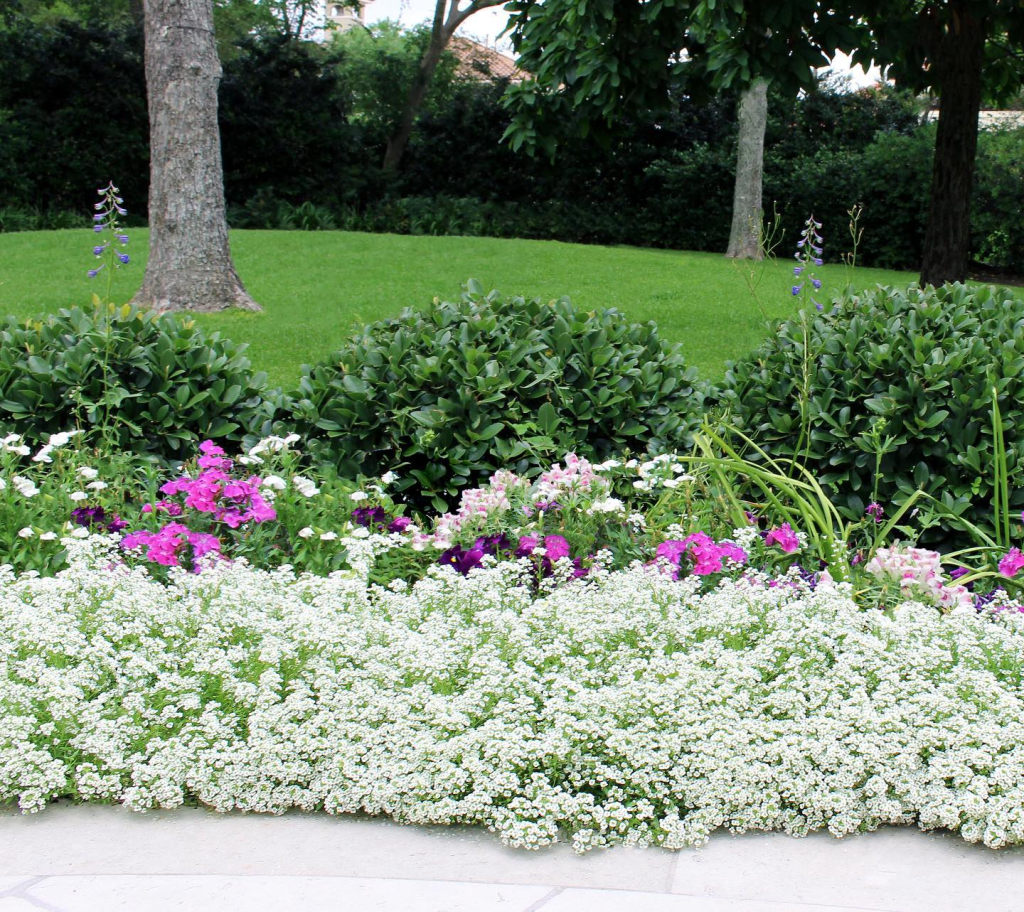
15. Sweet Alyssum. A delicate carpet of tiny, honey-scented flowers that softens the base of the planting and draws in beneficial insects. It flowers for months and asks for very little.
16. Dianthus (Pinks). Neat little mounds topped with fragrant, frilly pink and white flowers, ideal for edging. They adore the same sharp drainage and sunshine as iris.
17. Lamb’s Ear. Grown for its soft, silvery, felted leaves, which are a gorgeous foil for iris flowers of every color. It is drought tolerant and adds a lovely cool-toned contrast at ground level.
18. Coral Bells (Heuchera). All about the foliage, in shades of amber, lime, plum and near-black, so it earns its keep even when nothing is in bloom. It fills the gaps around iris with color that lasts all season.
Bonus: bulbs for color before the iris
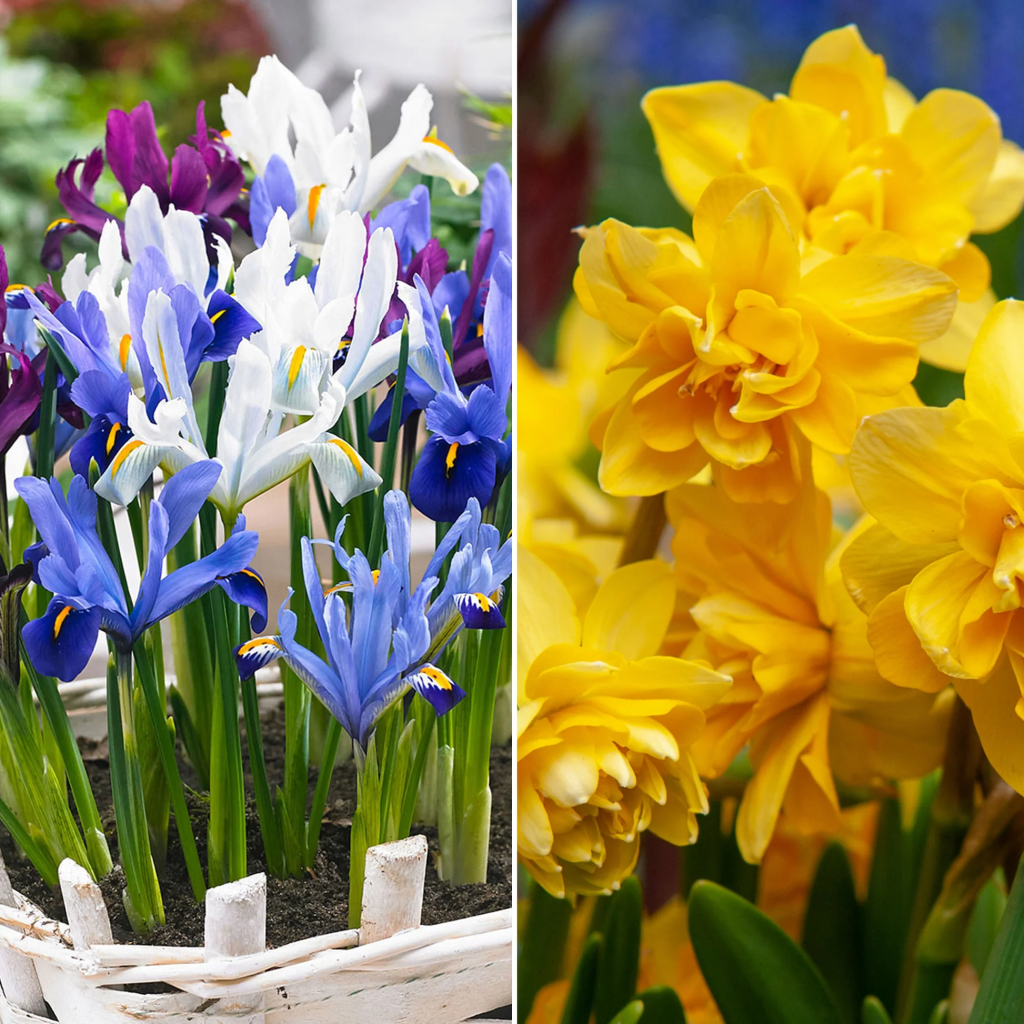
Want to extend the season at the other end too? Plant a few spring bulbs nearby for early color that finishes just as the iris gets going. Daffodils, late tulips, hyacinths and the airy blue spires of camassia all work beautifully.
Keep them a hand’s width from the rhizomes, since they clear their own space and fade away before they can crowd anything.
A few plants to keep well away from your iris
Just as important as what to plant is what not to. Steer clear of these near your iris, or you will fight them all season.
- Aggressive spreaders and running groundcovers like mint, periwinkle (vinca), English ivy and pachysandra. They form dense mats that creep right over the rhizome and smother it, exactly the thing your iris cannot tolerate.
- Thirsty, moisture-loving plants like hostas and astilbe. They need constantly damp soil, while your bearded iris wants to stay on the dry side, so someone always ends up unhappy.
- Tall, dense shrubs such as large junipers or viburnums. They cast too much shade and their roots compete hard, and remember, an iris in shade is an iris that will not bloom.
Go build a bed that blooms for months
With the right supporting cast, your iris stops being a two-week wonder and becomes the star of a border that stays colorful from the first spring bulbs right through to the last fall daisy. Start simple.
A clump of iris, some alliums to bloom alongside, and a few daylilies or coneflowers to take over afterward is a foolproof combination.
Give the rhizomes their sunshine, keep the crowders at arm’s length, and let the rest fill in around them.
Your iris bed will reward you for years. Happy planting, and enjoy the show. 🌸