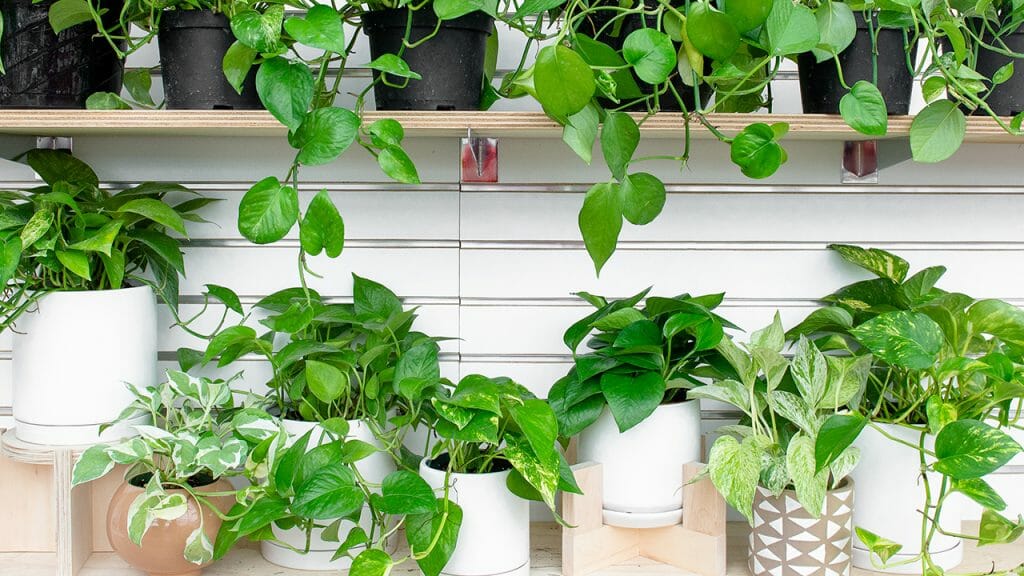
Philodendron ‘Royal Queen’ and Purple Heart are the easiest dark-leaved plants to grow in water, because both root readily from cuttings and keep their deep color indoors when you give them bright, filtered light. Coleus ‘Black Prince’ and ‘Blackie’ sweet potato vine root just as fast. They need far more light than most windowsills offer.
🖤 The truth about “black” leaves
Few houseplants are pure black. Most of these range from near-black to deep purple, burgundy, or very dark green, and the color depends heavily on light. There’s also a big gap between a cutting that roots in a jar and a plant that lives in water for years. Long-term water growing needs regular fresh water, a diluted fertilizer, and sometimes an air pump.
⭐ Quick picks
- Best overall: Philodendron ‘Royal Queen’ for steady, long-term jar growing.
- Fastest rooting: Purple Heart for quick results in a sunny window.
- Darkest leaves: Coleus ‘Black Prince’ or ‘Blackie’ sweet potato vine in strong light.
- For experienced growers: Alocasia ‘Black Velvet’ or Jewel Orchid as projects.

Philodendron ‘Royal Queen’
This is the most dependable choice on the list. Philodendrons are among the classic water-culture plants, and ‘Royal Queen’ adds glossy, oxblood-burgundy leaves that darken to near-black as they mature. New leaves unfurl a brighter red-copper, so expect a two-tone look on an actively growing plant.
To start one, cut a stem section with at least one node and an aerial root. Then:
- Strip any leaf that would sit underwater.
- Set the node in a glass jar or bud vase so it stays submerged.
- Keep the jar in bright, indirect light, a few feet from an east or west window.
Roots usually appear within a few weeks. Once they’re several inches long, start feeding with a diluted liquid fertilizer, because plain tap water won’t sustain leaf production for long. A self-heading ‘Royal Queen’ gets broad and heavy, so a wide-mouthed vase or a weighted container keeps it from tipping.
Pet caution: philodendrons contain calcium oxalate crystals, which irritate the mouth and throat of cats and dogs. Keep the jar off low shelves.
Coleus ‘Black Prince’
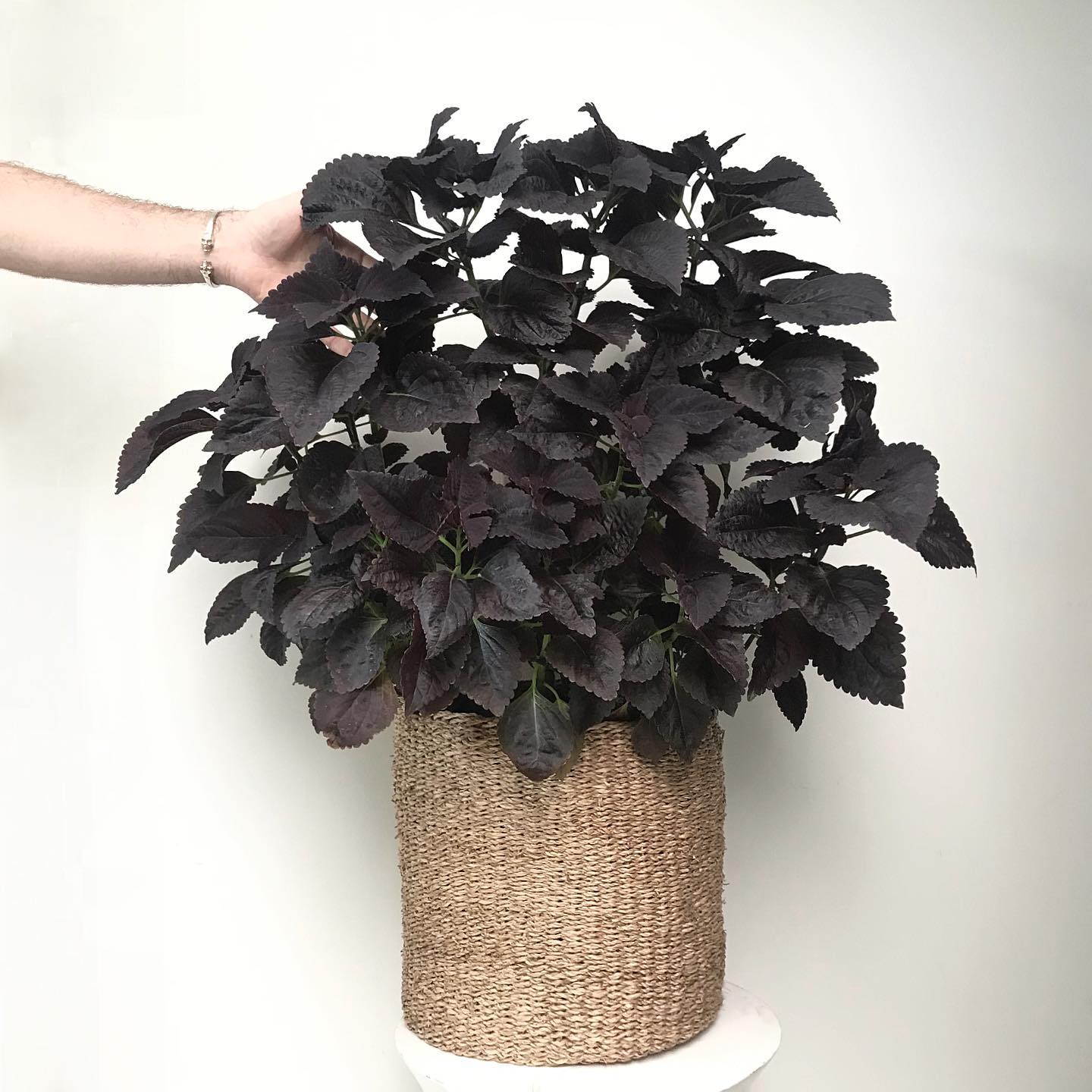
‘Black Prince’ gives you some of the inkiest foliage you can buy cheaply, with velvety purple-black leaves that look almost charred in strong light. Coleus stems root fast in water, often showing white root tips within one to two weeks.
Light decides whether this plant stays dark. Indoors, it wants your sunniest spot (a south or west window) or a grow light running 12 to 14 hours a day. In dim rooms, stems stretch, the gaps between leaves widen, and the color muddies toward dark green or brown.
Practical tips from growing coleus in jars:
- Take 4- to 6-inch tip cuttings just below a leaf pair.
- Pinch flower spikes as soon as they appear to keep leaves coming.
- Pinch the growing tip every few weeks for a bushier shape.
Treat a jar of ‘Black Prince’ as a renewable display. Plants get leggy over a winter, so many growers root fresh tip cuttings every few months and compost the tired parent.
Pet caution: coleus is toxic to cats and dogs and causes vomiting and drooling if chewed.
Ornamental Sweet Potato Vine ‘Blackie’
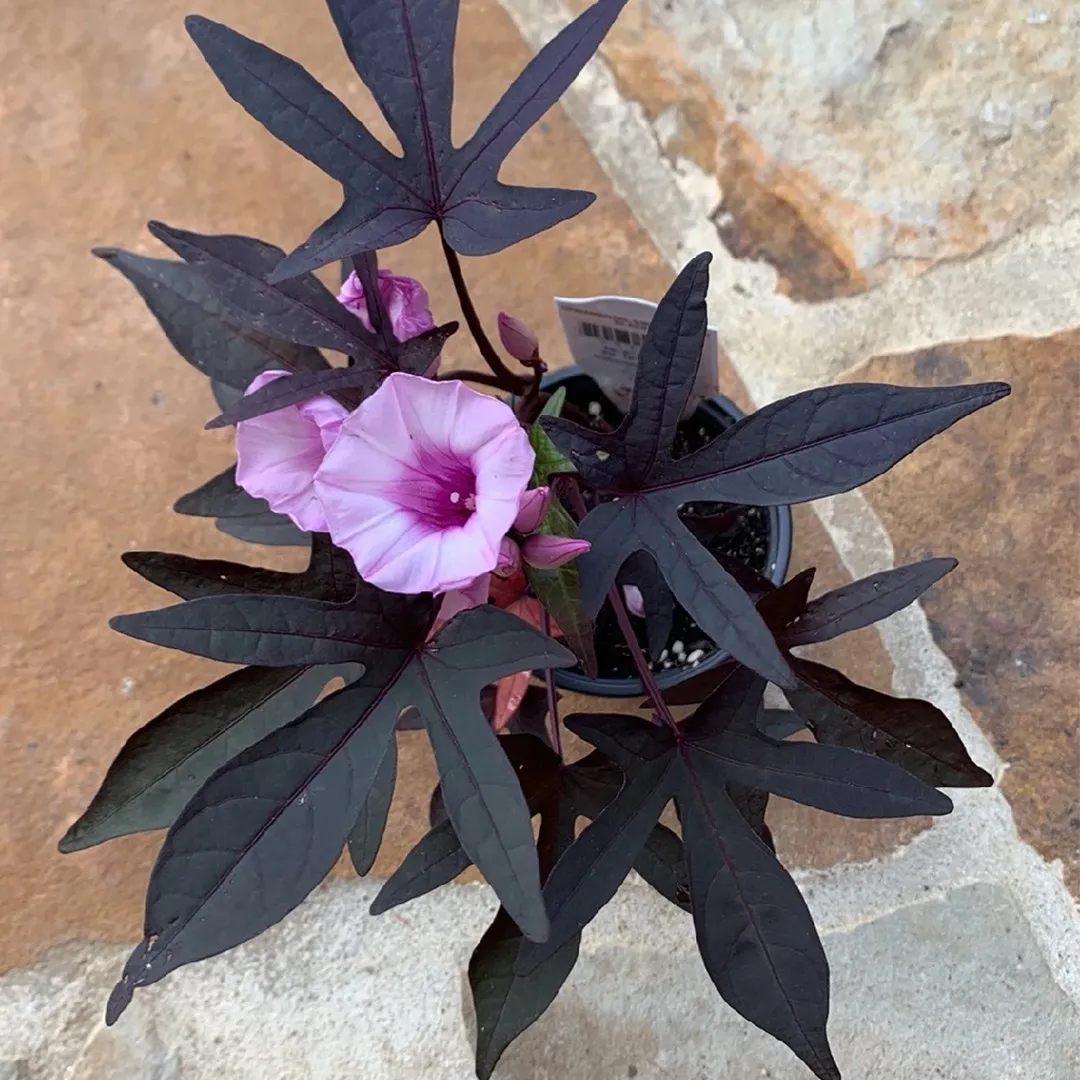
‘Blackie’ is a fast, trailing vine with deeply lobed, maple-shaped leaves in purple-black. Stem cuttings root eagerly in water, and you can also sprout a tuber by suspending it half-submerged with toothpicks.
It’s an outdoor annual at heart, and indoors it is light-hungry. Without direct sun or a strong grow light, new leaves come in smaller, thinner, and noticeably greener. Expect a winter windowsill display to slow down and stretch.
How to get the most from it:
- Root 6-inch cuttings with two or three nodes underwater.
- Change water weekly, since vigorous vines foul it quickly.
- Feed lightly once roots fill the bottom of the jar.
- Trim trailing stems hard to keep it compact.
If you sprout a tuber, keep only the bottom third in water; a fully submerged tuber rots. Ornamental sweet potato varieties are bred for foliage, so don’t eat the tubers.
Purple Heart
Tradescantia pallida ‘Purpurea’
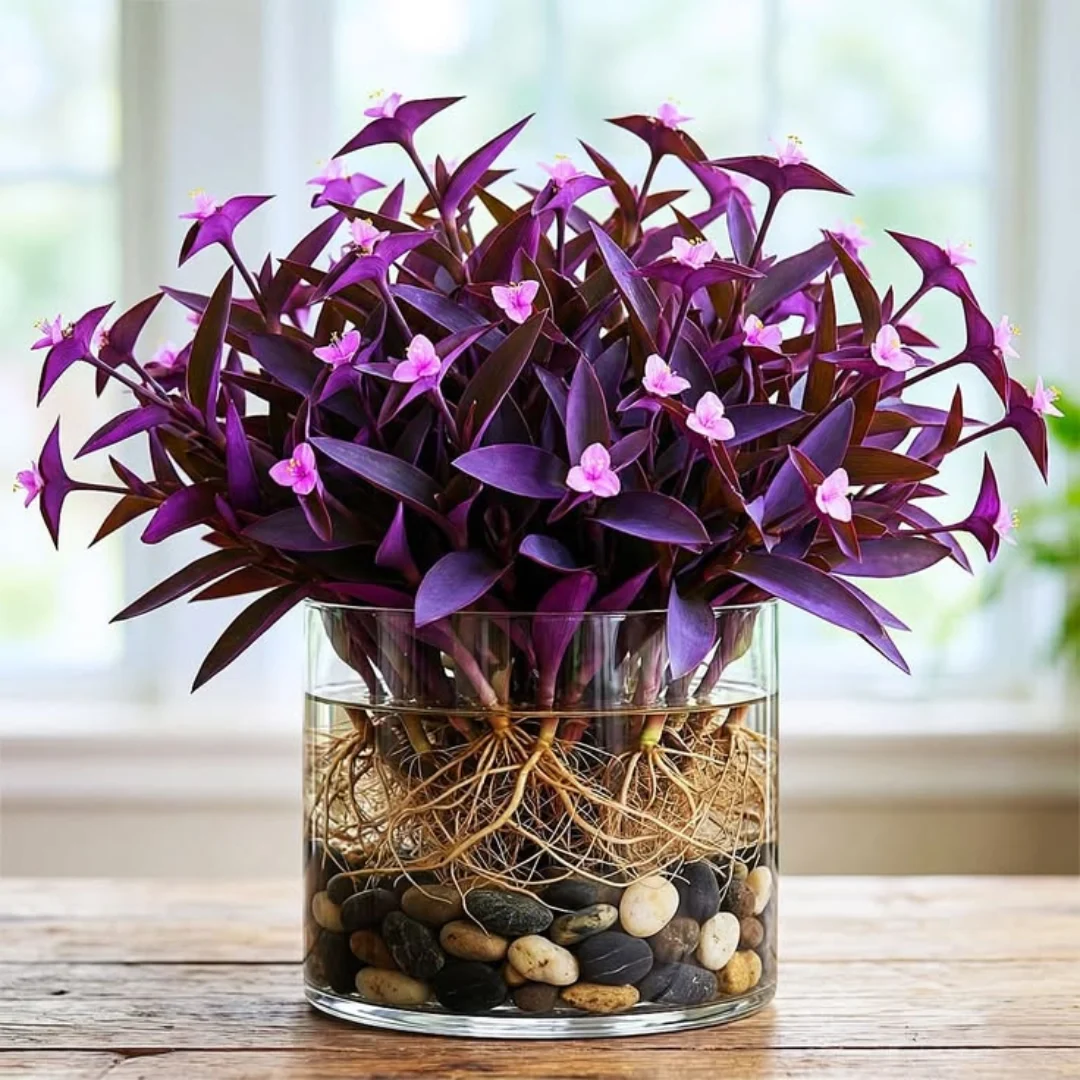
Purple Heart roots almost as quickly as you can cut it, which makes it the most forgiving dark plant for beginners. The long, pointed leaves are deep violet-purple with a faint frosty sheen, and the plant produces small pink flowers in good light.
Color here is about as light-sensitive as it gets. In full sun, leaves turn rich purple; in medium light, they fade toward green-tinged purple and the stems sprawl. A south-facing window works well.
Getting started:
- Cut 4- to 5-inch stem tips and remove the lower leaves.
- Bundle several cuttings in one jar for a fuller look.
- Expect visible roots in about a week in warm conditions.
Stems are brittle and snap easily, so handle the jar gently during water changes. Over time, older stems lose their lower leaves; restart the display from fresh tips once or twice a year.
Pet caution: the sap can cause skin irritation in people and pets, so wear gloves if you have sensitive skin and keep cats away from it.
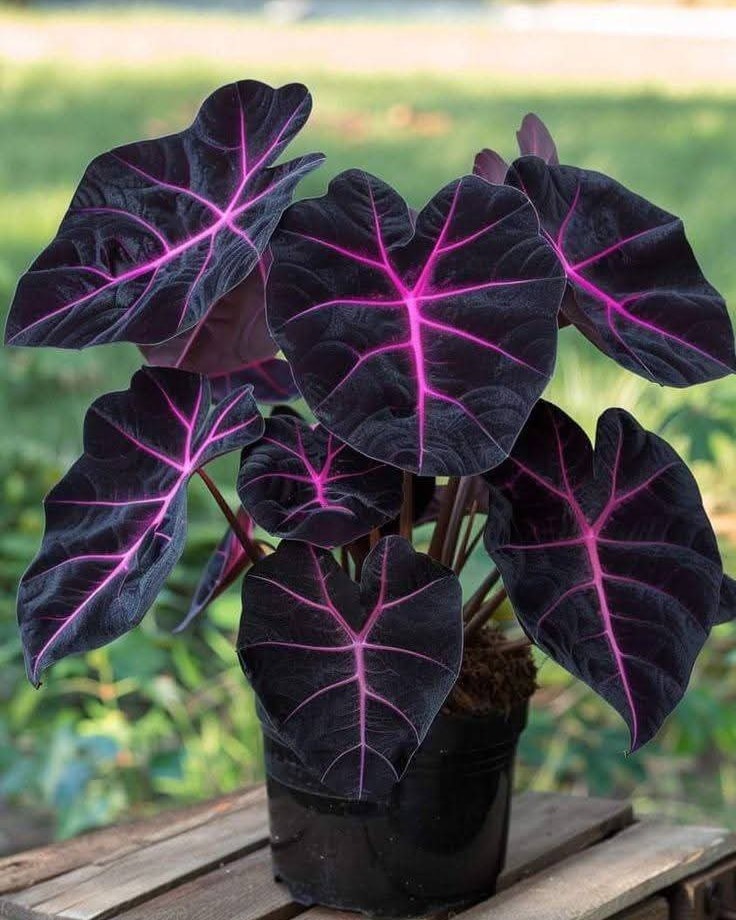
Alocasia ‘Black Velvet’
‘Black Velvet’ is a compact jewel alocasia with thick, near-black, velvety leaves and bold silver veins. It’s one of the most striking plants here and one of the least forgiving in water.
Alocasias grow from a corm (a swollen underground stem), and a corm sitting in water rots fast. If you want to try it:
- Wash all soil off the roots and trim anything soft or dark.
- Suspend the plant so only the roots touch the water and the corm stays dry.
- Use a clear pot filled with LECA clay pebbles and a hydroponic nutrient solution, which gives roots more air than a plain jar.
- Keep temperatures above 65°F and humidity high.
Expect some leaf loss during the transition while the plant swaps soil roots for water roots. Growth is slow, often one leaf at a time, so judge success over months.
Pet caution: alocasias contain calcium oxalate crystals and are toxic to cats and dogs.
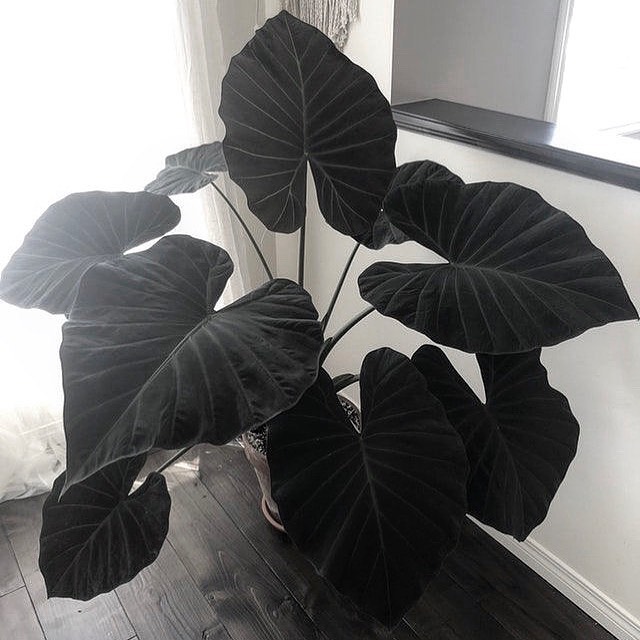
Elephant Ear ‘Black Magic’
Colocasia esculenta
‘Black Magic’ brings huge, dusky purple-black leaves on dark stems, and unlike most plants here, it’s a true wetland plant. Colocasia grows at pond edges and handles constantly wet roots far better than its cousin alocasia.
The challenge is size and light. Outdoors, plants reach several feet tall. Indoors, you need:
- Direct sun or a powerful grow light, or leaves fade to dark green.
- A large, heavy container, such as a glass cylinder or ceramic cachepot.
- Regular feeding, because big leaves need plenty of nutrients.
Keep the top of the tuber or corm just above the waterline. Expect older leaves to yellow and die back as new ones arrive; that’s normal turnover. In low winter light, growth slows sharply, and some plants go semi-dormant.
Pet caution: all parts contain calcium oxalate and are toxic to pets.
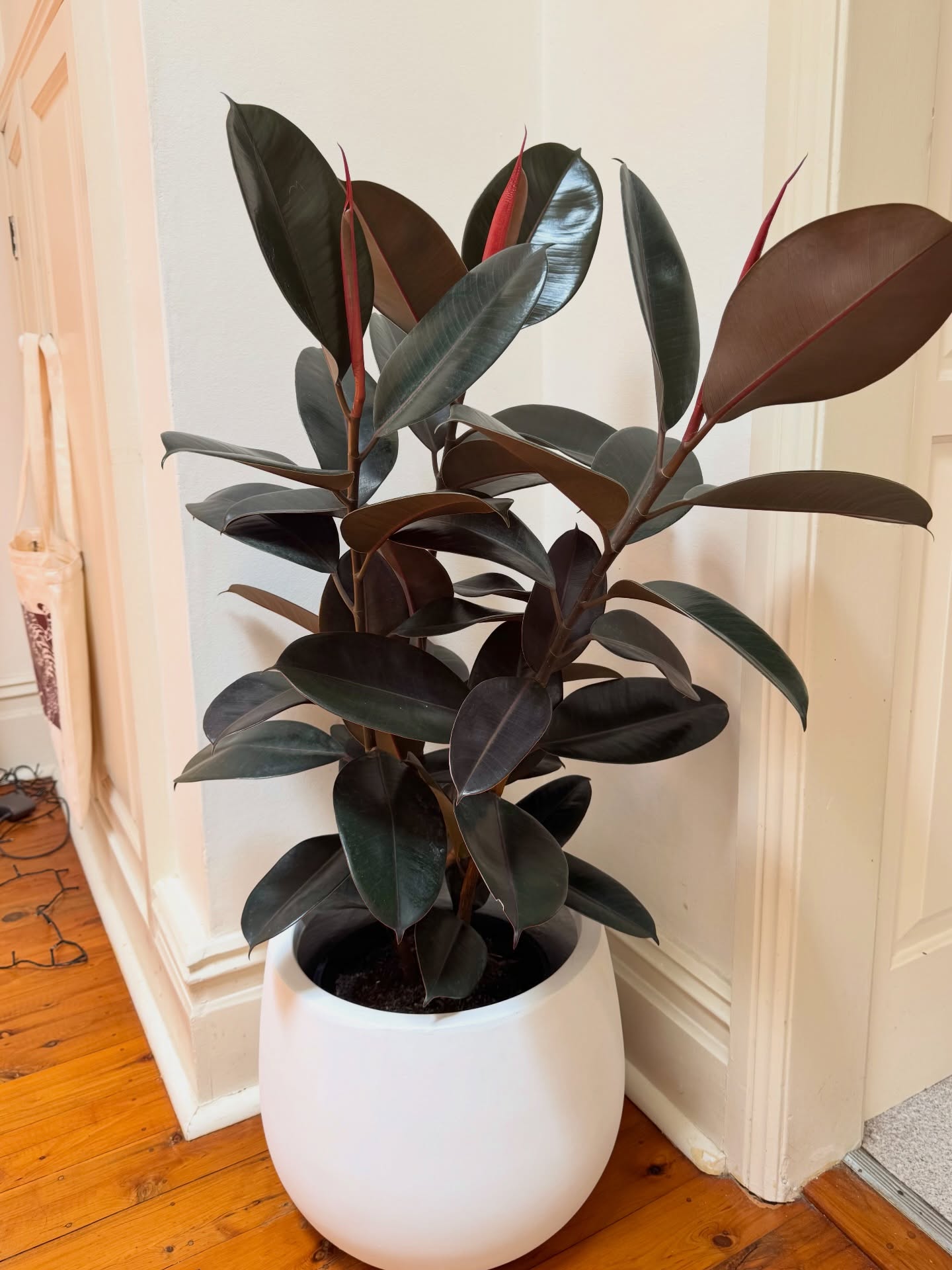
Rubber Plant ‘Burgundy’
Ficus elastica
‘Burgundy’ has thick, leathery leaves in deep wine to near-black, with red-sheathed new growth. It’s a beautiful plant, but in water it’s a conditional choice.
Cuttings do root in water, slowly, often taking a month or more. Seal the cut end first: fresh cuts ooze milky latex, so rinse the stem and let it sit for an hour before placing it in the jar. A cutting with two or three leaves balances well in a narrow vase.
What to expect long-term:
- Growth in water is slower than in soil.
- The plant needs consistent fertilizer to keep producing leaves.
- Large plants become top-heavy and better suited to a pot.
Many growers root a ‘Burgundy’ cutting in water, enjoy it for a season, then move it to soil once it outgrows the vase.
Pet caution: the sap irritates skin and is toxic to pets if chewed.
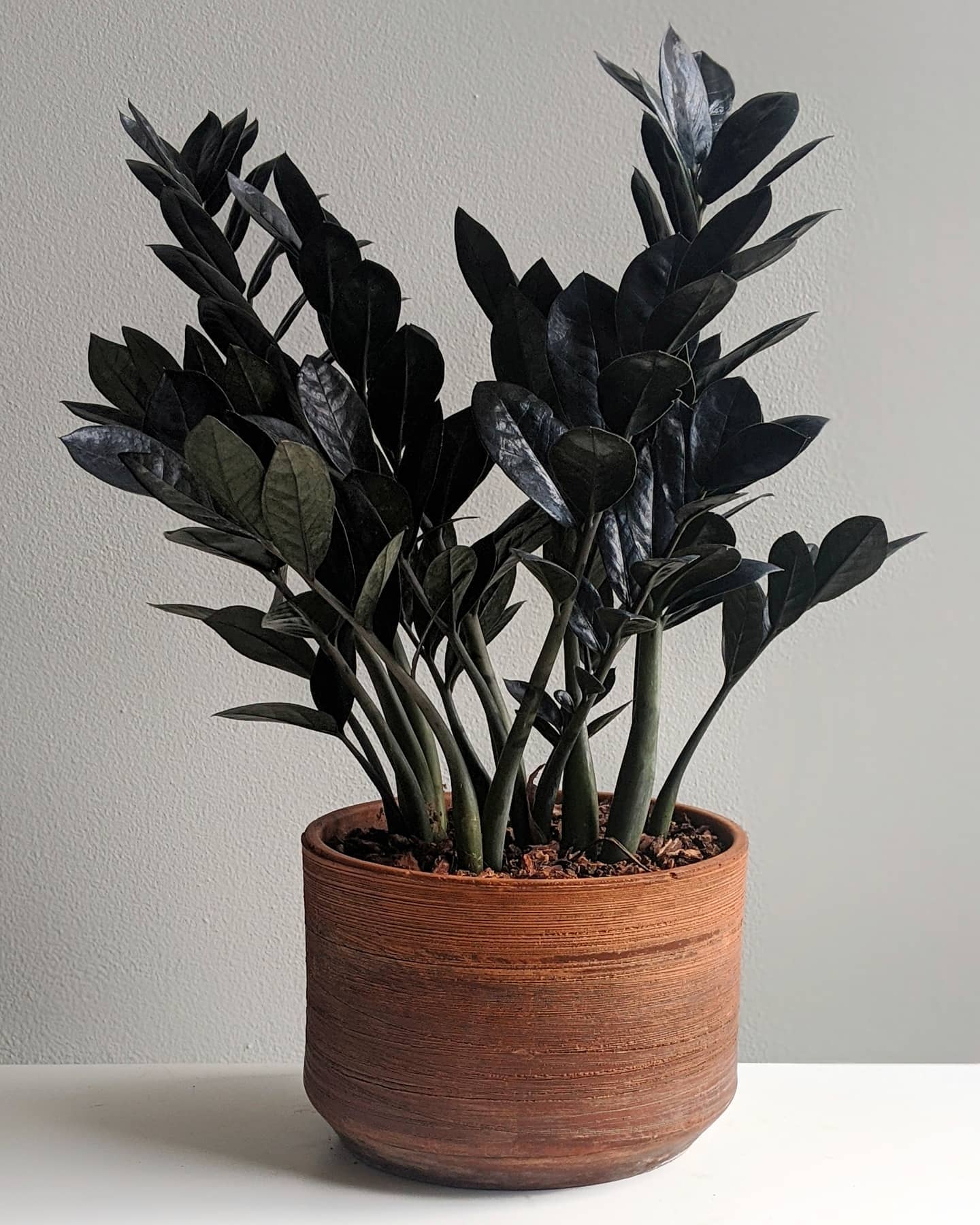
Raven ZZ Plant
Zamioculcas zamiifolia ‘Dowon’
Raven ZZ has glossy leaflets that emerge bright lime green and mature to a deep purple-black over several weeks. It’s one of the darkest plants available, and one of the slowest in water.
ZZ plants store water in thick underground rhizomes, which makes them drought-adapted and rot-prone when wet. Treat water growing as an experiment:
- Root a single leaflet or stem in water and expect a long wait before a new rhizome forms, often several months.
- If you move an established plant, keep the rhizomes fully above water and submerge only the roots.
- Change water often and discard any soft, smelly tissue immediately.
Leaflets and stems root more reliably than whole plants transfer. Don’t expect new upright stems quickly; a rooted cutting may take a long time to send up its first one.
Pet caution: ZZ plants contain calcium oxalate and are toxic to cats and dogs.
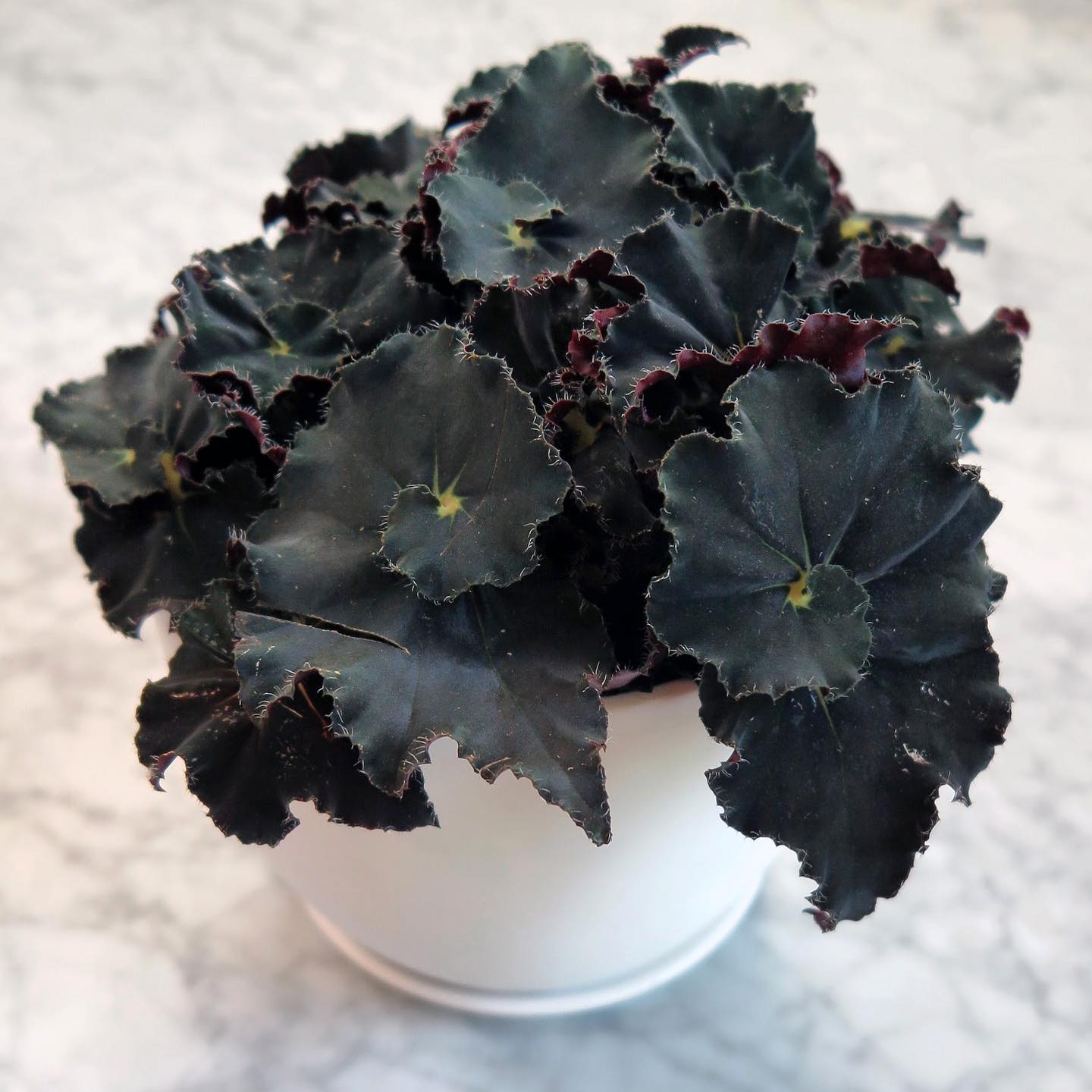
Begonia ‘Black Mamba’
‘Black Mamba’ is a rhizomatous begonia with deep chocolate to near-black leaves that have a slightly metallic sheen. Begonia leaf and stem cuttings root in water, but long-term water life is unpredictable.
The thick rhizome and fleshy stems rot easily if submerged. Try it this way:
- Take a stem cutting with a short section of rhizome or a healthy leaf with an inch of petiole (leaf stalk).
- Keep only the cut end in water and the rhizome out of it.
- Use bright, indirect light; direct sun scorches the leaves.
Once roots appear, you have a choice. Leave it in water with weak fertilizer and watch for soft stems, or move it into a fluffy potting mix for steadier growth. Begonias also like humidity, so a cluster of jars or a cabinet helps.
Pet caution: begonias are toxic to cats and dogs, with the highest concentration in the underground parts.
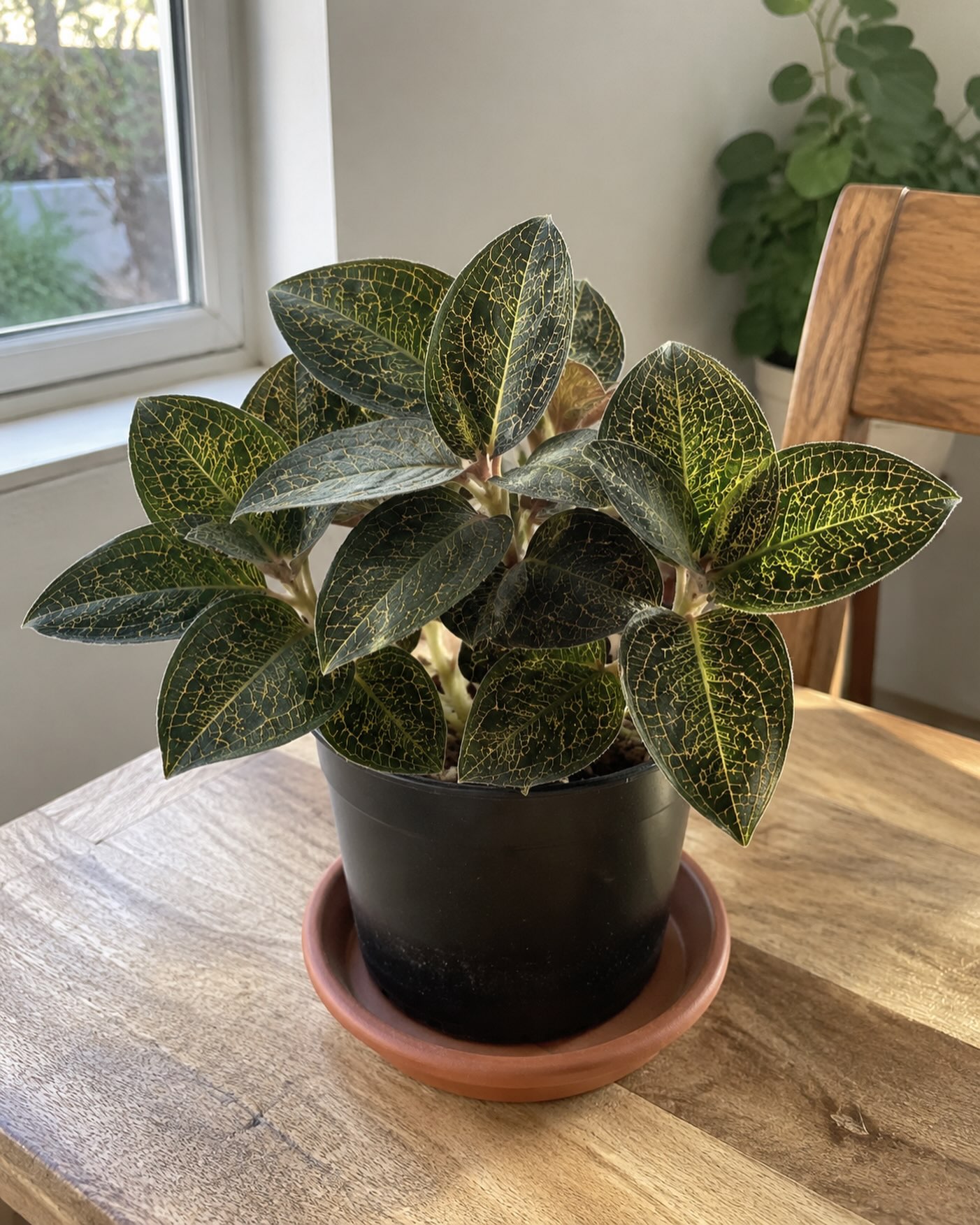
Jewel Orchid
Ludisia discolor
Jewel orchid leaves are velvety and deep maroon-black, lined with fine pinkish veins that catch the light. Unlike most orchids, it’s a terrestrial plant with creeping, succulent-like stems that root fairly readily.
Stem sections root in water within a few weeks. Long-term life in plain water is less certain, so treat this as an experiment.
- Cut stem segments with two or three nodes.
- Lay them so the nodes touch water but the upper stem and leaves stay dry.
- Give medium, indirect light; strong sun bleaches the leaves.
- Use a very weak fertilizer, since orchids are sensitive to salt buildup.
Many growers root jewel orchid cuttings in water and then move them to moss or a loose orchid mix. You’ll get spikes of small white flowers in winter on a healthy plant, which is a nice bonus on a plant grown for its leaves.
Start with your light and your patience, then pick for color. The table below compares all ten plants on the points that decide success in a jar.
| Plant | Water-growing difficulty | True leaf color | Light needed | Pet-safe? |
|---|---|---|---|---|
| Philodendron ‘Royal Queen’ | Easy | Burgundy-black | Bright indirect | No |
| Coleus ‘Black Prince’ | Easy rooting | Purple-black | Direct sun | No |
| Sweet Potato Vine ‘Blackie’ | Easy rooting | Purple-black | Direct sun | Use caution |
| Purple Heart | Easy | Deep violet | Direct sun | Irritant |
| Alocasia ‘Black Velvet’ | Hard | Near-black | Bright indirect | No |
| Colocasia ‘Black Magic’ | Moderate | Purple-black | Direct sun | No |
| Rubber Plant ‘Burgundy’ | Moderate, slow | Wine-black | Bright indirect | No |
| Raven ZZ | Hard, slow | Purple-black | Medium to bright | No |
| Begonia ‘Black Mamba’ | Experimental | Chocolate-black | Bright indirect | No |
| Jewel Orchid | Moderate | Maroon-black | Medium indirect | Low risk |
Which Plants Suit Simple Water Displays, and Which Need Hydroponic Equipment?
Water growing comes in three levels:
- Temporary propagation. You root a cutting in a jar, then pot it. Every plant here can do this to some degree.
- Nutrient-fed water culture. The plant lives in a vase long-term with regular water changes and diluted fertilizer. Philodendron, Purple Heart, and colocasia handle this best.
- Aerated hydroponics. The roots sit in a nutrient solution with an air pump or in LECA that holds pockets of air. Alocasia and Raven ZZ do better here than in a plain jar.
If you want a vase on a shelf with minimal fuss, stick with the first group. Coleus and sweet potato vine fit too, as long as you’re willing to refresh them from cuttings.
Are the Leaves Truly Black or Deep Purple, Burgundy, and Green?
No houseplant on this list has pure black leaves. What reads as black is a heavy load of anthocyanin pigments layered over green chlorophyll, which produces deep purple, burgundy, or chocolate tones that look black from across a room.
New growth often starts lighter. Raven ZZ emerges green, ‘Royal Queen’ starts copper-red, and both darken over weeks. Judge a plant by its mature leaves.
How Much Light Can Your Indoor Space Provide?
Light is the single biggest factor in keeping dark leaves dark. Plants that produce heavy purple pigment in sun lose it fast in shade.
- South or west window with direct sun: coleus, sweet potato vine, Purple Heart, colocasia.
- Bright indirect light near an east window: philodendron, rubber plant, alocasia, begonia.
- Medium light: jewel orchid and, more slowly, Raven ZZ.
If your brightest spot is a north window, a full-spectrum LED grow light on a timer opens up the sun-loving group.
Healthy water-grown plants come from a clean start, the right waterline, and steady feeding. Most failures trace back to rot at the stem base or nutrient starvation after the first few months.
Should You Start With a Cutting or Transfer an Established Plant?
Start with a cutting whenever you can. A cutting grows new water roots from scratch, and water roots are thinner and better adapted to absorbing oxygen from water than soil roots.
Transferring an established plant works for philodendron, colocasia, and sometimes alocasia, but it’s messier:
- Wash every bit of soil off the roots under lukewarm water.
- Cut away damaged, brown, or mushy roots with clean scissors.
- Expect the old soil roots to die back as new white roots form.
Some leaf drop during the switch is normal. Wait a few weeks before judging the plant.
Which Parts of the Plant Should Stay Above Water?
Only roots and the nodes that grow them belong underwater. Leaves, crowns, corms, tubers, and rhizomes should stay dry.
- Nodes: submerge them; they produce roots.
- Leaves: remove any that would sit underwater, since they rot and cloud the water.
- Corms, tubers, and rhizomes: suspend them above the waterline with a narrow-necked vase, a mesh insert, or a layer of LECA.
As roots grow, lower the water slightly so the top inch of root system has air.
How Often Should You Refresh the Water and Add Nutrients?
Change the water every one to two weeks, and sooner if it clouds or smells. Rinse the jar each time to remove slime.
Plain water carries almost no nutrients. A cutting runs on stored energy for its first weeks, but after that it needs feeding:
- Use a liquid houseplant or hydroponic fertilizer at one-quarter to one-half strength.
- Add it with each water change during spring and summer.
- Cut back or pause in winter when growth slows.
Rinse the roots and refill with plain water once a month to flush out salt buildup, which shows up as white crust on the glass.
When Is Aeration Necessary?
Aeration helps when roots fill the container or when you’re growing rot-prone plants. Still water holds less oxygen as it warms and as roots crowd it.
Consider a small aquarium air pump with an airstone, or switch to LECA in a clear pot, for:
- Alocasia ‘Black Velvet’ and Raven ZZ.
- Any plant whose roots have filled more than half the jar.
- Rooms that stay above about 80°F in summer.
For a single philodendron or Purple Heart cutting, regular water changes provide enough oxygen.
Most water-culture problems show up first in the roots or the water itself. Check both every time you change the water.
Why Are the Roots Turning Brown or Mushy?
Healthy water roots are white to cream, firm, and fuzzy at the tips. Brown, slimy, foul-smelling roots mean root rot, usually caused by low oxygen, warm stagnant water, or a submerged crown or rhizome.
To rescue the plant:
- Remove it and rinse the roots thoroughly.
- Cut every soft or dark root back to firm tissue with sterilized scissors.
- Wash the container with hot, soapy water.
- Refill with fresh water and set the plant higher so the crown stays dry.
If the stem itself is soft at the base, take a new cutting from healthy tissue above the damage.
What Causes Algae and Cloudy Water?
Green film on glass is algae, fed by light and nutrients. Cloudy water usually means bacteria growing on decaying leaves or roots.
Fix algae by moving the jar out of direct sun, switching to tinted or opaque glass, or wrapping the lower half of a clear vase. For cloudiness, remove any submerged leaves, trim dead roots, and change the water more often.
Why Are Dark Leaves Fading or Turning Green?
Fading color almost always means too little light. Coleus, sweet potato vine, Purple Heart, and colocasia lose their dark pigment first; new leaves come in greener and the stems stretch.
Move the plant closer to a bright window or add a grow light. Already-faded leaves rarely darken again, but new growth will. Pale, yellowish leaves with small new growth point to nutrient shortage instead, so start or increase diluted feeding.
When Should You Move a Plant Out of Water?
Pot a plant up when it stalls despite good light and feeding, when it outgrows its container, or when rot keeps returning.
Rubber plant, begonia, Raven ZZ, and jewel orchid often do better long-term in soil or a chunky mix once rooted. Make the switch gradually: plant into a moist, airy mix and keep it evenly damp for the first few weeks, since water roots dry out faster than soil roots. Then ease into a normal watering schedule.