Here is the single most useful thing you will ever learn about houseplants. 💧
Watering “once a week” is why so many plants die. A fern and a cactus could not want more different things, so one schedule can never suit them both.
The secret is to stop watering by the calendar and start checking the soil. Every plant has a point of dryness it likes to reach before its next drink, and your job is simply to learn where that line sits.
Get this one idea right and you will kill far fewer plants, because overwatering, not underwatering, is what finishes off most houseplants. 🌿
The whole trick in one line.
Match the plant to how dry it likes to get, then check the soil with your finger before every water.
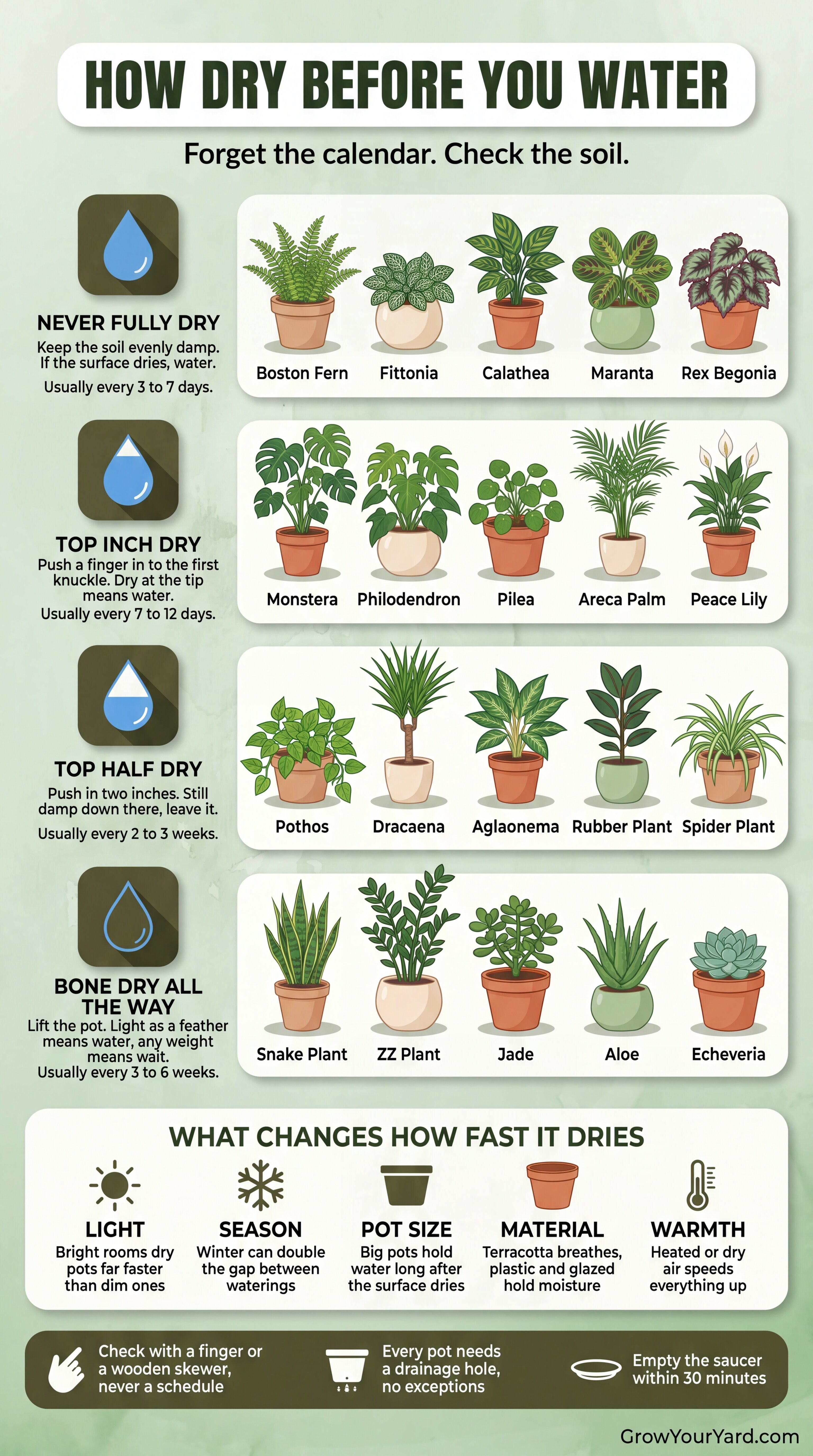
Below are the four groups almost every houseplant falls into. Find yours, learn its test, and you are basically done.
1. Never fully dryUsually every 3 to 7 days
The test: keep the soil evenly damp. The moment the surface dries out, it’s time to water.
These are the thirsty, jungle-floor types. In the wild they grow in constantly moist leaf litter, so they never want to dry out completely.
They are the drama queens of the plant world, wilting fast when thirsty, but they are telling you something real. Keep them damp, never waterlogged, and never let them crisp up.
2. Top inch dryUsually every 7 to 12 days
The test: push a finger in to the first knuckle. If it feels dry at the tip, water. If it’s still damp, wait.
This is the biggest and most forgiving group, home to most of the popular leafy houseplants everyone loves.
The finger test is all you need here, and it quickly becomes second nature. The peace lily even helps you out by dramatically drooping when it’s thirsty, then springing back within hours of a drink.
3. Top half dryUsually every 2 to 3 weeks
The test: push a finger in about two inches. If it’s still damp down there, leave it a few more days.
These tougher, more relaxed plants like to dry out a good way down before their next drink. They store a little water and shrug off the odd missed watering.
This is where people most often overwater, because the surface looks dry while the soil below is still wet. Always check deeper before you reach for the can.
4. Bone dry all the wayUsually every 3 to 6 weeks
The test: lift the pot. Light as a feather means water. Any real weight means wait.
The desert survivors. Succulents and their tough cousins store water in their leaves, stems or roots, so they want to dry out completely between drinks.
The pot-lifting trick is brilliant here. A dry pot is noticeably lighter than a freshly watered one, and once you’ve felt the difference a couple of times you’ll never need to guess. With these, when in doubt, don’t water.
Those timings are a guide, not a rule, because your home decides the actual pace. The same plant can drink twice as often in one spot as another. Five things move the dial.
☀️ Light
Bright rooms dry pots out far faster than dim ones. A plant on a sunny sill will want water noticeably more often than the same plant in a shady corner.
❄️ Season
Winter can double the gap between waterings. Plants rest and drink far less in the cold, darker months, so always ease off through winter.
🪴 Pot size
Big pots hold water long after the surface dries. A large pot has a reservoir of damp soil underneath, so check deep before watering.
🏺 Material
Terracotta breathes and wicks moisture away, drying out faster. Plastic and glazed pots hold moisture for much longer, so water those less often.
🌡️ Warmth
Heated or dry air speeds everything up. A warm room, or air near a radiator, pulls moisture from the soil quickly, so expect to water more.
The three golden rules
- Check, never schedule. Test with a finger or a wooden skewer every time, rather than watering on a fixed day.
- Every pot needs a drainage hole. No exceptions. Without one, water pools at the bottom and quietly rots the roots.
- Empty the saucer within 30 minutes. A pot left standing in water stays soggy, which is the fastest route to root rot.
Your watering questions, answered
How do I actually check the soil?
Push a clean finger straight into the soil to the depth your plant’s group needs, one inch, two inches, and so on. For deep pots, a long wooden skewer works like a dipstick: push it in, pull it out, and damp soil clings to it while dry soil comes out clean.
What does overwatering look like?
Confusingly, a lot like underwatering. Yellowing leaves, drooping, and soft, mushy stems often mean too much water, not too little. If the soil is wet and the plant looks sad, hold off, don’t water more.
Should I water a little and often, or a lot less often?
A lot, less often, for almost every plant here. When you do water, soak it thoroughly until water runs out the drainage holes, then let it reach the right dryness again before the next drink. Frequent little splashes leave the lower roots dry.
Do I really need to change my watering in winter?
Yes, and it’s the mistake that catches people out most. Plants grow slowly or rest in winter and need far less water, so keep checking the soil and you’ll naturally water less often through the cold months.
Put the calendar away
That is genuinely the whole secret. No app, no rigid routine, no guesswork. Just match your plant to its group and check the soil before you pour.
Do that, and you’ll water with confidence instead of crossing your fingers, and your plants will be healthier for it.
Go give one a quick finger test right now and see where it’s really at. Happy growing. 🌿