
There’s a moment every spring when a flowering tree in full bloom stops you in your tracks. That explosion of blossom – pink, white, deep magenta – against a blue sky is genuinely stunning. 🌸
A well-chosen flowering tree does something special to a garden. It gives you that “wow” moment for a few glorious weeks, then settles into a handsome backdrop for the rest of the year. Some bring autumn colour too, or interesting bark in winter, so you’re not just waiting around for next spring’s show.
The trick is picking the right one. Size matters (a lot – that cute little tree at the garden centre might be 10 metres tall in a decade), and so does your soil, your climate, and how much sun the spot gets. Get those things right, and you’ll have a tree that thrives without much fuss. Get them wrong and you’ll be battling problems for years.
This guide covers a good range of flowering trees – from popular favourites like magnolias and cherries to some lesser-known options worth considering. We’ll also help you figure out which one actually suits your space. 🌳
Let’s get into it.
1. Eastern Redbud
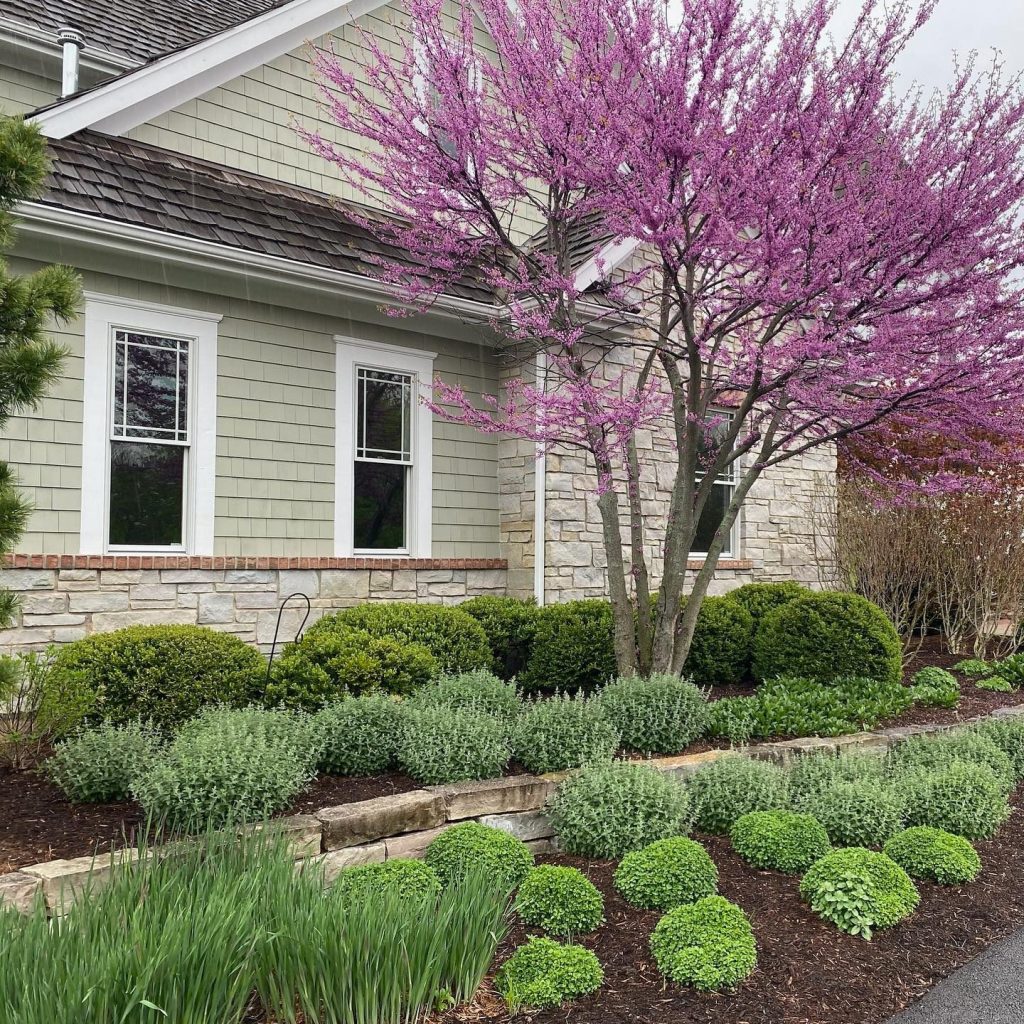
The Eastern Redbud brings stunning pink-purple flowers to your yard each spring. This native tree blooms directly on its branches and trunk, creating a unique display before most other trees wake up.
You’ll love how adaptable this tree is to different conditions. It grows well in full sun or partial shade and handles various soil types. The tree stays small and manageable, making it perfect for most yards.
Heart-shaped leaves appear after the flowers fade, adding nice texture throughout summer. Your Eastern Redbud can handle cold winters and hot summers with ease.
2. Cherry Blossom
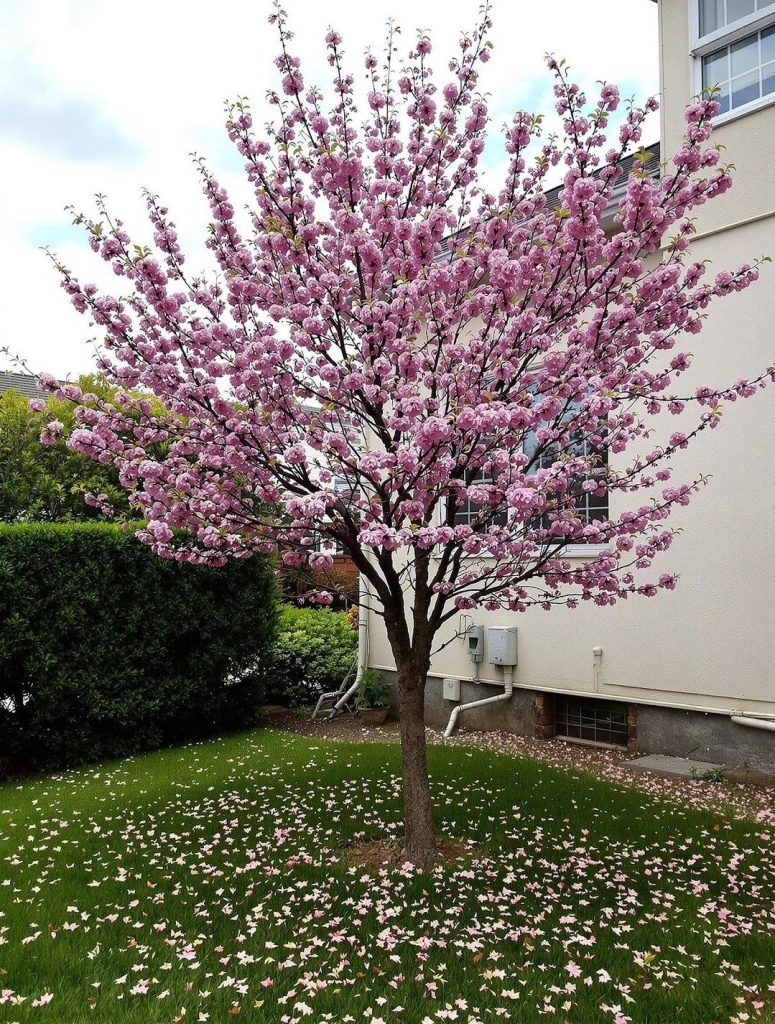
Cherry blossom trees bring stunning pink or white flowers to your yard each spring. These ornamental trees are easy to care for and need minimal maintenance once planted.
You’ll enjoy three seasons of beauty from these deciduous trees. They bloom before their leaves appear, creating a spectacular display.
Most cherry blossoms prefer full sun and grow well in various climates. The trees stay relatively small, making them perfect for smaller yards. Their fragrant blooms typically last a few weeks before falling like confetti.
3. Magnolia
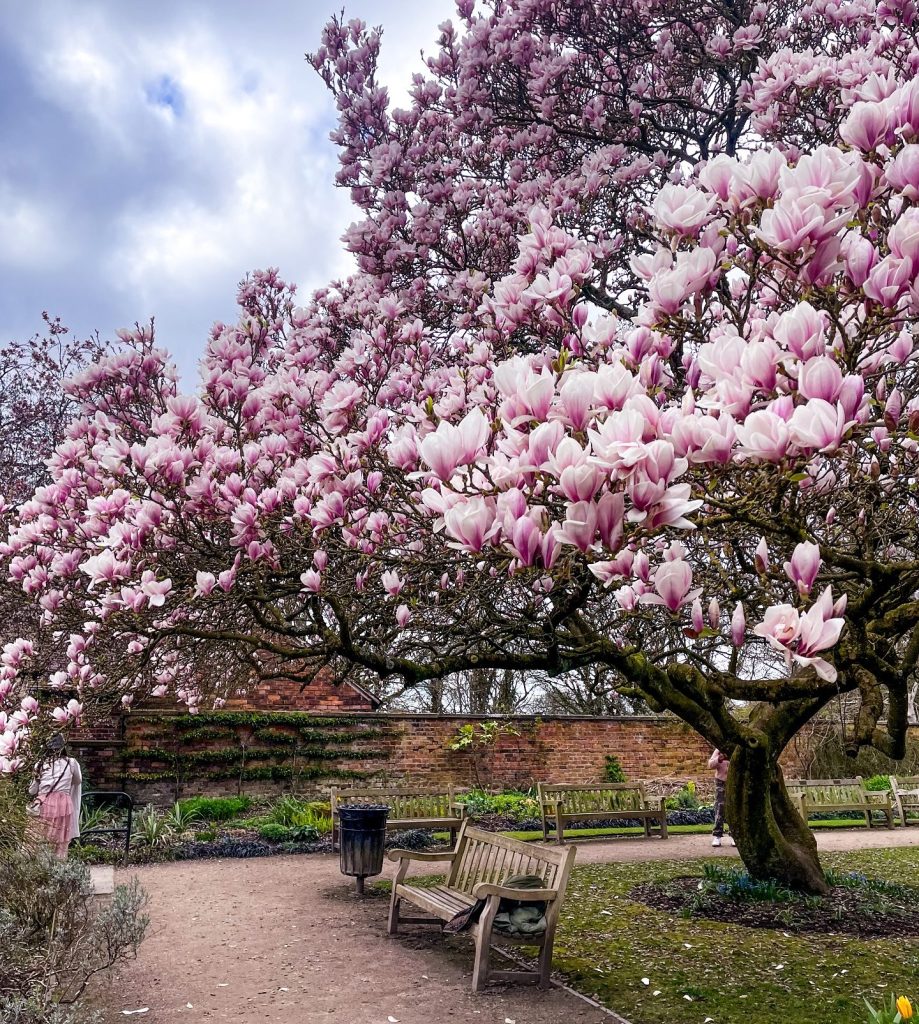
Magnolia trees bring stunning beauty to your yard with their large, showy flowers. You can choose from many varieties, including the Southern magnolia with its white blooms, the Saucer magnolia with pink and white petals, or the Star magnolia with delicate star-shaped flowers.
These trees work well in most yards because different varieties fit different spaces. Some grow tall and wide, while others stay compact enough for smaller areas or even containers. Most magnolias bloom in spring, though some varieties keep flowering into summer.
4. Dogwood Tree
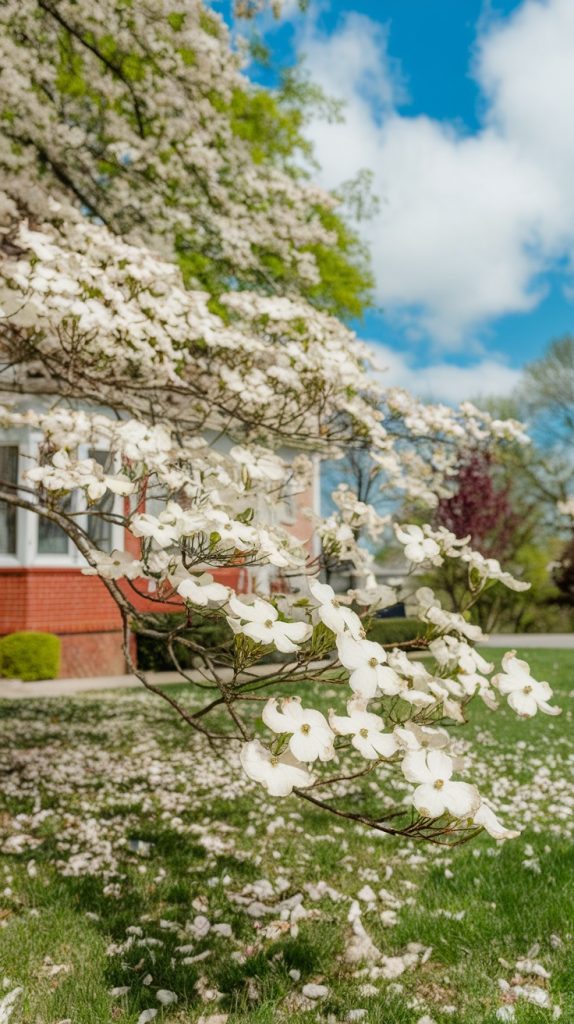
Dogwood trees bring beautiful color to your yard in both spring and fall. These popular trees stay relatively small, reaching only 15 to 30 feet tall, making them perfect for most yards.
You’ll love their showy spring blooms in white, pink, or red. The flowers come from modified leaves called bracts rather than true petals. In autumn, the leaves turn vibrant shades of red and purple.
Dogwoods grow well across North America. They work great as shade trees or border accents thanks to their low, wide canopies.
5. Flowering Crabapple
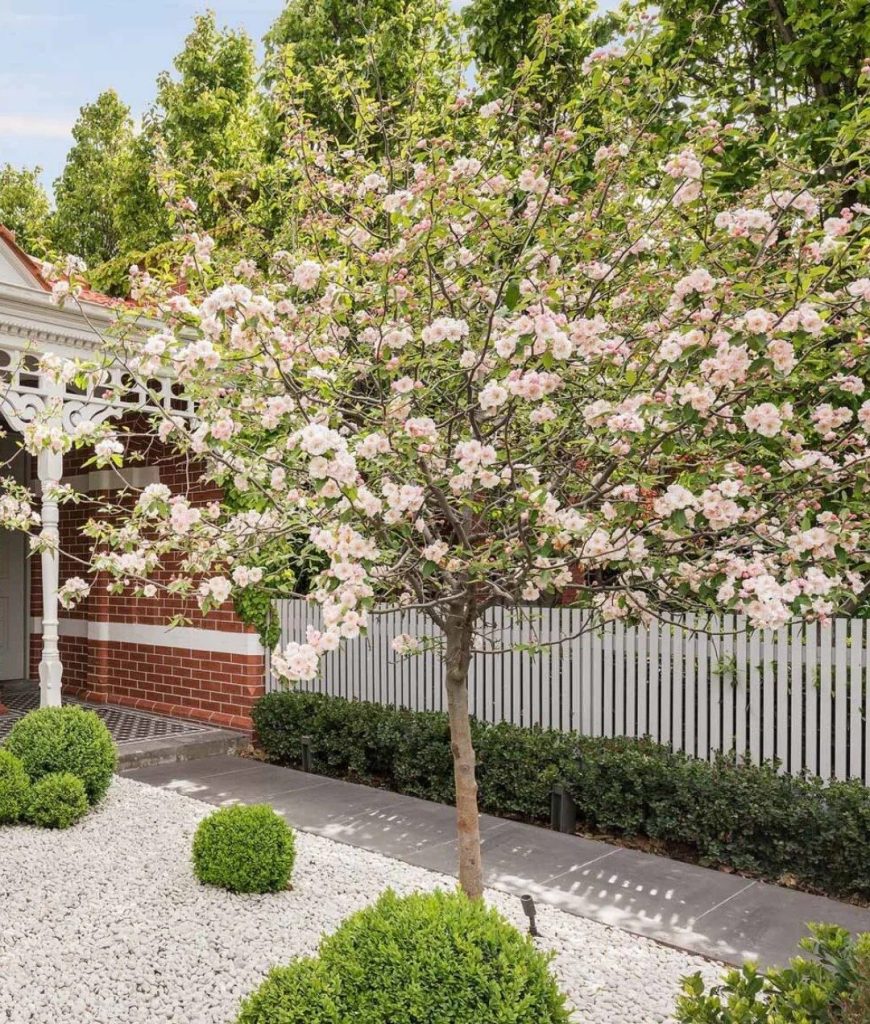
Flowering crabapples bring stunning spring blooms and year-round beauty to your yard. These hardy trees thrive in zones 4-8, making them suitable for most landscapes across the country.
You’ll enjoy their fragrant flowers in spring, followed by colorful fruit that attracts songbirds through winter. Crabapples grow well in various conditions and need minimal care once established.
These trees also work as pollinators if you have other apple trees nearby. With many varieties available, you can choose one that fits your space and style preferences.
6. Jacaranda
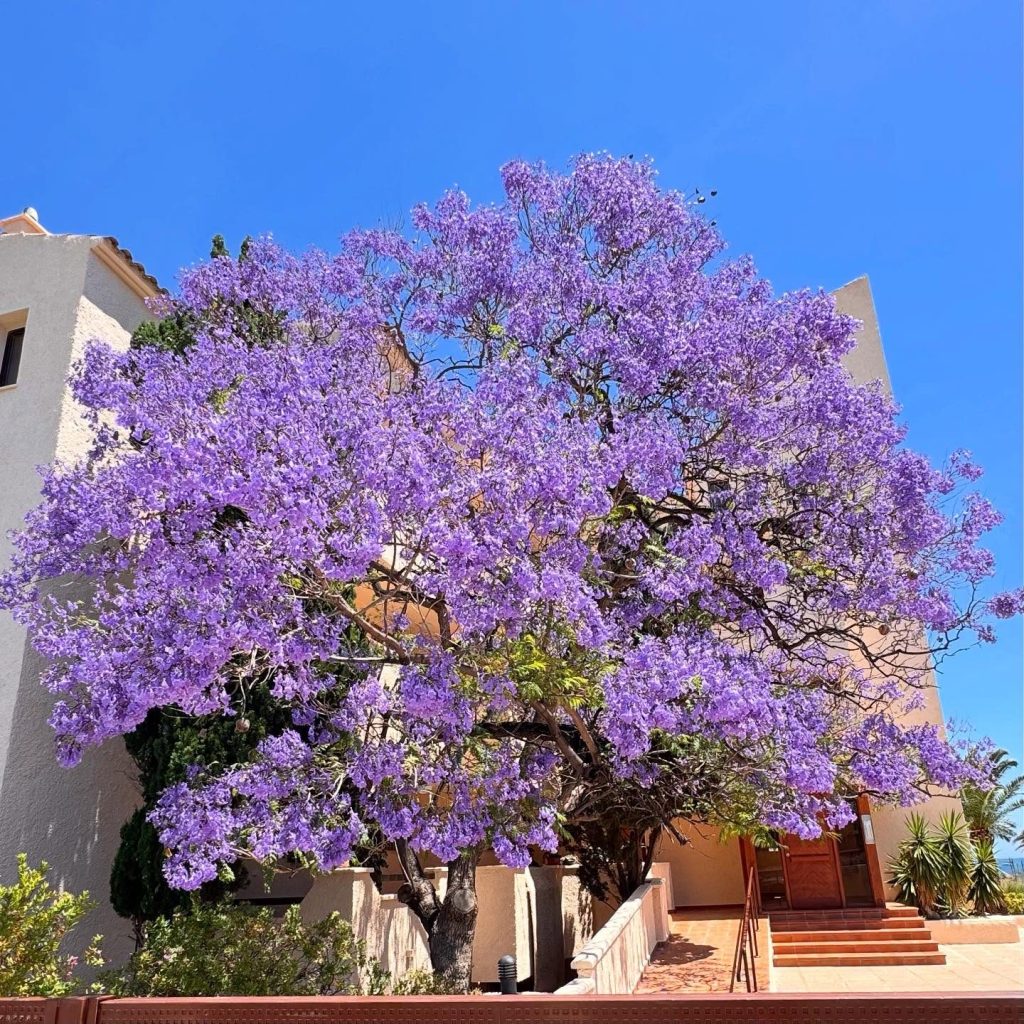
The Jacaranda tree puts on an incredible show each spring with its purple-blue flower clusters. These South American natives grow fast, adding up to 3 feet per year to quickly shade your yard.
You’ll love the fern-like foliage that gives the tree a light, delicate appearance. Jacarandas work best in warm climates, thriving in USDA zones 9-11.
These trees need minimal care and do well in poor soil. They rarely need fertilizer, making them a low-maintenance choice for your landscape.
7. Crape Myrtle
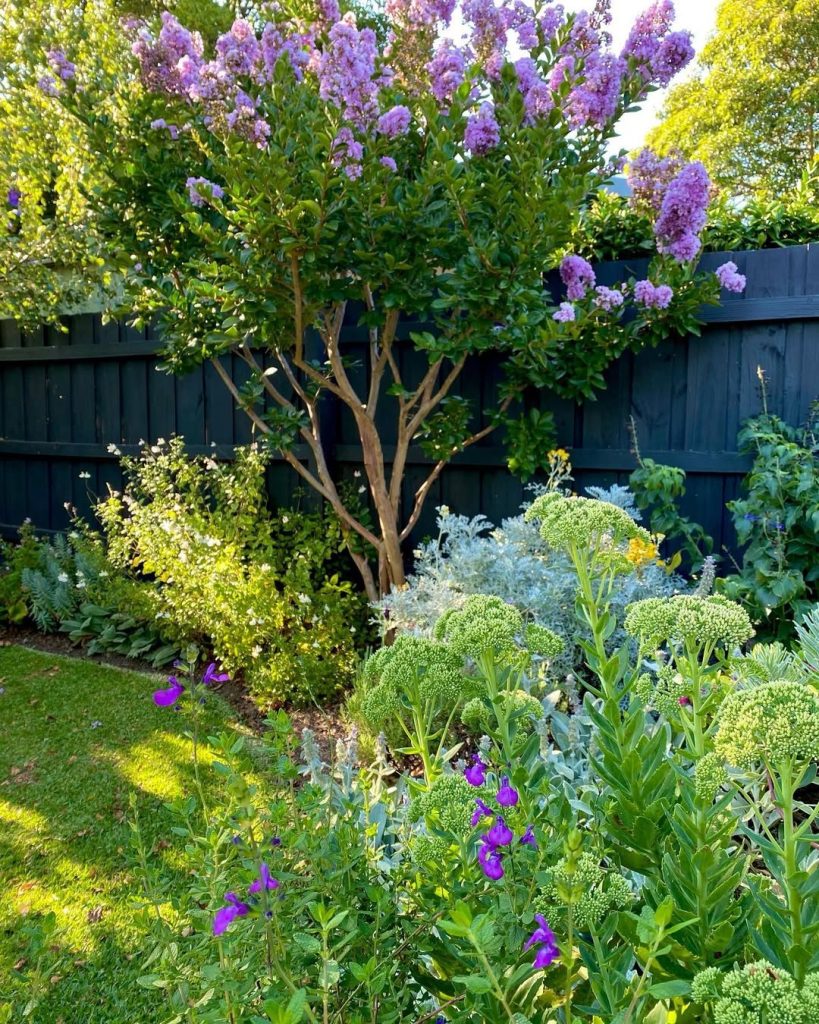
Crape myrtles bring vibrant color to your yard from early summer through fall. You can choose from varieties that range from 3 feet to 30 feet tall, so there’s a size for nearly any space.
These trees handle drought, heat, and humidity with ease. They grow well in most soil types and require little fuss once established.
You’ll enjoy their long-lasting blooms in colors like white, pink, red, and purple. Many varieties also feature attractive peeling bark that adds winter interest to your landscape.
8. Golden Rain Tree
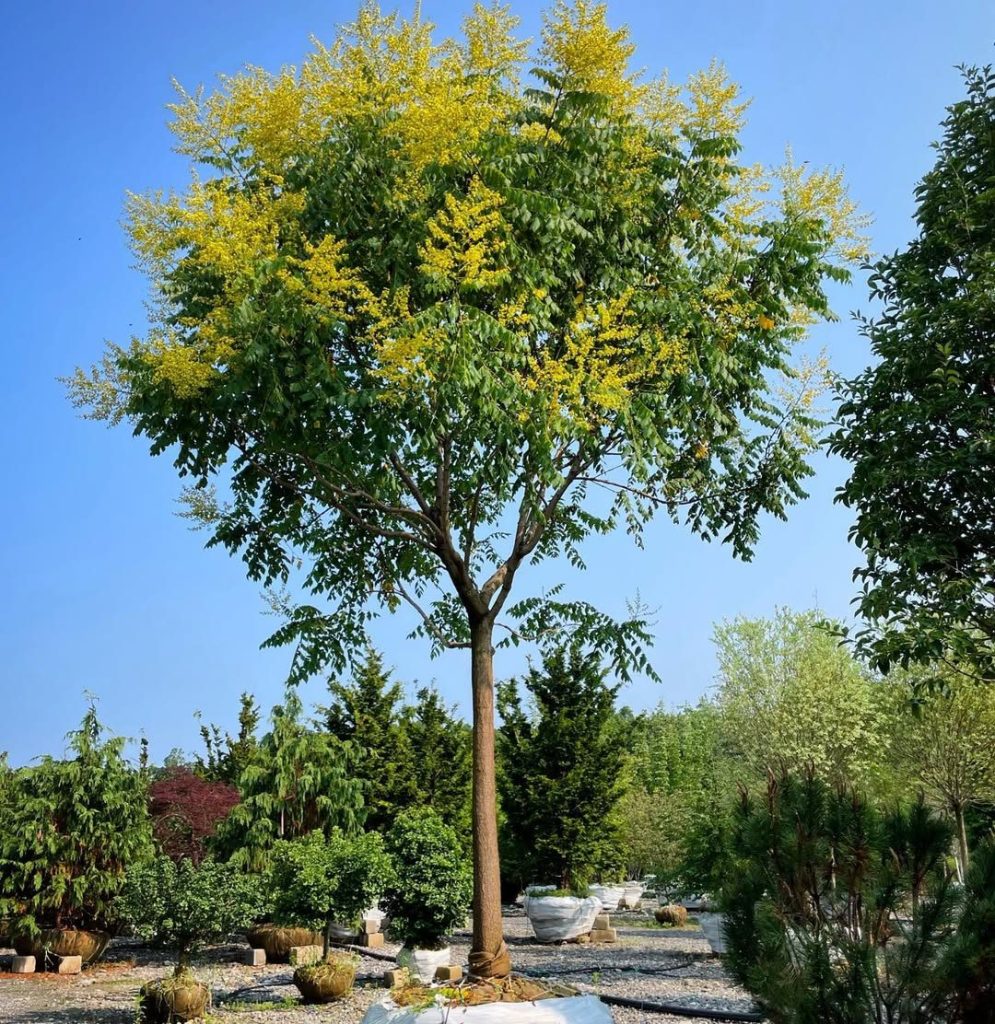
The Golden Rain Tree brings bright yellow flowers to your yard during summer when most other flowering trees have finished blooming. It grows 25 to 40 feet tall and wide, making it a good choice for medium-sized yards.
You’ll enjoy the fragrant blooms that last for several months. The tree handles drought, heat, and wind well, so it works in many different growing conditions. It grows successfully in zones 5 through 9, adapting to various climates across the country.
9. Serviceberry
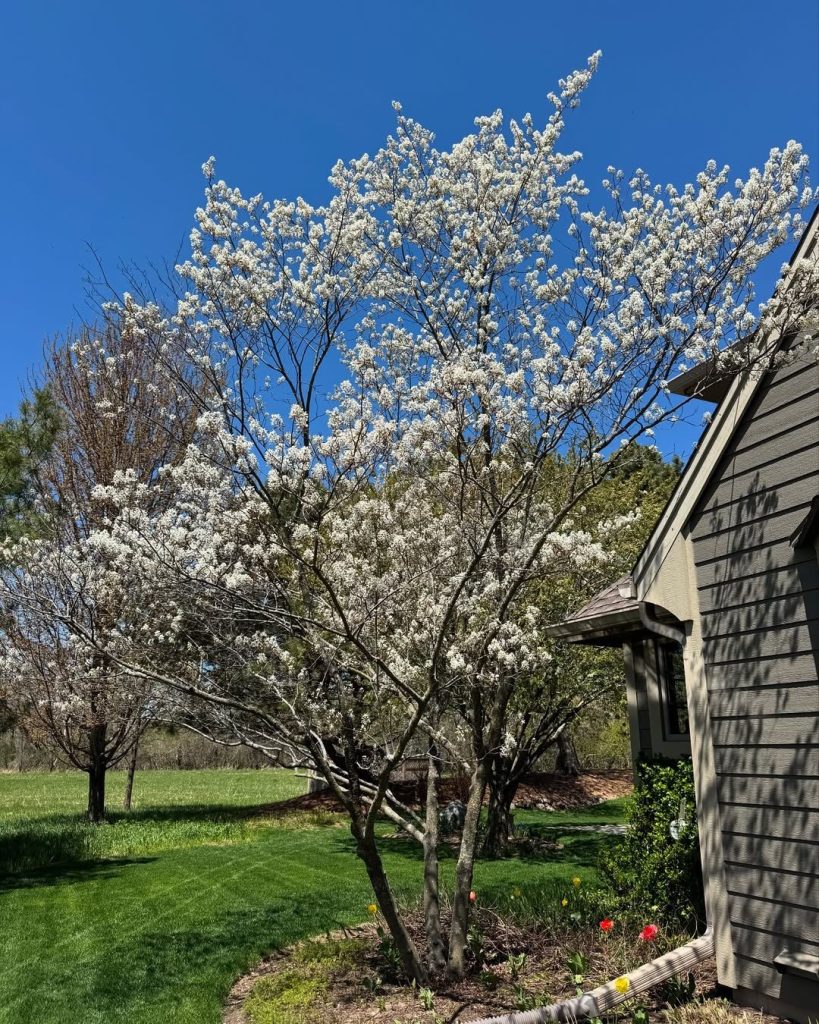
Serviceberry trees bring beauty to your yard in every season. In spring, white flowers cover the branches. Summer brings purple berries that you can eat and wildlife will love.
The fall foliage turns brilliant shades of red, orange, and yellow. These native North American trees grow 15 to 25 feet tall, making them perfect for most yards. They work well in full sun or partial shade and are safe around pets.
10. Star Magnolia
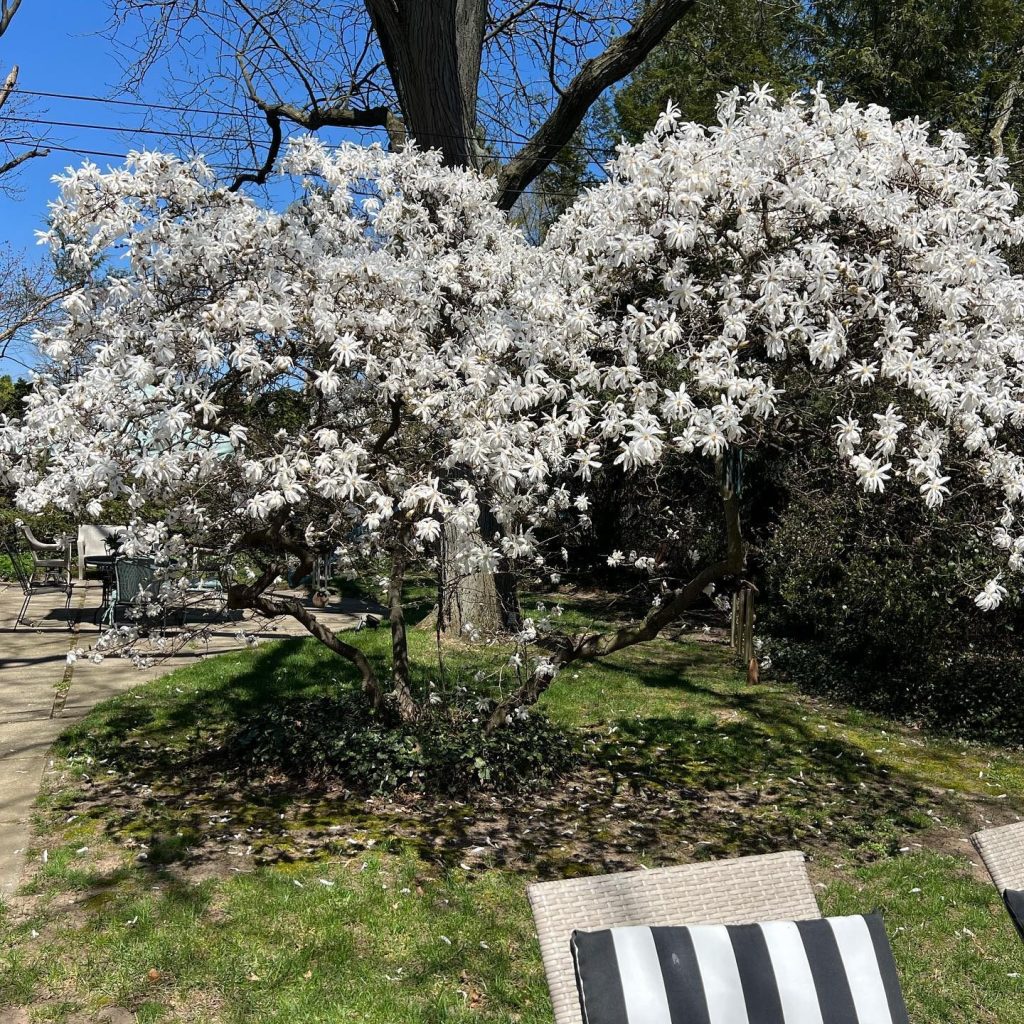
Star magnolia brings early spring beauty to your yard with its white, star-shaped flowers. This small tree grows 10 to 20 feet tall, making it perfect if you don’t have much space.
The flowers appear before the leaves in late winter or early spring. You’ll appreciate how it tolerates cold better than other magnolia types.
Plant your star magnolia in a sunny spot with moist soil. Its slow growth and compact size make it easy to fit into most landscapes without taking over your yard.
11. Tulip Tree
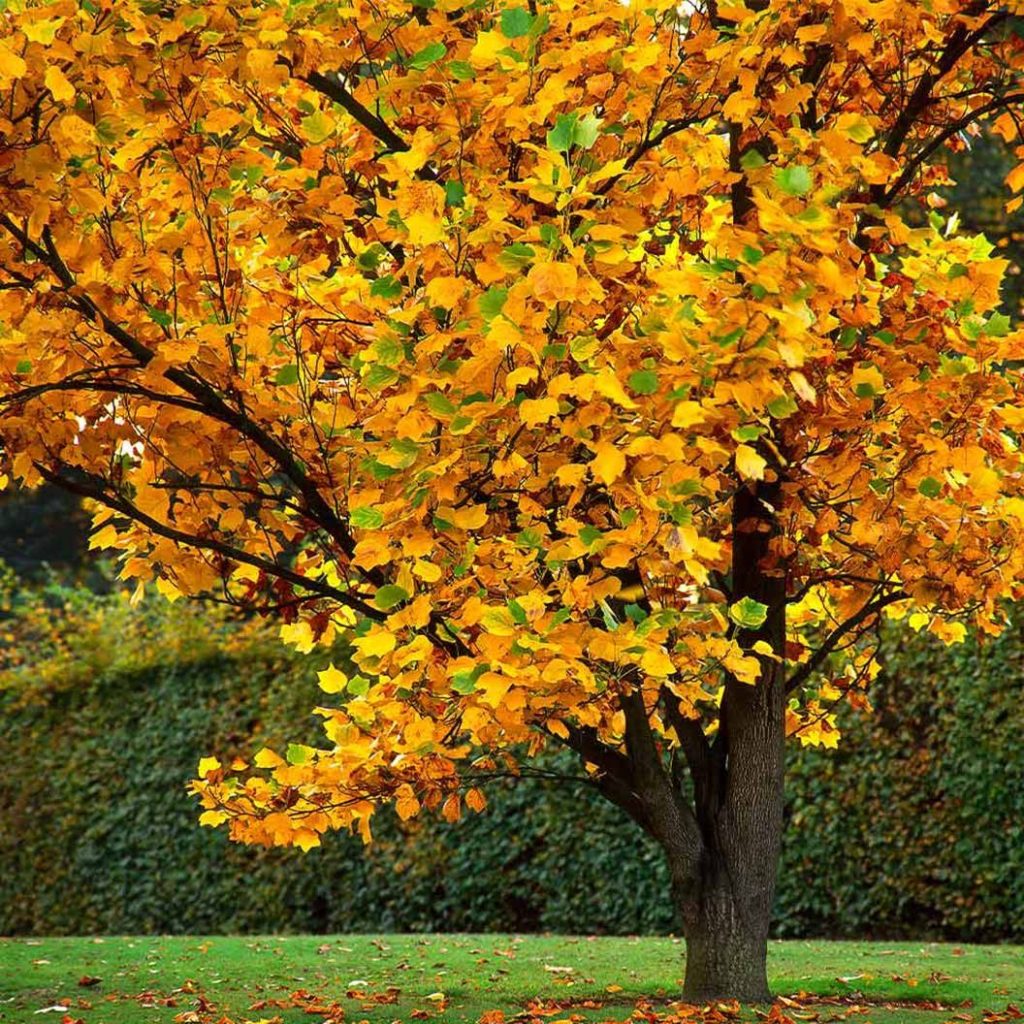
The tulip tree is a North American native that grows fast and tall. It produces beautiful yellow flowers in late spring that look like tulips. The blooms have an orange ring at the base and attract hummingbirds and butterflies to your yard.
This tree offers year-round interest with its attractive foliage and stunning fall color. You’ll need a large yard since tulip trees can become one of the biggest native trees. They prefer rich, moist soil and provide excellent shade once established.
12. Red Horse Chestnut
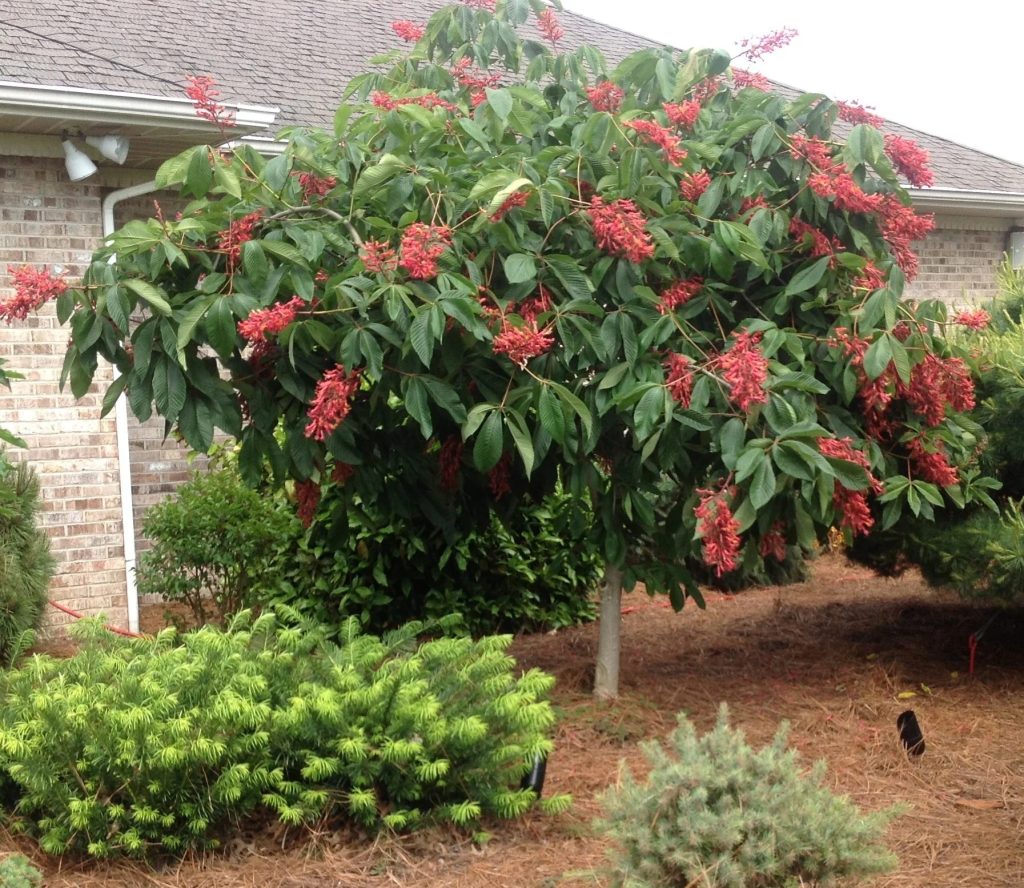
The red horse chestnut brings eye-catching color to your yard with its bright rose-red flower clusters. This tree blooms in late spring, putting on a show before many other flowering plants peak.
You’ll appreciate that it grows 30 to 40 feet tall and works well as a shade tree. The flowers stand out against dark green leaves, creating a nice contrast. The tree handles different soil types and needs regular watering to thrive.
Keep in mind that seed pods can drop and create some yard cleanup after flowering ends.
13. Saucer Magnolia
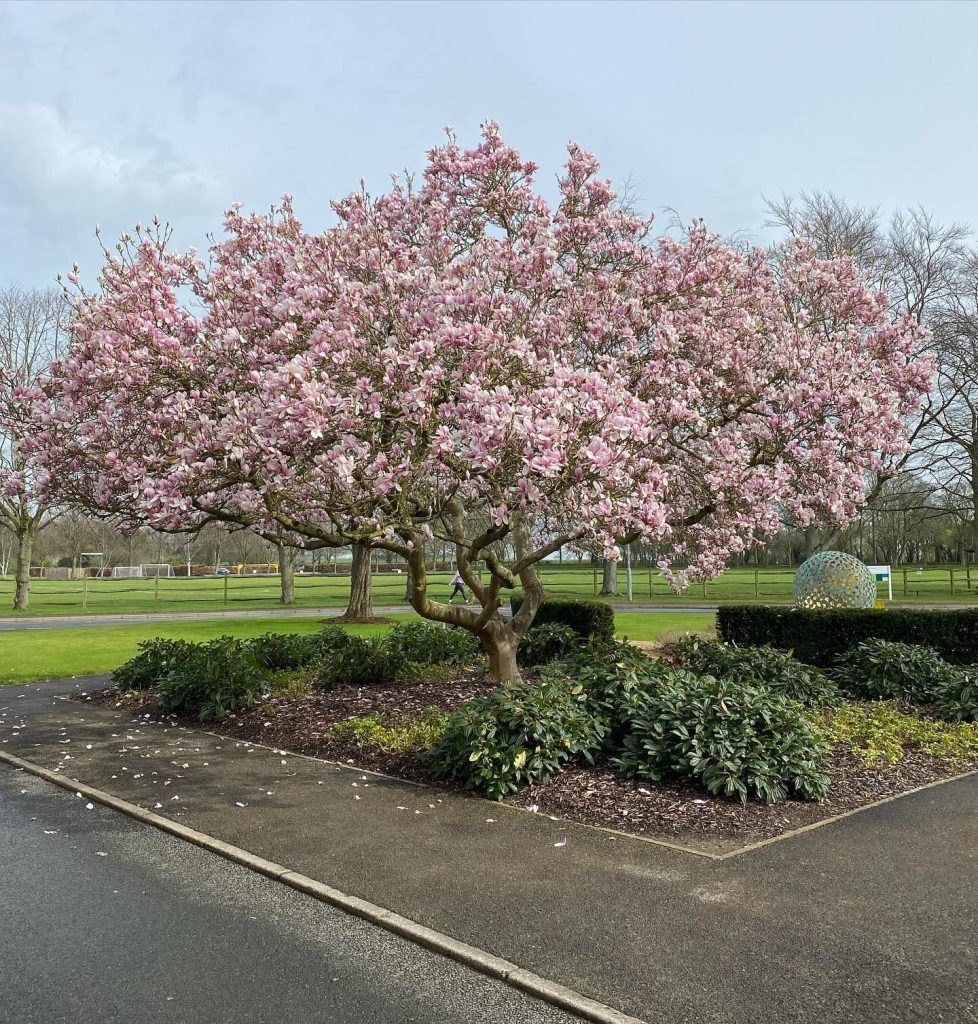
Saucer magnolia puts on a stunning show each spring with its large cup-shaped flowers. The blooms can reach up to 10 inches across and come in shades of pink, purple, and white.
This tree works well in most yards, growing between 15 to 30 feet tall. You can plant it as a single specimen tree or even grow smaller varieties in large containers.
The flowers appear before the leaves in early spring, giving you color when most other trees are still bare. After blooming, dark green foliage fills in for summer interest.
14. Amur Maple
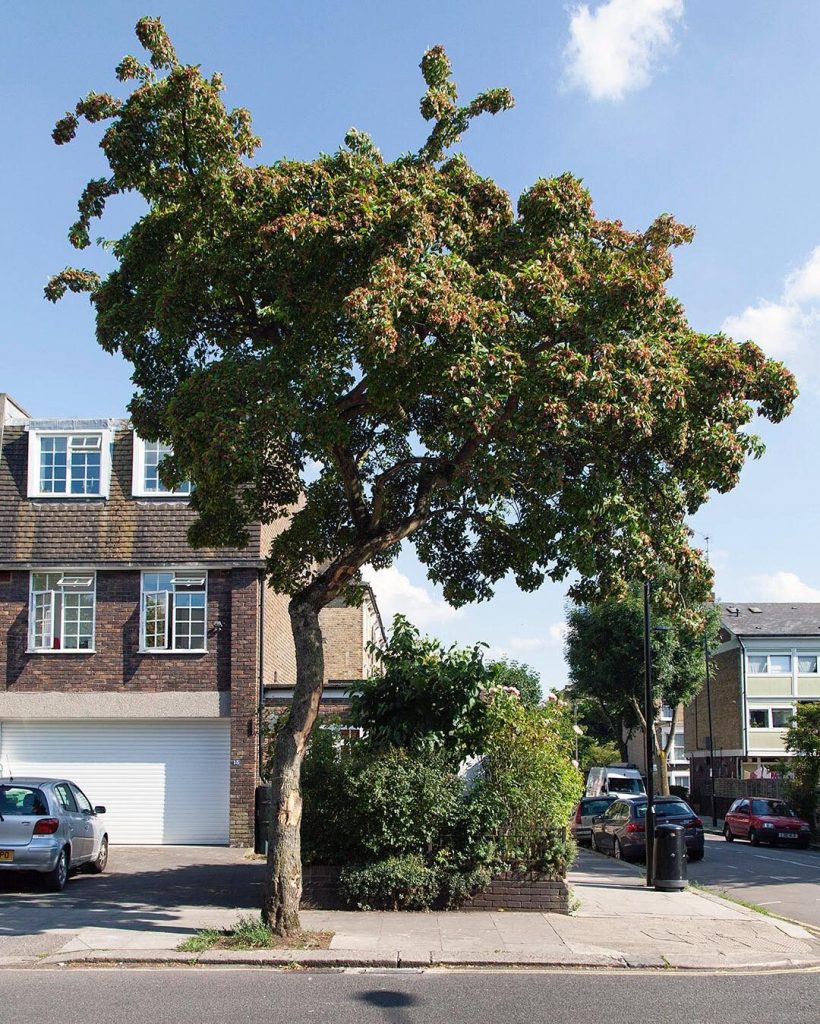
The Amur Maple brings fragrant yellow-white flowers to your yard in April and May. This small tree grows 15 to 20 feet tall, making it perfect for compact spaces.
You’ll love the bright green leaves in spring and summer. In fall, they turn deep red or sometimes bright yellow. The tree also produces red winged fruits in June and July.
This maple handles cold weather well and adapts to different soil types. You can grow it as a single-trunk tree or let it develop multiple stems.
15. Southern Magnolia
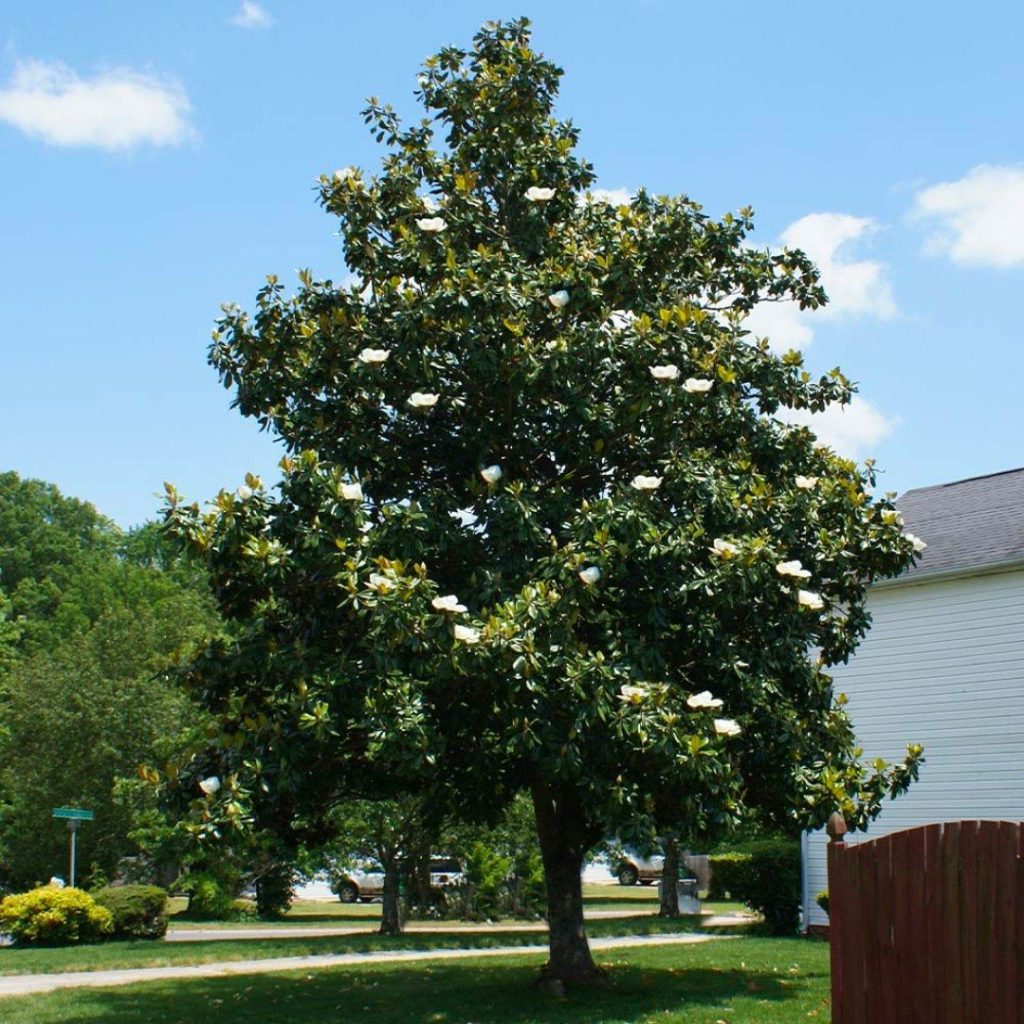
When you think of classic Southern beauty, the Southern Magnolia likely comes to mind. This evergreen tree features glossy dark green leaves and produces large ivory-white flowers with bright yellow centers. The blooms carry a sweet, lemony scent that fills your yard during spring and summer.
Your Southern Magnolia can grow quite tall, making it a striking focal point in your landscape. The tree is surprisingly tough and adapts well to different growing conditions. Its year-round green foliage and stunning flowers make it a standout choice for your yard.
Choosing the Right Flowering Tree for Your Yard
Success with flowering trees starts with matching the right tree to your specific yard conditions. Your soil type, available sunlight, local climate, and available space all play key roles in determining which trees will flourish.
Understanding Sunlight and Soil Needs
Most flowering trees need at least six hours of direct sunlight daily to produce abundant blooms. Some varieties like dogwoods and redbuds can handle partial shade, making them good picks if you have taller trees or buildings blocking full sun.
Your soil’s drainage matters just as much as sunlight. Dig a hole about 12 inches deep and fill it with water to test drainage. If the water drains within a few hours, you have well-draining soil that suits most flowering trees.
Heavy clay soil holds too much water and can rot tree roots. Sandy soil drains too quickly and won’t hold enough moisture. You can fix clay soil by mixing in compost or sand. For sandy soil, add organic matter to help it retain water better.
Check your soil’s pH level with a simple test kit from any garden center. Most flowering trees prefer slightly acidic soil between 6.0 and 7.0 pH. Trees like dogwoods and magnolias need more acidic conditions, while crabapples tolerate a wider pH range.
Climate Considerations
Your USDA hardiness zone determines which flowering trees will survive winter in your area. Each tree has a specific zone range where it grows best. A tree rated for zones 5-9 won’t survive zone 4 winters.
Chill hours affect bloom production in many flowering trees. These are hours below 45°F that trees need during winter dormancy. Southern gardeners should pick low-chill varieties, while northern gardeners have more options.
Spring frost can damage early-blooming trees like magnolias and cherries. If you live in an area with unpredictable spring weather, choose trees that bloom later in the season. Late frosts can kill flower buds and leave you with no blooms for that year.
Drought-tolerant trees like crape myrtle work well in dry climates or if you want to reduce watering. Trees native to your region typically handle local weather patterns better than exotic species.
Matching Tree Size to Outdoor Space
Small yards need compact trees that stay under 20 feet tall. Flowering dogwoods, Japanese maples, and dwarf crape myrtles fit tight spaces without overwhelming your landscape. These trees also work well near power lines or buildings.
Medium-sized trees reach 20-40 feet and need more room to spread. Cherry trees, redbuds, and crabapples fall into this category. Plant them at least 15 feet from your house and other structures to allow for mature canopy growth.
Large flowering trees like tulip poplars and magnolias can exceed 40 feet. They need spacious yards with room for their wide canopies. Consider the tree’s root system too—plant large trees at least 20 feet from foundations, septic systems, and underground utilities.
Measure your available planting space before shopping for trees. Width matters as much as height since many flowering trees spread wide as they mature. A tree’s drip line (the edge of its canopy) shouldn’t crowd walkways, driveways, or neighboring properties.
Caring for Flowering Trees
Flowering trees need regular attention to stay healthy and produce beautiful blooms year after year. The right watering schedule, proper pruning techniques, and quick action against pests make the difference between a struggling tree and one that thrives.
Watering and Fertilization Tips
Young flowering trees need deep watering once or twice a week during their first growing season. You should water slowly at the base of the tree, allowing moisture to reach 12-18 inches into the soil. After the first year, most established trees only need water during dry spells.
The best way to check if your tree needs water is to stick your finger into the soil near the roots. If the top 2-3 inches feel dry, it’s time to water.
Feed your flowering trees in early spring before new growth starts. Use a balanced fertilizer with equal parts nitrogen, phosphorus, and potassium. You can also apply a second light feeding after the blooms fade.
Avoid fertilizing after mid-summer. Late-season fertilization encourages new growth that won’t harden off before winter, making your tree vulnerable to cold damage.
Pruning for Health and Shape
Prune your flowering trees right after they finish blooming. This timing protects next year’s flower buds, which form on new growth throughout the summer. Trees that bloom in spring should be pruned in late spring, while summer bloomers get trimmed in fall.
Start by removing dead, damaged, or diseased branches. Cut these back to healthy wood, making clean cuts just above a bud or branch collar. Next, remove any branches that cross or rub against each other.
Thin out crowded areas to improve air circulation through the canopy. Good airflow helps prevent fungal diseases and keeps your tree healthier. Never remove more than 25% of a tree’s branches in a single year.
Dealing With Common Pests and Diseases
Watch for aphids, scale insects, and spider mites on your flowering trees. These pests suck sap from leaves and stems, causing yellowing, curling, or spotted foliage. Spray affected areas with insecticidal soap or neem oil every 7-10 days until the problem clears.
Fungal diseases like powdery mildew and leaf spot appear as white coating or dark spots on leaves. Remove infected leaves and improve air circulation by pruning. Apply fungicide if the problem spreads.
Check your trees weekly during the growing season. Early detection makes treatment easier and prevents minor issues from becoming major problems. Keep the area around your tree clean by raking up fallen leaves and fruit, which can harbor disease.