

Lavender is pretty easy-going once it’s established – give it sun, don’t overwater it, and it’ll reward you with those gorgeous fragrant spikes year after year. But pair it with the wrong neighbours and things can go downhill fast. 💜
The trick with lavender companion planting is finding other plants that want the same conditions. Lavender hates wet feet and loves baking in full sun, so anything that needs regular watering or rich soil is going to be a mismatch. One of you will suffer, and it’s usually the lavender.
The good news? There are loads of plants that thrive alongside lavender beautifully. Rosemary, sage, thyme, yarrow – basically the Mediterranean crowd that evolved in the same hot, dry conditions. They look great together, they attract the same pollinators, and they won’t compete for water. Low-maintenance gardening at its best. 🐝
We’ve put together a proper guide to lavender companion planting – what works, what to avoid, and some ideas for different garden styles. Whether you’re planning a herb garden, filling a sunny border, or planting up some pots, you’ll find plenty of options here.
Let’s get into it.
Companion Planting Principles for Lavender
Successful companion planting with lavender starts with understanding what companion planting is and matching plants that share lavender’s need for full sun, well-drained soil, and dry conditions. When you pair lavender with the right plants, you create a low-maintenance garden that naturally resists pests and attracts helpful pollinators.
What Is Companion Planting?
Companion planting is the practice of growing different plants near each other to help them thrive. When you use this method, certain plants work together to improve growth, repel pests, or attract beneficial insects.
This gardening approach is based on how plants interact with each other in nature. Some plants release chemicals through their roots or leaves that help nearby plants grow better. Others attract insects that pollinate flowers or eat harmful pests.
For your lavender garden, companion planting means choosing plants that need the same growing conditions. You want plants that won’t compete with lavender for resources but will enhance its natural benefits. The goal is to create a garden where all plants support each other without extra work from you.
Essential Lavender Growing Conditions
Lavender needs full sun for at least 6-8 hours each day to produce healthy growth and strong fragrance. Without enough sunlight, your plants will become leggy and produce fewer flowers.
Well-drained soil is critical for growing lavender successfully. The roots will rot in soil that stays wet or holds too much moisture. Sandy or rocky soil works best because water moves through it quickly.
Your lavender prefers alkaline soil with a pH between 6.5 and 8.0. You can add lime to acidic soil to raise the pH level if needed.
Lavender grows well in USDA zones 5-9, though some varieties tolerate colder or warmer climates. Once established, lavender is extremely drought-tolerant and needs very little water. Overwatering is one of the most common mistakes when growing lavender.
Benefits of Companion Planting with Lavender
Lavender naturally repels aphids, moths, mosquitoes, and other pests that damage garden plants. When you plant lavender near vegetables or flowers, these pests stay away from your entire garden bed.
The purple flowers attract bees, butterflies, and other pollinators that help nearby plants produce fruit and seeds. This benefit is especially valuable if you grow vegetables or fruit-bearing plants near your lavender.
Companion planting with drought-tolerant plants reduces your watering needs and maintenance time. Plants that share lavender’s preference for dry conditions create a water-wise garden that survives hot, dry summers with minimal care.
Lavender’s gray-green foliage and purple blooms add color and texture contrast to your garden. Pairing it with plants that have different leaf shapes, heights, and bloom colors creates visual interest throughout the growing season.
Top Mediterranean Herb Companions
Mediterranean herbs share lavender’s native growing conditions and thrive in the same hot, dry, well-draining soil. Rosemary, sage, thyme, and oregano all need minimal water and full sun, making them ideal partners that reduce maintenance while creating a fragrant, productive garden space.
Pairing Lavender with Rosemary
Rosemary and lavender work together in the garden just like they do in herb blends. Both plants need sandy or gravelly soil with excellent drainage and can handle long periods without water. They prefer soil pH between 6.0 and 7.5 and thrive in full sun with plenty of summer heat.
Rosemary grows up to 4 feet tall and wide, so you should plant it 2-4 feet away from your lavender bushes. This spacing prevents crowding while creating a nice visual border. Keep in mind that rosemary is less cold-hardy than lavender and needs frost protection in zone 6 or colder.
The strong fragrance of both plants helps keep pests away from nearby vegetables. Rosemary produces beautiful flowers in spring and summer that attract bees and other pollinators. You’ll only need to prune both plants once or twice a year, making this combination very low-maintenance.
Sage and Lavender
Sage thrives in the same exposed, sunny locations as lavender and loves sandy or gravelly soil where water drains quickly. This Mediterranean herb typically grows up to 3 feet tall and 2 feet wide, staying shorter than most lavender varieties. You can plant sage between your lavender and rosemary to add different heights to your garden.
Like lavender, sage doesn’t need any irrigation once established. Both plants are perennial in zones 5 through 11 and handle drought extremely well. Sage prefers the same alkaline to neutral pH that lavender needs and won’t compete for nutrients in low-fertility soil.
The combination of sage and lavender creates a powerful aromatic barrier that deters many garden pests while attracting beneficial insects.
Thyme and Oregano as Groundcovers
Thyme and oregano work perfectly as low-growing companions beneath and around lavender bushes. Creeping thyme (Thymus serpyllum) makes an excellent groundcover that tolerates some shade from taller lavender plants. Regular garden thyme (Thymus vulgaris) and oregano both stay close to the ground and won’t compete with lavender for space or light.
These herbs share lavender’s preference for well-draining soil and full sun. They’re hardy in zones 5 through 9 and need even less water than lavender once established. Both produce purple flowers that complement lavender’s blooms while attracting pollinators and beneficial insects like lacewings.
Oregano makes an especially good edging plant because it stays low and spreads slowly. You can let these groundcovers fill in bare soil between lavender plants, creating a dense, fragrant carpet that suppresses weeds naturally.
Ornamental Flower Pairings for Vibrant Gardens
Pairing lavender with colorful ornamental flowers creates eye-catching displays that bloom throughout the growing season. These flowering companions thrive in the same full sun and well-drained soil conditions that lavender prefers.
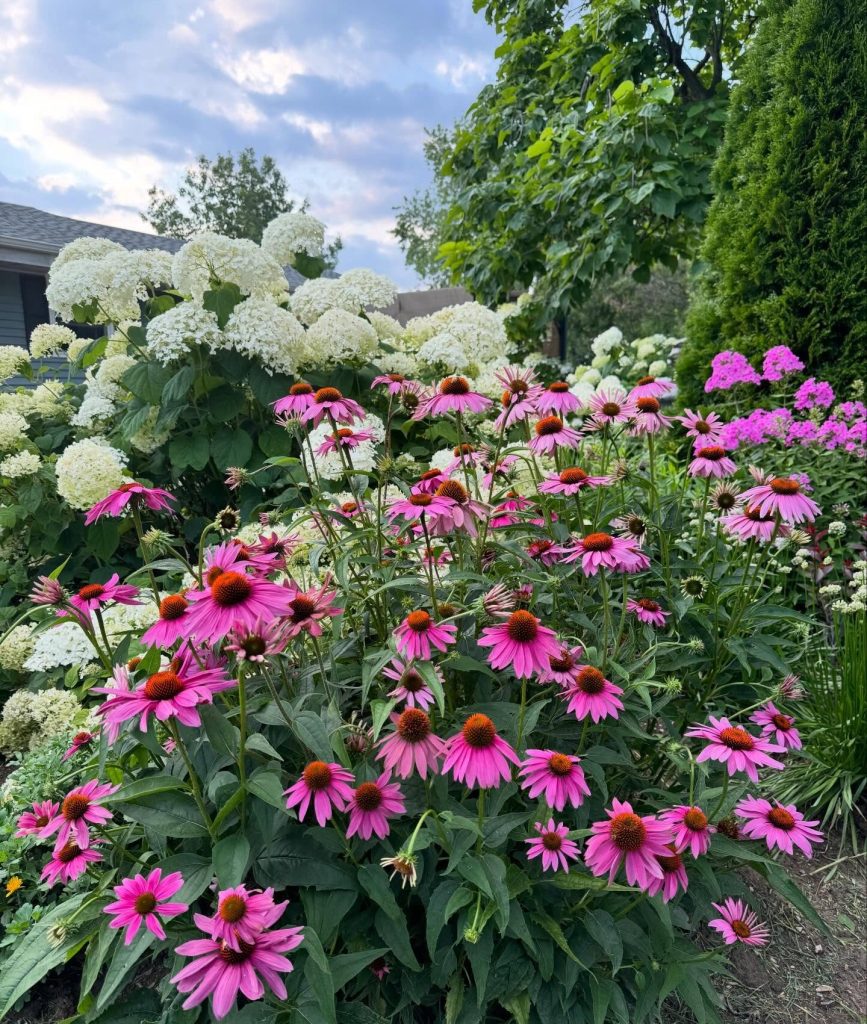
Echinacea and Coneflower
Purple coneflower pairs beautifully with lavender in your garden beds. The cone-shaped blooms of echinacea add vertical interest while contrasting with lavender’s spiky wands.
Coneflowers grow 2 to 4 feet tall and bloom throughout summer. They prefer the same full sun conditions as lavender. The dark pink petals create a striking contrast against lavender’s cooler purple tones.
Your coneflowers and lavender will attract butterflies and bees to your garden. Both plants tolerate drought once established. Space them 18 to 24 inches apart to allow good air circulation.
Modern coneflower hybrids come in orange, yellow, and white if you want more color variety. These prairie natives are tough and need little maintenance once they’re growing strong.
Yarrow and Achillea
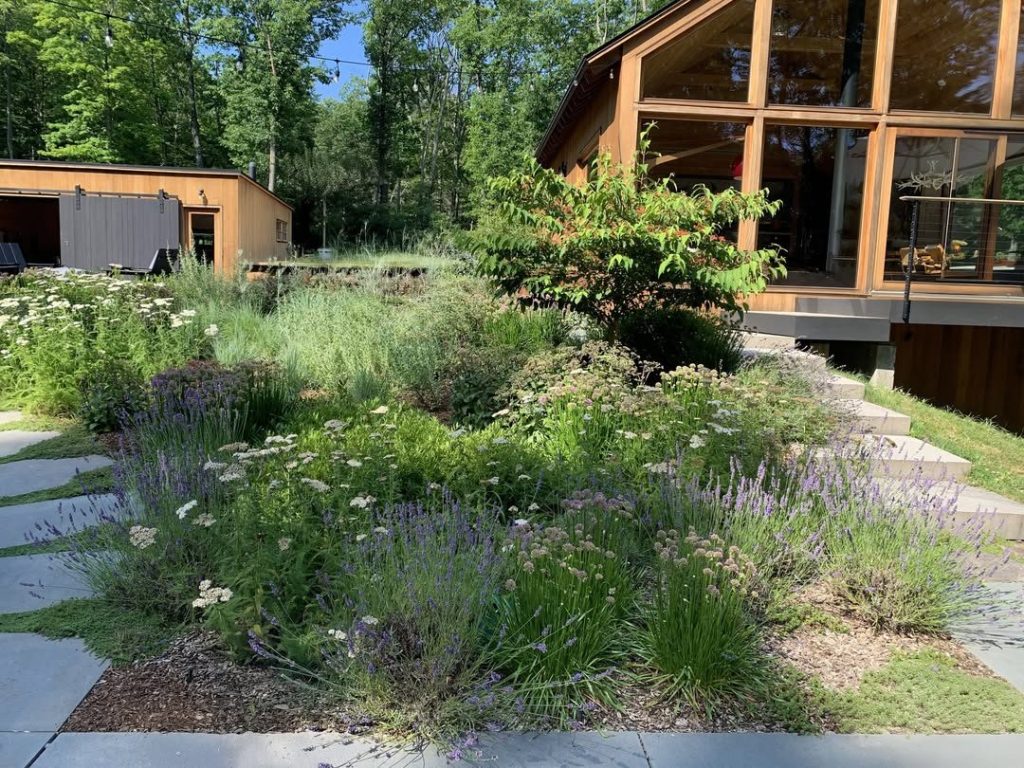
Yarrow produces flat-topped flower clusters that contrast perfectly with lavender’s upright blooms. The feathery foliage of achillea adds soft texture to your garden design.
You can choose yarrow in yellow, red, pink, or white varieties. Most yarrow plants grow 2 to 3 feet tall. They bloom from early summer through fall, extending color beyond lavender’s main flowering period.
Yarrow thrives in the same well-drained soil and full sun that lavender needs. This tough perennial tolerates poor soil and dry conditions. Plant yarrow 18 inches away from your lavender to give both plants room to spread.
The combination creates a low-water garden that needs minimal care. Both plants resist most pests and diseases.
Black-Eyed Susan and Rudbeckia
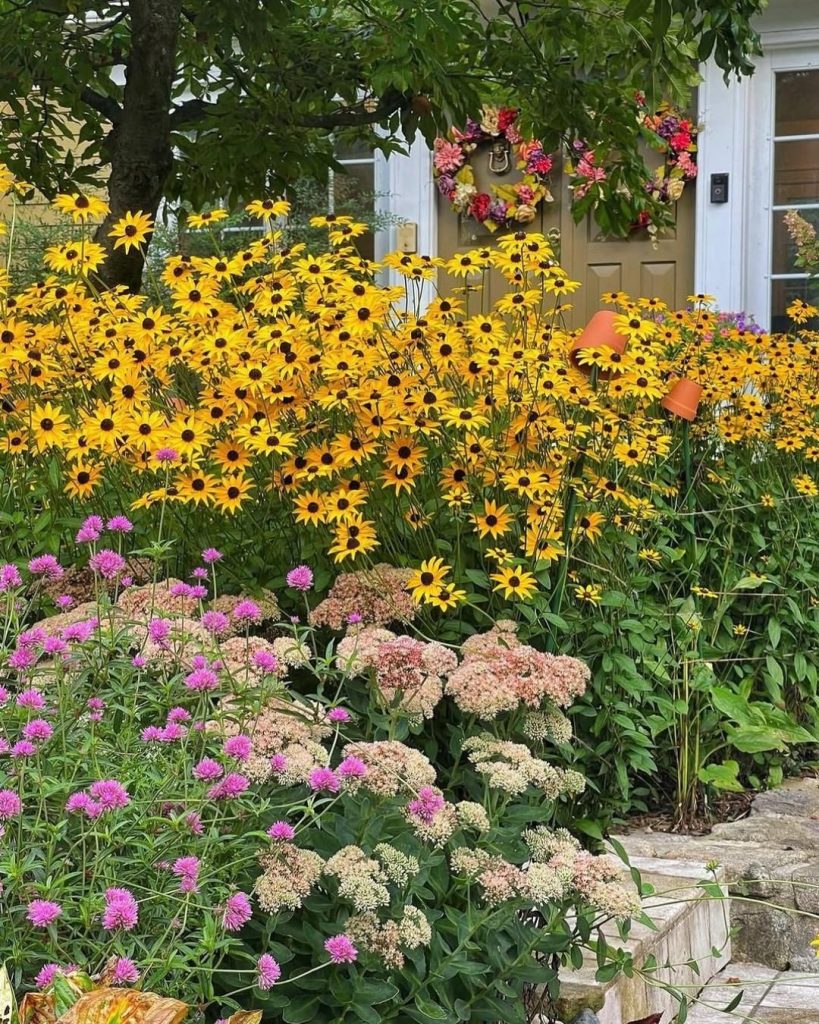
Black-eyed Susan brings golden yellow blooms to your lavender plantings. These cheerful daisy-like flowers with dark centers bloom from mid-summer into early fall.
Rudbeckia grows 1 to 3 feet tall in most varieties. The bright yellow petals pop against lavender’s purple flowers. You’ll get months of continuous color when you combine these two plants.
Black-eyed Susan tolerates full sun and adapts to various soil types. It performs best in well-drained soil like lavender prefers. The plants self-seed readily, filling in gaps around your lavender over time.
This pairing works well in mixed borders and foundation plantings. Both plants attract pollinators and make excellent cut flowers for bouquets.
Marigold, Zinnia, and Blanket Flower
Marigolds add bold orange, yellow, and red tones near your lavender plants. These annuals bloom from late spring until frost hits. They grow 6 inches to 4 feet tall depending on the variety you choose.
Zinnias offer another colorful annual option with blooms in nearly every color. Plant them as fillers between young lavender plants. They love hot weather and full sun exposure.
Blanket flower (gaillardia) provides long-lasting perennial blooms in warm sunset colors. The daisy-like flowers feature red, orange, and yellow petals. Gaillardia blooms from late spring through fall with minimal deadheading.
All three options thrive in well-drained soil and full sun. Marigolds may help repel certain garden pests. Space these flowers 12 to 18 inches from lavender plants to avoid overcrowding.
Silvery Foliage and Low-Maintenance Choices
Plants with silvery leaves and minimal care requirements make excellent partners for lavender because they share similar growing conditions and create a cohesive, drought-tolerant garden design. These companions thrive in well-draining soil and full sun while adding textural interest to your planting beds.
Catmint and Nepeta
Catmint offers soft, billowing mounds of gray-green foliage that complement lavender’s upright structure perfectly. You’ll appreciate that nepeta blooms from late spring through fall with small purple-blue flowers on spiky stems.
This perennial grows 1 to 3 feet tall and wide, making it ideal for filling spaces around your lavender plants. Catmint tolerates poor soil and drought conditions once established, requiring even less maintenance than lavender itself.
The plant works well in zones 3-9, giving you more cold hardiness than lavender in northern gardens. Catmint spreads gently without becoming invasive, creating a natural ground cover effect. You can trim it back after the first bloom to encourage fresh growth and more flowers.
Ornamental Sage and Salvia
Ornamental sage brings vertical interest with tubular flowers in purple, blue, pink, red, or white shades. Salvia species vary widely in size from 1 to 5 feet tall, letting you choose varieties that fit your garden’s scale.
These plants extend your garden’s bloom season since different salvia types flower from late winter through fall. You’ll find that both culinary and ornamental types pair beautifully with lavender in herb gardens or mixed borders.
Salvia requires the same well-draining soil and full sun exposure that lavender prefers. The plants attract hummingbirds and butterflies while resisting deer and rabbits. Many varieties are drought-tolerant once their roots establish, making them perfect for water-wise landscapes.
Sedum, Santolina, and Artemisia
Sedum provides fleshy, succulent foliage that contrasts nicely with lavender’s needle-like leaves. These drought-tolerant plants grow 3 to 36 inches tall depending on the variety, with star-shaped flowers appearing from summer into fall.
Santolina (also called santolina chamaecyparissus) features finely textured, silver foliage that grows 1 to 2 feet tall. This Mediterranean native handles heat and dry conditions extremely well while requiring minimal care.
Artemisia adds feathery, silvery-gray leaves that create a soft backdrop for lavender’s flower spikes. You can choose from varieties ranging from 6 inches to 6 feet tall, depending on your garden’s needs. All three plants thrive in zones 3-9 or warmer, preferring lean soil that drains quickly. They need little to no fertilizer and rarely suffer from pest problems.
Roses and Lavender: A Classic Combination
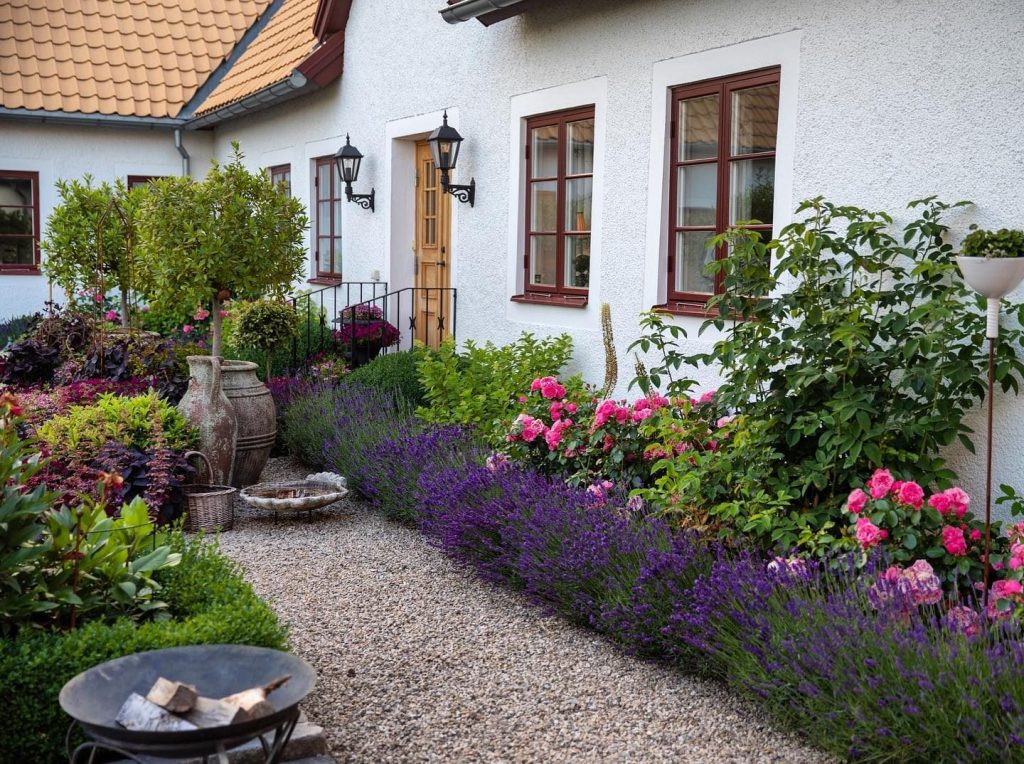
Roses and lavender create one of the most reliable pairings in garden design, combining complementary colors, fragrances, and growing habits. This combination offers natural pest management while supporting pollinators throughout the growing season.
Shrub Roses and Rose Varieties
Shrub roses work especially well alongside lavender because they share similar sunlight and soil drainage needs. Both plants thrive in full sun for at least six hours daily and require well-draining soil to prevent root problems.
You’ll want to choose Rosa varieties that can handle slightly drier conditions since lavender prefers less water than most roses. English roses, floribunda roses, and hardy shrub roses adapt better to these conditions than hybrid teas. Plant your roses and lavender 2-3 feet apart to accommodate their different watering needs.
The soil pH works well for both plants, typically ranging from 6.0 to 7.5. However, lavender prefers less fertile soil than roses, so you’ll need to fertilize carefully. Apply fertilizer directly around your rose bushes rather than broadcasting it across the entire bed.
Benefits for Pest and Pollinator Management
Lavender’s strong scent helps deter aphids, which commonly attack rose bushes. While it won’t eliminate all pest problems, the aromatic oils in lavender create a natural barrier that reduces aphid populations around your roses.
The combination also helps attract beneficial insects to your garden. Ladybugs, lacewings, and parasitic wasps visit lavender flowers and then move to nearby roses to hunt for aphids and other pests. Bees and butterflies benefit from the extended bloom time when you pair early-blooming roses with lavender that flowers throughout summer.
Both plants bloom around the same time in late spring and early summer, creating a pollinator-friendly environment when many beneficial insects are most active.
Pollinator-Friendly Gardens and Beneficial Insects
Lavender naturally draws bees, butterflies, and other helpful insects to your garden, and pairing it with the right companions creates an even stronger habitat for these vital pollinators while supporting a healthy, balanced ecosystem.
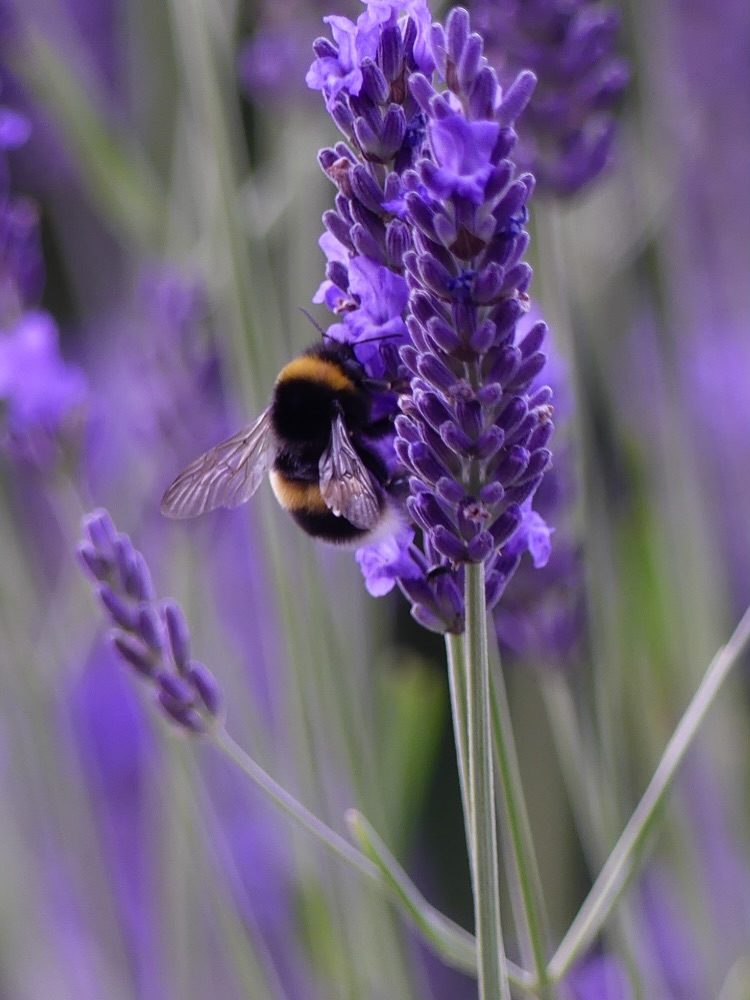
Attracting Bees, Butterflies, and Bumblebees
Lavender’s fragrant purple blooms are rich in nectar, making them irresistible to bees, butterflies, and bumblebees. When you plant lavender alongside other nectar-producing flowers, you create a buffet that keeps pollinators visiting throughout the growing season.
Coneflowers (Echinacea) work especially well because they bloom at slightly different times than lavender. This gives pollinators food sources from early summer through fall. Yarrow adds flat-topped flower clusters that butterflies love to land on.
Consider adding these proven pollinator magnets near your lavender:
- Salvia – Long tubular flowers that bumblebees especially enjoy
- Cosmos – Large, open blooms that butterflies can easily access
- Thyme – Low-growing herb with tiny flowers that attract small native bees
All these plants thrive in well-drained soil and full sun, just like lavender. This means you won’t need to create different watering zones or soil conditions. Your pollinators get diverse food sources while you maintain a simple, low-water garden.
Supporting Biodiversity in Lavender Borders
A diverse planting scheme around your lavender supports more than just pollinators. Beneficial insects like ladybugs, lacewings, and predatory wasps also visit companion plants, helping control aphids and other garden pests naturally.
Yarrow and rosemary both attract beneficial insects that prey on harmful pests. These helpers stay in your garden longer when they have multiple plant types to feed from and shelter in. Sedum provides flat landing pads and late-season nectar when many other flowers have finished blooming.
Mix plant heights and textures to create layers in your border. Tall plants like red hot poker give shelter, while low-growing thyme creates ground cover where beneficial insects can overwinter. Santolina adds silvery foliage that contrasts with lavender’s gray-green leaves.
This variety of plants, all sharing similar needs for well-drained soil and minimal water, builds a self-sustaining ecosystem. You’ll see more songbirds visiting to eat insects, and your garden stays healthier without pesticides.
Creative Design: Containers, Borders, and Ornamental Grasses
Lavender thrives in containers and pairs beautifully with structured perennials like globe thistle and allium, while ornamental grasses add movement and texture that complement lavender’s upright form.
Growing Lavender in Pots
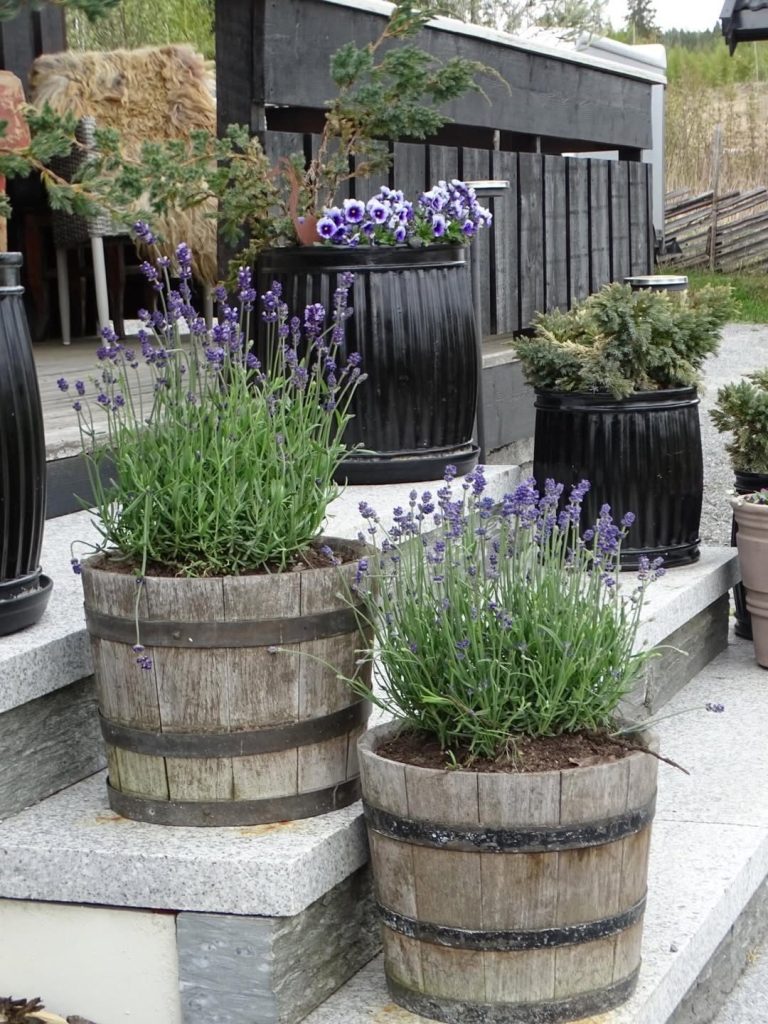
Growing lavender in pots gives you flexibility in placement and makes the plants easier to care for. Choose containers at least 12 to 16 inches wide with drainage holes to prevent root rot.
Use a well-draining potting mix or blend equal parts regular potting soil with perlite or sand. Terra cotta pots work especially well because they allow excess moisture to evaporate through the sides.
Place your potted lavender in full sun where it gets at least 6 hours of direct sunlight daily. Container-grown plants dry out faster than those in the ground, so check the soil regularly. Water only when the top inch of soil feels dry.
You can group multiple lavender containers together for impact or mix them with other drought-tolerant plants. Move pots to sheltered locations during harsh winter weather if you live in colder zones.
Pairing with Globe Thistle and Allium
Globe thistle (Echinops) creates striking contrast with lavender through its spherical blue flowers and spiky texture. The steel-blue globes sit atop tall stems from mid-summer to early fall, extending your garden’s bloom time after lavender fades.
Plant globe thistle 2 to 3 feet behind lavender since it grows taller at 3 to 4 feet. Both plants need full sun and well-draining soil, making them natural companions in waterwise borders.
Ornamental allium adds another layer of interest with its distinctive globe-shaped flowers on tall stems. The purple, pink, or white blooms of allium appear in late spring to early summer, often overlapping with lavender’s peak flowering period.
Space allium bulbs throughout your lavender planting in groups of 5 or more for the best visual effect. The slender stems of allium rise above the bushy lavender without blocking views or crowding the plants.
Designing with Blue Fescue and Festuca Glauca
Blue fescue (Festuca glauca) brings year-round color and fine texture to lavender plantings. This compact ornamental grass forms neat mounds of silvery-blue foliage that echo lavender’s gray-green leaves.
Plant blue fescue 12 inches apart along the front edge of lavender borders or between larger lavender plants. The grass stays small at 8 to 12 inches tall, making it perfect for edging.
The cool blue tones of Festuca glauca complement lavender’s purple blooms without competing for attention. Both plants prefer lean soil and drought conditions once established.
Blue fescue works well in modern landscape designs where you want clean lines and limited color. Combine these two plants in rock gardens, along pathways, or in contemporary garden beds for a low-maintenance display.
Using Lavender with Ornamental Grasses
Ornamental grasses add movement and softness that contrasts with lavender’s structured flower spikes. The wispy texture of grasses like Miscanthus and Pennisetum creates visual interest as they sway in the breeze.
Plant taller grasses like feather reed grass or Karl Foerster grass behind lavender to create a layered border. These vertical grasses grow 3 to 5 feet tall and provide a graceful backdrop for 2 to 3 foot lavender plants.
Use medium-height grasses such as fountain grass alongside lavender in mixed borders. The arching habit and feathery plumes offer textural contrast without overwhelming the lavender.
Key combinations to try:
- Lavender with Mexican feather grass for a soft, flowing look
- Lavender with switchgrass for height and fall color
- Lavender with little bluestem for a prairie-inspired planting
Space grasses at least 2 feet away from lavender to ensure good air circulation and prevent moisture buildup. Both types of plants benefit from full sun and minimal watering once established.
What to Avoid: Incompatible Plants and Common Mistakes
Lavender’s Mediterranean origins mean it thrives in conditions that many popular garden plants can’t tolerate. Plants that need regular watering, shade, or nutrient-rich soil will create problems when planted alongside lavender.
Moisture-Loving Plants to Avoid
Plants that need constant moisture are your lavender’s worst enemies. Hostas require consistent watering and shade, which creates the exact opposite environment that lavender needs to survive. If you try to keep hostas happy with regular watering, your lavender will likely develop root rot.
Hydrangeas are heavy water users that demand fertile soil. They need so much moisture that you’ll face an impossible choice between overwatering your lavender or letting your hydrangeas wilt. Impatiens present the same problem since they need frequent watering and partial shade to thrive.
Ferns evolved in damp forest environments with high humidity and organic-rich soil. These conditions will suffocate lavender roots and promote fungal diseases. Azaleas and camellias need acidic, moisture-retentive soil, while lavender prefers alkaline conditions and well-draining soil. Oleander (Nerium oleander) also requires more water than lavender can tolerate.
Common Issues for Companion Planting with Lavender
The biggest mistake you can make is mixing irrigation zones. When you plant lavender with water-loving companions, you’ll end up with either rotted lavender roots or stressed neighboring plants. Poor drainage kills more lavender than almost any other factor.
Another common error is ignoring soil requirements. Don’t add rich compost or fertilizer to lavender beds just because nearby plants need it. Lavender actually performs better in poor, rocky soil.
Shade is also a critical issue. Planting tall moisture-lovers near lavender blocks the full sun it needs. You should always ensure lavender gets 6-8 hours of direct sunlight daily. Creating separate garden zones for plants with different needs prevents these conflicts entirely.

