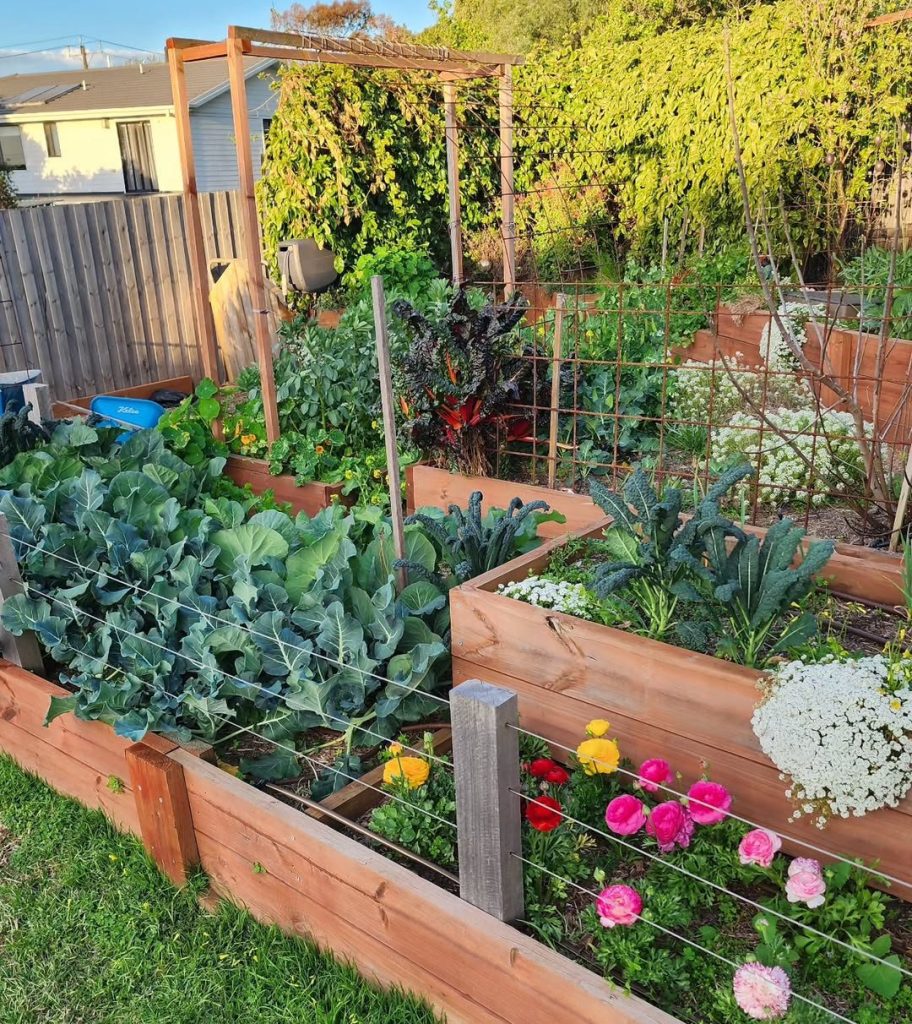

Six raised beds. One growing season. That’s all it takes to put real food on the table for a family of five – if you set the beds up the right way. 🥕
Most people start a raised bed garden by planting whatever looks good at the nursery. That works fine for a few tomato plants, but it falls apart fast once you’re trying to grow enough to actually feed people. The fix is simple: group your plants by type, not by preference. Each bed gets a job. Climbers go together. Greens go together. Roots go together.
This makes watering easier, pest control easier, and harvest timing easier – because plants with similar needs are growing side by side instead of fighting each other for sun, space, and water. 🌱
Here’s the six-bed plan, bed by bed.
Planning Your Layout
A standard raised bed runs about 4 feet by 8 feet, which gives you 32 square feet of growing space per bed. Six beds gets you to roughly 192 square feet total. That’s enough room to grow a meaningful amount of vegetables, herbs, fruit, and cut flowers for a household of five, without turning your backyard into a full-time farm.
Before you plant anything, walk your yard and track the sun for a full day. Most of these beds need 6 to 8 hours of direct sun. If part of your yard only gets 4 hours, that’s where the leafy greens bed goes, since greens tolerate partial shade better than tomatoes or peppers do.
Group beds by water needs too. Strawberries and herbs like consistent moisture. Root vegetables prefer slightly drier soil between waterings. If you can position beds with similar water needs near each other, you’ll save time on irrigation and avoid overwatering one crop while underwatering another.
The Six Beds
Climbing & Vining Bed
What’s in it: Sugar snap peas, snow peas, cucumber, marigolds
This bed needs vertical support before anything goes in the ground. A simple trellis made from wood stakes and garden netting works well and keeps peas and cucumbers off the soil, which cuts down on rot and makes harvesting much easier.
Plant peas early, since they prefer cooler weather and will struggle once summer heat sets in. Cucumbers go in once the soil has warmed, typically a couple weeks after your last frost date. Marigolds go on both ends of the bed. They’re not just decoration, they help repel aphids and other pests that go after your vines.
Leafy Greens Bed
What’s in it: Kale, spinach, lettuce, radish, beets, onion
This is the bed where succession planting matters most. Lettuce and spinach bolt fast once temperatures climb, so instead of planting the whole bed at once, plant a third of it every two weeks. That way you’re harvesting a steady supply instead of getting hit with everything at once and then nothing for a month.
Radishes are the fastest payoff in the whole garden, ready in as little as three to four weeks. Kale and beets take longer but hold up better in heat, so they can anchor the bed while you cycle faster crops around them.
Strawberry & Herb Bed
What’s in it: Strawberries, cilantro, basil
Strawberries are perennial, so this bed is a long-term investment rather than a one-season planting. Give them their own dedicated space and they’ll come back and spread on their own over the following years.
Cilantro bolts quickly in heat, similar to lettuce, so plant it in succession if you want a steady supply for salsa or garnish. Basil prefers warmer weather and pairs well with strawberries since both like consistent moisture without sitting in soggy soil.
Brassica & Root Bed
What’s in it: Broccoli, green onion, carrots, green beans, cabbage, nasturtium
Broccoli and cabbage take up real space and need consistent watering to avoid bitter, woody heads. Carrots need loose, rock-free soil to grow straight, so if your native soil is heavy clay, this is the bed where good raised bed soil really pays off.
Nasturtium goes along the border, similar to the marigolds in the vining bed. It acts as a trap crop, drawing aphids away from your brassicas. Green beans are one of the higher-yield crops per square foot in this plan, so don’t skimp on space for them.
Salsa Garden Bed
What’s in it: Tomatoes, parsley, bell pepper, jalapeño pepper, marigolds
This bed is built around one outcome: salsa. Tomato cages go in at planting time, not after the plants get tall and floppy. Bell peppers and jalapeños need warm soil, so don’t rush them in before nighttime temperatures are reliably above 55°F.
Marigolds line the full border here rather than just the corners, since tomatoes are prone to pest pressure from aphids and whiteflies. Parsley fills in the gaps between larger plants and doubles as both a salsa ingredient and a pest deterrent for tomato hornworms.
Cut Flower Bed
What’s in it: Zinnias, cosmos, sunflowers, mixed annuals
This bed isn’t for eating, but it earns its spot. Flowers bring in pollinators, which improves yield across every other bed in the garden, especially the vining bed and the salsa bed where bees are doing the work of pollinating cucumbers, tomatoes, and peppers.
Zinnias and cosmos are reliable bloomers that keep producing all summer if you cut them regularly. Sunflowers need their own space since they grow tall and can shade out smaller flowers nearby.
Care Basics
Sun: Most of these crops need 6 to 8 hours of direct sun daily. Less than that and you’ll see leggy growth and lower yields, especially from tomatoes and peppers.
Water: Water deeply in the morning rather than a little bit every day. Aim for 1 to 2 inches per week, including rainfall. Morning watering gives leaves time to dry out before evening, which helps prevent fungal issues.
Succession planting: Don’t treat each bed as a one-time planting. As soon as radishes or lettuce finish, replant that space with something else suited to the season. This is how you keep beds productive from spring through fall instead of going empty after the first harvest.
What “Feeding a Family of Five” Actually Looks Like
It’s worth setting realistic expectations here. Six beds at this scale won’t replace your weekly grocery trip entirely, but they will meaningfully cut your produce spending and give you a steady supply of fresh vegetables, herbs, and fruit through the growing season. A well-managed salsa bed alone can produce enough tomatoes and peppers for dozens of jars of salsa or sauce. The leafy greens bed, with proper succession planting, can supply salads for months.
First-year yields are usually lower than what you’ll get in year two or three, once your soil has had time to build up organic matter and you’ve learned the rhythm of your specific yard.
Common Mistakes to Avoid
Overcrowding. It’s tempting to cram in extra plants, but overcrowded beds compete for water and nutrients, which lowers yield across the board rather than increasing it.
Wrong bed placement. Putting the leafy greens bed in full sun all day, or the salsa bed in partial shade, will hurt your harvest no matter how well you’ve planted within the bed itself.
Skipping pest-control companions. Marigolds and nasturtium aren’t optional extras. Pull them out and you’ll likely see more aphid and pest pressure on the crops they’re protecting.
Start Small, Grow Big, Eat Well
You don’t have to build all six beds in one weekend. Start with one or two, get a feel for your soil and sun, and expand from there. The plan works whether you build it all at once or add a bed each season.
Want the full visual layout? Save the raised bed garden plan infographic and keep it handy as you map out your own backyard.