
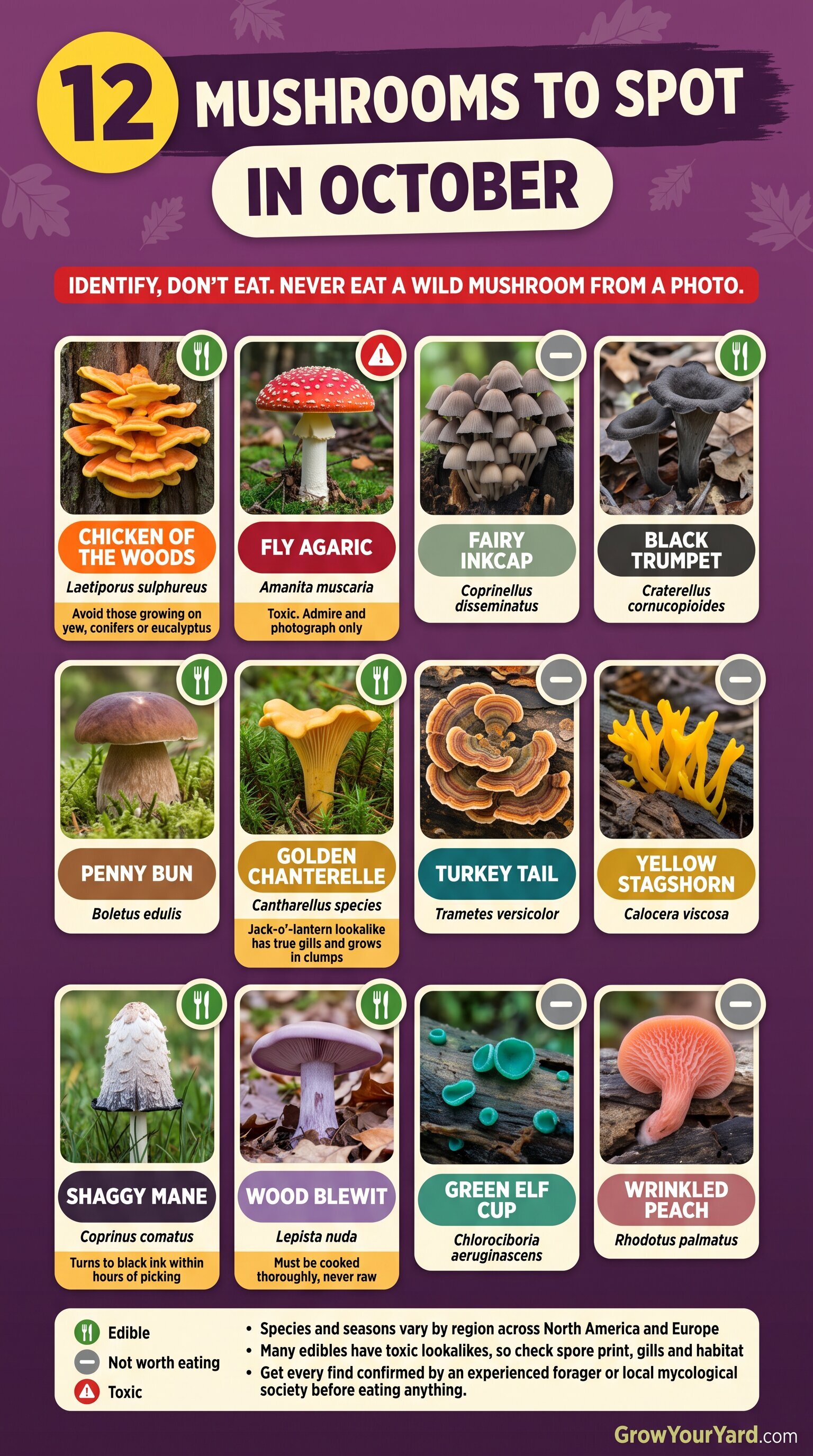
October is peak mushroom season. 🍄
After the first cool, damp nights of autumn, the woods and fields quietly fill with fungi in every color and shape you can imagine.
Going out to find them is one of the great free pleasures of fall. It turns an ordinary walk into a treasure hunt.
But before we start, one rule matters more than everything else on this page put together.
⚠️ Identify, don’t eat. Never eat a wild mushroom from a photo.
This guide is for spotting and enjoying mushrooms, not for filling your dinner plate.
Several deadly species look almost identical to tasty ones, and a photo or an app simply cannot tell them apart safely.
If you ever want to eat a wild find, it must be confirmed in person by an experienced forager or a local mycology group first. Every single time, no exceptions.
With that firmly in mind, here are twelve beautiful mushrooms to look out for this October, and how to recognize each one. 🔍
Edible A prized find, once expertly confirmed.
Not worth eating Harmless, but leave it to enjoy.
Toxic Admire and photograph only.
1. Chicken of the Woods
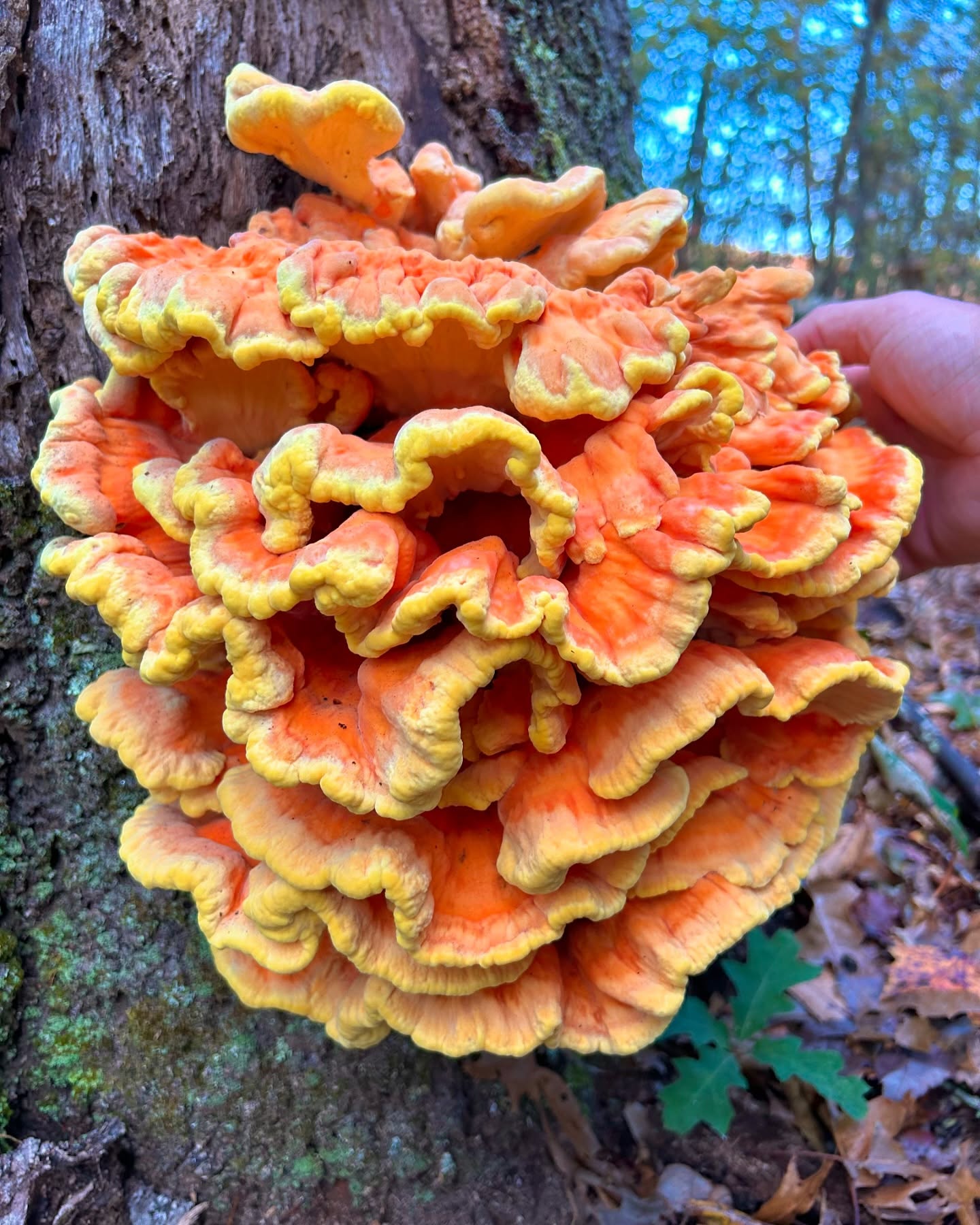
Edible
Laetiporus sulphureus
You cannot miss this one. It grows in big, overlapping shelves of brilliant sulphur-yellow and orange, fanning straight out of tree trunks and stumps.
It is named for its soft, meaty texture, which really does echo chicken when cooked. A favorite with foragers for good reason.
One important caveat: avoid any growing on yew, conifers or eucalyptus, as these can take up irritants from the tree and cause a reaction. And even good ones should be eaten young and well cooked.
2. Fly Agaric
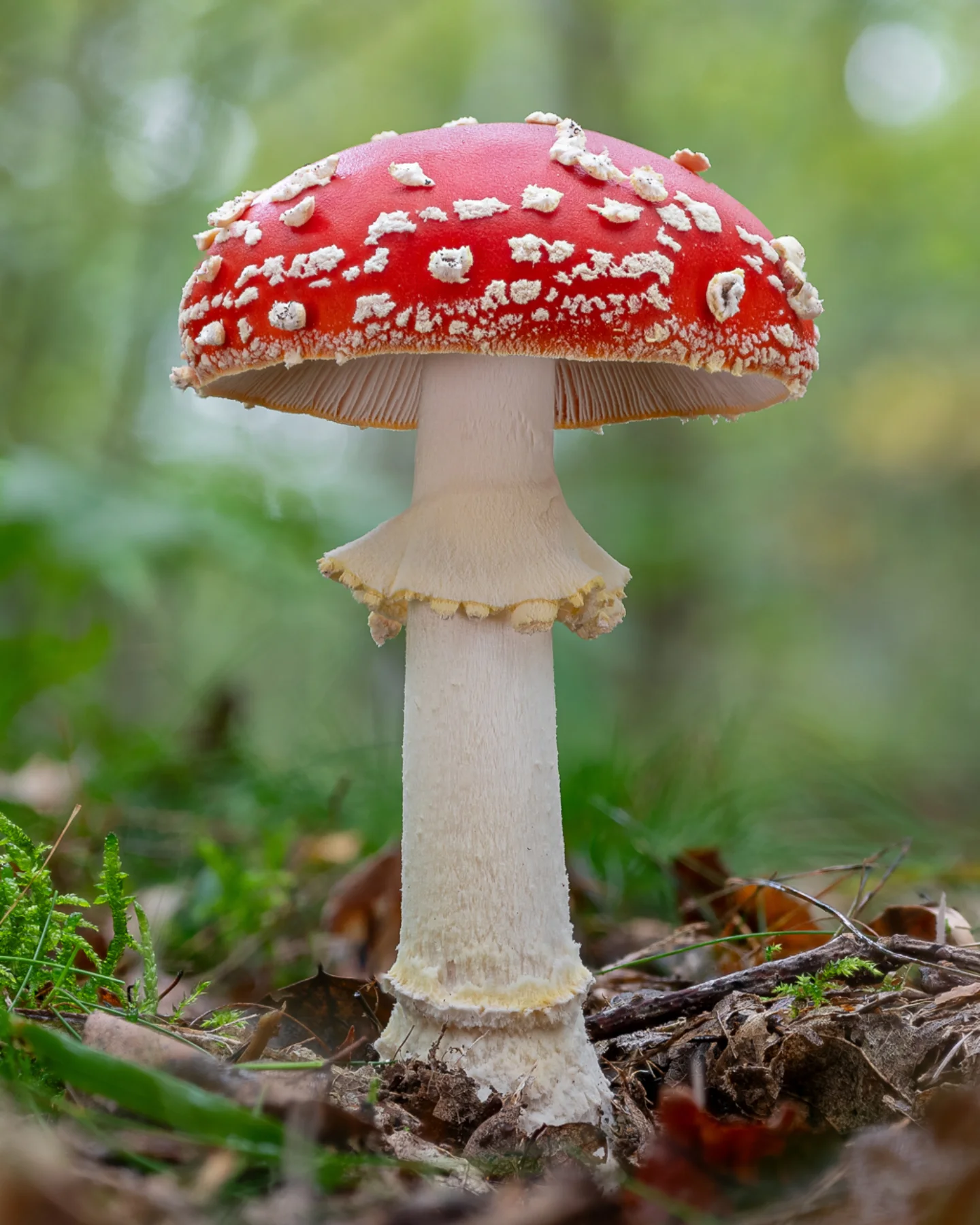
Toxic
Amanita muscaria
The storybook toadstool itself. That glossy scarlet cap flecked with white makes it the most recognizable mushroom on earth.
It is also genuinely toxic, so this is strictly one to admire and photograph, never to touch and taste.
You will often find it under birch and pine. Enjoy the fairy-tale look, snap your photo, and move on.
3. Fairy Inkcap
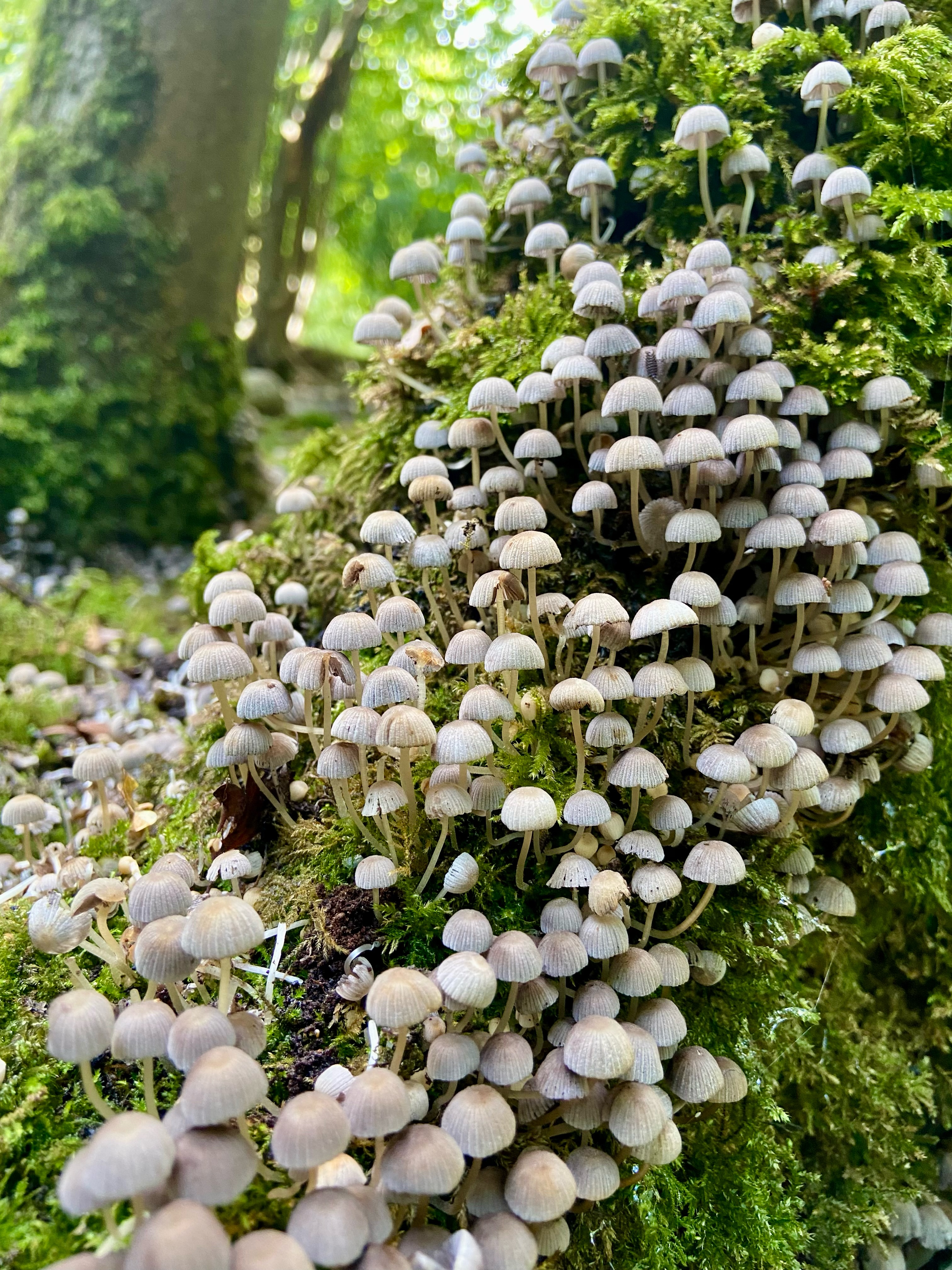
Not worth eating
Coprinellus disseminatus
These appear in their hundreds, a shimmering crowd of tiny pleated bells swarming over old stumps and buried wood.
They are far too small and flimsy to be worth eating, but they are a lovely sight in their sheer numbers.
Catch them early, as this one is fleeting and often fades away within a day or two.
4. Black Trumpet
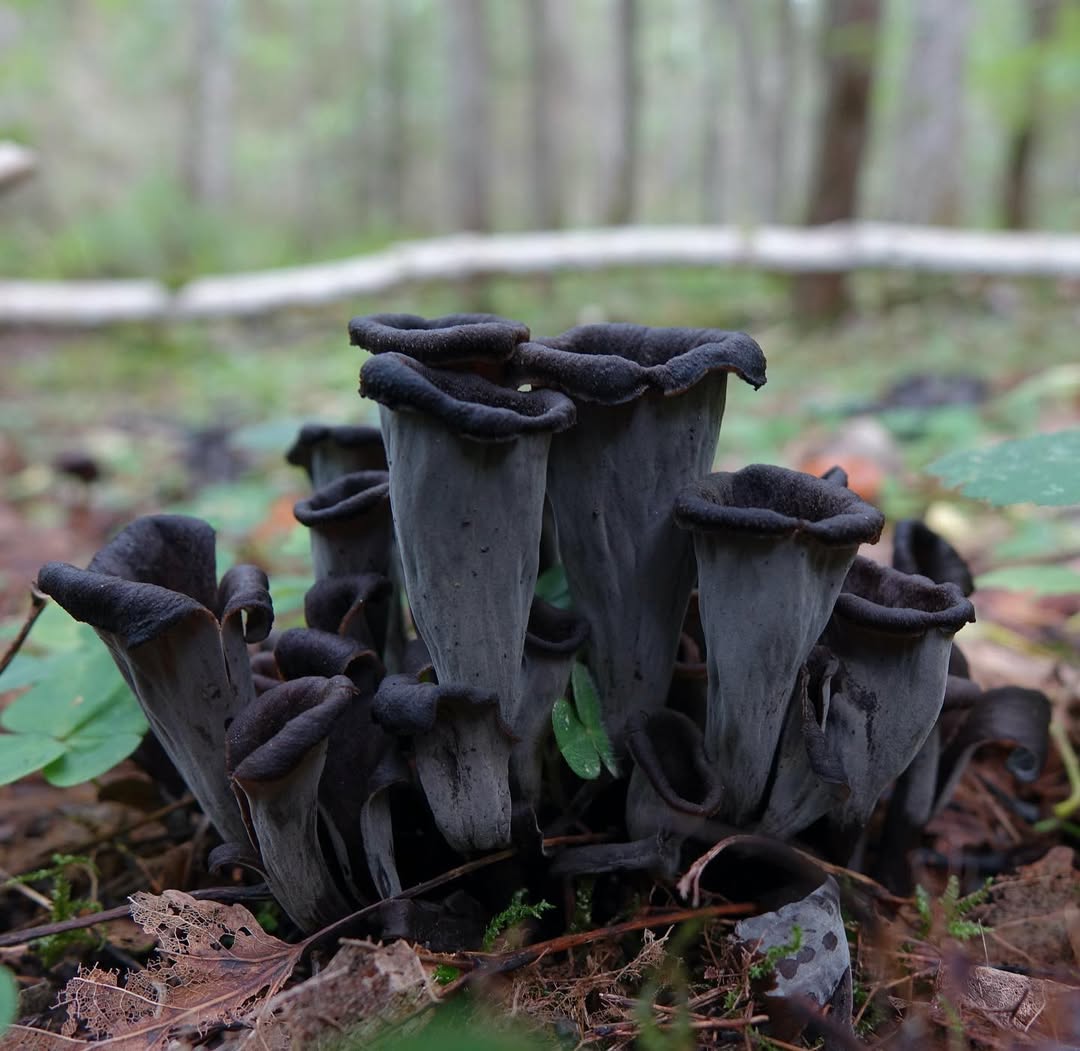
Edible
Craterellus cornucopioides
Also known as the horn of plenty, this dark, trumpet-shaped beauty is a prized find, though a tricky one.
Its sooty grey-black color blends perfectly into the leaf litter, so spotting your first one takes a patient eye. After that, you tend to see the whole patch.
It is treasured in the kitchen for its rich, smoky flavor, and reassuringly it has no dangerous lookalikes.
5. Penny Bun
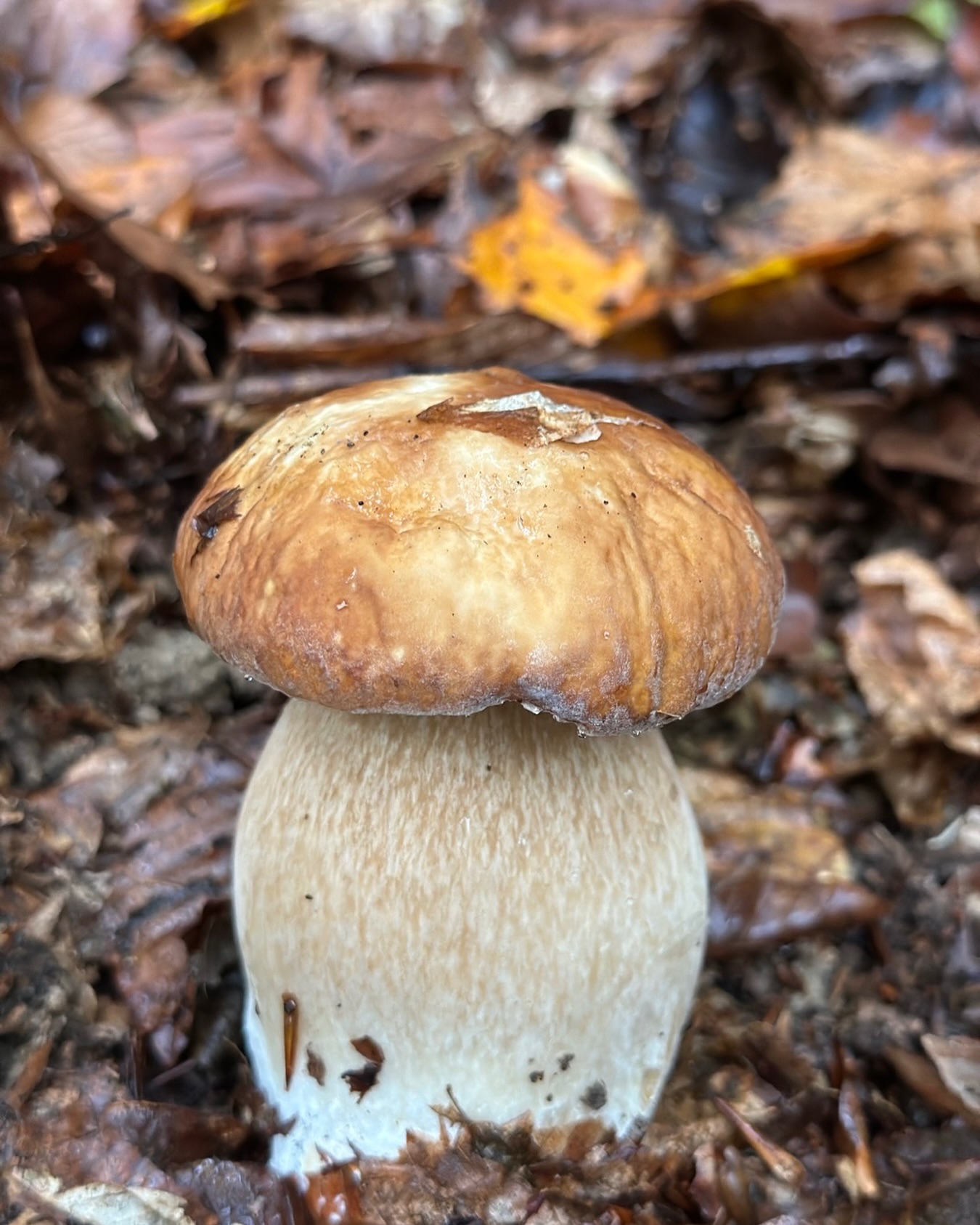
Edible
Boletus edulis
The king of edible mushrooms, better known to many as the cep or porcini.
It has a glorious domed cap the color of a well-baked bun, a fat bulbous stem, and a sponge of tiny pores underneath instead of gills.
Prized the world over for its deep, nutty flavor, it is the one many foragers dream of finding under oak and beech.
6. Golden Chanterelle
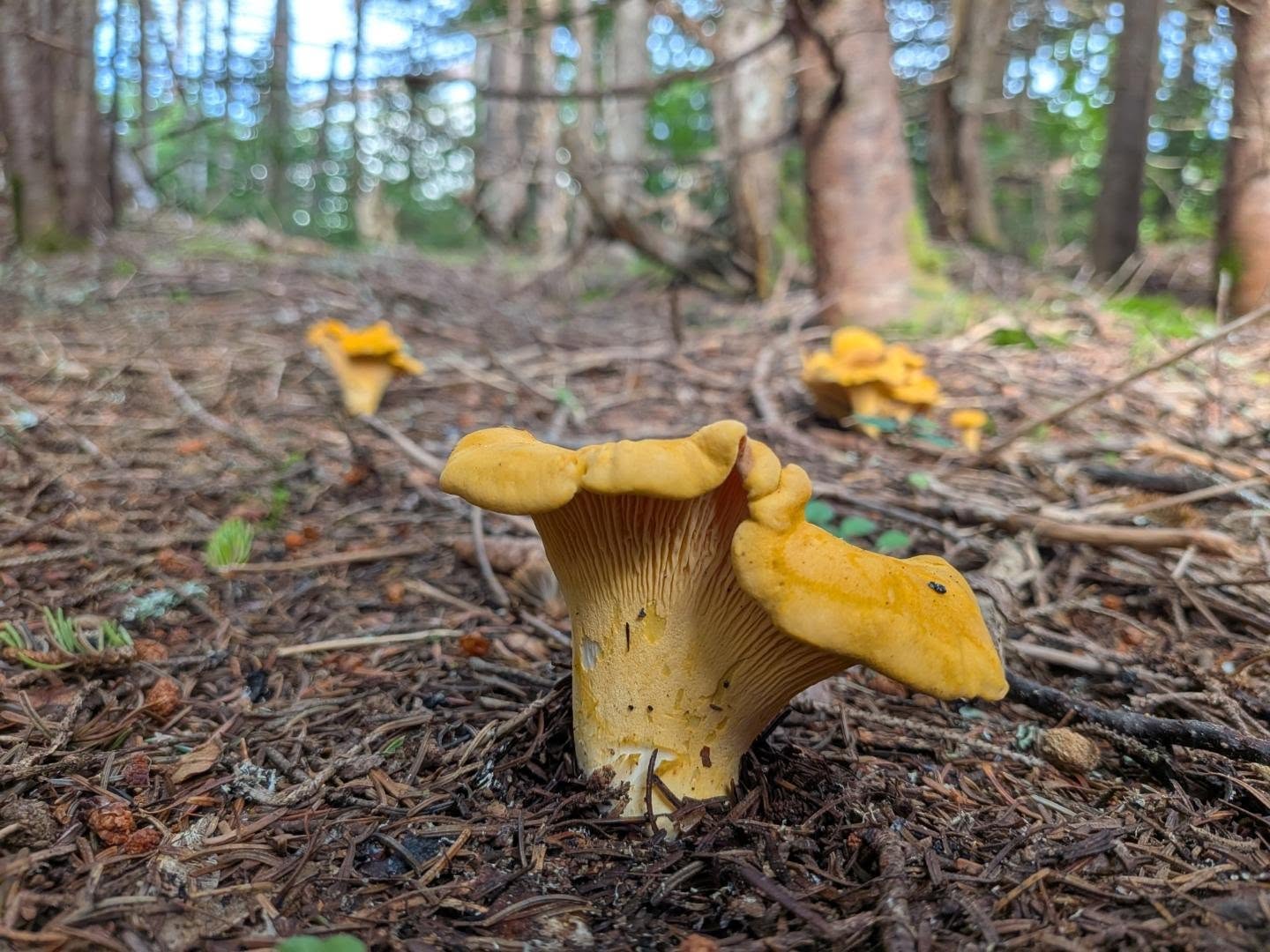
Edible
Cantharellus species
A glowing egg-yellow funnel with a gentle apricot scent, the chanterelle is one of the most loved mushrooms there is.
Here is the crucial spotting tip. Its toxic lookalike, the jack-o’-lantern, has true, sharp gills and grows in dense clumps on wood.
A real chanterelle instead has soft, blunt ridges that run down the stem, not true gills, and tends to grow from the ground. Learn that one difference well.
7. Turkey Tail
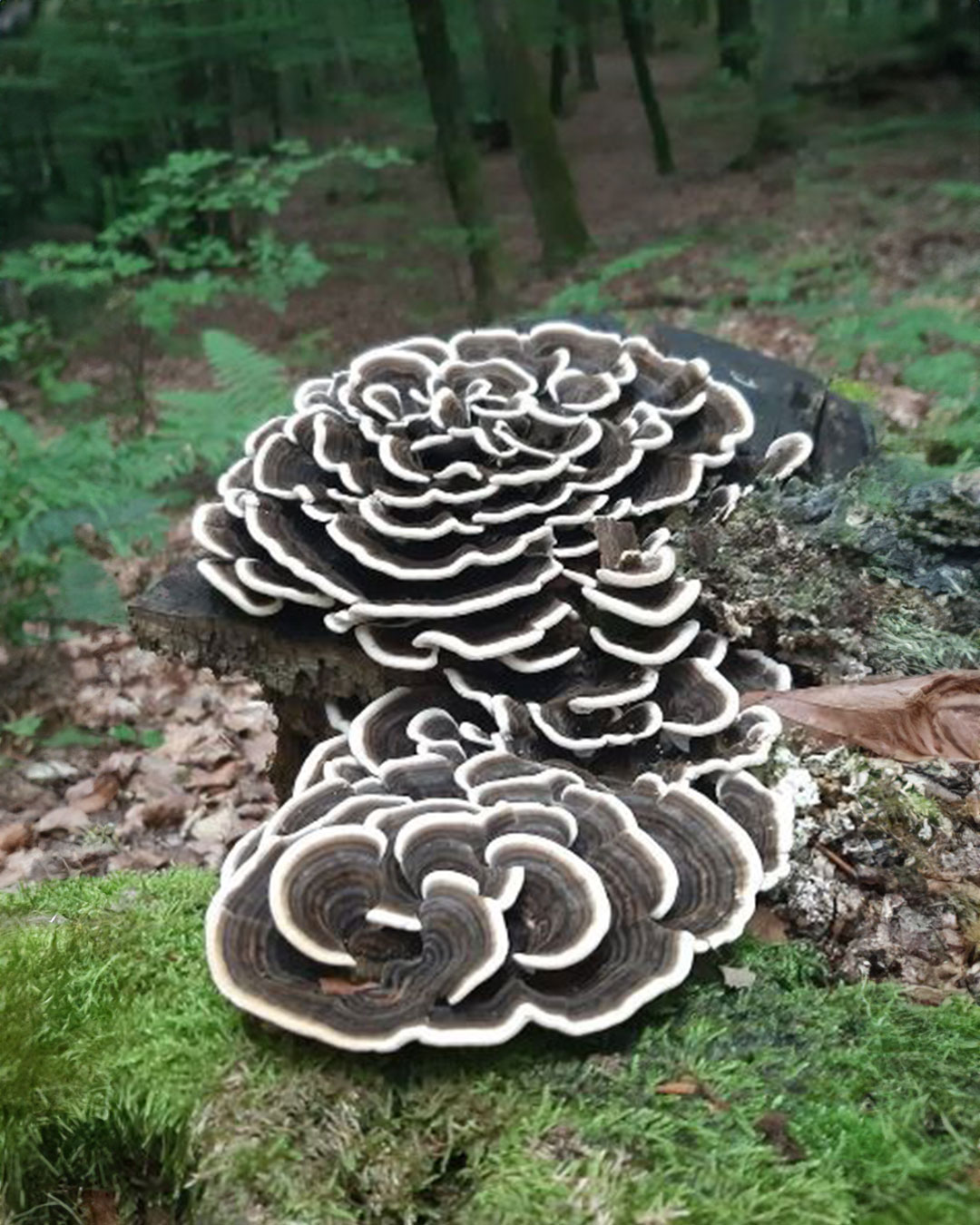
Not worth eating
Trametes versicolor
These pretty, banded brackets really do look like the fanned tail of a turkey, in rings of brown, tan, grey and rust.
They are far too thin and leathery to eat as food, though they have a long history of being brewed into teas.
You will find them lining fallen logs and stumps all year, and they add a lovely splash of pattern to the autumn woods.
8. Yellow Stagshorn
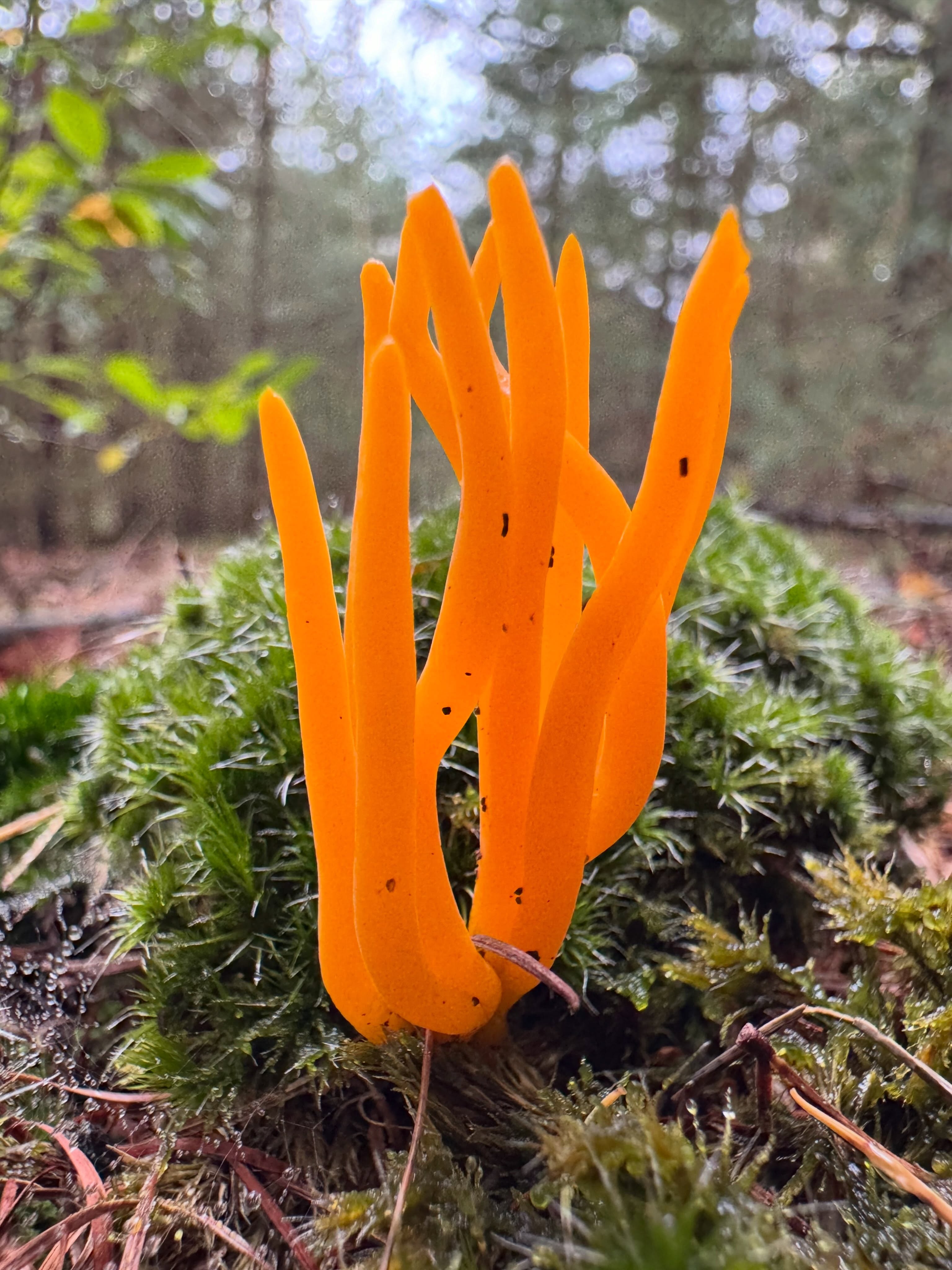
Not worth eating
Calocera viscosa
Little bursts of bright, almost neon yellow, shaped like tiny antlers sprouting from rotting conifer wood.
It has a curious jelly-like, slightly sticky texture, which is where the “viscosa” in its name comes from.
Not one for the pot, but a cheerful pop of color to spot on a damp autumn log.
9. Shaggy Mane
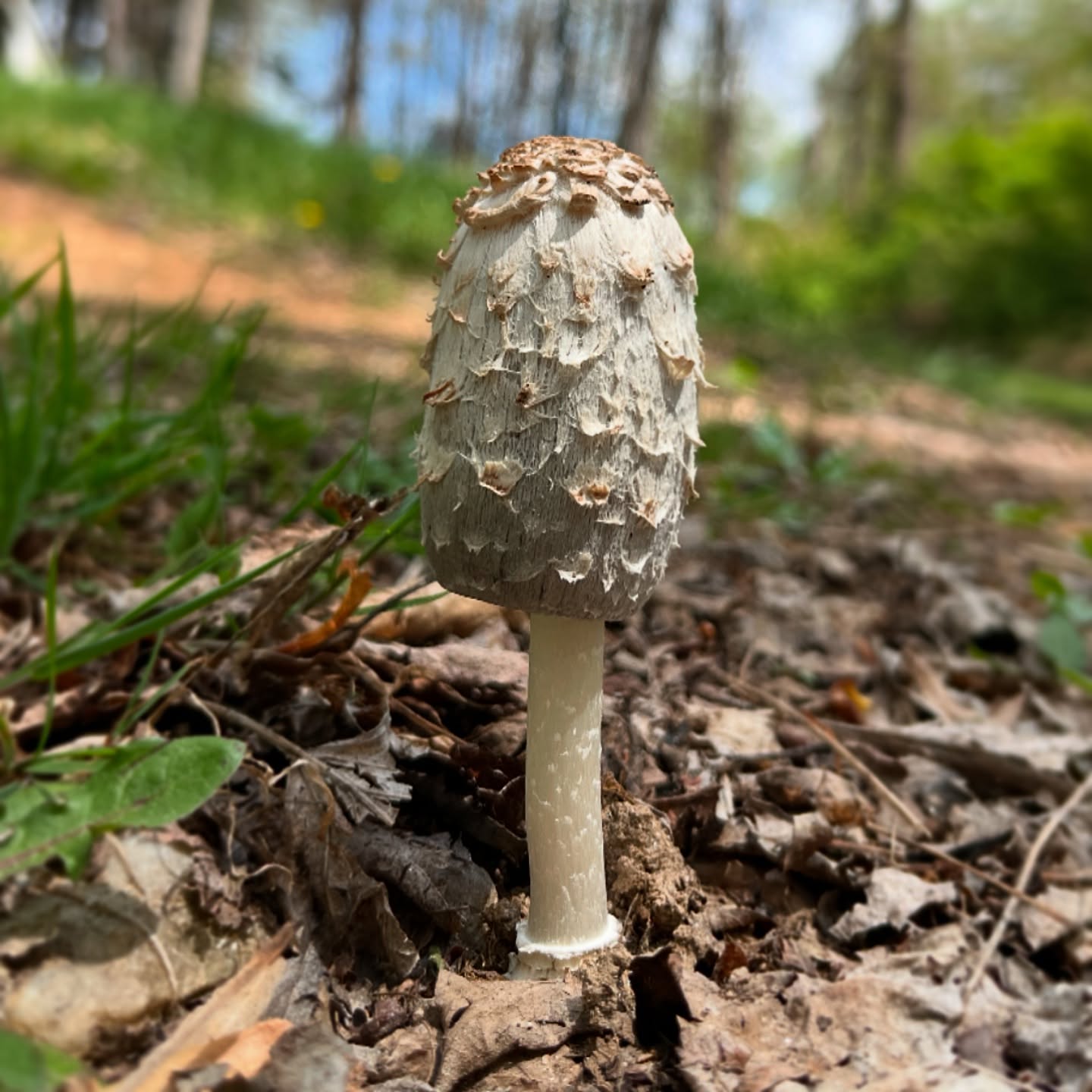
Edible
Coprinus comatus
Also called the lawyer’s wig, this tall white column wrapped in shaggy, upturned scales often pops up on lawns and grassy verges.
It has a remarkable party trick: within hours of being picked, the cap dissolves itself into a pool of black, inky liquid.
That means it has to be used almost immediately if at all. Blink and your find has turned to ink.
10. Wood Blewit
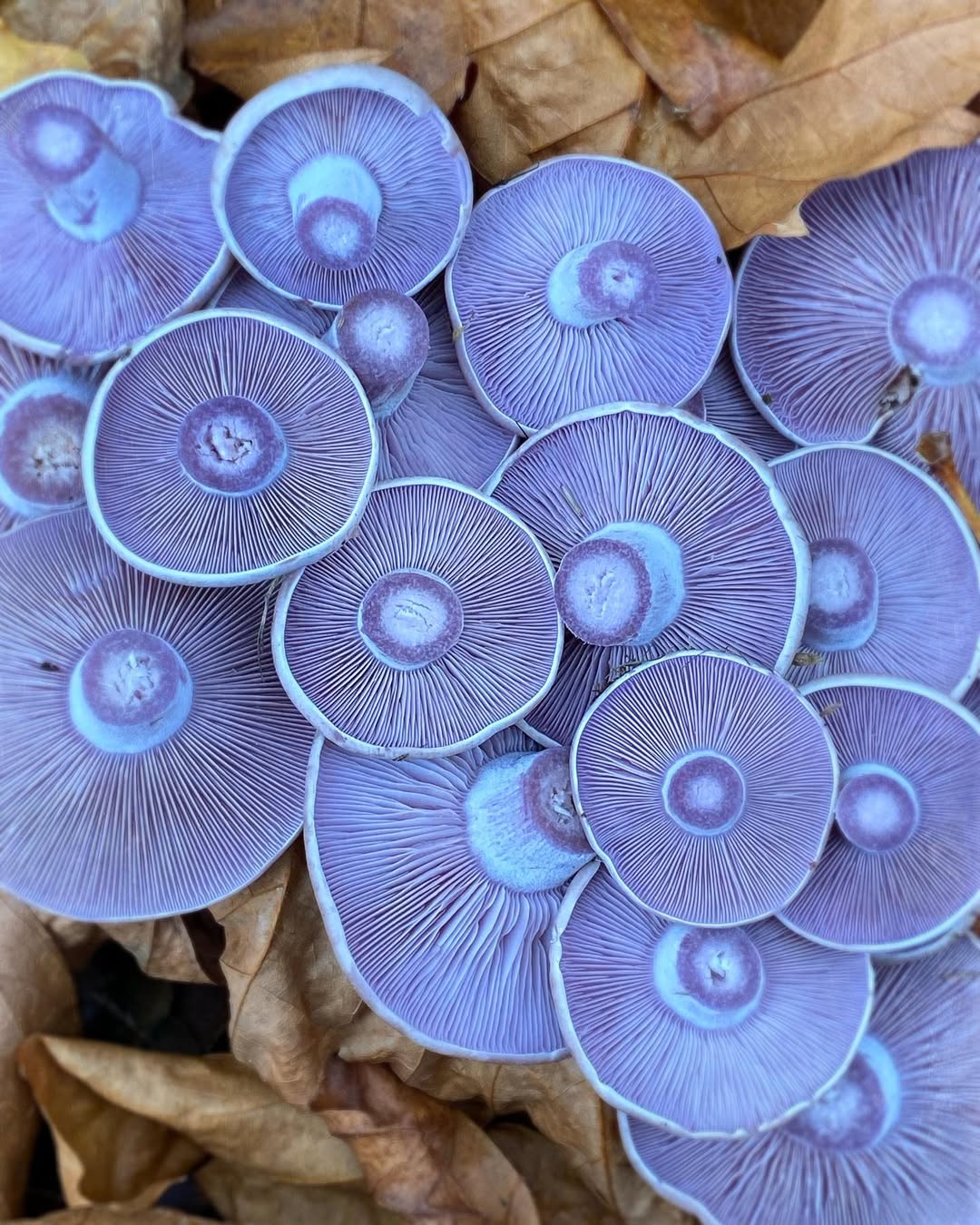
Edible
Lepista nuda
A real surprise of the autumn woods, washed all over in a soft lilac-purple, cap, gills and stem alike.
It is one of the later mushrooms, happily fruiting into the colder months when much else has finished.
A key safety note: it must be cooked thoroughly and never eaten raw, as raw blewits upset the stomach. It also has purple-tinged lookalikes, so this is very much one to get confirmed.
11. Green Elf Cup
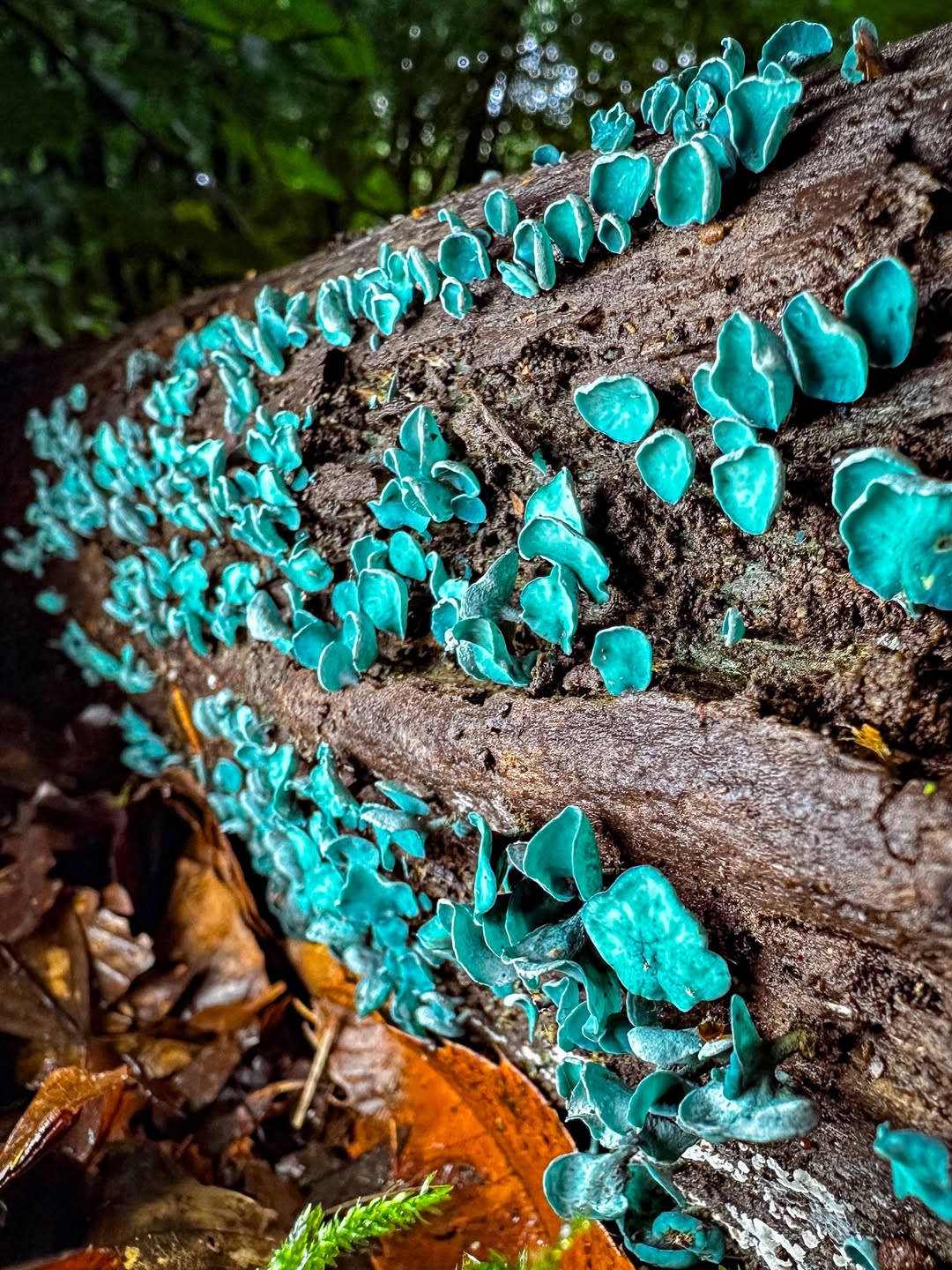
Not worth eating
Chlorociboria aeruginascens
One of the most magical little finds in the whole wood: tiny, saucer-shaped cups of an unreal blue-green.
Often you will spot the color before the cups themselves, because this fungus stains the wood it grows on a vivid green. That stained timber was once prized for decorative woodwork.
Far too small to eat, but an absolute delight to come across.
12. Wrinkled Peach
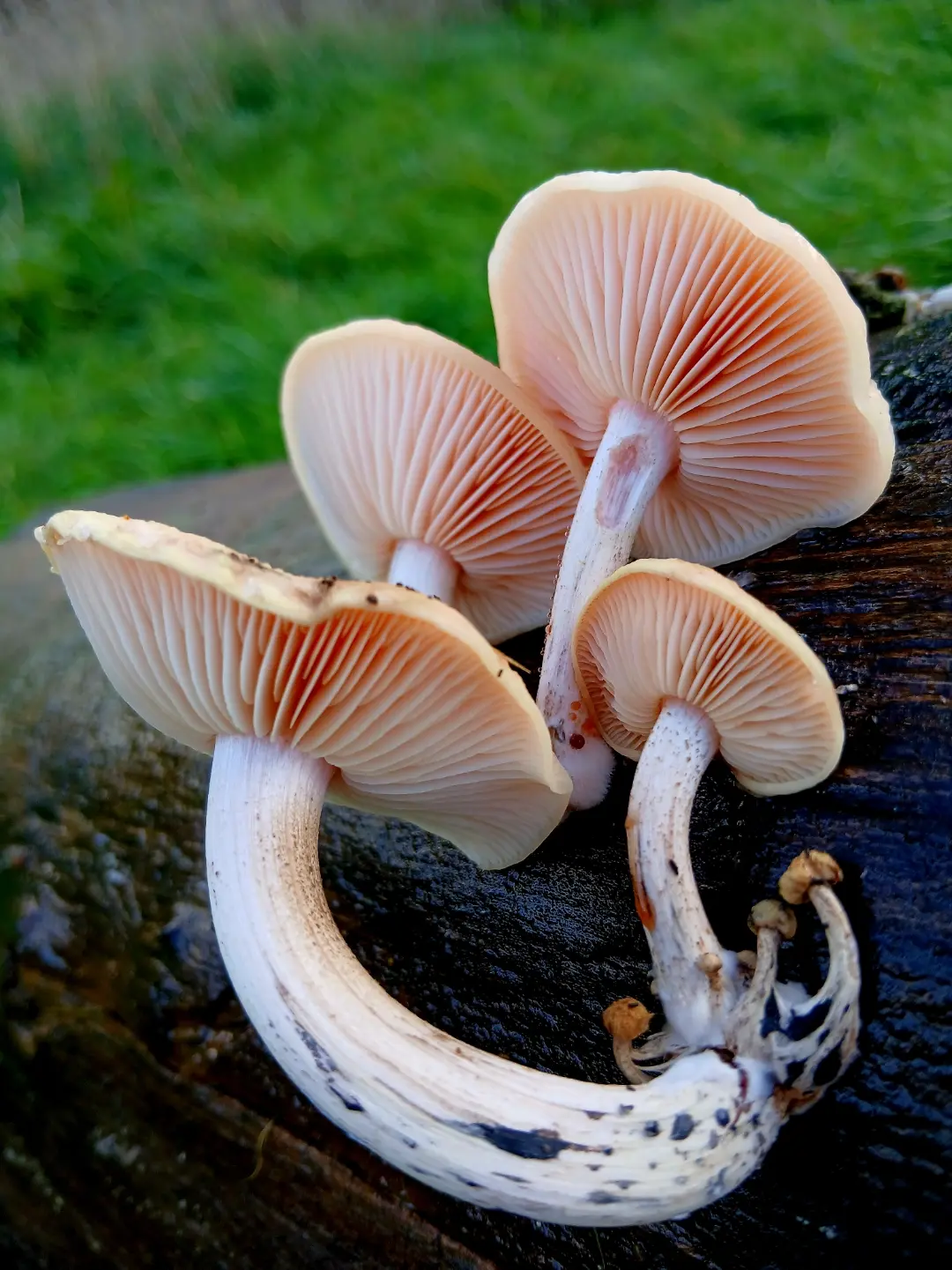
Not worth eating
Rhodotus palmatus
A rare and genuinely beautiful treat to find, with a soft apricot-pink cap covered in a delicate network of raised, wrinkled veins.
It grows on dead and dying hardwood, especially old elm, and finding one feels like a real event.
Because it is uncommon, the kindest thing is simply to photograph it and leave it be for others to enjoy.
A photo is never enough. To tell mushrooms apart properly, you look at the whole thing, from cap to base, plus where it grows.
Check the spore print
The color of a mushroom’s spores is one of the most reliable clues there is.
Lay a cap gills-down on paper for a few hours and it drops a dusty print. That color, white, pink, brown, black, often separates an edible from a dangerous lookalike.
Look under the cap
Get right underneath. Are there true gills, a sponge of pores, soft blunt ridges, or spines?
This single feature narrows things down fast. The chanterelle versus its toxic lookalike comes down to exactly this: false ridges versus true gills.
Note the habitat
Where a mushroom grows is part of its identity.
Is it on the ground or on wood? Under oak, birch, pine or beech? Growing alone or in a clump? Jot it down, because the same-looking mushroom in a different spot can be a different species.
The golden rules of foraging
Keep these close and you will stay safe and welcome in the woods.
Never eat anything you are not 100% sure of, confirmed in person by an expert, not an app or a book.
Learn the deadly ones first. Knowing what to avoid matters far more than knowing what to pick.
Take only a little, and cut cleanly. Leave plenty behind for wildlife and for the fungus to spread.
Check you are allowed. Many parks and reserves protect their fungi, so foraging may be limited or banned.
Your October mushroom-walk kit
- A basket or paper bag, not plastic, so your finds can breathe and drop spores as you go.
- A small knife for a clean cut and a closer look at the base.
- A soft brush to flick off dirt without squashing delicate caps.
- A good regional field guide, or better still, a knowledgeable friend.
- A camera or phone to record the cap, the underside, the stem and the habitat.
Your mushroom questions, answered
Can I use an ID app to decide if a mushroom is safe to eat?
No, never for eating. Apps are a fun starting point for a name, but they get it wrong often enough to be dangerous. Anything destined for a plate must be confirmed in person by an expert.
Why is October such a good month for mushrooms?
The mix of lingering warmth in the soil and cool, damp autumn nights is exactly what triggers fungi to fruit. It is the richest spotting season of the whole year.
Is it safe to just touch wild mushrooms?
Handling almost all mushrooms, including the toxic ones here, is fine. The danger is in eating them. That said, wash your hands afterward and never put fingers near your mouth mid-walk.
Do these grow where I live?
Many appear across both North America and Europe, but species and seasons vary by region, and lookalikes differ too. Always cross-check against a local guide or group for your own area.
Head out and start spotting
You do not need to pick a single thing to fall in love with mushroom season. Half the joy is simply in the finding.
Grab a basket, pull on your boots, and see how many of these twelve you can spot on your next autumn walk.
Identify, admire, photograph, and leave the eating to the experts. Happy hunting out there. 🍄

