Hostas get a bit of an unfair reputation as boring shade fillers – the plant you stick in that tricky dark corner and forget about. But honestly? They deserve so much more credit. 🌿
Once you start paying attention to hostas, you notice how varied they actually are. Huge blue-grey leaves the size of dinner plates. Tiny chartreuse mounds that glow in low light. Variegated varieties with stripes, splashes, and edges in every shade of green, white, and gold. There’s way more going on than people realise.
They’re also ridiculously easy to grow. Shade that defeats most plants? Hostas thrive. Soil you’ve neglected for years? They’ll cope. Too busy to fuss over your garden? Perfect – they mostly look after themselves.
We’ve pulled together a bunch of hosta garden ideas to show what’s possible, whether you want to fill a shady border, create a striking container display, or build an entire garden around them. 🪴
Let’s get into it.
1. Mixed Hostas in a Stone-Edged Border Alongside the Lawn

One of the most satisfying things you can do with hostas is mix varieties in the same border — different leaf sizes, different colour combinations, different textures sitting side by side. The contrast between a large blue-green variety and a smaller gold-edged one is genuinely striking, and because they’re all hostas, the scheme holds together as a coherent whole rather than feeling muddled.
The stone edging here creates a clean division between the border and the lawn that makes even informal planting look intentional. Red and pink flowering perennials tucked in among the hostas provide the vertical interest and seasonal colour that hostas alone can’t deliver — a useful reminder that hostas work best as the backbone of a planting rather than the entire scheme.
2. A Variegated Hosta With a Pink Flower Spike: Simple and Quietly Lovely
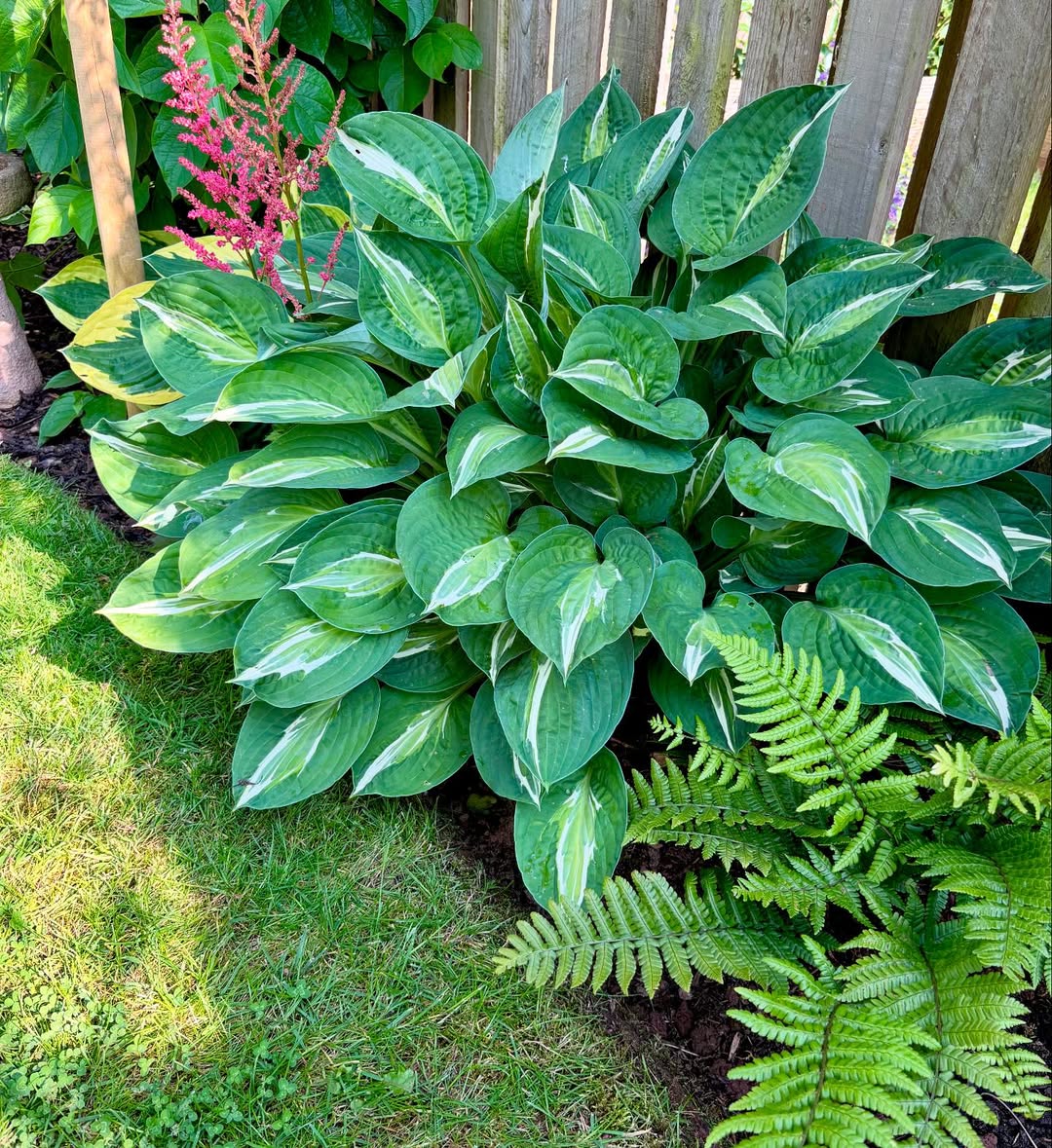
Most people grow hostas for the foliage and treat the flowers as a bonus. But a well-timed flower spike — especially in pink or lavender — adds something that even the most beautifully marked leaves can’t provide. The contrast between those bold green and cream variegated leaves and a slender pink flower stem rising above them is one of the most elegant combinations in the shade garden.
This kind of single-plant display against a simple fence works particularly well because there’s nothing competing for attention. The hosta is allowed to be the whole point. In a corner or against a plain backdrop, one well-grown variegated hosta can be a complete garden feature in itself rather than just a component of a larger scheme.
3. Hostas Lining a Front Path: Low Maintenance Kerb Appeal That Actually Works
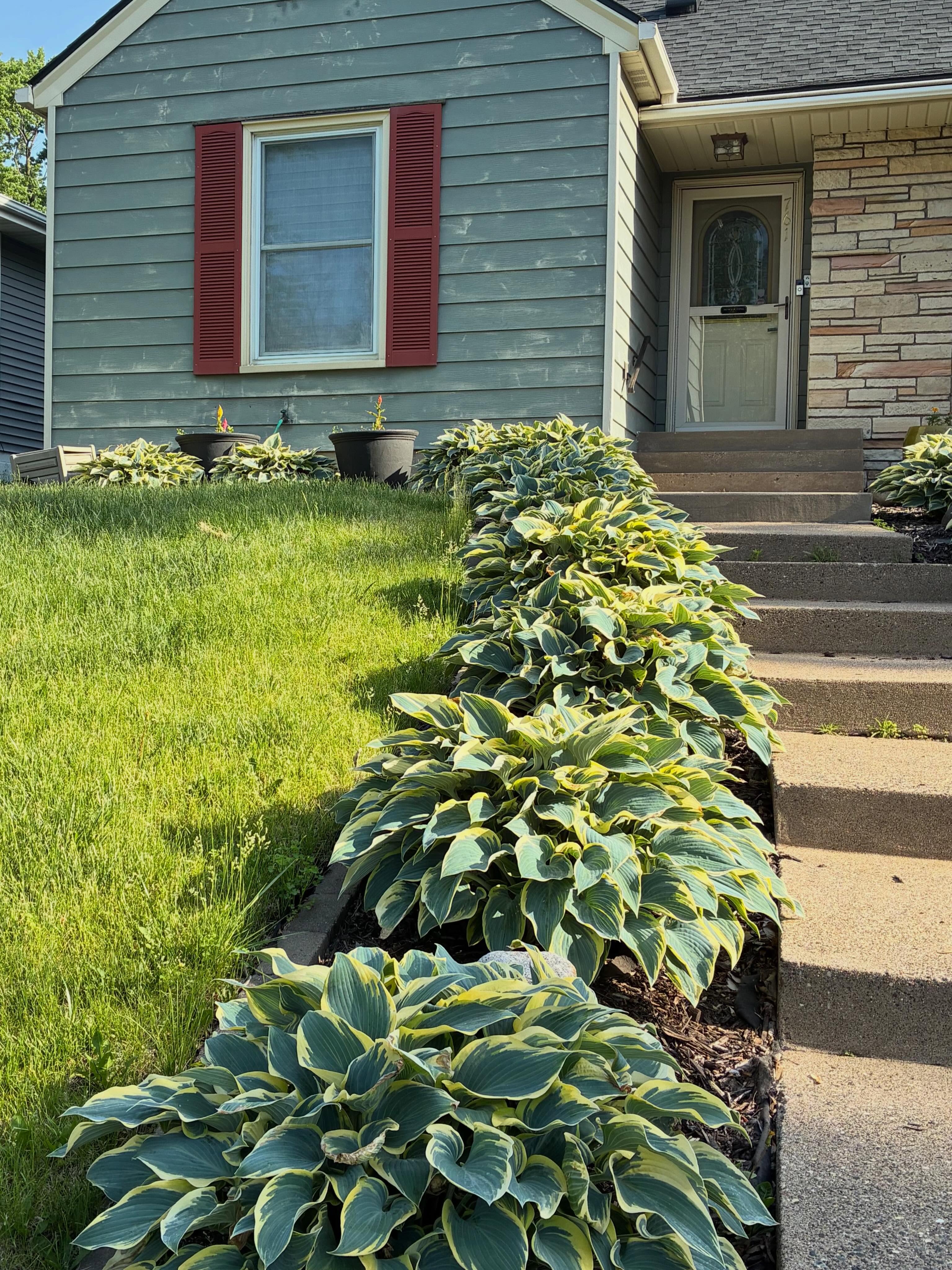
Hostas lining a front path is one of the most sensible planting decisions you can make for a front garden that doesn’t get much sun. They stay lush and green all season without any deadheading or cutting back, they’re neat enough to look deliberate, and they require almost no maintenance beyond dividing every few years when they start to crowd each other out.
The cream-edged variety used here is doing particularly useful work — that pale edge catches light in a way that plain green leaves don’t, which means the path feels brighter and more welcoming even in dull conditions. Against the brown mulch and soft grey-blue siding, the effect is understated but genuinely attractive. This is exactly the kind of planting that looks like it was carefully chosen rather than planted by default.
4. Hostas Around a Curved Deck: Where Hard Landscaping Needs Softening
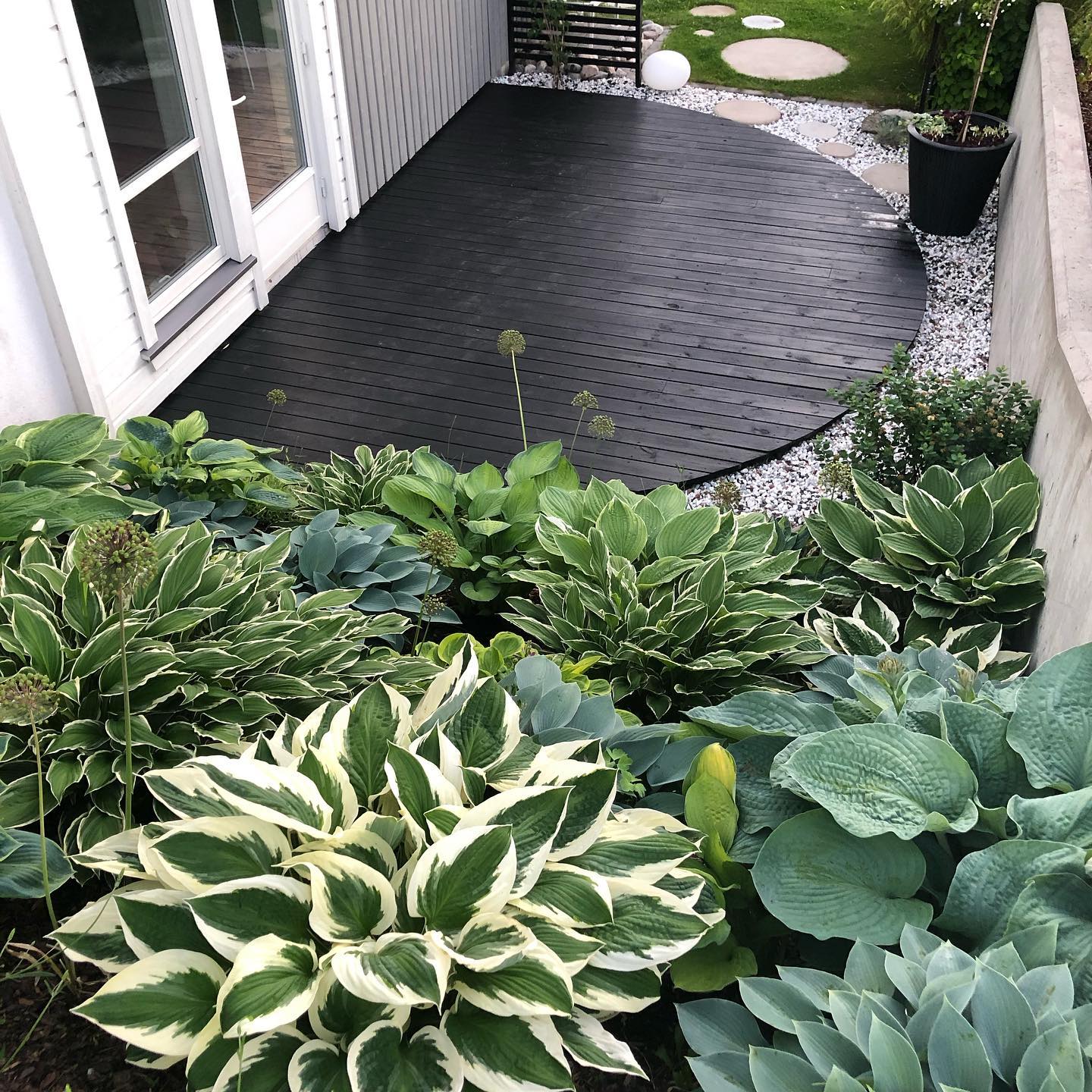
The edge where decking meets the garden is one of the most visually awkward transitions in a garden, and hostas are one of the best plants for resolving it. Their broad leaves spill forward naturally over a hard edge, softening the boundary between the built and planted elements in a way that more upright plants simply can’t. The result is a deck that feels integrated into the garden rather than imposed on it.
The white pebble border here adds a polished finishing detail that elevates what could be a purely functional planting. The combination of dark decking, pale pebbles and the varied greens and creams of the hostas is a genuinely considered colour palette. The stepping stones beyond draw the eye through the planting and give the garden a sense of depth that a flat border can’t achieve.
5. Hostas in Pots on a Shaded Patio: The Container Collection That Keeps Growing
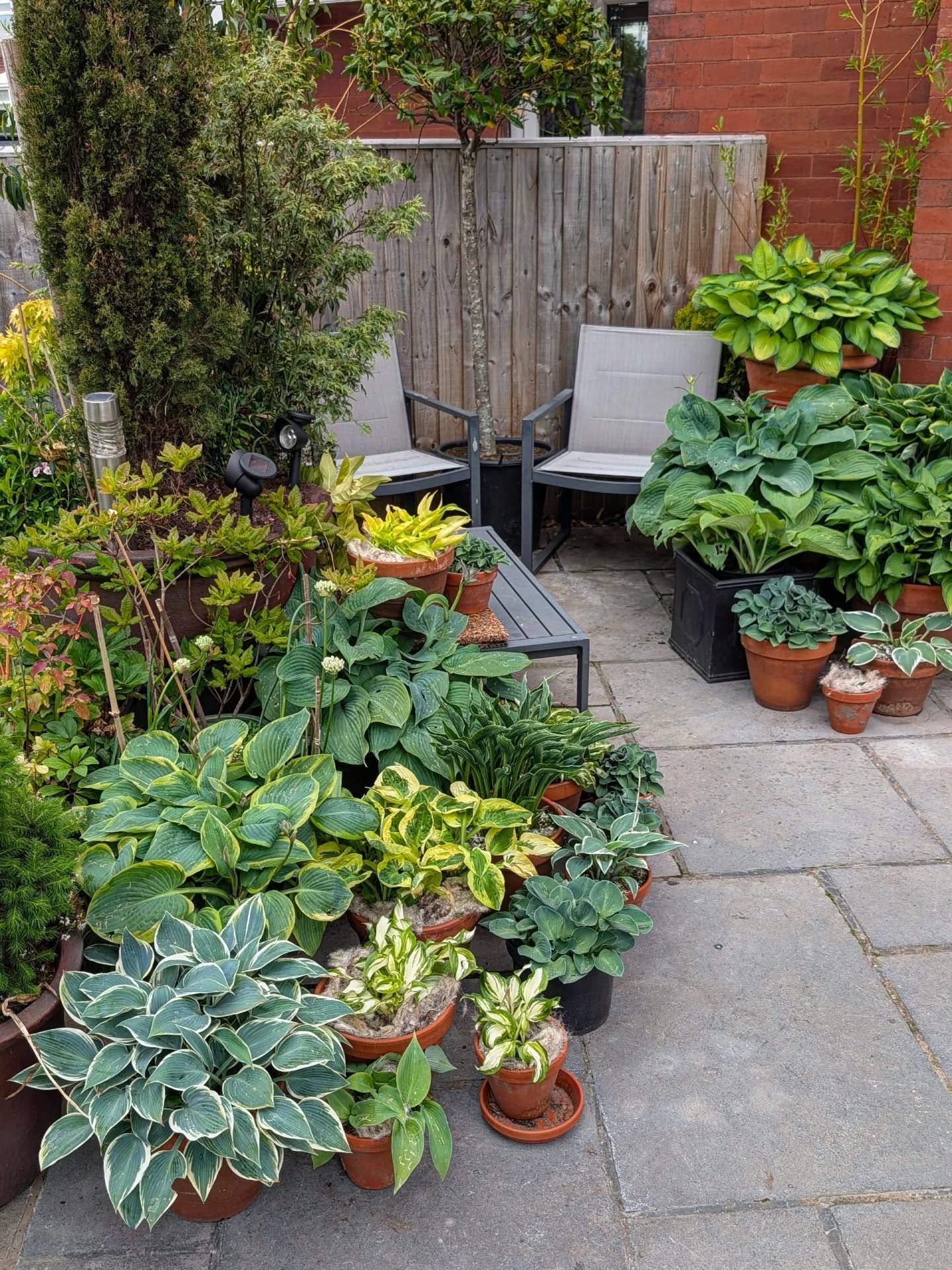
Growing hostas in containers is one of the best decisions you can make for a shaded patio, and once you start it’s hard to stop. Different varieties in different pots, grouped together to create a mini jungle effect — it costs very little, looks genuinely impressive, and because each plant is in its own pot, you can rearrange whenever the mood takes you.
The mix of yellows, greens and variegated patterns here is exactly right — enough variety to keep things interesting but all within the same plant family so nothing jars. The grey chairs alongside show that a hosta-heavy patio doesn’t have to be purely a planting display; it can be a proper seating area that happens to be beautifully planted. The tall tree behind providing scale and structure is the finishing touch that stops the arrangement feeling like a garden centre display.
6. Hostas Under a Large Tree: Using the Awkward Shaded Spot Properly
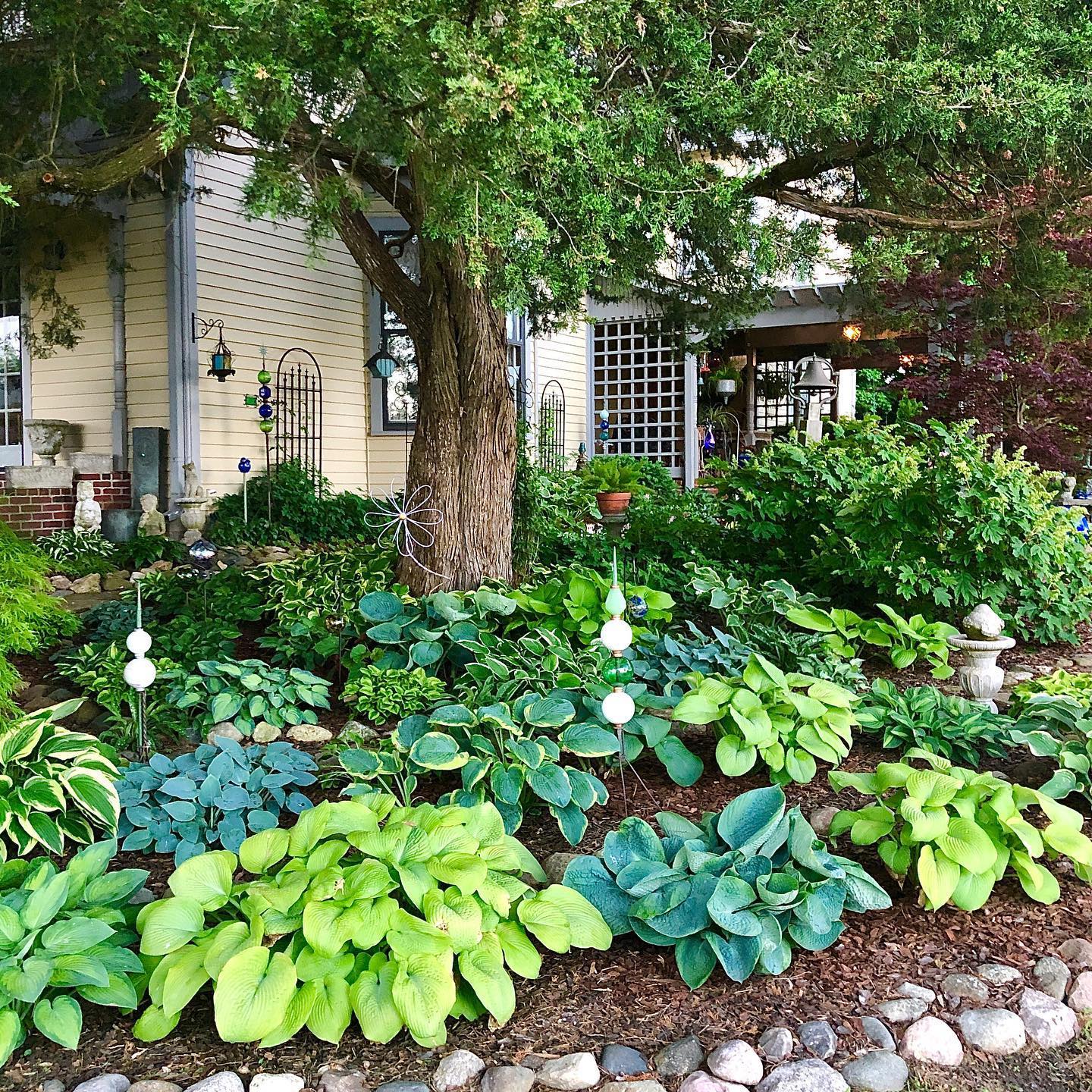
The area under a large tree is one of the most challenging planting situations in any garden — dry, shaded, root-filled, and largely inhospitable to most plants. Hostas are one of the few reliable solutions. They tolerate dry shade better than almost anything else, they naturalise happily under trees, and a well-established colony under a mature tree is one of the most attractive garden scenes available.
The stone-edged beds here keep the planting looking defined and cared-for even when the hostas are doing their own thing beneath the canopy. Decorative touches — small sculptures, hanging ornaments — are easy to place within a hosta planting because the broad leaves create natural pockets of space at ground level. It transforms what is typically a problem area into one of the most characterful parts of the garden.
7. Giant Hostas With Ferns on a Shaded Deck: The Full Woodland Corner
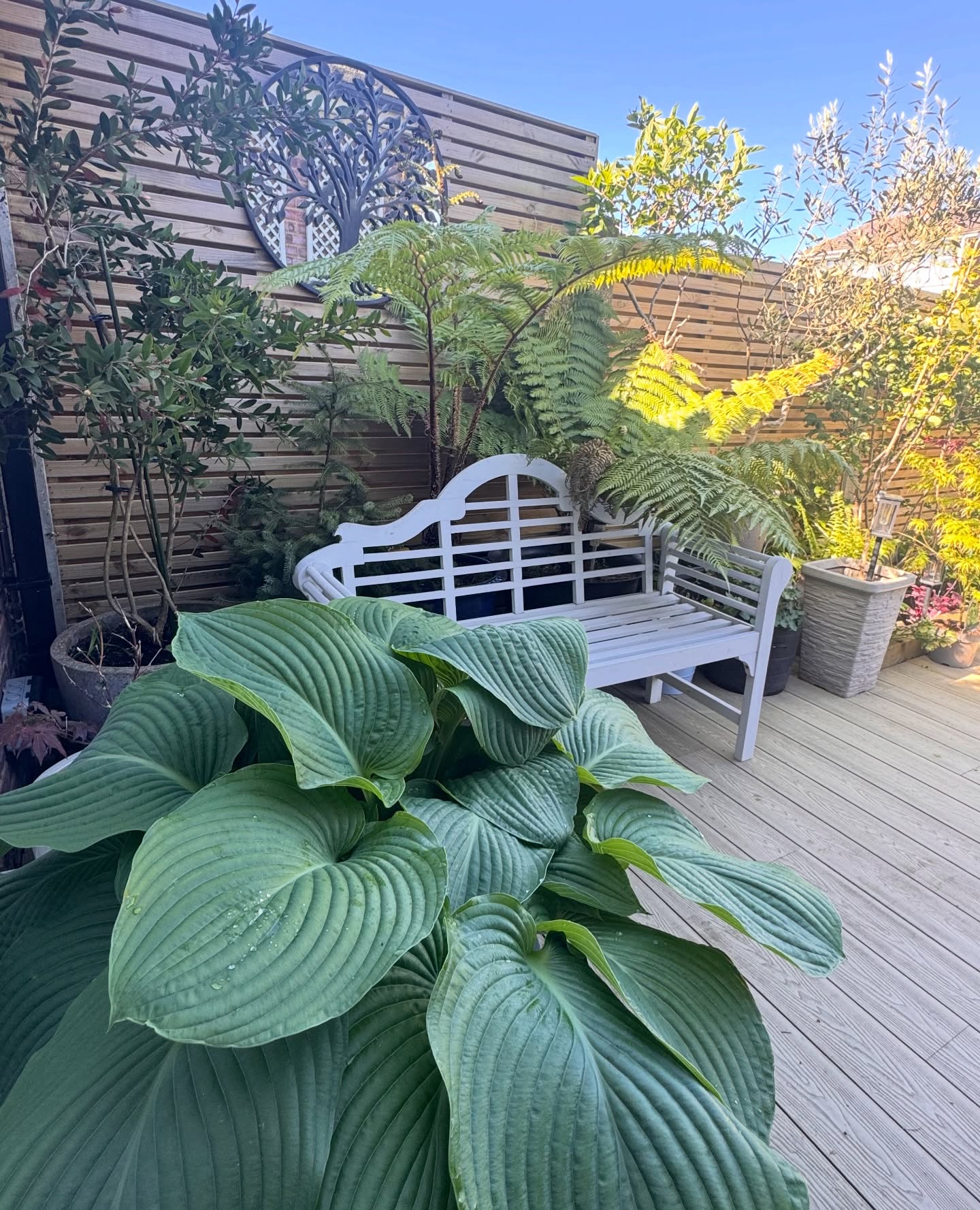
Large-leaved hostas paired with ferns is one of the most naturally sympathetic planting combinations in the shade garden. The broad, textured hosta leaves and the delicate, feathery fern fronds provide maximum contrast from two plants that want exactly the same growing conditions. Neither is demanding; together they create a genuinely lush, woodland atmosphere that’s hard to achieve with any other combination.
The white garden bench here shows how a hosta-dominated planting can provide the backdrop for a genuinely usable garden space. This isn’t just a planted corner — it’s a retreat. The art piece on the fence, the deck underfoot, the play of sunlight through the canopy: it’s a complete garden room that happens to be extraordinarily easy to maintain. Divide the hostas every three or four years and that’s essentially the entire workload.
8. Hostas and Hydrangeas Under a Window: A Classic Shade Planting Done Beautifully
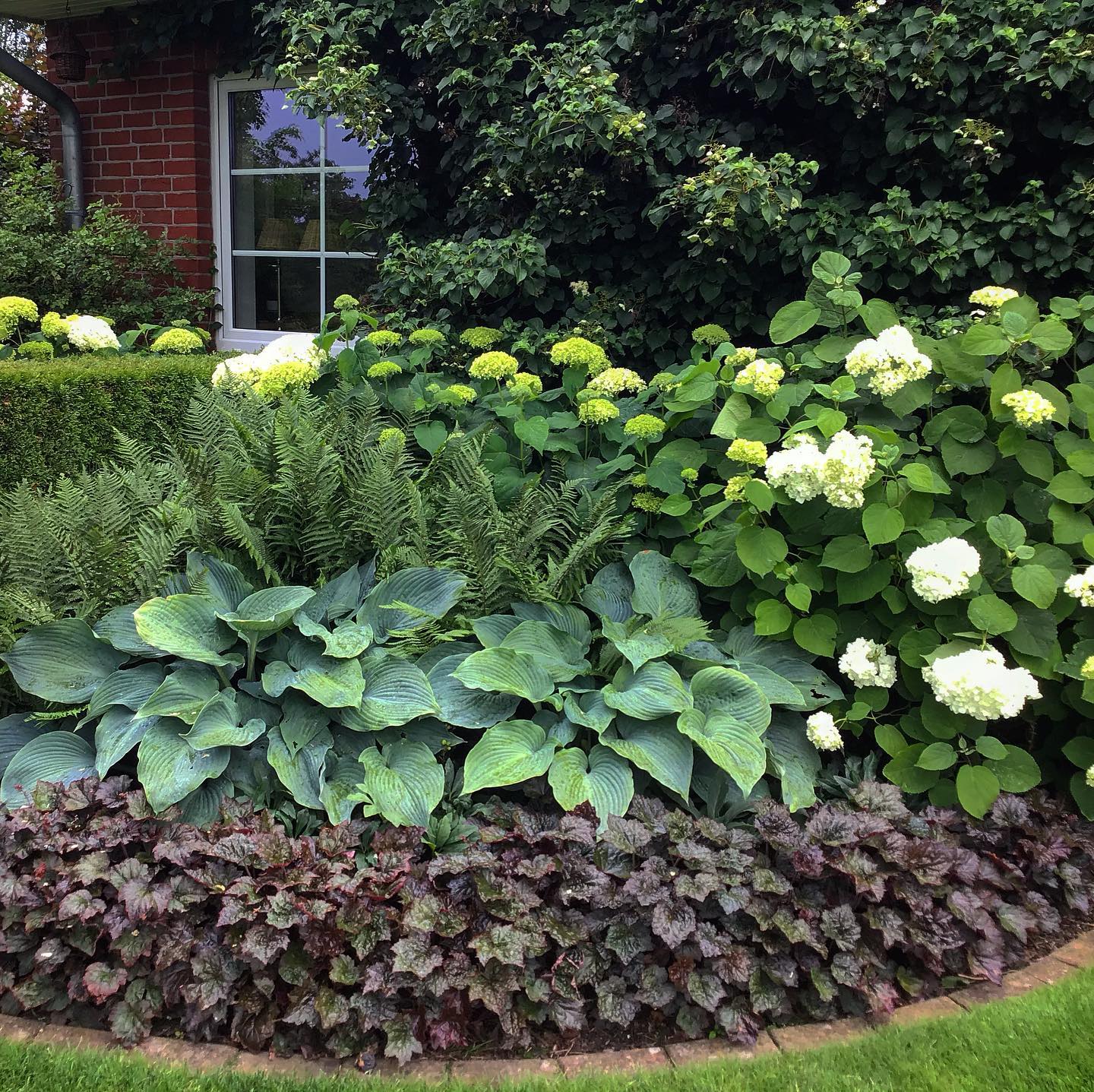
Hostas and hydrangeas together is one of the most reliable shade planting combinations available — both thrive in the same conditions, both have bold, attractive foliage, and the white hydrangea flowers provide exactly the kind of seasonal highlight that hostas can’t offer on their own. This is a pairing that looks genuinely designed rather than assembled from whatever would grow in a difficult spot.
The ferns adding texture in the foreground complete the trio that defines woodland-inspired planting. The climbing vines on the brick wall give the border a sense of depth and the garden a sense of enclosure that makes this a genuinely appealing spot to look at from inside the house. A planting like this — visible from a window — adds as much to the enjoyment of the house as it does to the garden.
9. Hostas With a Japanese Maple: When Two Plants Make Each Other Look Better
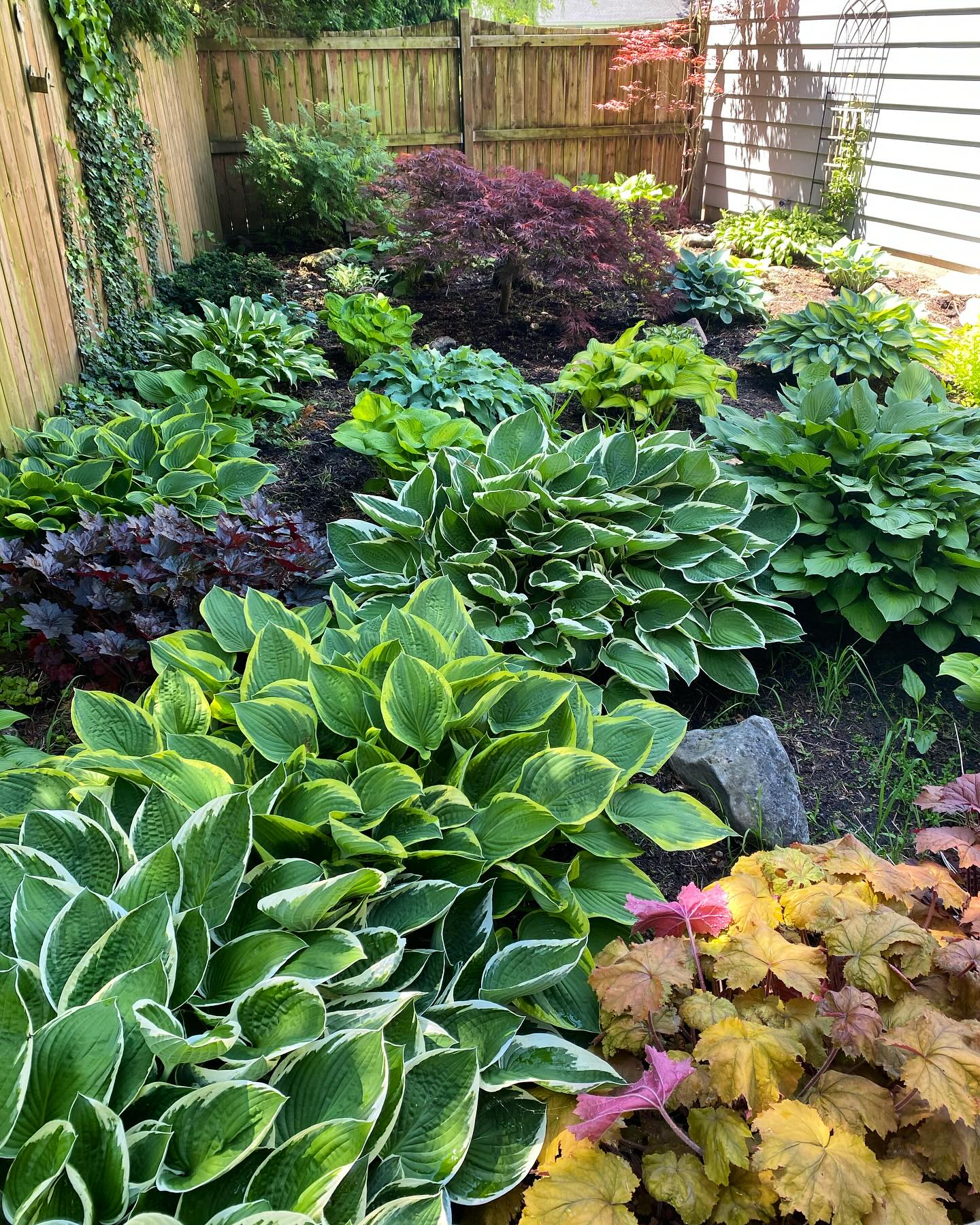
The combination of hostas and a Japanese maple is one of the finest pairings in the shade garden. The deep red, finely cut foliage of the acer and the bold, cream-edged hosta leaves are as different as two plants can be while still occupying the same corner — and that contrast is precisely what makes it work. Each plant makes the other look better than it would alone.
The additional planting of yellows and purples between the hostas shows how a primarily foliage-led scheme can incorporate colour without losing the calm, considered quality that makes hosta-based plantings so appealing. The wooden fence providing a warm neutral backdrop is doing more work than it might appear — it unifies the different plant colours and prevents the border from feeling busy despite its variety.
10. A Bold Mix of Variegated Hostas: The Border That Doesn’t Need Any Flowers
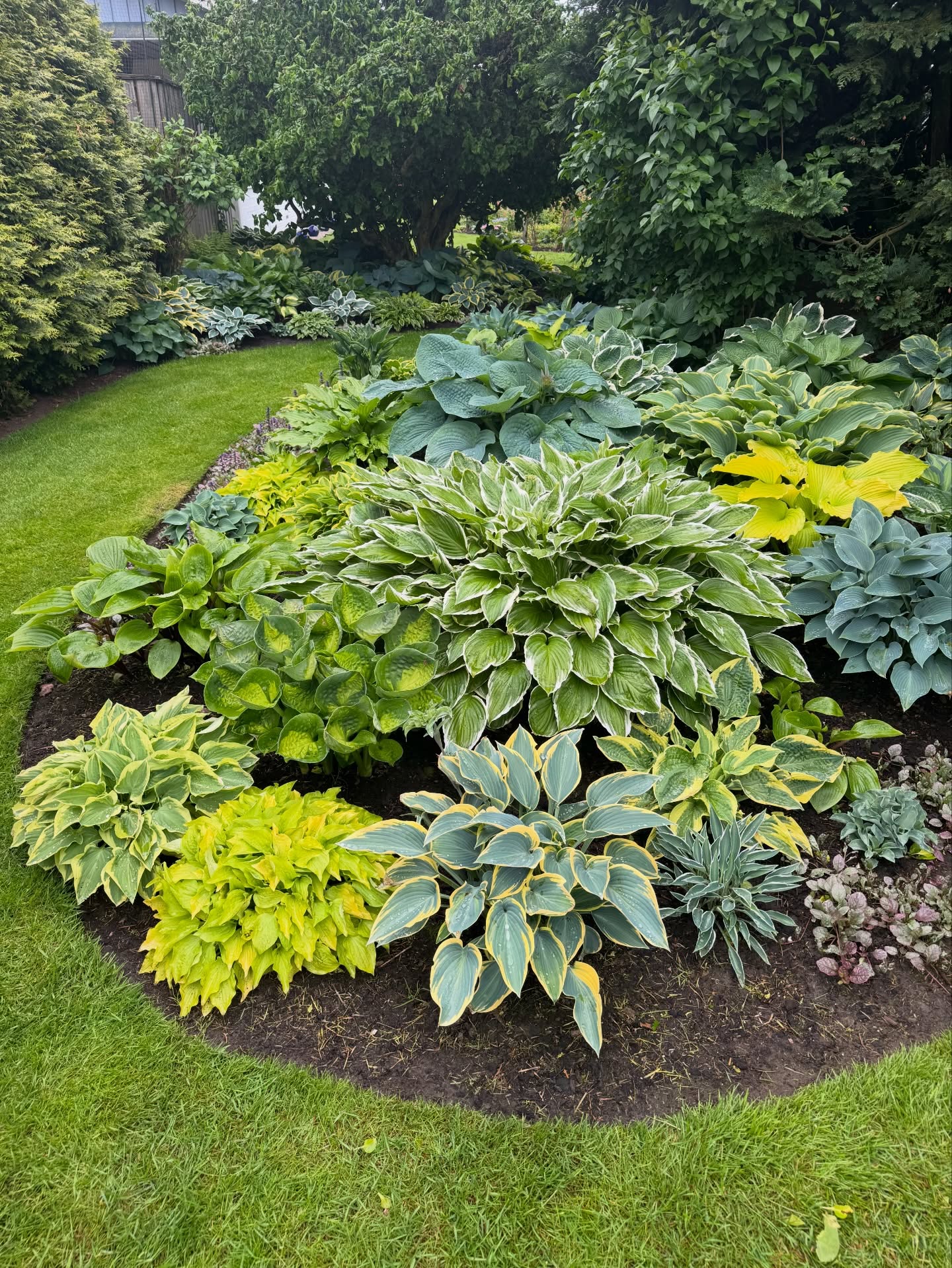
A border planted entirely with different hosta varieties demonstrates something that gardeners who haven’t paid much attention to the genus often don’t realise: hostas alone can provide enough variety in colour, pattern, size and texture to make a genuinely compelling planting. No flowers required. The yellow-edged varieties here glow against the darker plain greens in a way that demands attention.
The grass border framing the planting and the larger shrubs and trees providing structure in the background are important context for why this works. Hostas need a tidy setting to show at their best — they’re not plants that look good emerging from weeds or competing with overgrown neighbours. Give them clean edges, good soil and a considered backdrop and they reward you with a border that looks impressive from spring through to the first frosts.
11. Hostas Planted Around a Tree Base: The Best Thing You Can Do With That Shady Circle
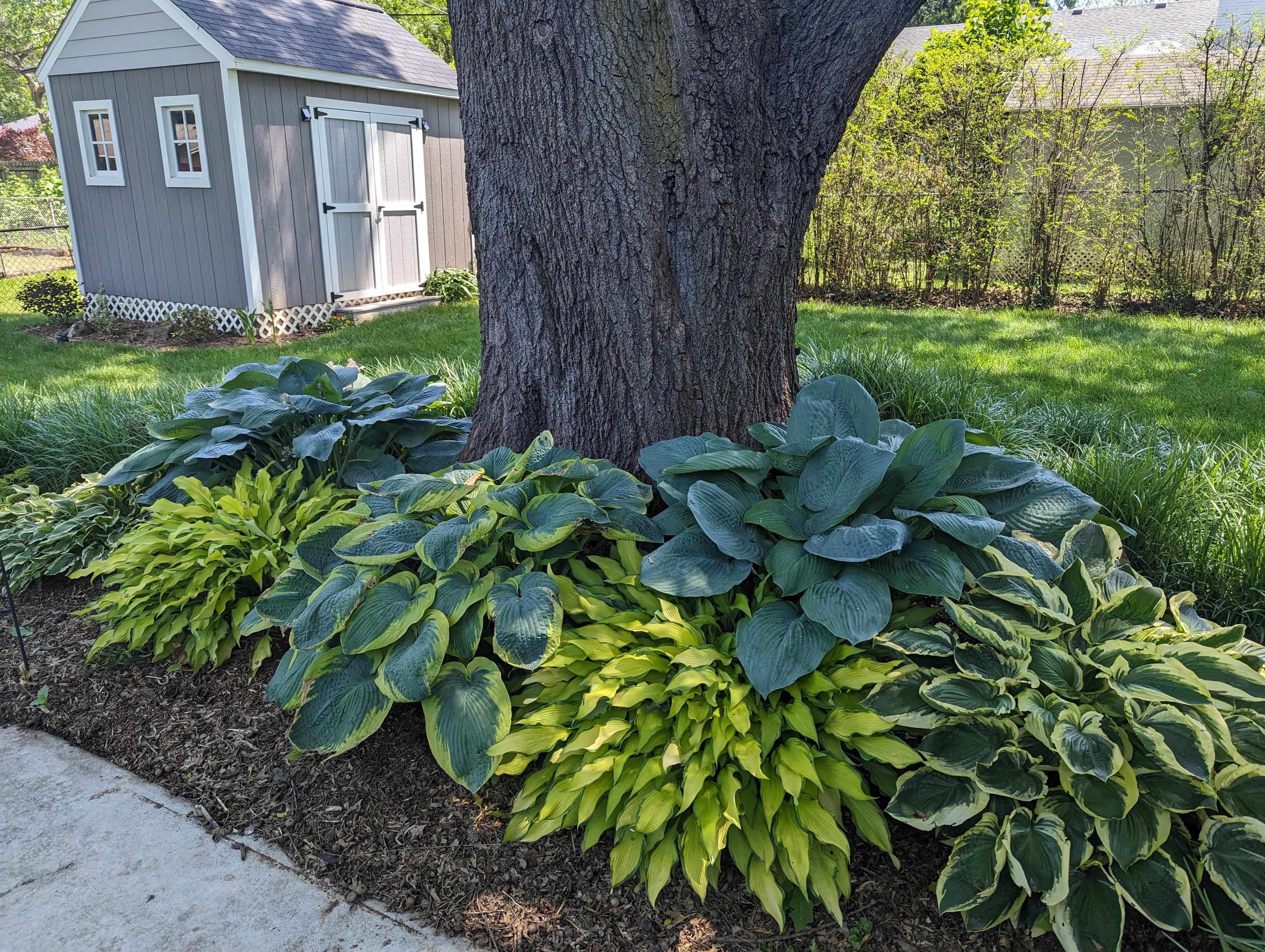
The circle of bare earth or struggling grass around the base of a mature tree is one of the most common unsolved problems in domestic gardens. Hostas solve it beautifully. They thrive in exactly the conditions that make that spot so difficult for other plants — the deep shade, the dry root-filled soil, the competition from the tree itself — and they fill the space with genuine presence rather than just covering the ground.
The combination of deep green and bright yellow-green varieties here creates a colour contrast that’s visible from some distance, which is important in a spot that could otherwise disappear visually into the base of the tree. The mulch ring is a practical necessity that also looks good — it helps retain moisture, reduces competition from grass, and gives the whole planting a polished, maintained quality.
12. Gold-Edged Hostas Along a House Wall: The Foundation Planting That Looks After Itself
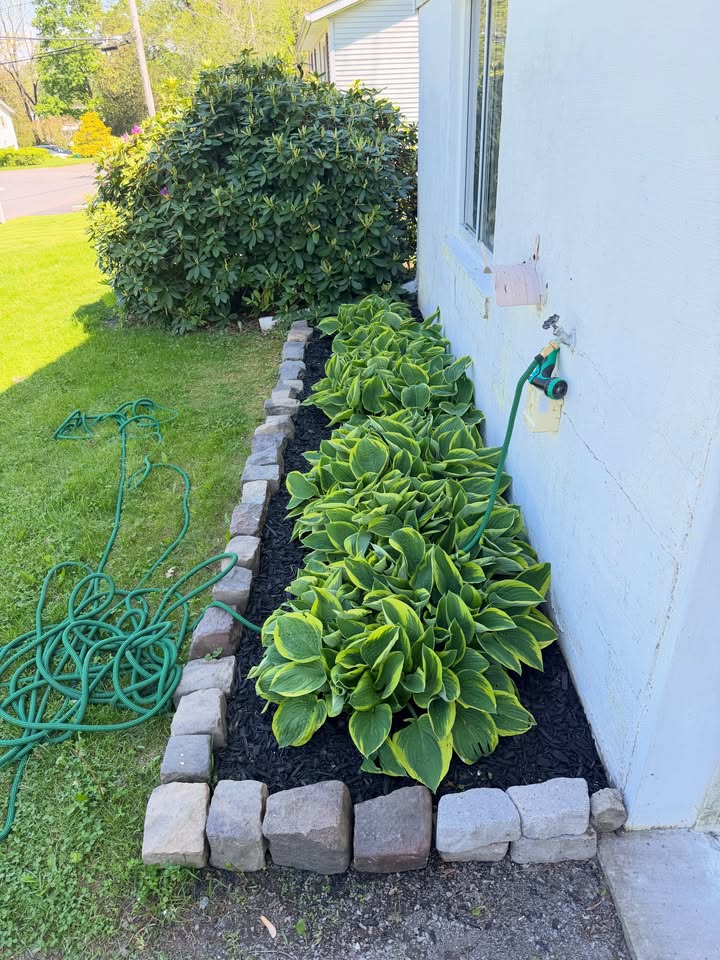
The strip of ground along a house wall that doesn’t get much sun is exactly the kind of situation hostas were made for. The gold-edged variety used here is particularly well-chosen — that bright yellow margin catches whatever light is available and makes the planting visible and attractive even on dull days. Against dark mulch, those yellow edges read almost like they’re lit from within.
Stone paving edging the bed keeps the whole scheme neat and prevents the mulch from migrating onto the lawn. This is one of those details that requires a small investment of time but makes the difference between a foundation planting that looks deliberate and one that looks like an afterthought. The hostas here are clearly well-established, which is a reminder that patience is one of the most useful tools in gardening — these plants improve considerably over their first three or four years.
13. Large Hostas in Black Planters: Bold Foliage That Works as Garden Architecture
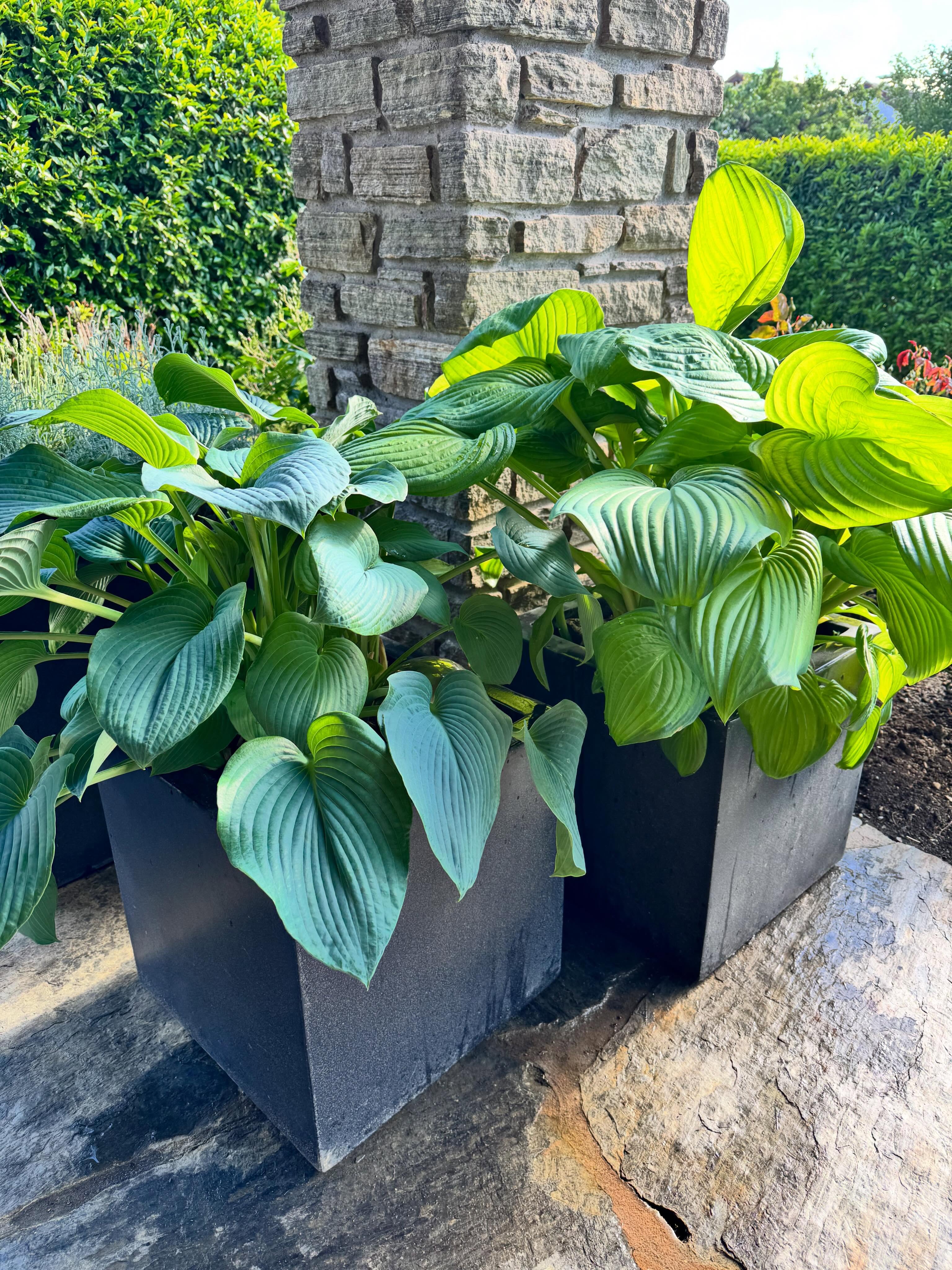
A large-leaved hosta in a sleek black planter is one of those combinations that looks like it belongs in a design magazine without requiring any particular expertise to achieve. The dark container makes the green foliage read with extraordinary vividness, and the bold leaf texture and size give the whole arrangement the quality of a sculpture rather than just a pot of plants.
Paired pots flanking a gate, entrance or garden feature is a planting approach that’s hard to get wrong with hostas because the leaves are naturally symmetrical and architectural. The stone pillar providing a backdrop here shows that these plants work particularly well against hard, textured surfaces — the contrast between the rough stone and the smooth, ribbed hosta leaves is satisfying in a way that’s difficult to articulate but immediately apparent.
14. Different Hosta Varieties in Pots Against a Wall: The Collector’s Corner
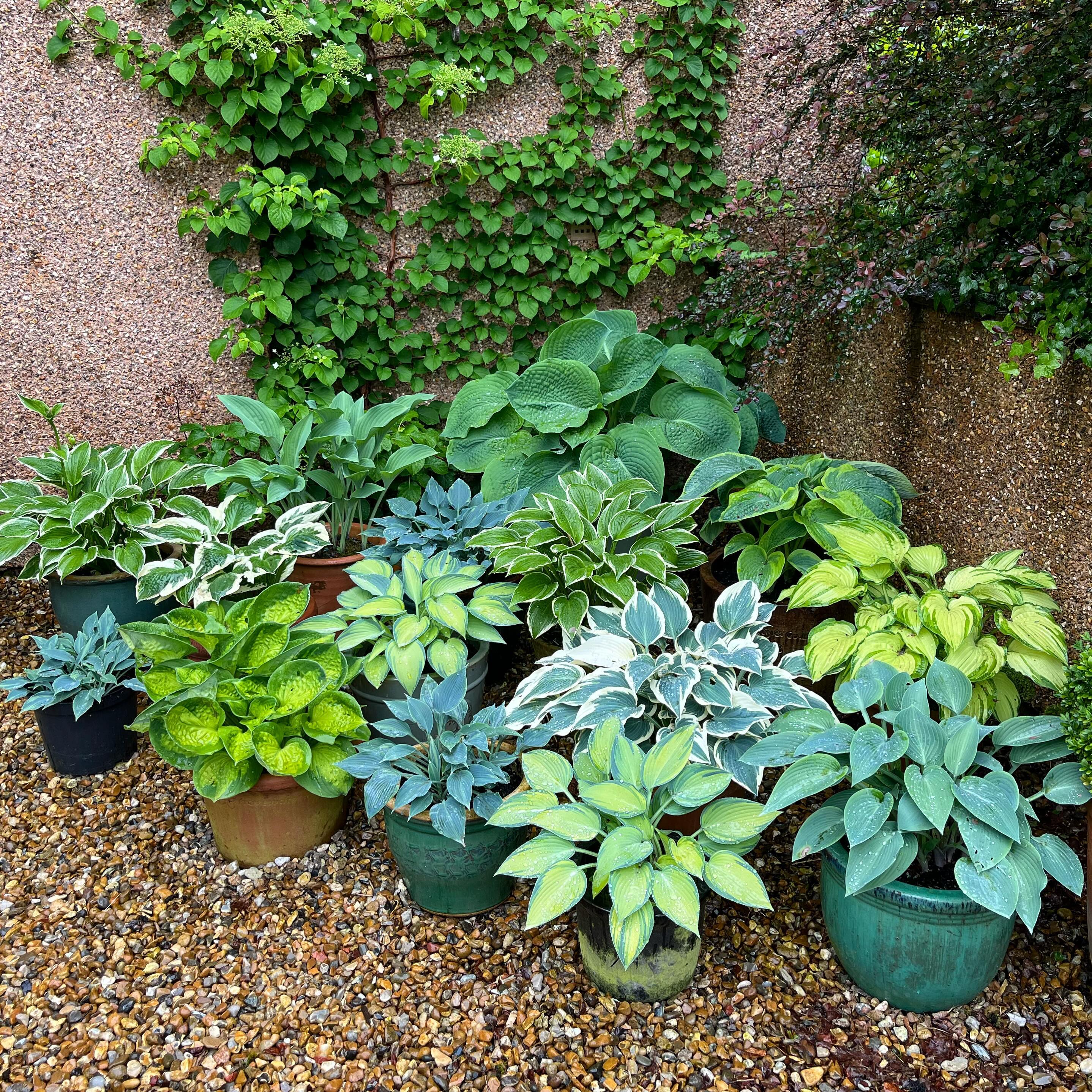
Growing different hosta varieties in individual pots grouped together is the easiest way to start a hosta collection, and it tends to become addictive. Each variety has its own character — different leaf size, colour, pattern and texture — and displaying them close together makes those differences more apparent and interesting than they would be scattered around a border. It’s the kind of display that rewards close inspection.
The pebble ground treatment here keeps the arrangement looking considered rather than cluttered, which is important when you’re grouping multiple containers. The wall with its creeping vines provides the backdrop that unifies the group and gives the arrangement the quality of a curated display. This is a corner that can be added to gradually over time — another pot, another variety — without ever looking overfull.
15. Hostas at the Base of a Small Tree Beside Brick Steps: A Corner That Finally Works
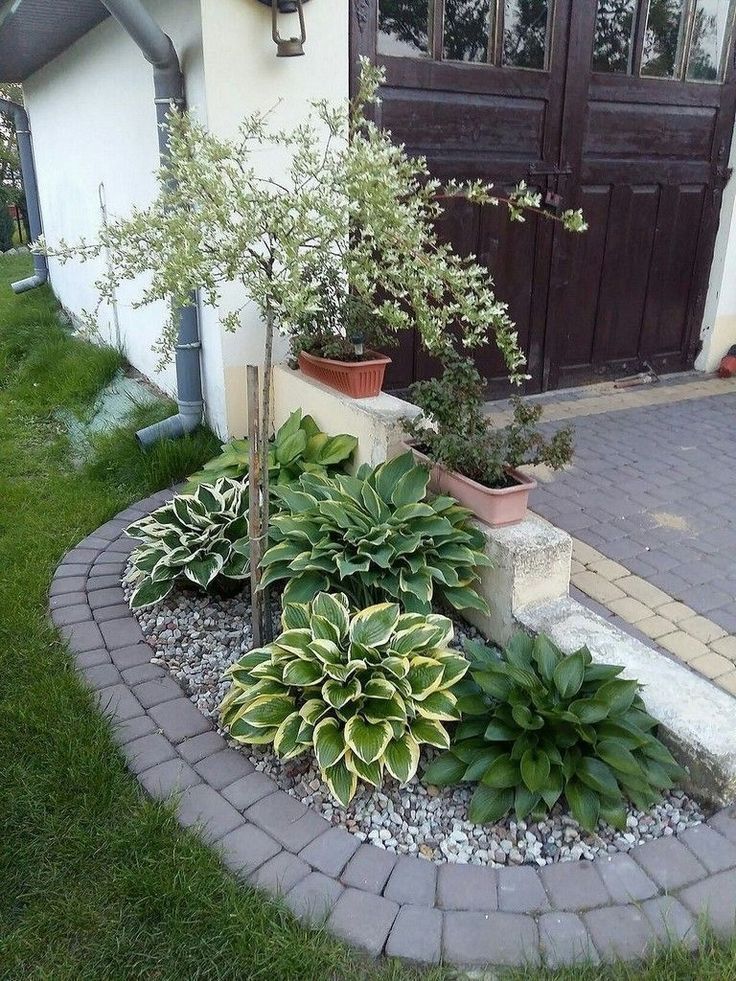
Awkward corners beside steps and walls — shaded, narrow, tricky to plant — are where hostas consistently earn their reputation. This kind of spot defeats most plants but suits hostas perfectly, and a well-chosen variegated variety at the base of a small tree provides just enough interest to make what could be a dead corner into a genuinely pleasant part of the garden.
The terracotta pots on the brick steps add a vertical element that draws the eye upward and prevents the planting from sitting entirely at ground level. The small stones around the base of the planting keep things tidy and reduce maintenance — an important consideration in a spot that isn’t particularly easy to get into with tools. This is a corner that asks very little and delivers a quiet, satisfying result every year without any fuss.