Nothing ruins a relaxing afternoon in the garden quite like realising you’re being watched. 👀
Your neighbours might be perfectly nice people, but that doesn’t mean you want to make eye contact with them every time you step outside. A bit of privacy makes such a difference to how you actually use your outdoor space – suddenly you’re more likely to eat breakfast out there in your dressing gown, or read a book without feeling self-conscious, or just exist without an audience.
The good news is privacy fencing has come a long way from those dreary six-foot panels. There are some genuinely stylish options now – slatted screens, horizontal boards, mixed materials, living walls – that block the view without making your garden feel like a fortress.
We’ve pulled together over 18 modern privacy fence ideas covering different budgets, styles, and situations. Whether you need to screen off one awkward sightline or create total seclusion, there’s something here that’ll work. 🌿
Let’s get into it.
1. Black Steel Posts and Warm Timber Boards: A Combination Worth Stealing

The contrast between black steel posts and warm timber boards has become one of the defining looks in contemporary garden design, and it’s easy to understand why. The metal provides crispness and permanence; the wood provides warmth and a natural quality that softens what could otherwise feel industrial. Together they read as considered and modern without being cold.
The wall-mounted planter breaking up the timber surface here is a detail worth noting. A long run of fence without interruption can feel heavy — adding a planted element partway along creates visual interest and ties the fence into the garden rather than making it feel like a boundary imposed on it. The low-level lights along the top mean the fence earns its place after dark as well as during the day.
2. Composite Cladding and Dark Metal Posts: Low Maintenance, High Impact
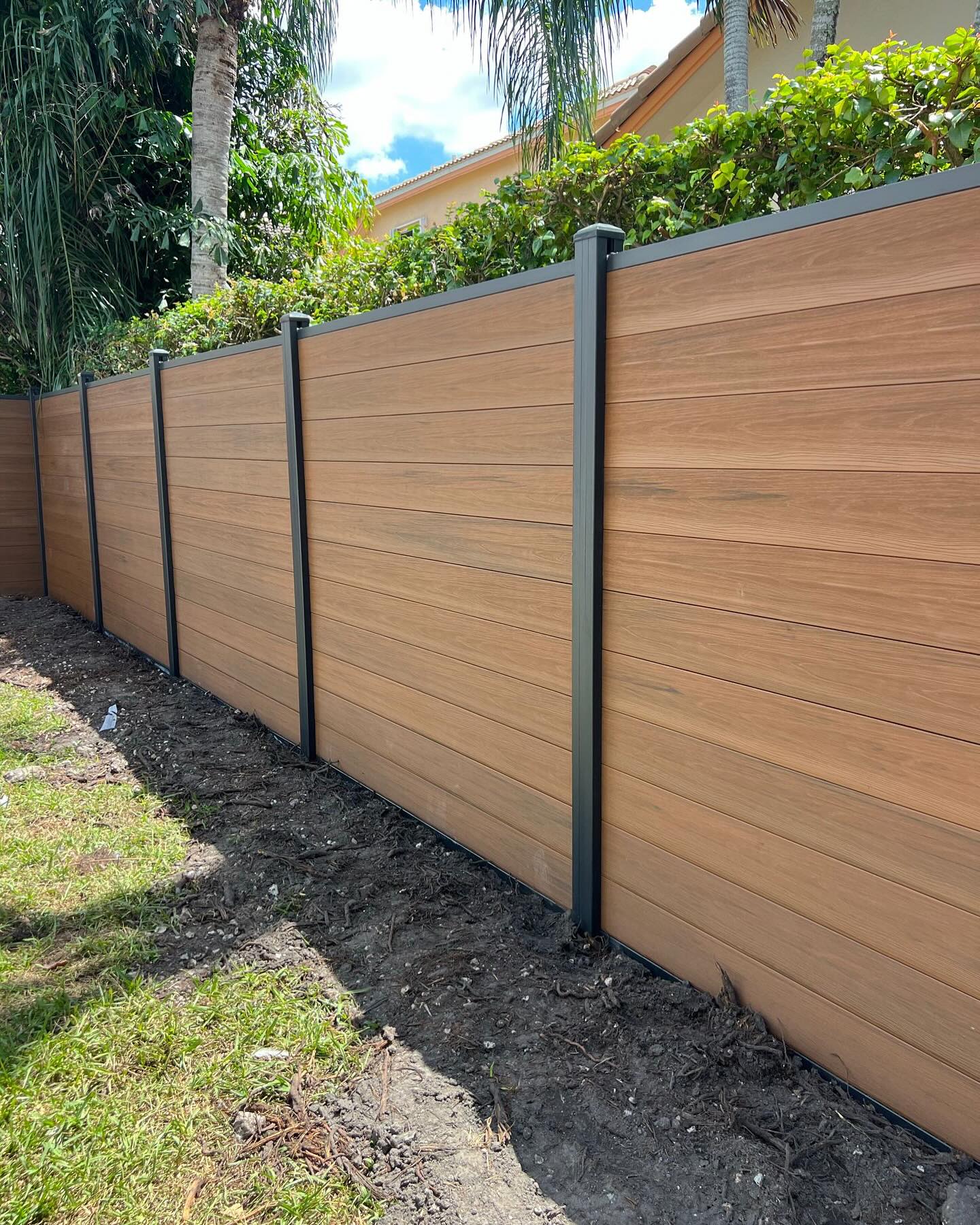
Composite cladding — the wood-effect boards that don’t rot, fade or require annual oiling — has transformed what’s possible with garden fencing. It looks like timber, it feels like timber, but it behaves like the low-maintenance material it actually is. For anyone who wants the warm aesthetic of wood without the upkeep, this is the answer.
The dark metal posts here provide the structural element that stops the warm boards from reading as purely rustic. That contrast is important — it’s what gives the fence its contemporary quality rather than making it look like a traditional timber panel done in a different colour. The palms and shrubs softening the top of the fence show how planting alongside a solid boundary stops it feeling oppressive.
3. Decorative Laser-Cut Panels That Turn a Fence Into a Feature
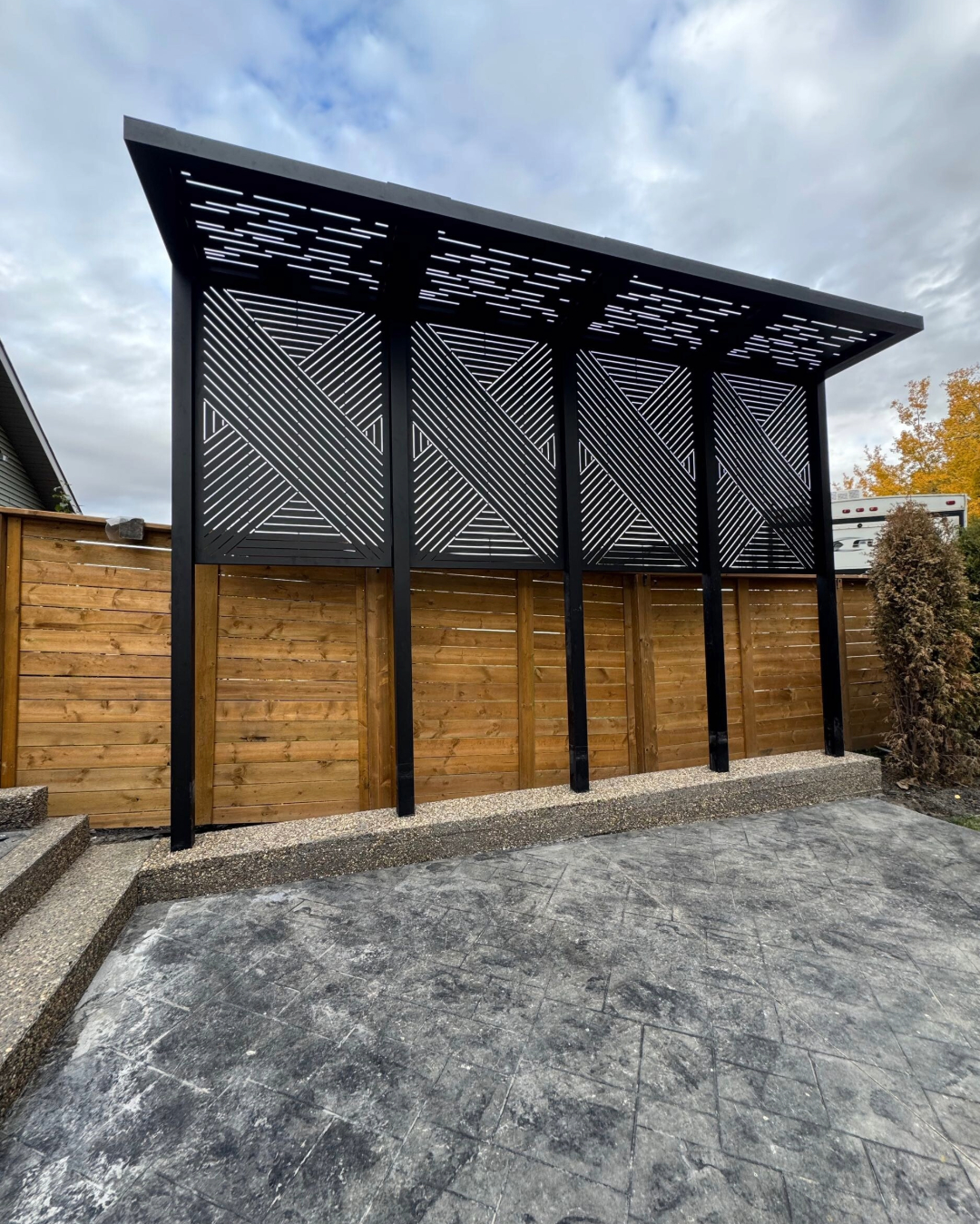
Most fences are things you look past rather than at. A decorative laser-cut panel changes that entirely — suddenly the boundary becomes the focal point, and a garden that previously needed a lot of planting to feel interesting now has something genuinely worth looking at. The geometric pattern here has the quality of a piece of outdoor art that also happens to provide privacy.
The warm timber fence behind the panels is doing important supporting work — it provides the solid backdrop that makes the cutout pattern readable and adds the natural contrast that stops the whole thing feeling too industrial. This layered approach, with a decorative screen in front of a solid backing, gives you the visual interest of the pattern without sacrificing any privacy.
4. A Timber Screen That Creates a Seating Area Worth Actually Using
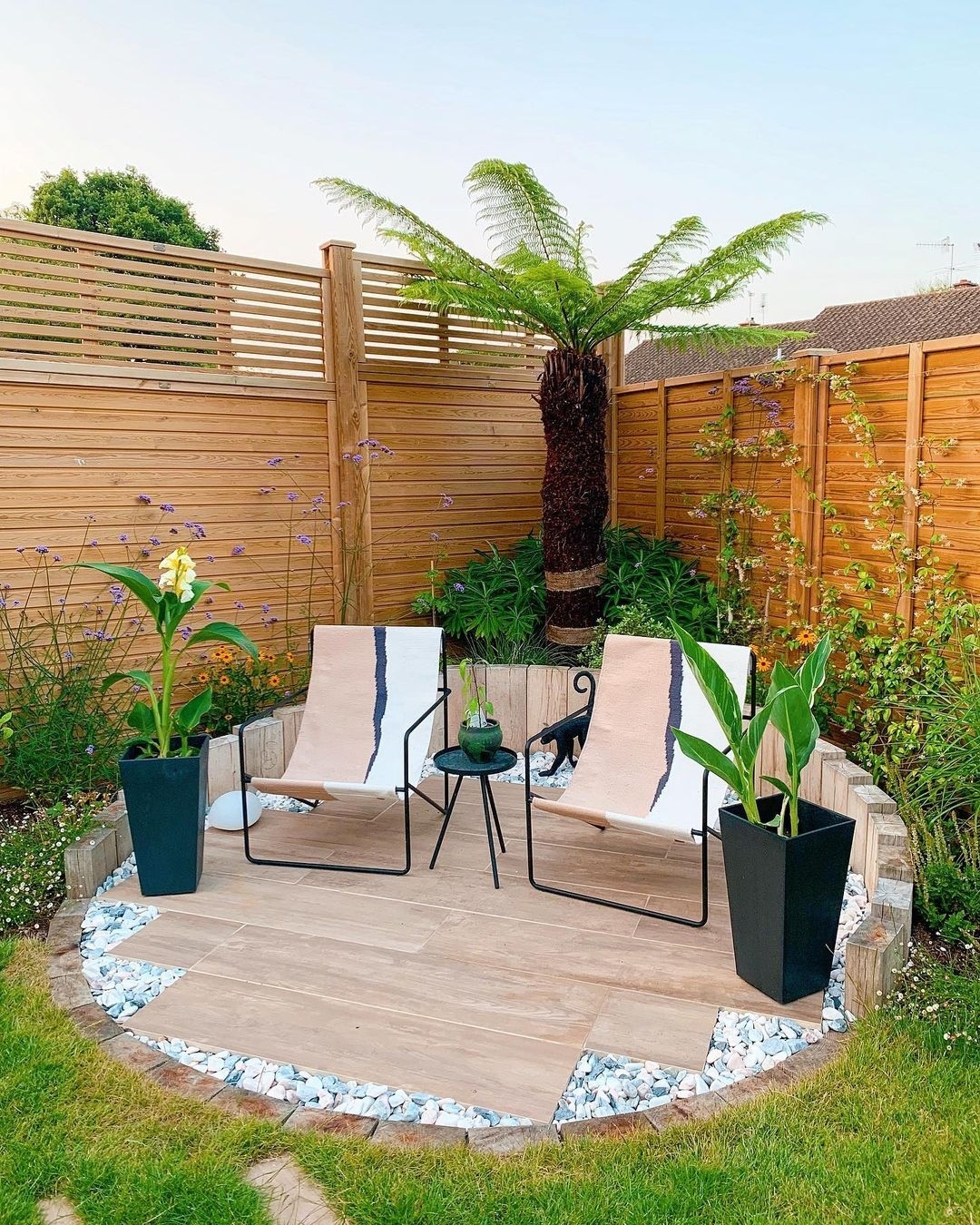
There’s a difference between a garden that has seating and a garden that has a seating area, and a privacy screen is often what makes the distinction. A defined, enclosed corner — with a fence or screen creating the back wall — gives outdoor furniture a sense of purpose and makes you far more likely to actually sit in it. This is the psychological reason why restaurants use booths: enclosed seating feels more comfortable than open seating.
The tree fern and tall potted plants alongside the fence are doing the work of softening the boundary and giving the space a sense of established greenery. White pebbles defining the seating area against the beige tiles is a simple finishing detail that makes the whole space feel intentional rather than just furnished. These are the kinds of touches that separate a good garden from a great one.
5. Solid Panels With a Lattice Top: Privacy and Light in the Same Fence
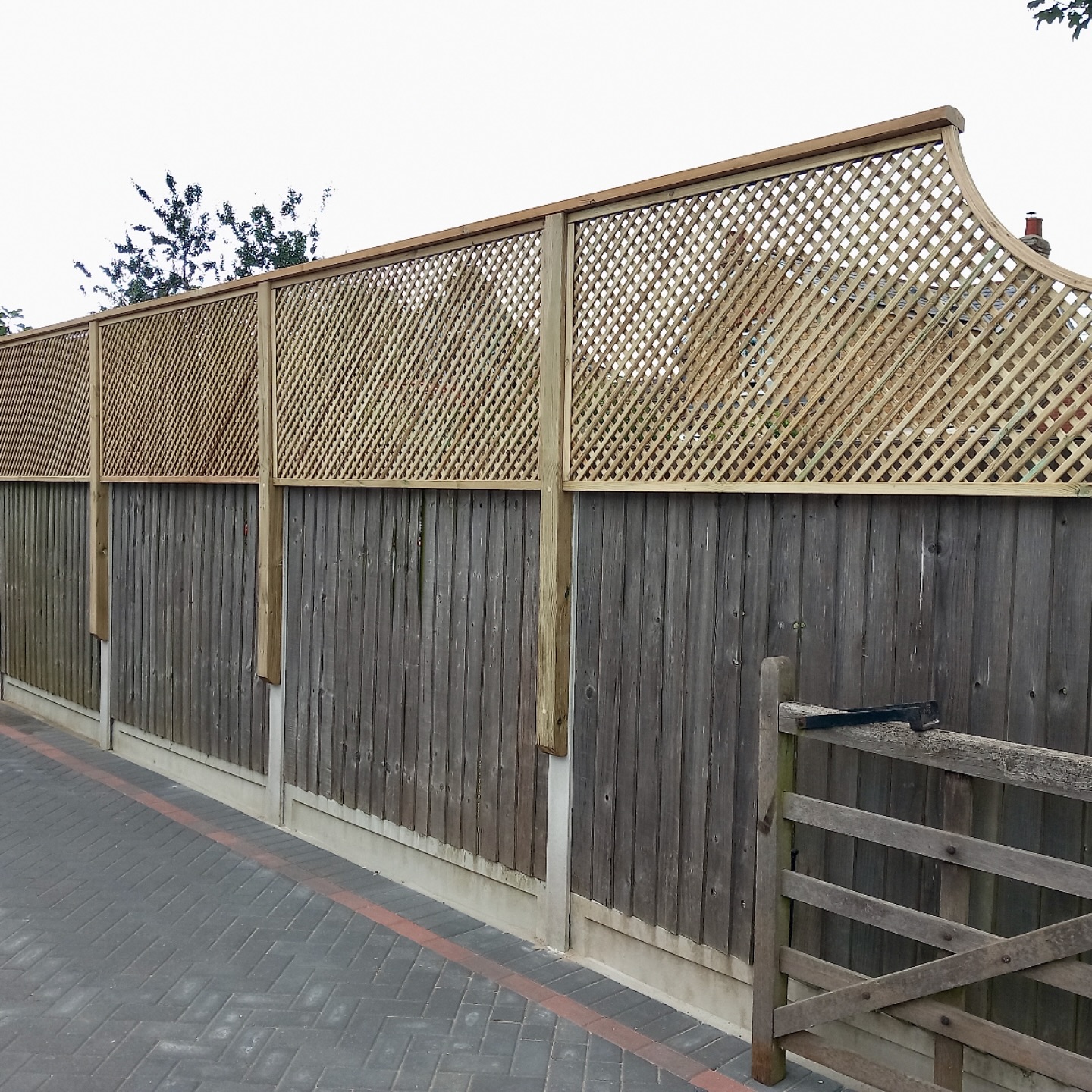
The problem with a very tall solid fence is that it can make a garden feel enclosed in the wrong way — dark, hemmed in, slightly oppressive. The solution is exactly what’s shown here: solid panels at eye level for genuine privacy, topped with an open lattice section that allows light and air through without allowing sightlines. You get the screening you need without sacrificing the sense of openness.
The weathered grey of the solid panel base and the slightly fresher tone of the lattice top creates a subtle two-tone effect that gives the fence visual interest without any additional effort. This is a design worth considering if your garden is on the smaller side — it screens effectively while feeling less imposing than a uniform solid panel of the same height would.
6. Horizontal Timber Slats: The Modern Fence That Suits Almost Any Garden
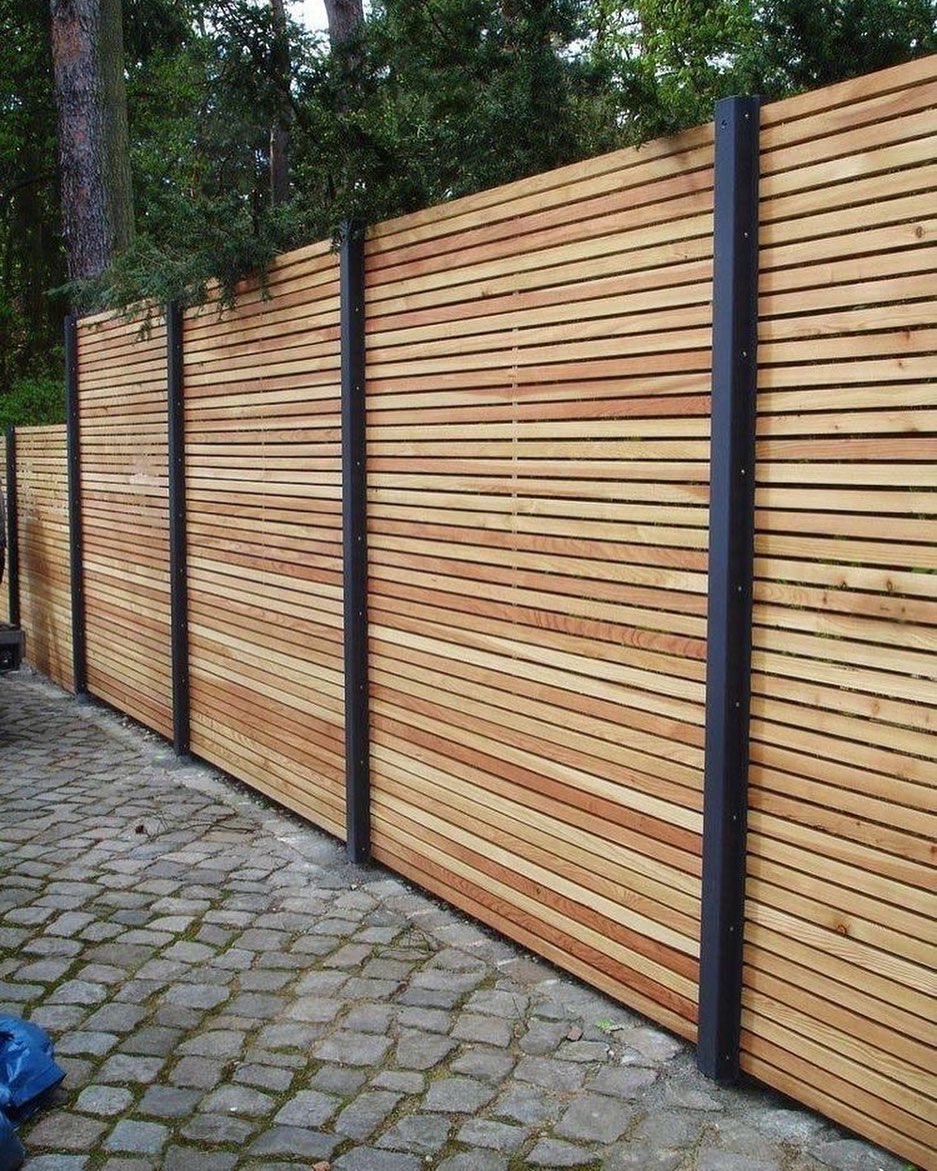
Horizontal slatted fencing has become the default choice for anyone wanting a fence that looks contemporary without being complicated, and it earns that status. The horizontal lines read as calm and grounded in a way that vertical boarding doesn’t, and the gaps between slats allow some air and light through while still providing effective privacy from any distance.
Dark metal posts set at regular intervals give the fence its structure and add the modern material contrast that elevates horizontal timber from merely functional to genuinely stylish. Set against the backdrop of mature trees, the warm timber tones feel completely at home in the garden rather than imposed upon it. This is a fence that improves with a bit of weathering rather than deteriorating.
7. Horizontal Boarding on a Stone Plinth: When a Fence Feels Like Architecture
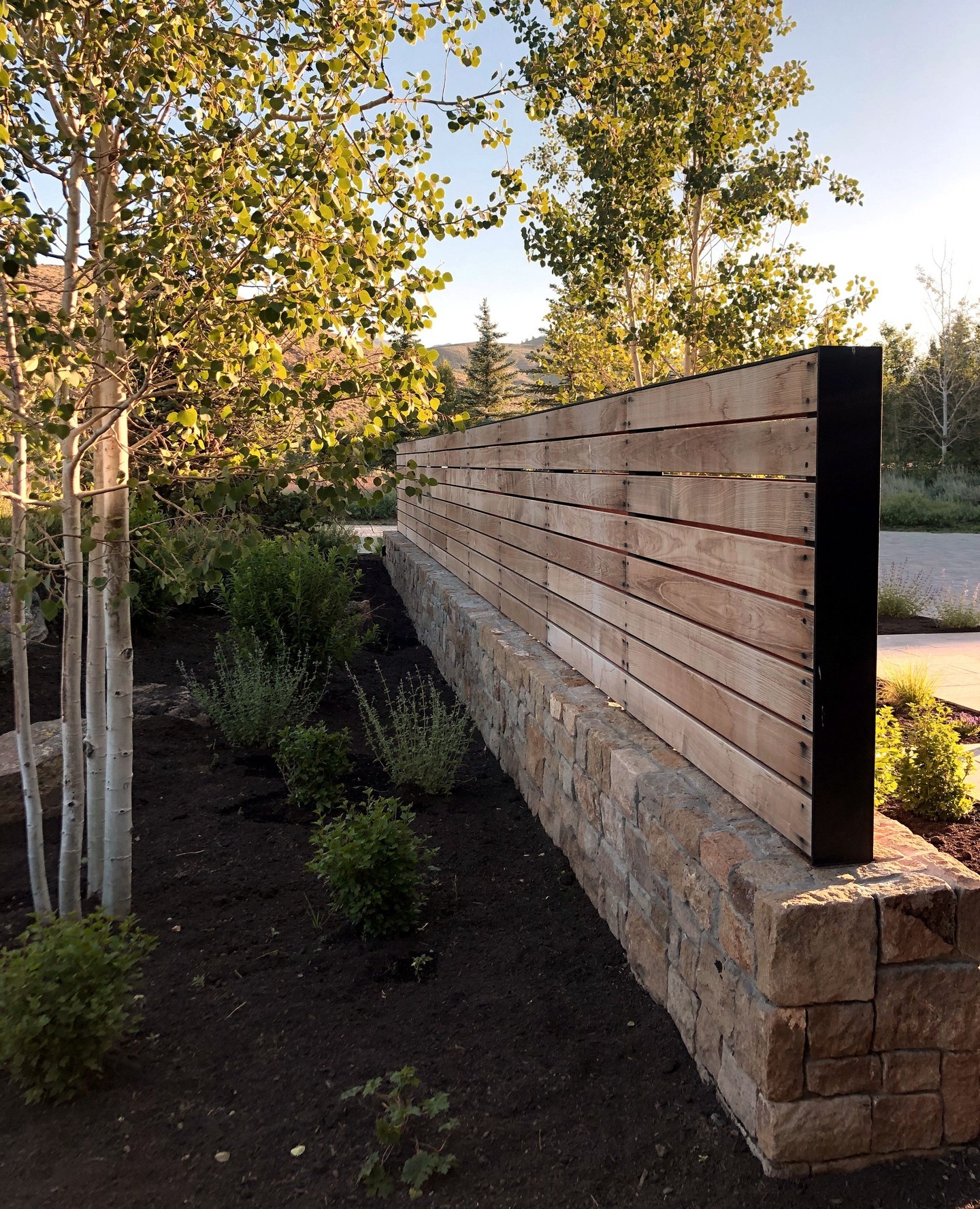
Sitting horizontal timber boards on a stone or rendered plinth rather than running them straight to the ground is the detail that separates a premium fence from a standard one. The plinth protects the timber from ground moisture, adds a solid visual base that makes the whole structure feel permanent and substantial, and introduces a material contrast that gives the fence a genuinely architectural quality.
The tall trees alongside this fence are doing what trees always do for a fence line: making it feel like a considered garden boundary rather than an imposed barrier. A fence without any planting alongside it can read as a wall you’re trying to hide behind. With trees or shrubs softening the approach, it reads as a designed garden feature. The distinction is significant and worth planning for from the outset.
8. A Timber Lattice Screen Beside a Classic Garden: Old Materials, New Approach
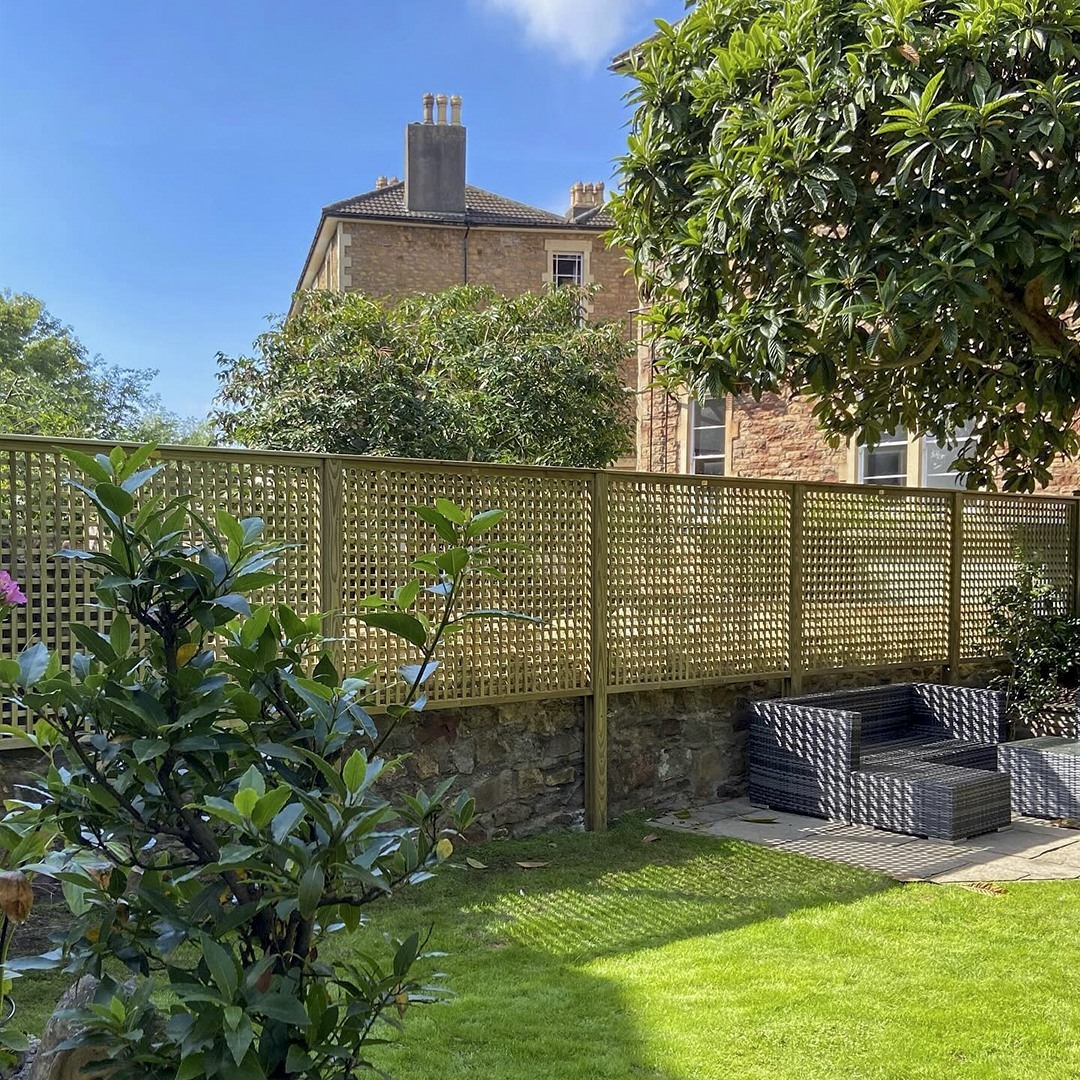
Lattice screening is one of the oldest garden privacy solutions and it remains one of the most useful, because it does something solid panels can’t: it filters rather than blocks. Light passes through, air passes through, the garden doesn’t feel closed off — but views from neighbouring properties are disrupted enough to make the space genuinely private. In a garden surrounded by other buildings, that filtering quality is valuable.
The intricate shadows cast by the lattice on a sunny day are an added benefit that never gets old — the pattern changes throughout the day as the sun moves and creates a constantly shifting quality of light in the garden. Paired with the woven furniture and mature tree providing natural shade, this is a privacy solution that enhances rather than diminishes the garden it’s placed in.
9. Young Trees Trained Against a Fence: Privacy That Improves Every Year
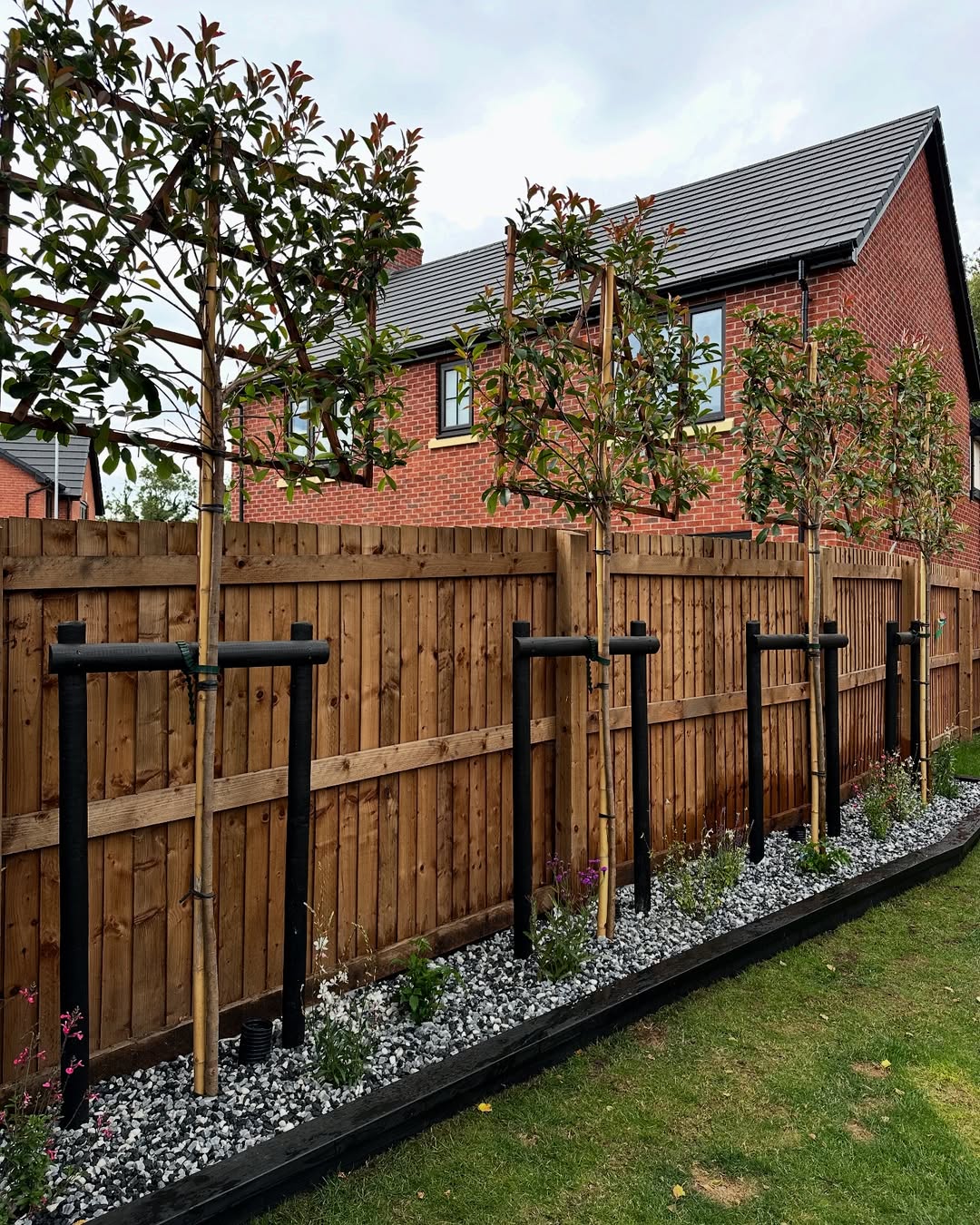
Planting a row of young trees along a fence line is one of the most forward-thinking privacy strategies available — it costs relatively little now and delivers increasing returns every year. As the trees establish and fill out, they progressively soften the fence, add height beyond what the fence alone provides, and create a layered natural boundary that a fence by itself can never achieve.
The pebble mulch at the base serves two purposes: it suppresses weeds around the young trees during the critical establishment period, and it creates a clean, modern ground treatment that makes the whole scheme look considered from day one rather than like a work in progress. This is a privacy planting approach that rewards patience and looks better at five years than it does at one.
10. Pleached Trees: The Elevated Privacy Screen That Nothing Else Quite Replicates
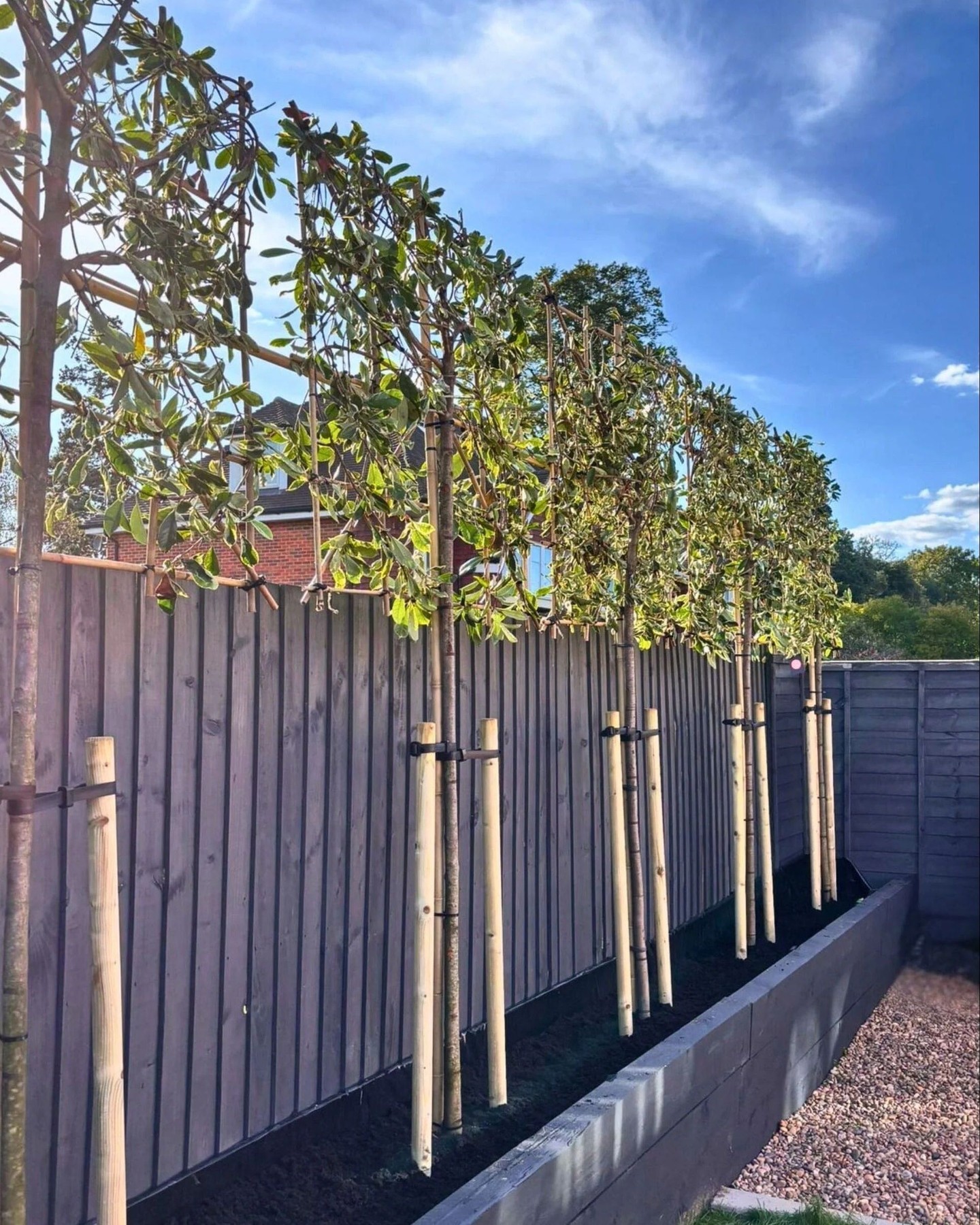
Pleached trees — trained to form a flat canopy on clear stems — are arguably the most elegant privacy solution in the garden designer’s toolkit. They give you screening at exactly the height you need it (above fence level, where overlooking actually happens) while keeping the space below open and light. The clear stems mean you don’t lose any ground-level planting space and the garden doesn’t feel enclosed.
Hornbeam and lime are the most commonly used species for pleaching, both responding well to the annual training and clipping required to maintain the formal flat canopy. This isn’t a zero-maintenance option — they need attention once or twice a year — but the result is a living privacy screen of genuine distinction that no manufactured fence can match for sophistication.
11. Tall Black Metal Railings: Security and Style Without Sacrificing Openness
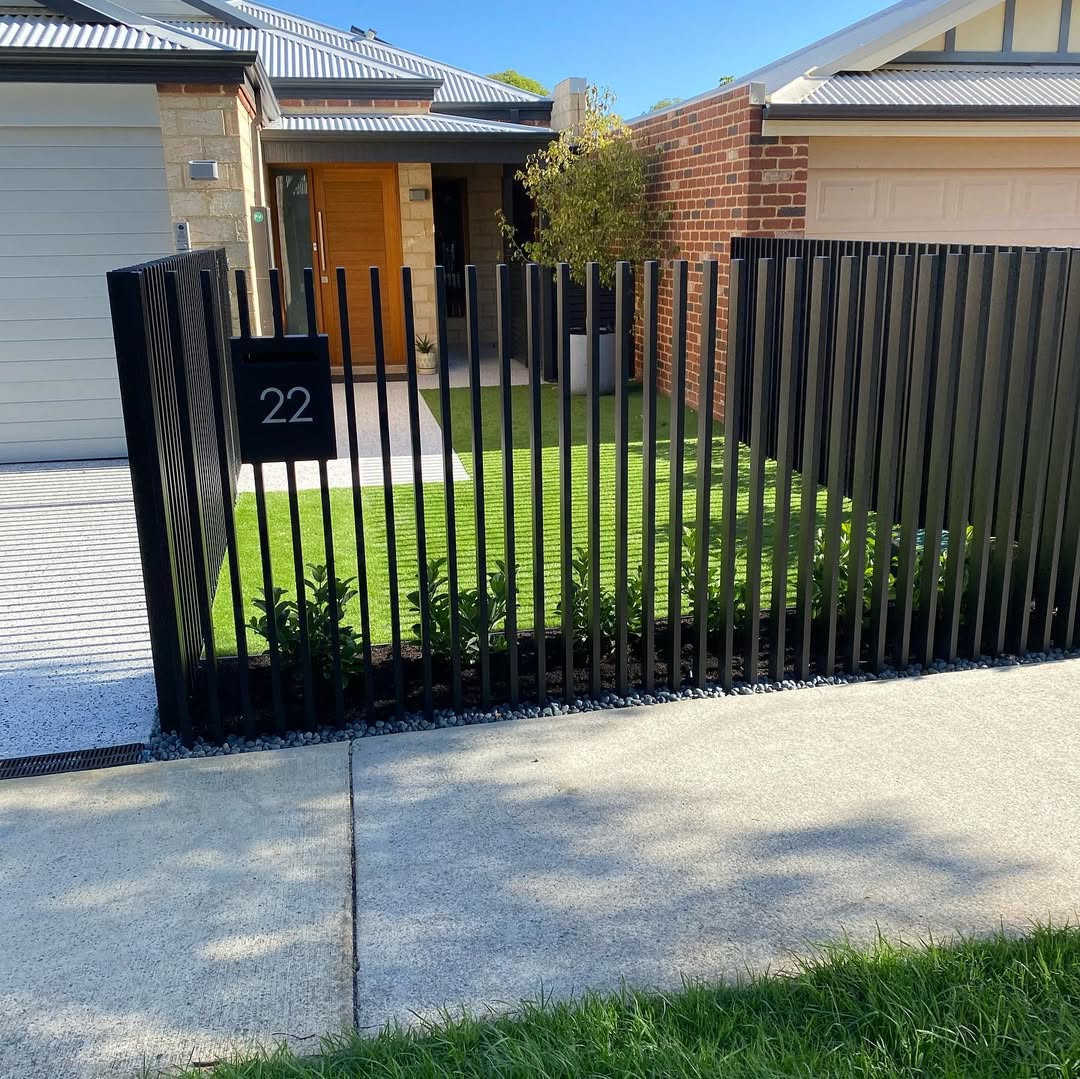
Not every privacy situation calls for a solid fence. Sometimes what you need is security and boundary definition rather than complete visual screening — and for that, tall metal railings do the job with considerably more elegance than solid panels would. The vertical black bars here are visually striking, clearly define the boundary, and allow the front garden and house to be seen, which is often preferable to hiding everything behind a solid wall.
The lush green lawn behind the railings is visible from the street and that’s intentional — a well-maintained garden glimpsed through metal railings is far more attractive than a solid fence that gives nothing to the streetscape. This approach works particularly well for front gardens where you want presence and definition without creating a barrier that makes the property look unwelcoming.
12. Black Horizontal Slats With Gravel and Drought-Tolerant Planting: The Low-Effort Modern Boundary
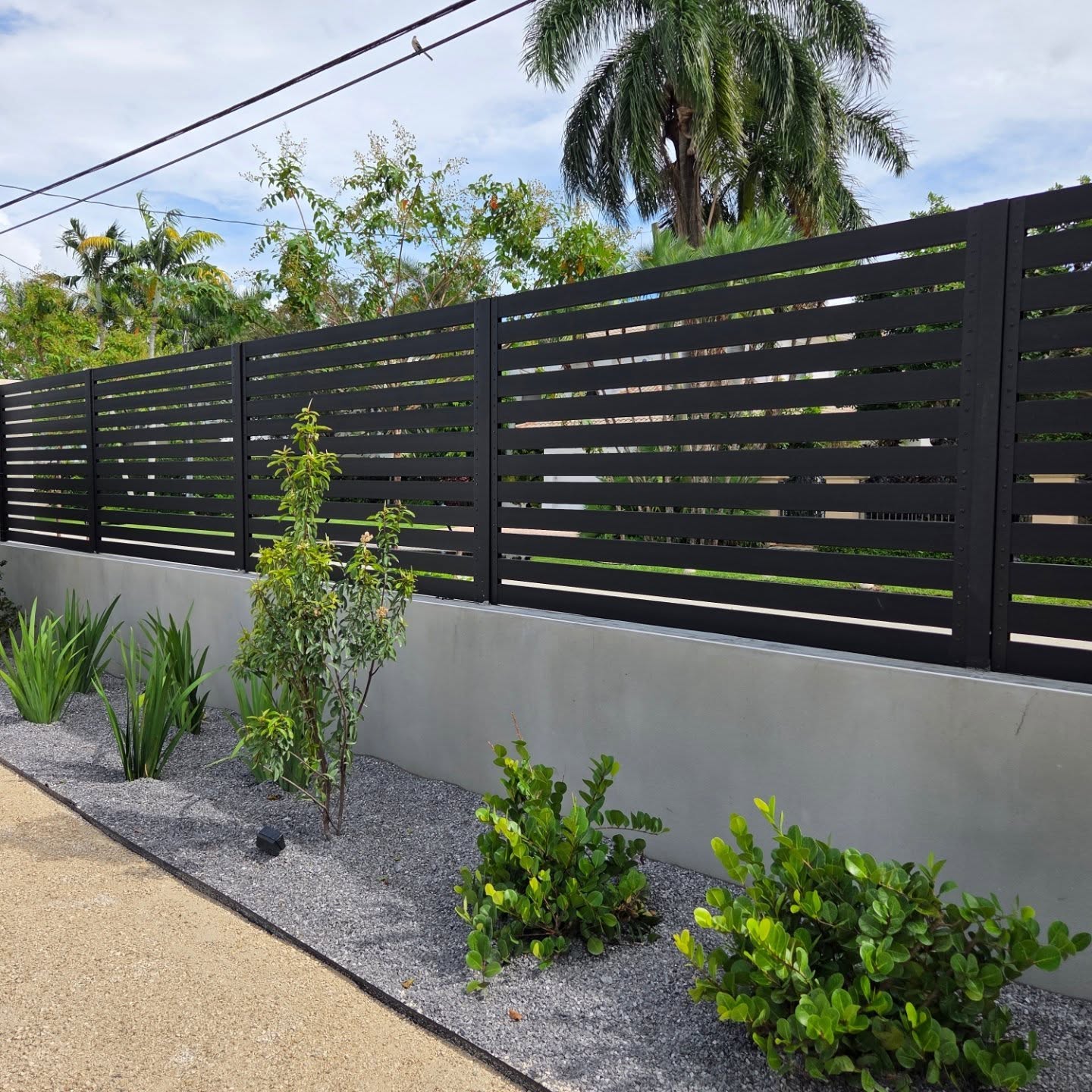
A dark-painted horizontal slatted fence paired with a gravel bed and drought-tolerant planting is one of the most coherent and low-maintenance modern garden combinations available. Everything in this palette — the dark fence, the pale gravel, the architectural plant forms — is both visually harmonious and practically sensible. Nothing here requires much attention and the whole scheme looks sharp year-round.
The dark fence colour is worth specifically noting. Black and very dark charcoal finishes make everything planted in front of them look more vivid — the foliage reads more intensely, flowers pop more strongly, and the overall effect is of a more deliberate, considered planting than the same plants would produce against a light fence. If you’re planning to repaint a fence, going darker is almost always the right choice.
13. Metal Slat Panels With Columnar Evergreens: Structure and Softness Together
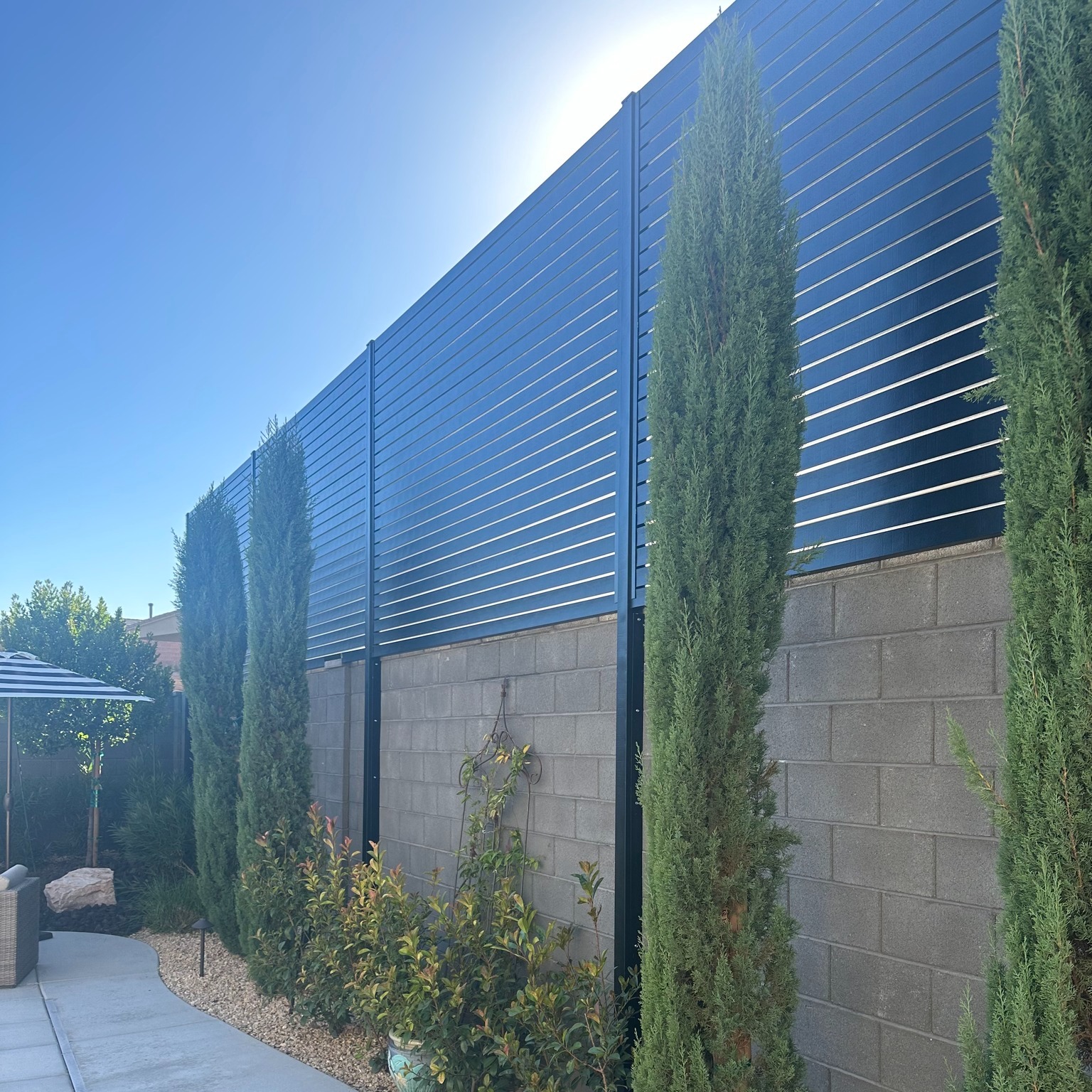
Combining a hard fence with columnar evergreen trees planted immediately in front of it is a strategy that delivers year-round privacy far more effectively than either element alone. The fence provides immediate, reliable screening; the trees add height, life, seasonal interest, and the quality of an established garden that a bare fence simply can’t provide. Within three or four years, the two elements merge into what looks like a mature planting scheme.
The gravel ground treatment and curved path here give the scheme a considered quality that prevents the strong vertical elements from feeling rigid. Mixing hard angular structure with soft curved planting and ground treatment is a reliable design principle that applies across garden styles — the tension between geometric and organic is what makes a garden feel designed rather than assembled.
14. Solid Panels With a Lattice Insert and Shrubs Along the Base: Three Layers of Privacy
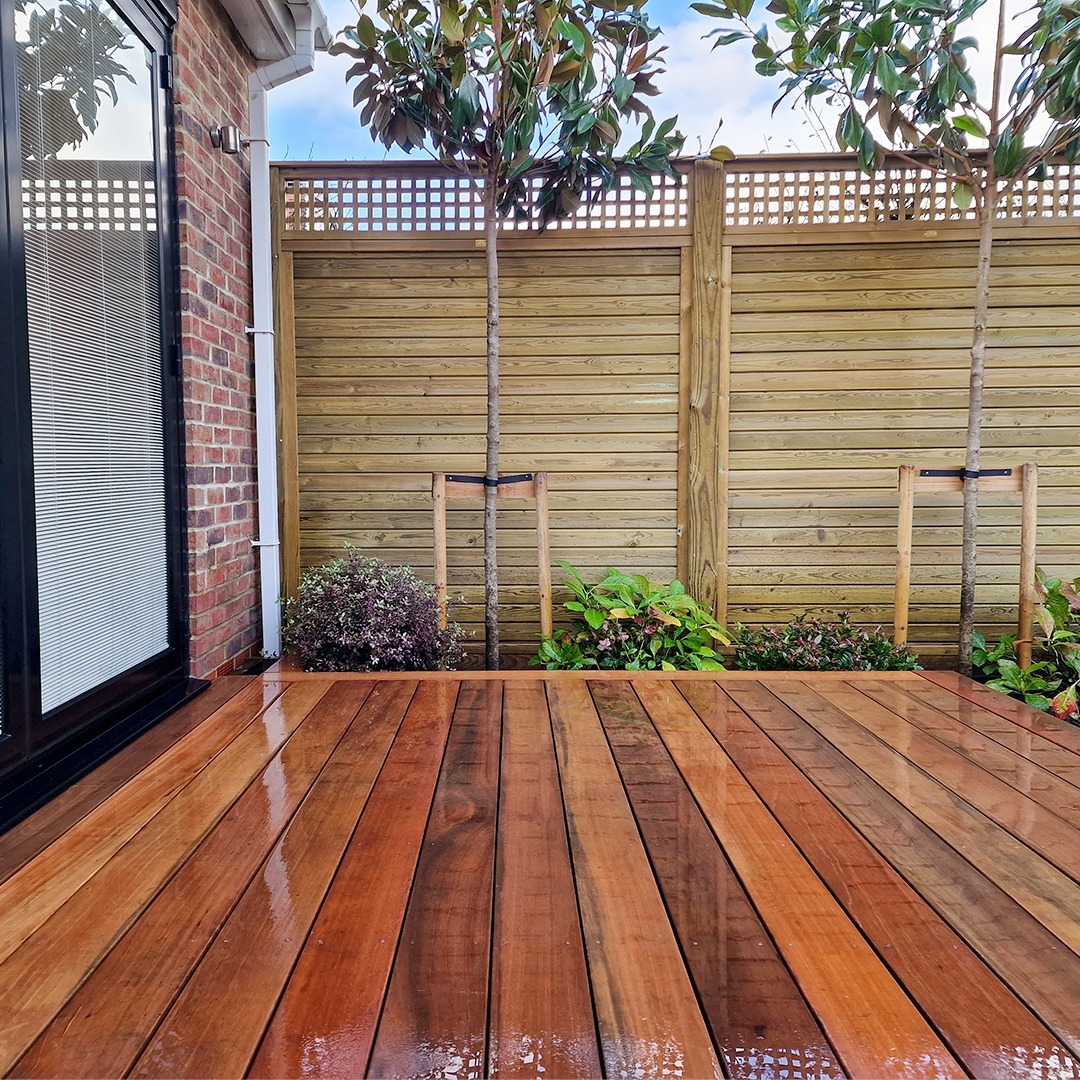
The most effective privacy screens layer different elements — here a solid panel, a lattice insert breaking up the surface, and shrubs planted at the base all work together. The shrubs soften the base of the fence and prevent the hard boundary from looking imposed on the garden; the lattice section breaks up what would otherwise be an unrelenting solid wall; the overall scheme reads as a garden feature rather than a barrier.
Wet conditions in a garden can make a wooden fence look particularly good — the rain darkens the tones and brings out the grain in a way that dry conditions don’t. This is a useful reminder that a fence that looks good in all weathers is one worth investing in. Timber that weathers gracefully improves with age rather than simply deteriorating, which is one of the most important qualities to consider when choosing materials.
15. Metal Trellis Panels With Climbing Plants: The Living Privacy Screen in Progress
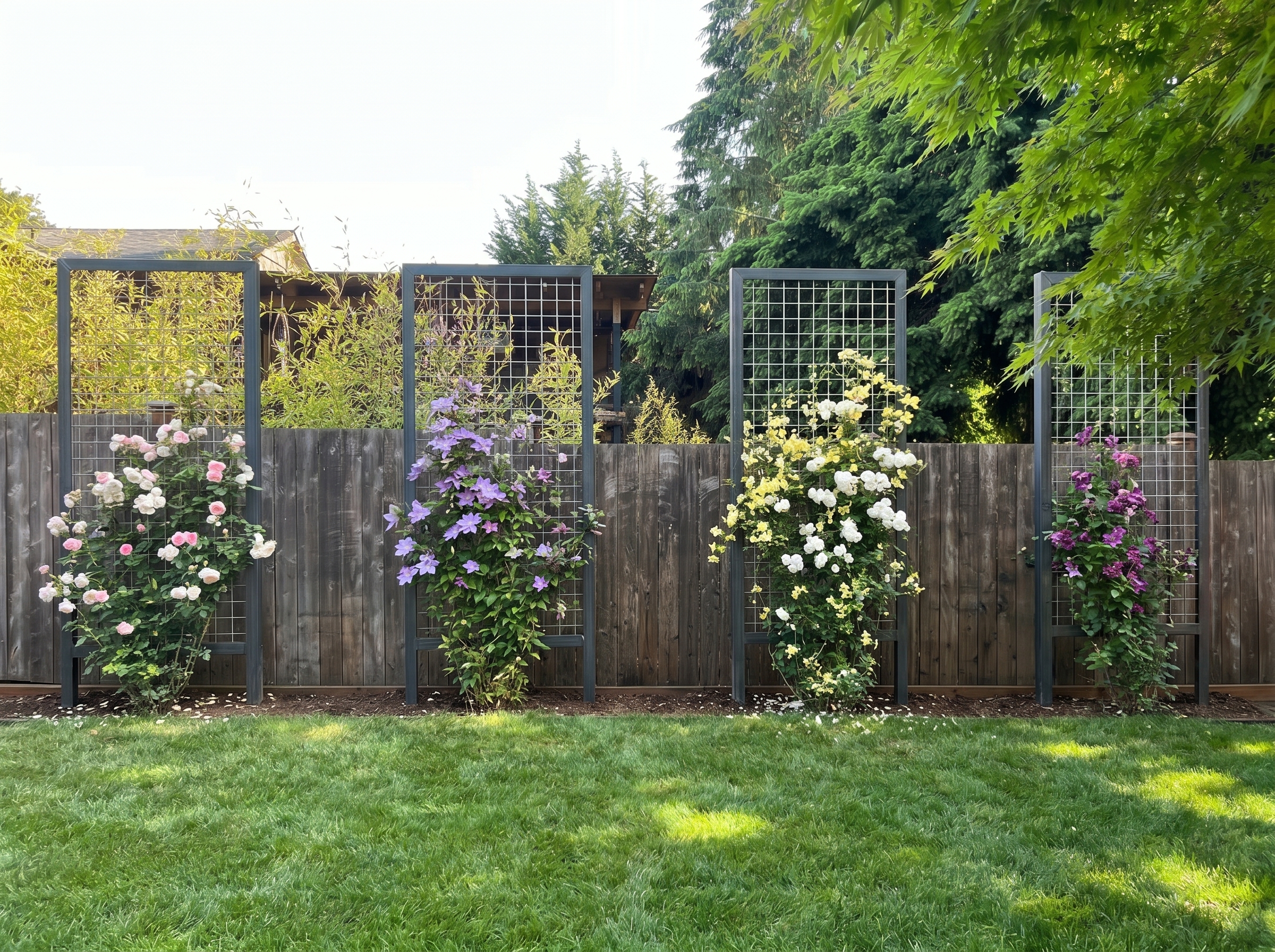
Metal trellis panels with climbing plants trained up them represent a fundamentally different approach to privacy fencing — instead of installing a solid screen, you’re growing one. The privacy improves every year as the plants establish and fill out, and the result is a boundary that changes with the seasons, attracts wildlife, and looks nothing like a conventional fence.
The four panels here with different flowering climbers on each — white, pink, purple and yellow — show how the same structure can carry completely different planting to create a varied, colourful effect. Roses, clematis, honeysuckle and jasmine are all excellent choices for this kind of screen. The neatly trimmed lawn in front anchors the scheme and prevents the vertical planting from feeling chaotic.
16. Ornamental Fence Panels With Young Shrubs: Building Toward a Living Boundary
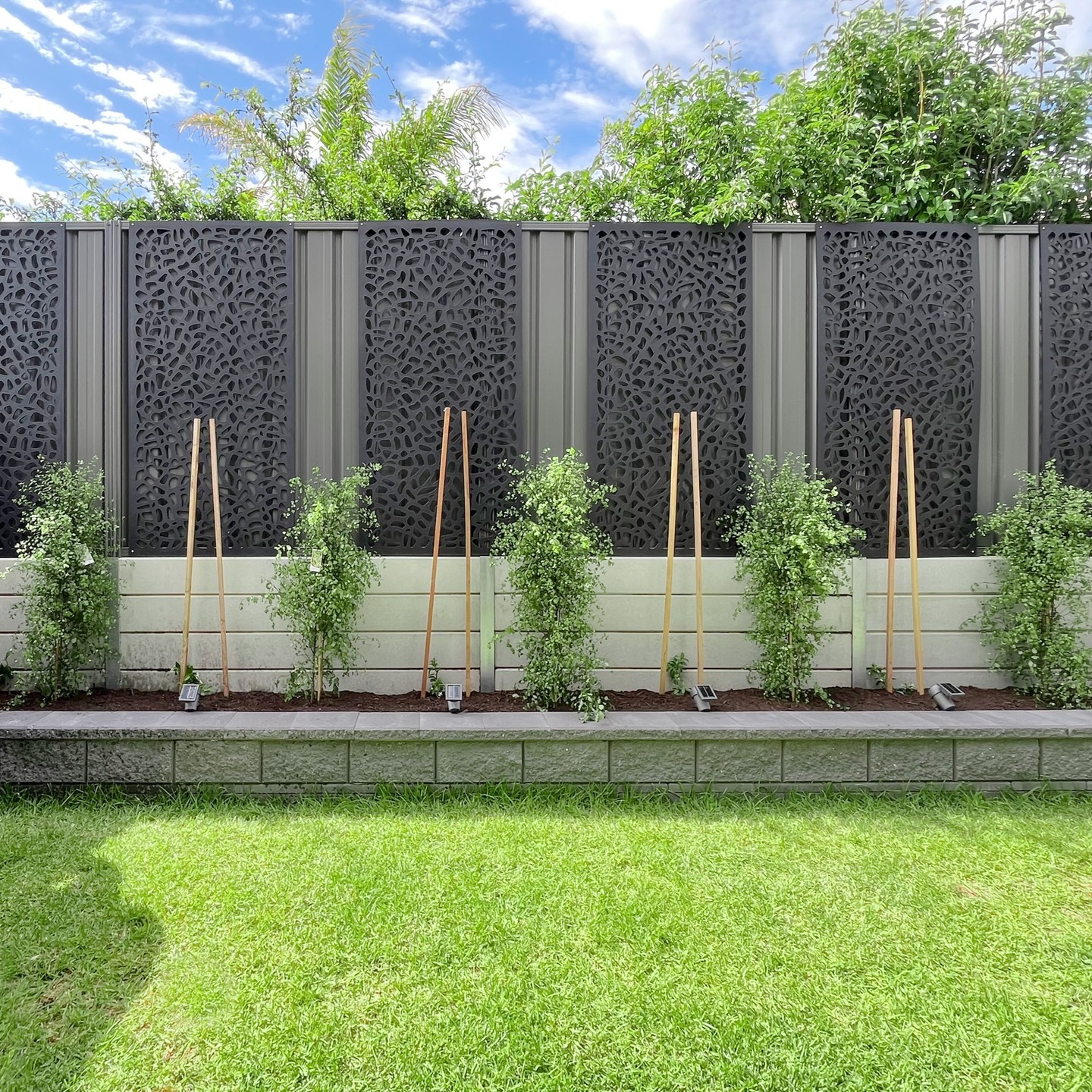
The approach here — decorative fence panels providing immediate privacy while young shrubs establish in front — is one of the smartest ways to build a long-term garden boundary. The fence does the job now; the shrubs take over gradually as they grow, softening the hard boundary and eventually creating a more natural-looking screen than the fence alone could provide.
Bamboo canes supporting the young shrubs are a practical touch that keeps the plants growing upright and trained in the right direction during the establishment period. The ornamental fence panels with their distinctive pattern give the boundary genuine visual interest rather than the blank backdrop of a standard close-board fence — which makes the garden feel more designed during the years it takes for the planting to fill out.
17. Timber Posts With Wire Mesh: The Framework for a Future Green Wall
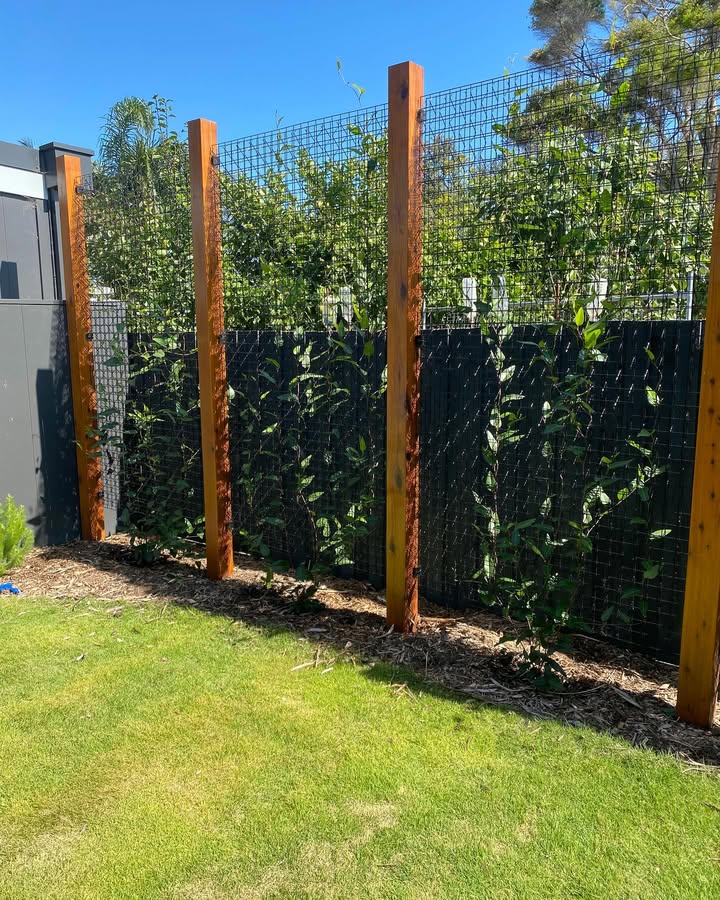
A simple framework of timber posts and black wire mesh costs very little and provides the structure for climbing plants to create a genuinely impressive living privacy screen. What looks relatively sparse at planting becomes a dense green wall within two or three growing seasons — and unlike a solid fence, it improves in privacy and visual quality year on year rather than deteriorating.
The mulched planting beds at the base of the posts are essential during establishment — they retain moisture, suppress weeds, and give the young climbers the best possible start. Choosing vigorous climbers like Hydrangea petiolaris, ivy, or Virginia creeper will fill this kind of structure surprisingly quickly. The contrast between the dark wire mesh and the warm timber posts is appealing even before the plants fill in, which makes the interim period easier to live with.
18. Ivy on Timber With a Brick Path: The Privacy Fence That Grows Into the Garden
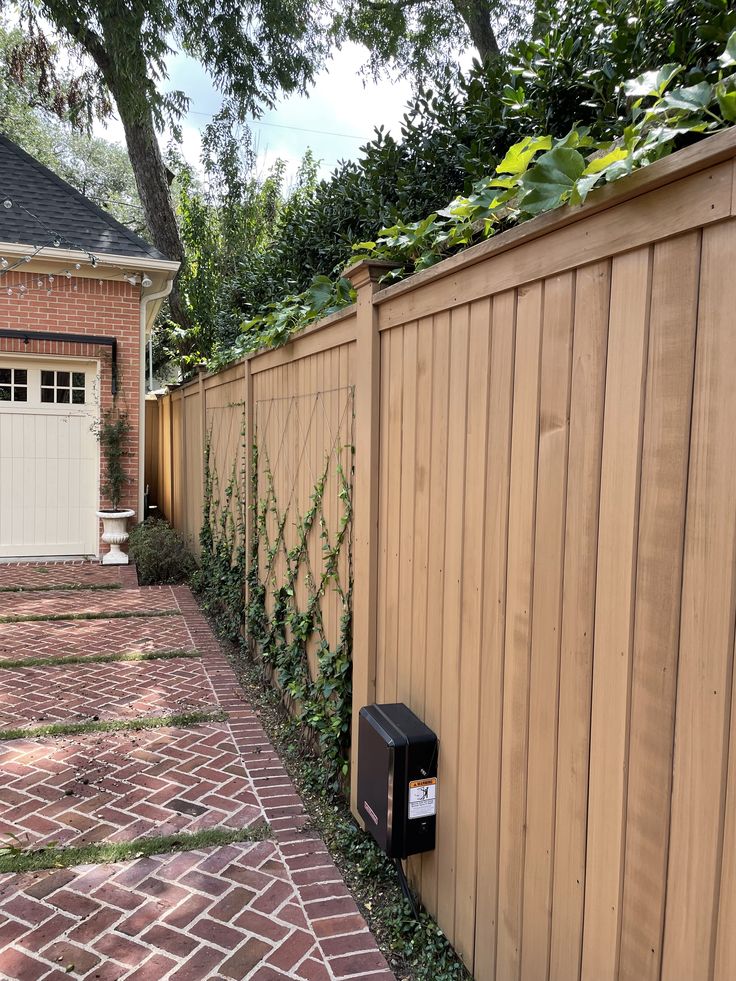
A timber fence with ivy growing across it is the most natural-looking privacy solution in this collection — and that’s precisely its appeal. The ivy softens every edge, blurs the boundary between the fence and the garden, and creates the impression of a garden that has evolved organically over time rather than been recently installed. For anyone who finds modern fencing too clean and hard, this approach offers a much more relaxed alternative.
The red brick path with grass filling the joints is a classic combination that works particularly well alongside a planted fence — it has the same quality of age and naturalness as the ivy itself. This is a garden boundary that gets better the less you interfere with it. An occasional trim to keep the ivy off the roof and away from gutters is all the maintenance this kind of screen requires.