Rain chains are one of those things you see and immediately think “I need one of those.” 💧
If you’ve not come across them before, they’re basically a decorative alternative to a downpipe. Instead of water disappearing into a plastic tube, it trickles down a chain or series of cups, turning rainfall into something you actually want to watch. They’ve been used in Japan for hundreds of years, but they work just as well on a terraced house in Manchester.
The shop-bought versions can be surprisingly pricey, sometimes more for the fancier copper ones. But here’s the thing: rain chains are incredibly easy to make yourself. We’re talking an afternoon project using stuff you might already have lying around. Old keys, spare plant pots, tin cans, even cookie cutters – all fair game.
We’ve rounded up over 16 DIY rain chain ideas that look great and won’t cost much at all. Some are dead simple, others a bit more involved, but none of them require special skills or tools. ☔
Let’s get into it.
1. Classic Copper Cup Links: The Rain Chain That Started It All

The traditional copper cup-link rain chain is the design most people picture when they hear the term, and there’s a reason it’s stuck around. Each cup catches the water from the one above and guides it down to the next, so instead of a hidden rush of water through a pipe, you get a visible, almost deliberate-looking cascade. It replaces a downspout section entirely, which means no extra installation beyond what’s already there.
Copper is the material to go for if you like the idea of something that changes over time. It starts bright and shiny, and within a year or two it develops a soft, weathered patina that suits a garden setting far better than the original shine. Against greenery, that aged copper tone looks like it’s always been there.
2. A Single Chain Into a Weathered Pot: The Simplest Version That Still Works
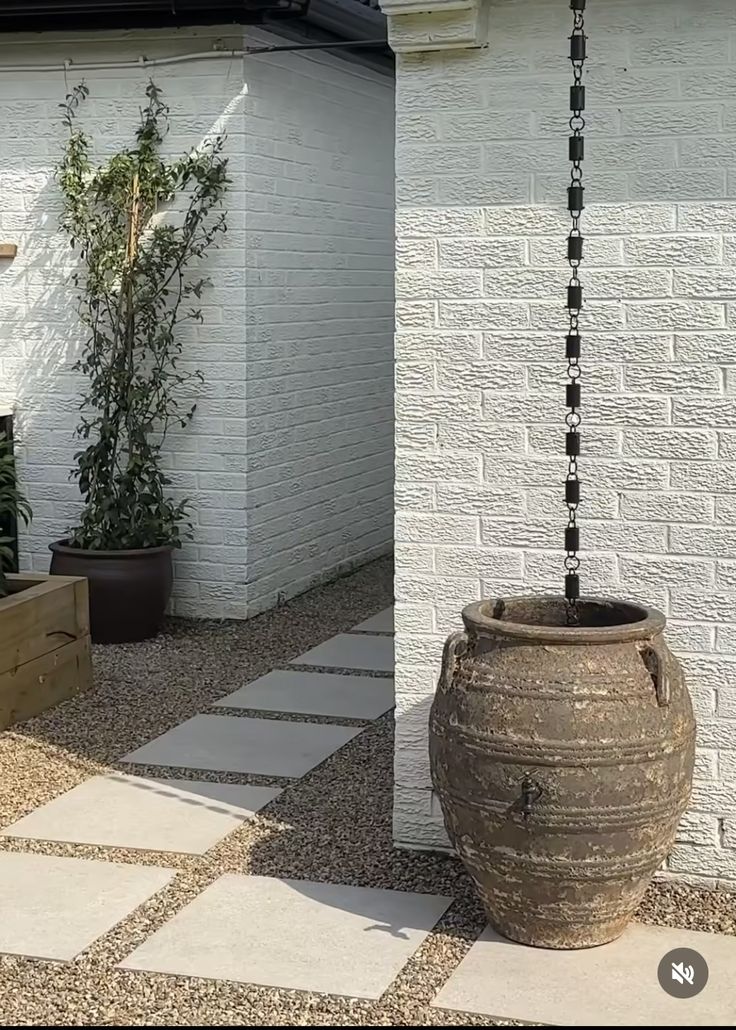
You don’t need a full cup-style chain to get the effect. A plain chain hanging from the gutter outlet into a large pot or container does the same basic job, guiding water down in a controlled line rather than letting it splash everywhere. It’s about as simple as this project gets, and it’s a good option if you want to try the idea before committing to anything more elaborate.
The weathered terracotta pot here is doing a lot of the visual work. Against the clean white brick wall, that rough, aged texture stands out in a way a new pot wouldn’t. If you’ve got an old pot sitting unused somewhere, this is a good use for it. Just make sure it has drainage, or add a layer of gravel at the bottom so it doesn’t sit full of water.
3. Black Metal Cups Into a Basin of River Stones
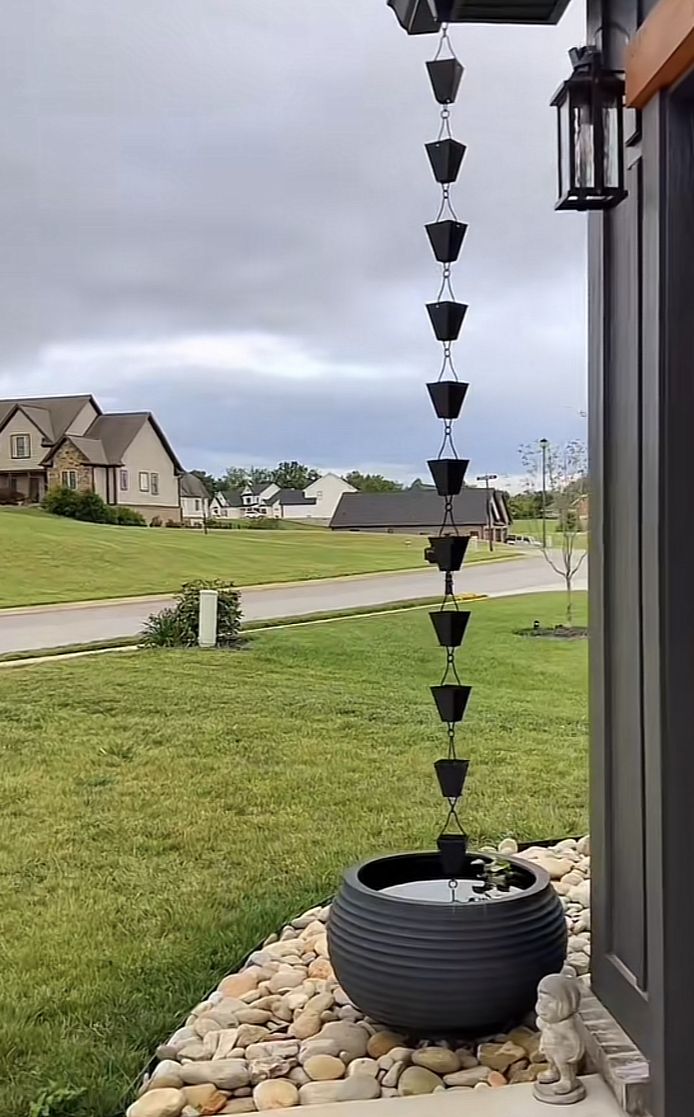
Not every rain chain needs to be copper. A matte black chain reads as more modern and tends to disappear against darker siding or trim, which can be exactly what you want if you’d rather the focus stayed on the water itself rather than the chain. Against an overcast sky, the black links here have a clean, graphic quality that copper wouldn’t give you.
Where the chain ends matters as much as the chain itself. A basin filled with smooth river stones does two things: it slows the water down so it doesn’t splash or erode the soil underneath, and it looks intentional rather than like a drainage afterthought. This is a detail that’s easy to add to any rain chain setup, whatever the chain itself looks like.
4. A Full Copper Gutter and Chain System

If you’re already thinking about replacing guttering, copper is worth considering as more than just an accent. A copper gutter system with a matching cup chain means the whole drainage setup, not just one section, has that warm tone and the same aging process. Against pale brick or render, copper guttering reads as a genuine architectural detail rather than an add-on.
This is obviously a bigger undertaking than swapping out a single downspout, and it’s not a weekend project in the way some of the others on this list are. But if your existing guttering needs replacing anyway, the cost difference between copper and standard materials is smaller than people expect, and a rain chain becomes a natural extension of the system rather than something bolted on afterward.
5. A Copper Chain Beside a Stone Lantern: Borrowing From Japanese Garden Design
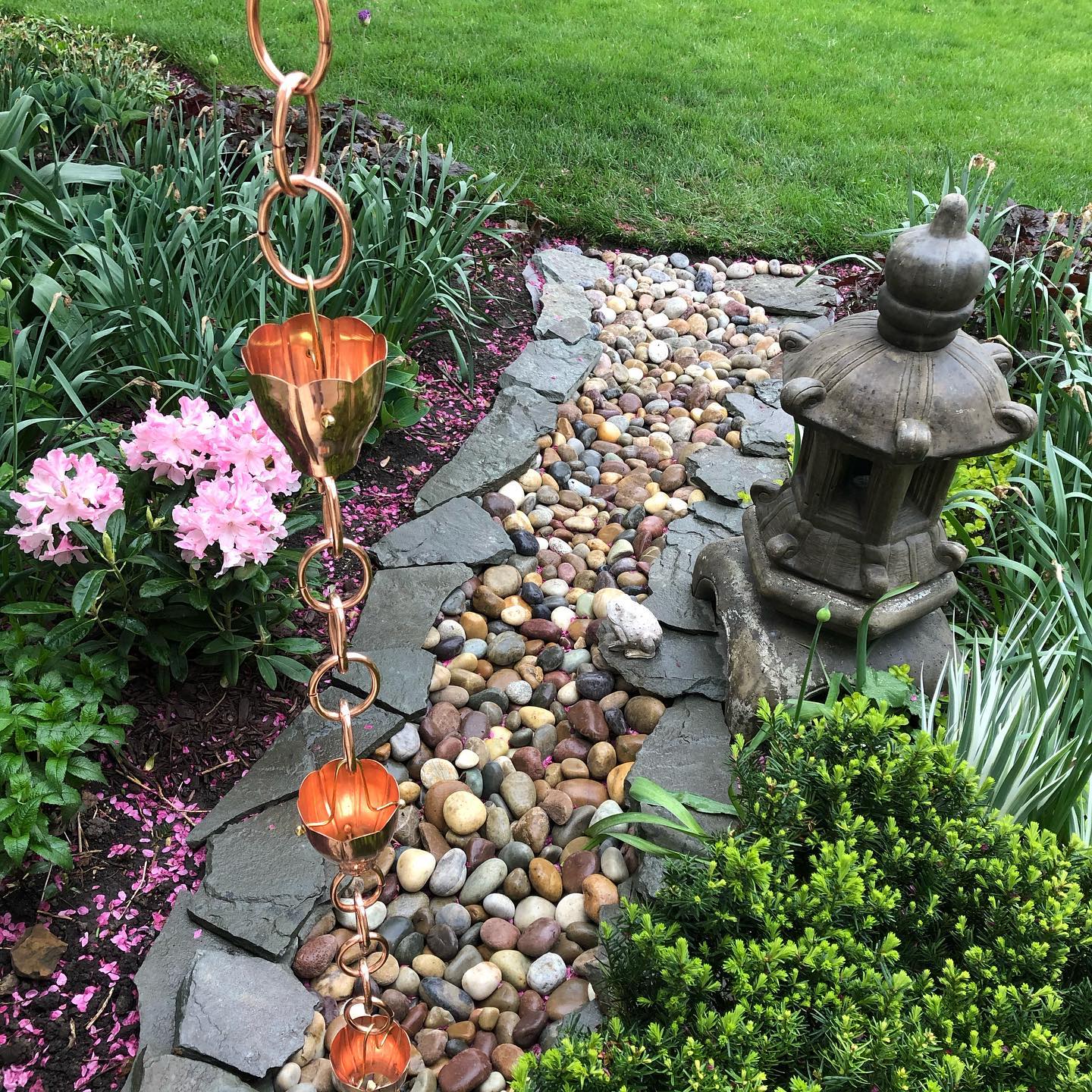
Rain chains have roots in traditional Japanese garden design, where managing water visibly and gracefully is part of a broader approach to the whole space. This setup leans into that origin. The copper chain sits alongside a stone lantern and a pebble path that mimics a dry riverbed, and the whole corner feels like it was designed around the idea of water, even on a dry day.
If this style appeals to you, the rain chain doesn’t need to be the only element. A few smooth stones laid out as if they’re a stream bed, a weathered ornament, some low planting in muted greens, that’s enough to build the same atmosphere on a much smaller scale. The rain chain becomes one part of a quiet, considered corner rather than a standalone feature.
6. A Dark Chain Against a Bright White Porch
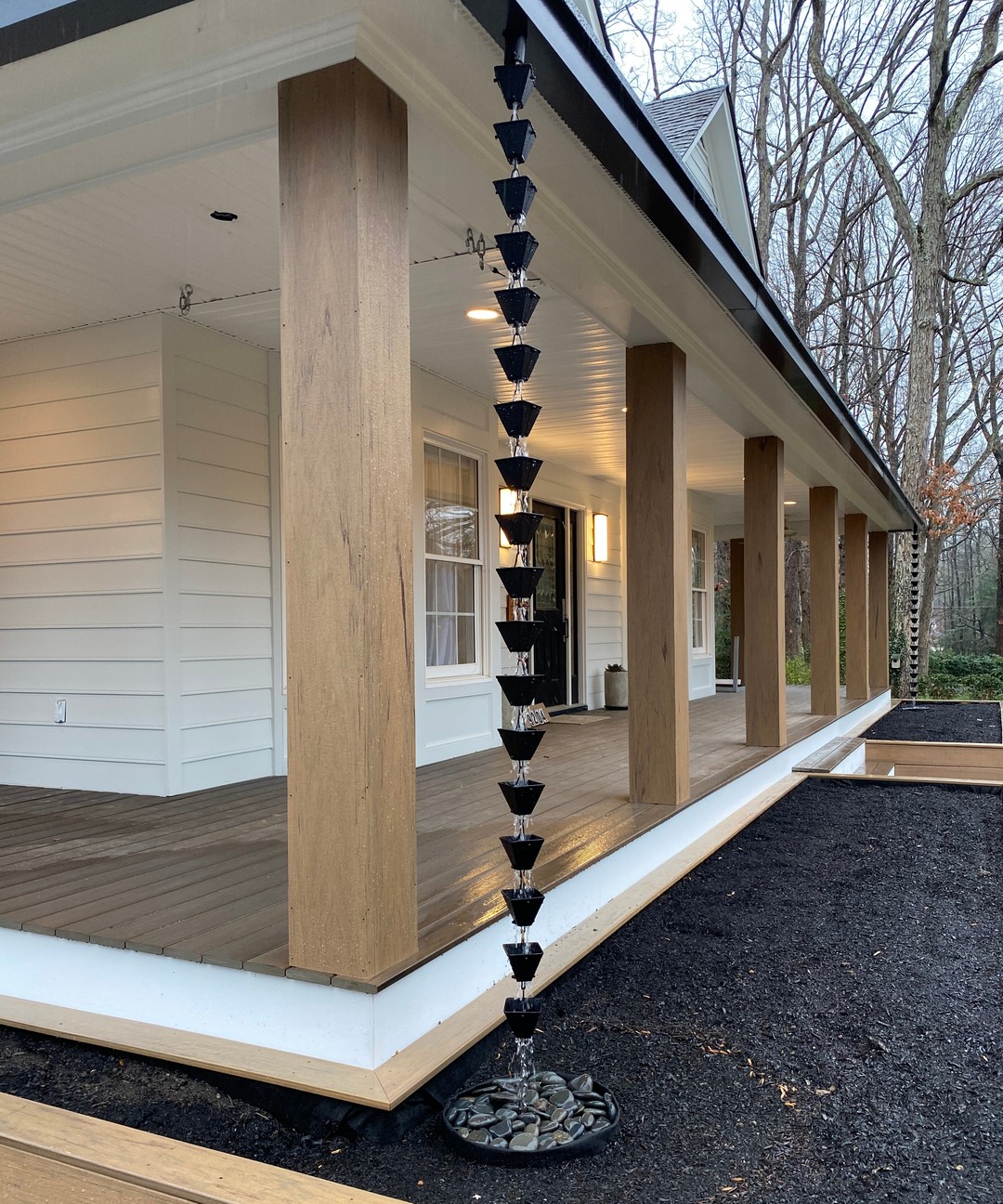
A dark rain chain against a bright white porch is one of those combinations that works because of the contrast rather than in spite of it. The black cups stand out clearly against the white overhang and pale columns, so even when it’s not raining, the chain reads as a deliberate design choice rather than something that happens to be there.
This is worth bearing in mind if your house has a light-colored exterior. A copper chain would also look good, but it would blend in more. If you want the rain chain to read as a feature rather than just a function, going for a darker finish against a pale background makes it far more visible, rain or no rain.
7. A Cup Chain Feeding a Large Ceramic Pot by the Door
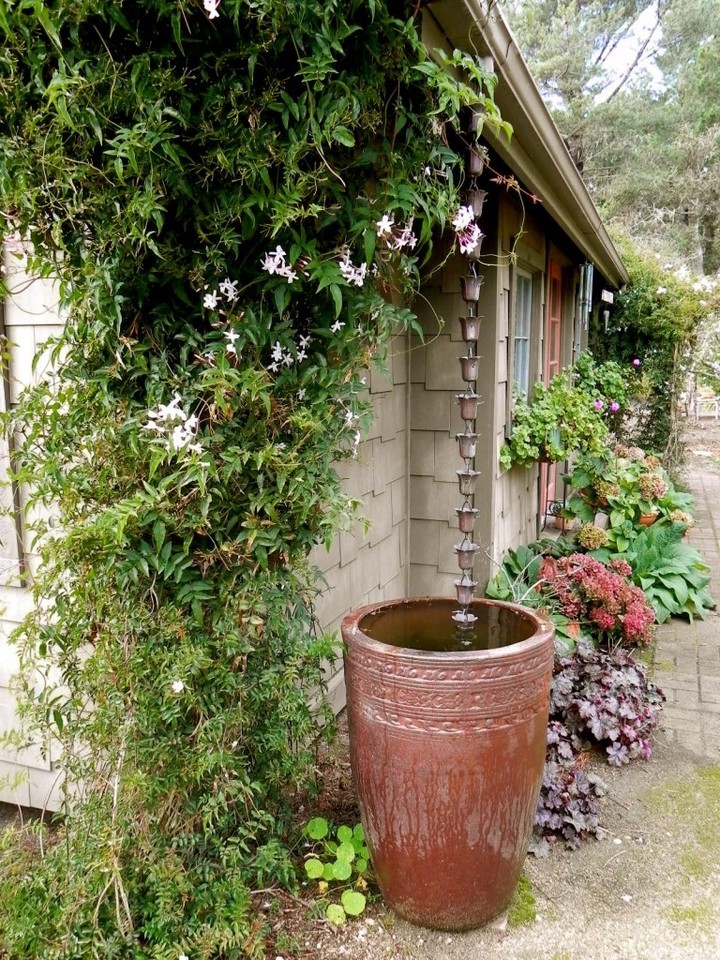
A large ceramic pot positioned to catch the water from a rain chain gives the setup a sense of purpose beyond decoration. It looks like the chain exists to fill that pot, even if the pot is mostly there for looks. The earthy brown tone of the pot against the cottage’s stone and climbing greenery keeps everything feeling like it belongs together rather than like separate additions.
If you want to take this further, there’s no reason the pot has to just collect water. Drill a small overflow hole near the top and you’ve got a basic rain barrel that can supply water for the garden during dry spells. It’s a small step from “looks nice” to “is doing something useful,” and it doesn’t change the appearance much at all.
8. A Plain Chain Tucked Into a Fern Border
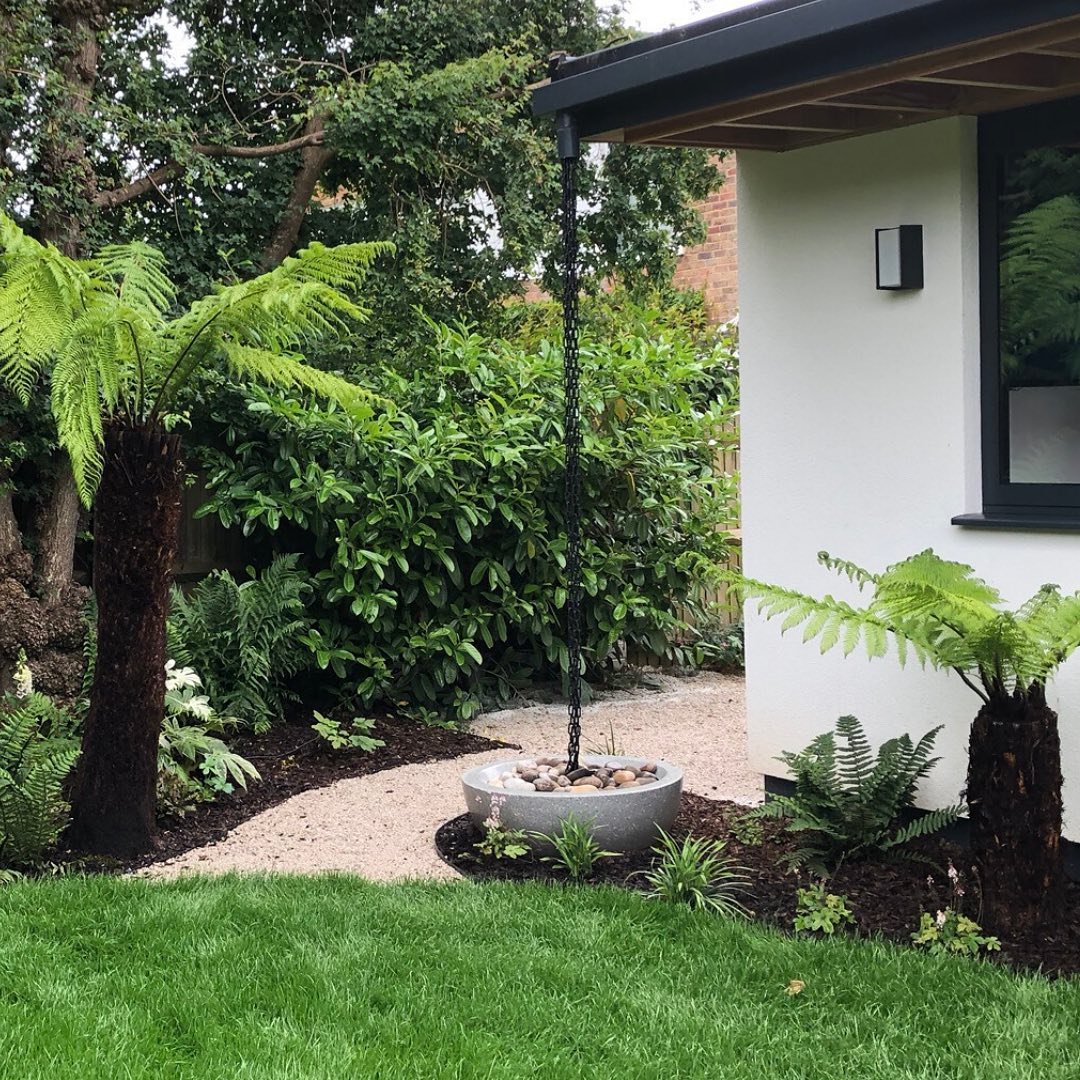
Sometimes the best rain chain is the one you barely notice. A simple chain set among ferns and other greenery doesn’t try to be a focal point. It’s just there, doing its job, and the planting around it does most of the visual work. If your style leans more toward “let the plants do the talking,” this is the approach.
This is also one of the easiest setups to retrofit into an existing garden, because it doesn’t ask anything of the space around it. If you’ve already got a planted bed near a downspout, swapping in a chain and letting the existing greenery surround it is a low-effort way to get the benefit without redesigning anything.
9. Copper Flower-Shaped Cups on a Wooden Porch
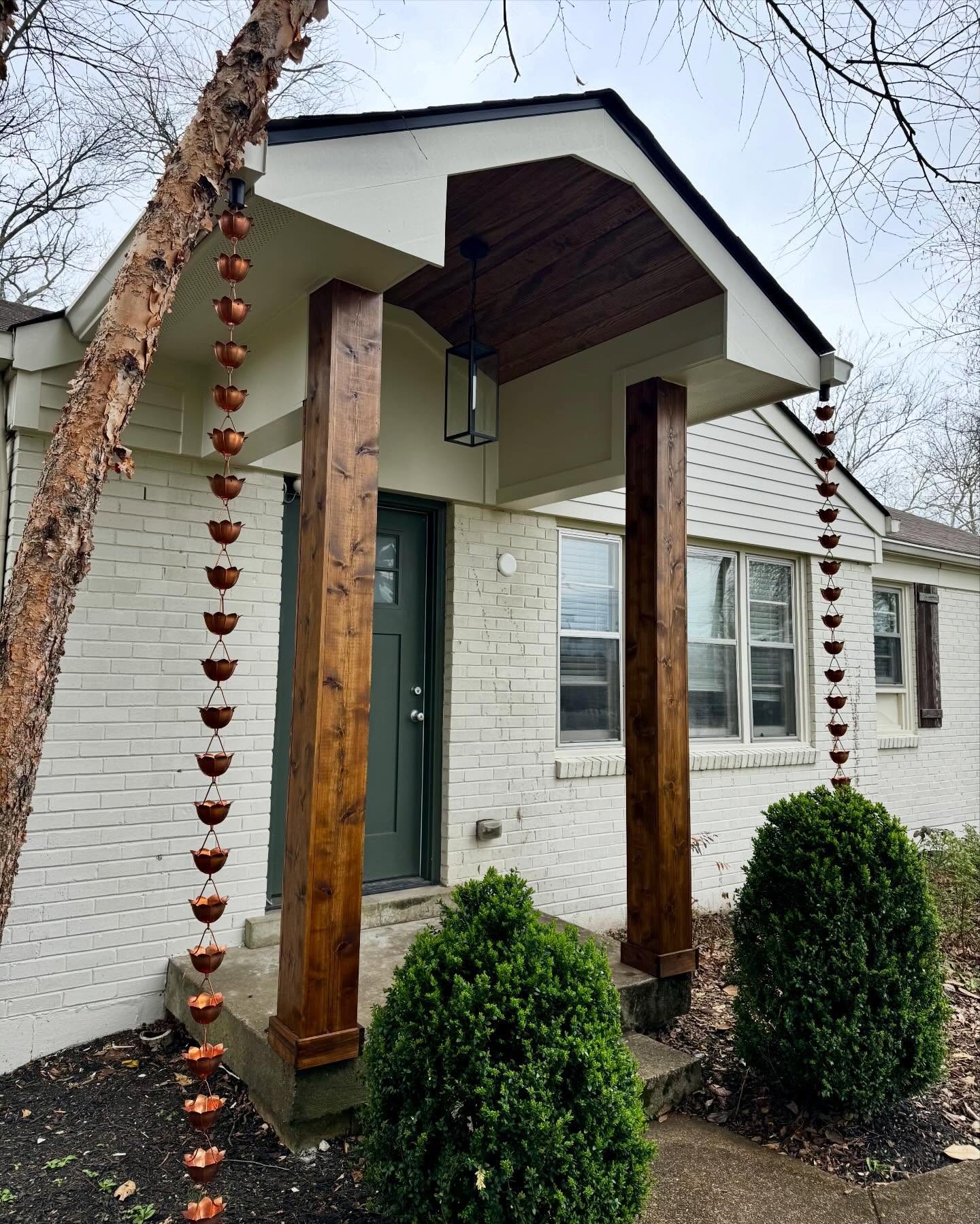
Not all rain chain cups are plain bowls. Some are shaped more like flowers or bells, with a bit more detail and texture, and they catch the light a little differently as a result. Against the white brick and warm wood of this porch, the copper flower shapes have a slightly more decorative quality without tipping into anything fussy.
If your porch already has some character, like the dark green door and the wooden pillars here, a more detailed rain chain fits right in rather than competing for attention. It’s a small upgrade from the plainer cup styles, and it’s worth seeking out if you’ve got a spot where a bit more visual interest would suit what’s already there.
10. Black Links Leading to a Grated Drain
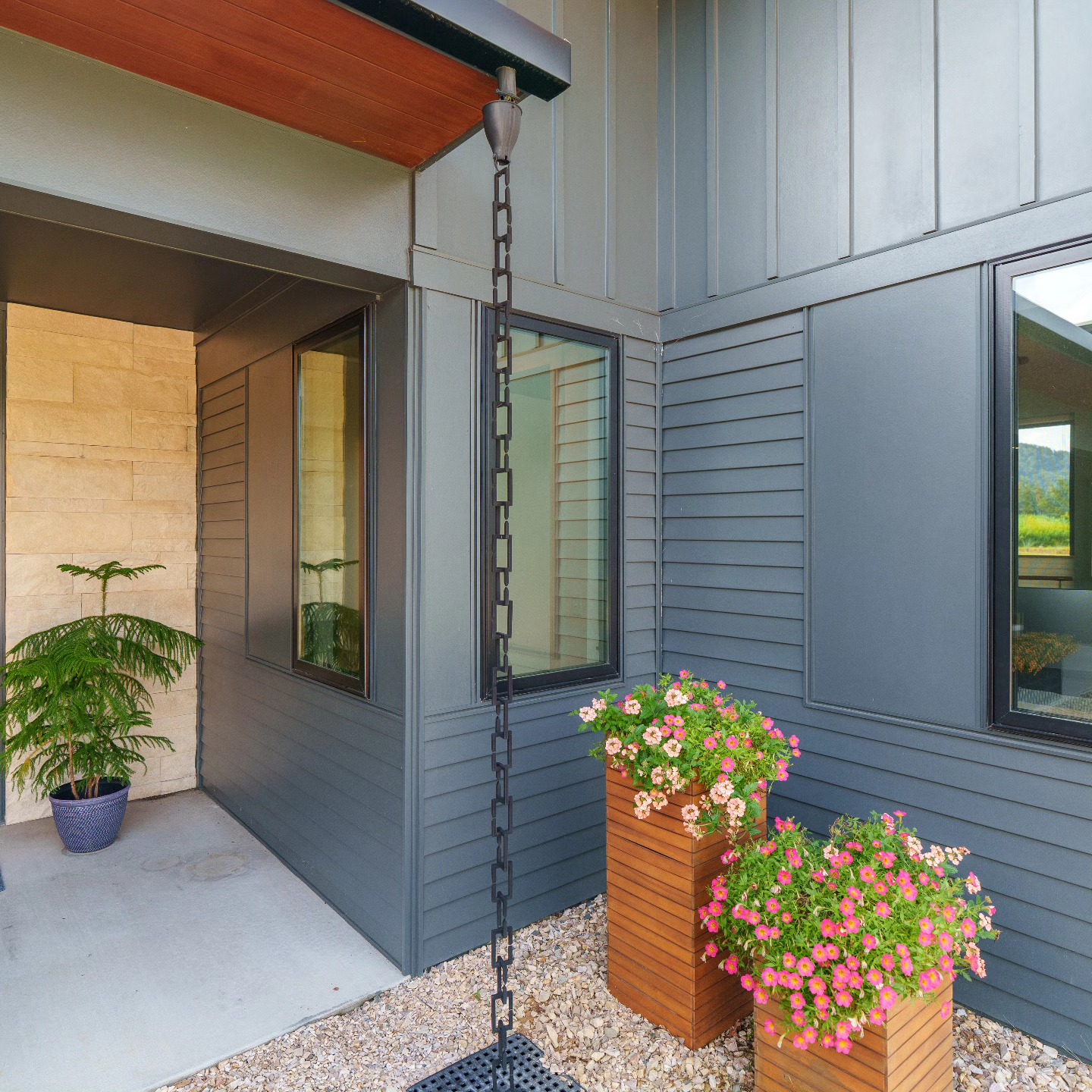
If you’ve got proper drainage already in place, a rain chain doesn’t need a pot or a basin at the bottom at all. It can simply guide water down to a grated drain, which is both practical and visually clean. The sleek black links here disappear neatly against the wood paneling, and the whole thing reads as part of the building’s design rather than something stuck on.
This is a good option for anyone who wants the visual effect of water moving down the chain without adding another container or feature to maintain. The drain does the practical work, the chain does the decorative work, and neither gets in the way of the other.
11. A Simple Chain Beside Rustic Lanterns and Potted Plants
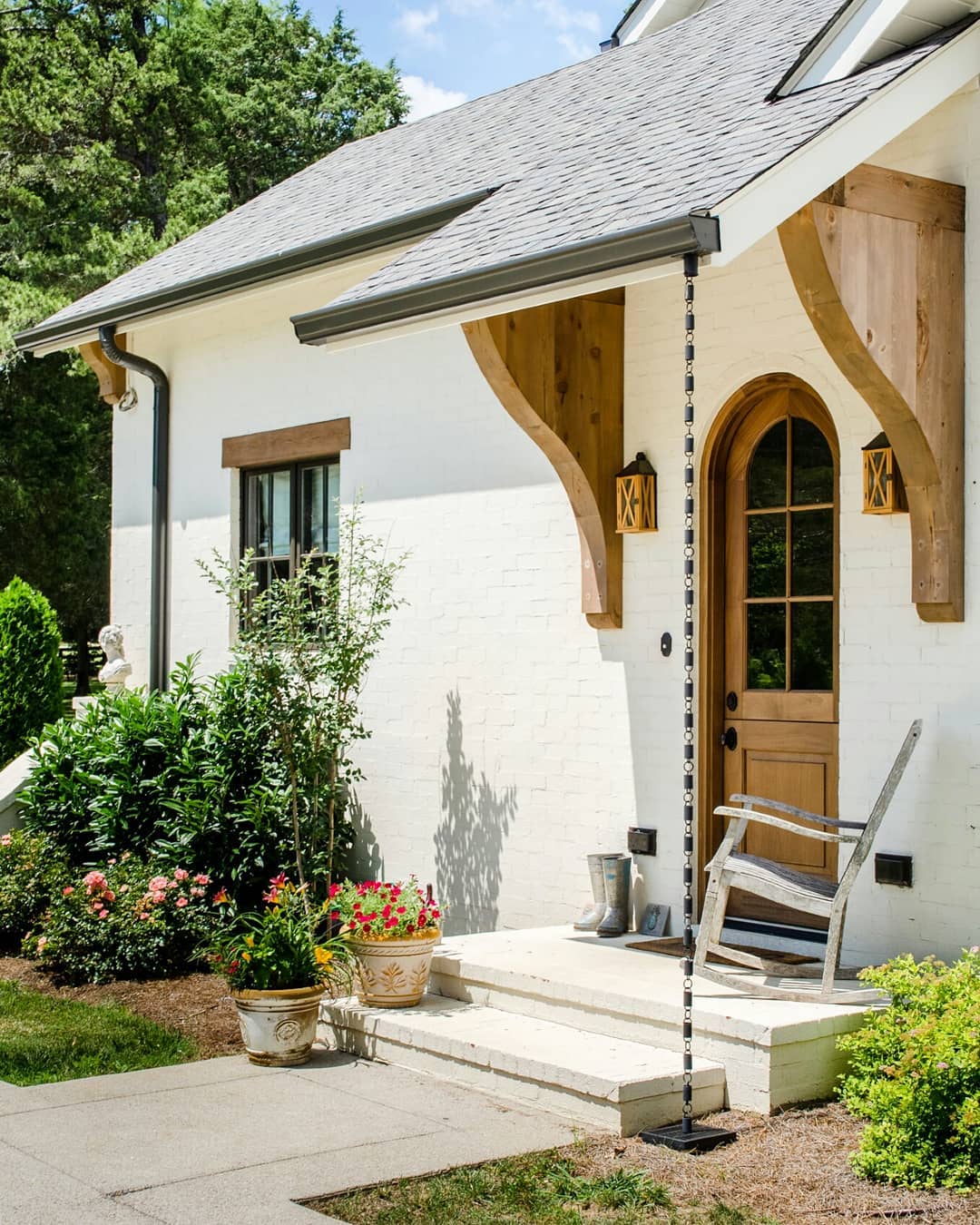
On a small porch, a rain chain doesn’t need to do much to fit in. Here, it sits alongside a couple of weathered lanterns and some potted plants, and it reads as just another piece of the overall look rather than a standalone feature. The white brick and natural wood door provide a calm backdrop that lets all these small details sit comfortably together.
This is a useful example if your porch already has a few personal touches and you’re wondering whether a rain chain will feel like *too much*. Added in among other things rather than as the main event, it tends to blend in just fine.
12. Tiny Watering Cans Linked Together as a Rain Chain
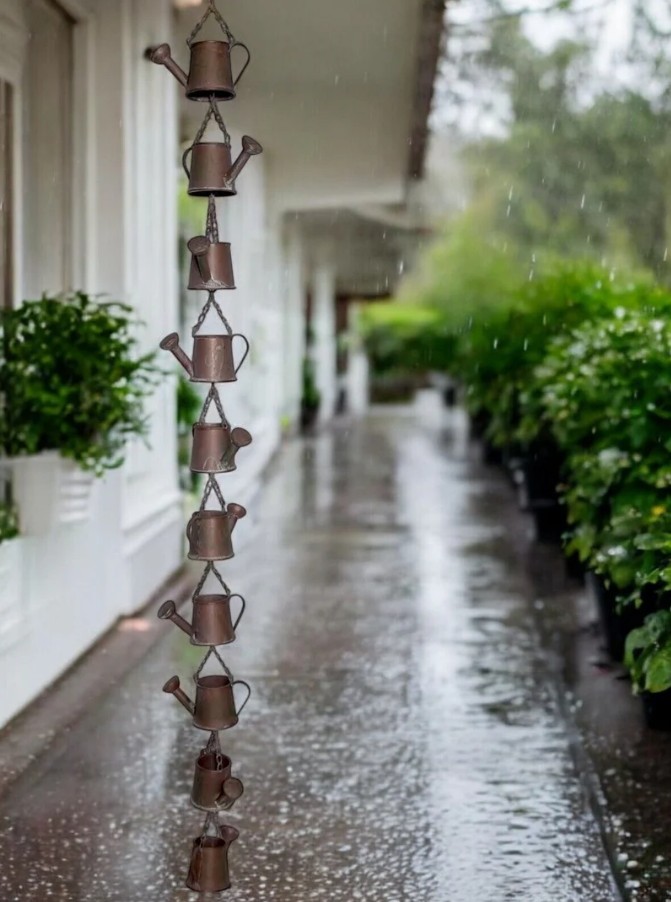
This is the idea that proves rain chains don’t have to come from a garden center at all. Small rustic watering cans, linked together and hung from the gutter, each catch water and pass it down to the next, just like a traditional cup chain would. The brown, slightly worn look of the cans gives it a charm that a brand new chain wouldn’t have.
If you’ve got old watering cans, mugs, or small buckets lying around, this is the kind of project they’re made for. Drill a hole in the base of each one for drainage, link them with wire or s-hooks, and hang the result from the gutter outlet. It costs next to nothing and gives you something nobody else on the street will have.
13. Copper Cups Shaped Like Tiny Umbrellas Over a Brick Path
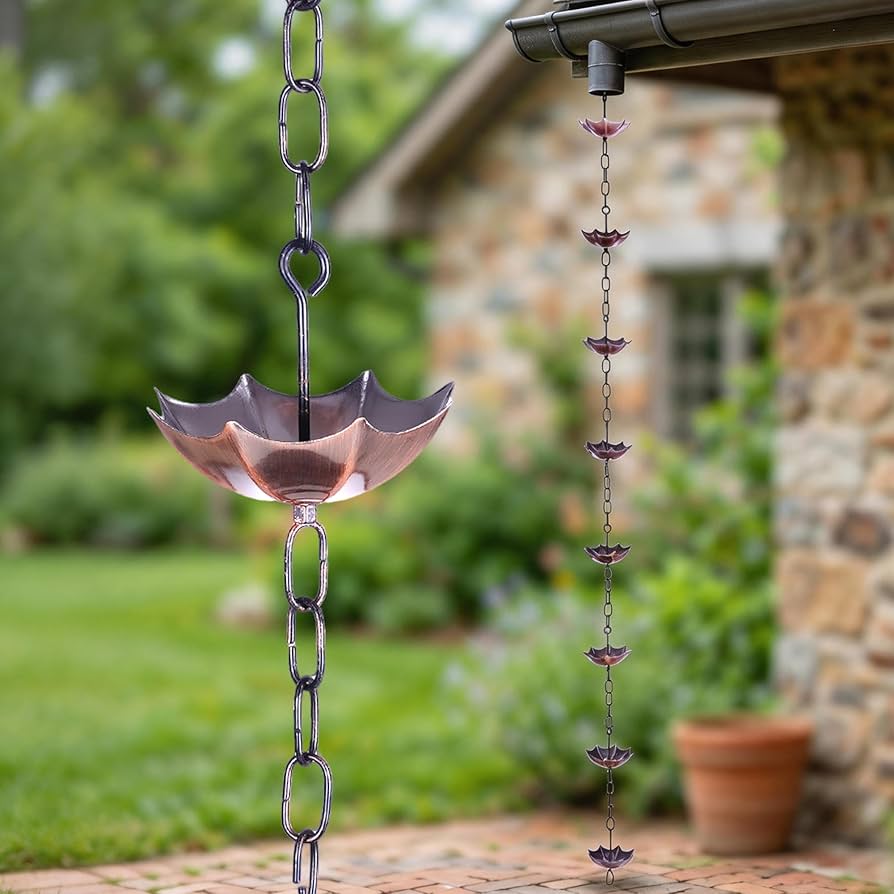
Umbrella-shaped cups are one of the more playful variations on the classic copper chain. Each cup has a slight dome rather than a flat bowl, which catches the light a little differently and adds a touch of whimsy without being a novelty item. Against a brick path and some greenery, it still reads as a considered garden feature rather than a gimmick.
If you like the idea of copper but want something with a bit more personality than the standard cup shape, this kind of design is worth looking out for. It’s still functional, it still develops that nice patina over time, but it has a slightly different character to the more common versions.
14. A Rain Chain Feeding a Basin in a Small Front Garden

In a small front garden, every element has to earn its place, and a rain chain feeding into a basin does double duty. It manages water from the roof, reduces splashing onto the mulch and path below, and gives the eye something to land on in a space that might otherwise just be a row of plants against a wall.
The basin here catches the water and lets it soak away gradually rather than pooling or running off, which is genuinely useful in a small bed where erosion around the downspout is often the first sign of a drainage problem. If you’ve noticed a worn patch or small gully under your downspout, this is the kind of fix that solves the practical issue while adding something nice to look at.
15. A Chain Into a Stone Planter Along a Pebble Path
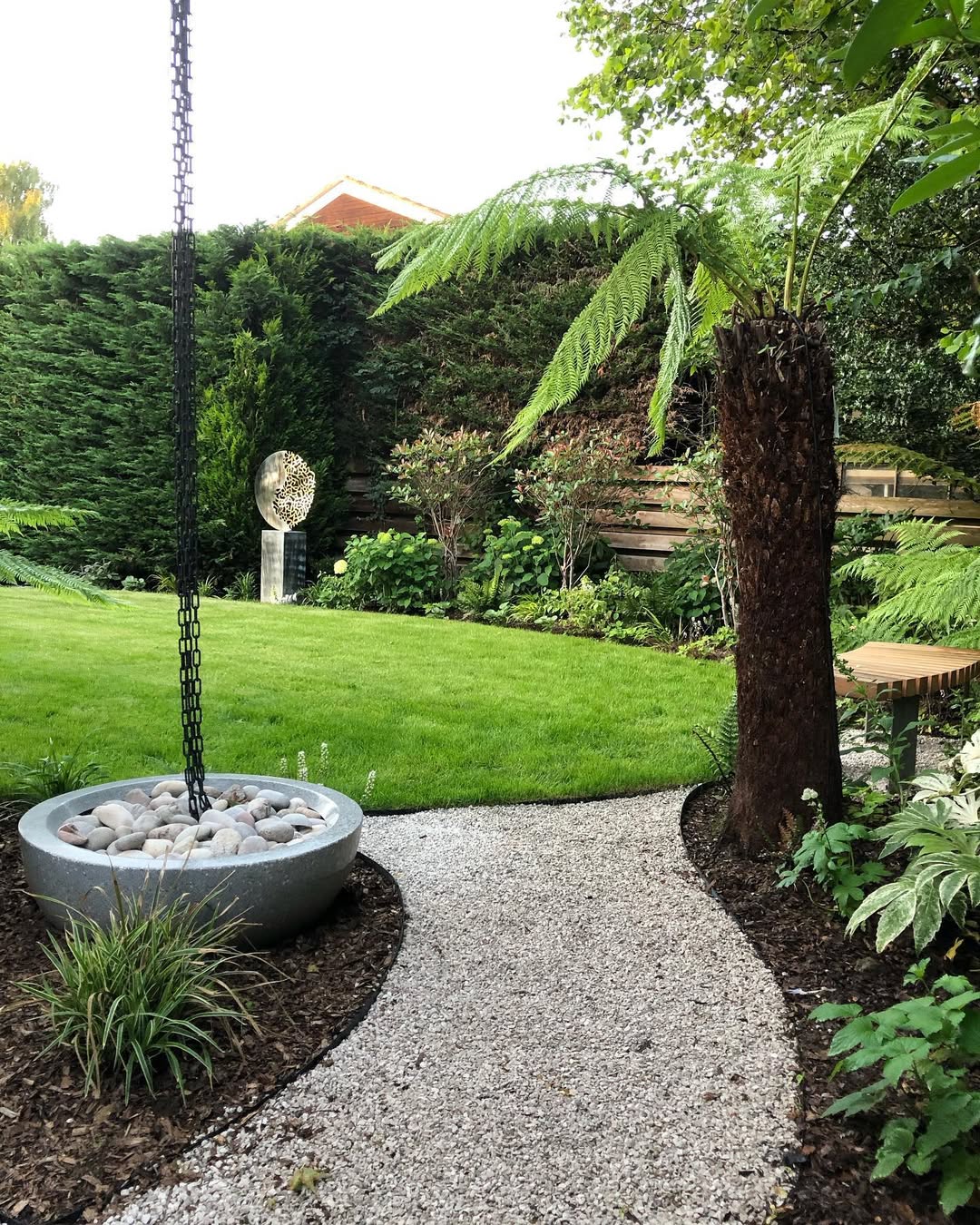
A chain hanging into a large planter filled with smooth stones works particularly well alongside a pebble path, because the two elements share the same material language. The planter doesn’t look like a separate addition. It looks like it’s part of the same design idea as the path, just turned vertical.
If your garden already has a pebble or gravel path, this is a relatively easy way to extend that look upward. A large pot or planter, filled with stones to match, positioned under a downspout outlet with a chain running into it. The stones do the same job they do on the path: looking deliberate while managing water and reducing mess.
16. A Geometric Chain Diverter Over Ornamental Grasses
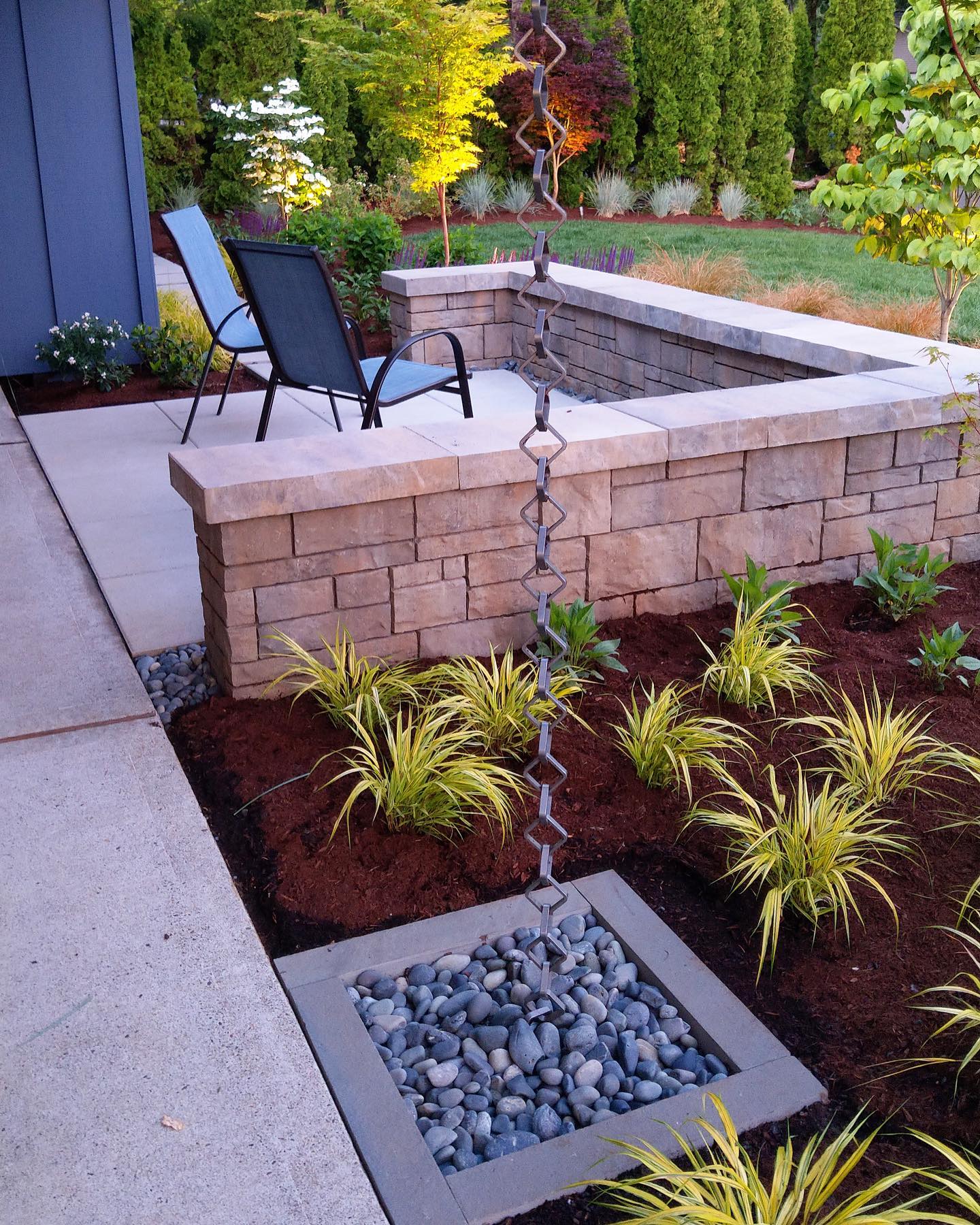
For a more contemporary garden, a rain chain doesn’t have to look traditional at all. This geometric diverter has clean, angular lines that suit a modern gravel and concrete patio far better than a classic cup chain would. It sits in a small gravel bed of its own, separate from the dark mulch nearby, which gives it a defined spot rather than letting it blend into the planting.
Ornamental grasses planted around the base add movement and soften what is otherwise quite a hard, structured look. If your outdoor space leans more toward clean lines and contemporary materials, this kind of geometric design is worth looking for instead of the more rustic copper styles. The principle is the same. Only the aesthetic changes.