If you love the look of natural stone or brick but not the price tag, stamped concrete might be exactly what you’re after. 🏡
It’s one of those clever solutions that gives you the appearance of expensive materials — slate, flagstone, cobbles, even wood planks — at a fraction of the cost. And because it’s poured as a single surface, you don’t get the weeds-growing-through-the-gaps problem that comes with traditional paving.
The design options are surprisingly varied too. Different patterns, colors, textures, borders — you can create something that looks completely custom without the custom budget. It’s durable, handles weather well, and once it’s down, there’s very little maintenance involved.
We’ve gathered a range of stamped concrete patio ideas to show you what’s possible. Whether you’re after something classic and understated or a bit more decorative, there’s plenty here to help you picture what might work in your own space. 🪨
Let’s take a look.
1. A Geometric Stamped Concrete Patio That Sits Neatly Against the House
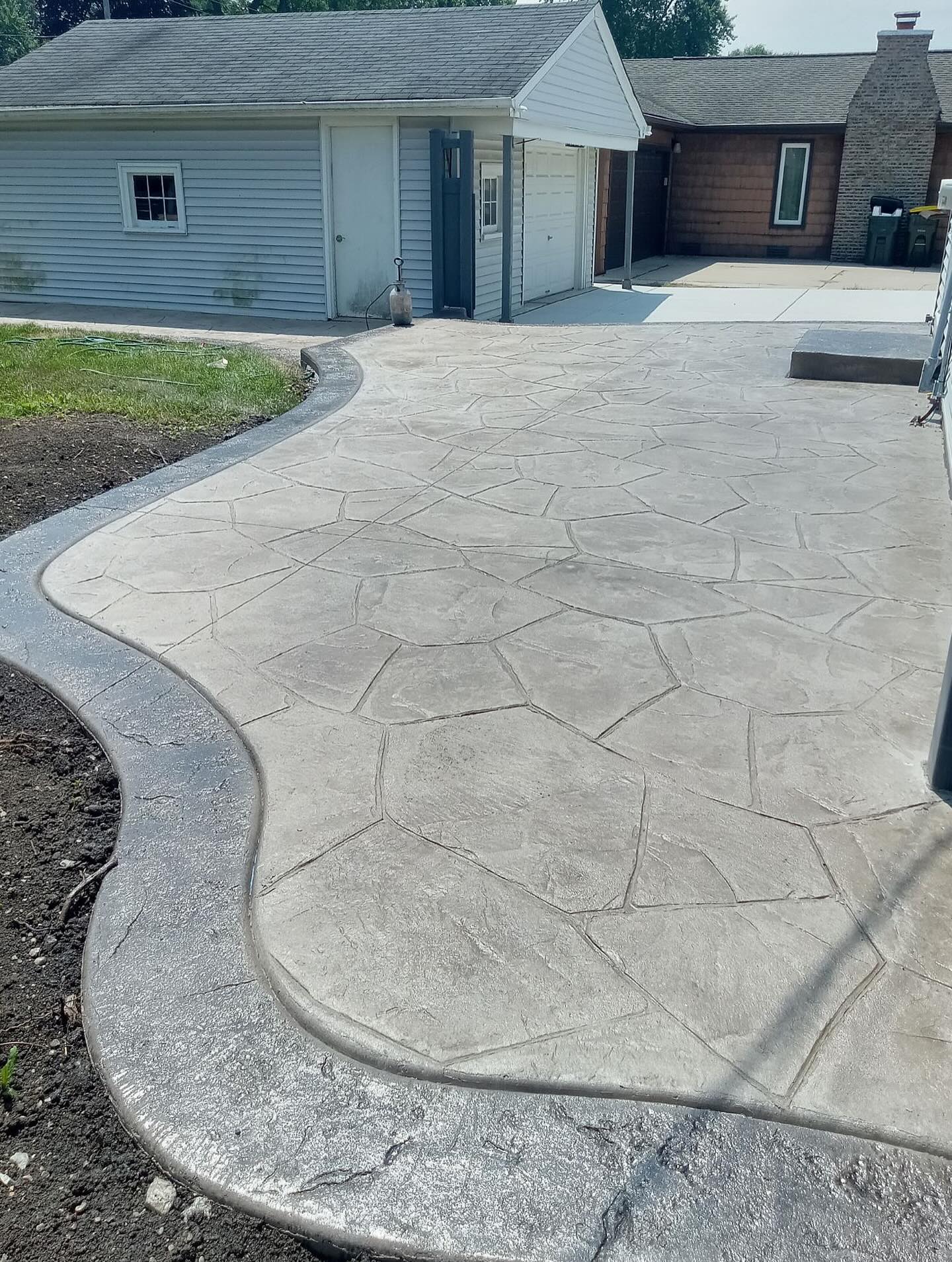
The geometric pattern here does something that plain concrete can’t: it gives the surface visual texture without adding any height or complexity to the installation. The light gray tone works well against a modest suburban house because it doesn’t compete with the siding or the garage — it just creates a clean, defined outdoor space that looks finished.
The curved edge separating the concrete from the soil bed is worth noting. A straight-cut edge would have given this a much more rigid look; the curve softens it considerably and makes the whole patio feel more like part of the yard rather than something dropped into it. If you’re planning a stamped concrete project, the edge detail is often the thing that makes or breaks the overall effect.
2. A Plain Stamped Concrete Patio That Gets Its Character From the Planting Around It
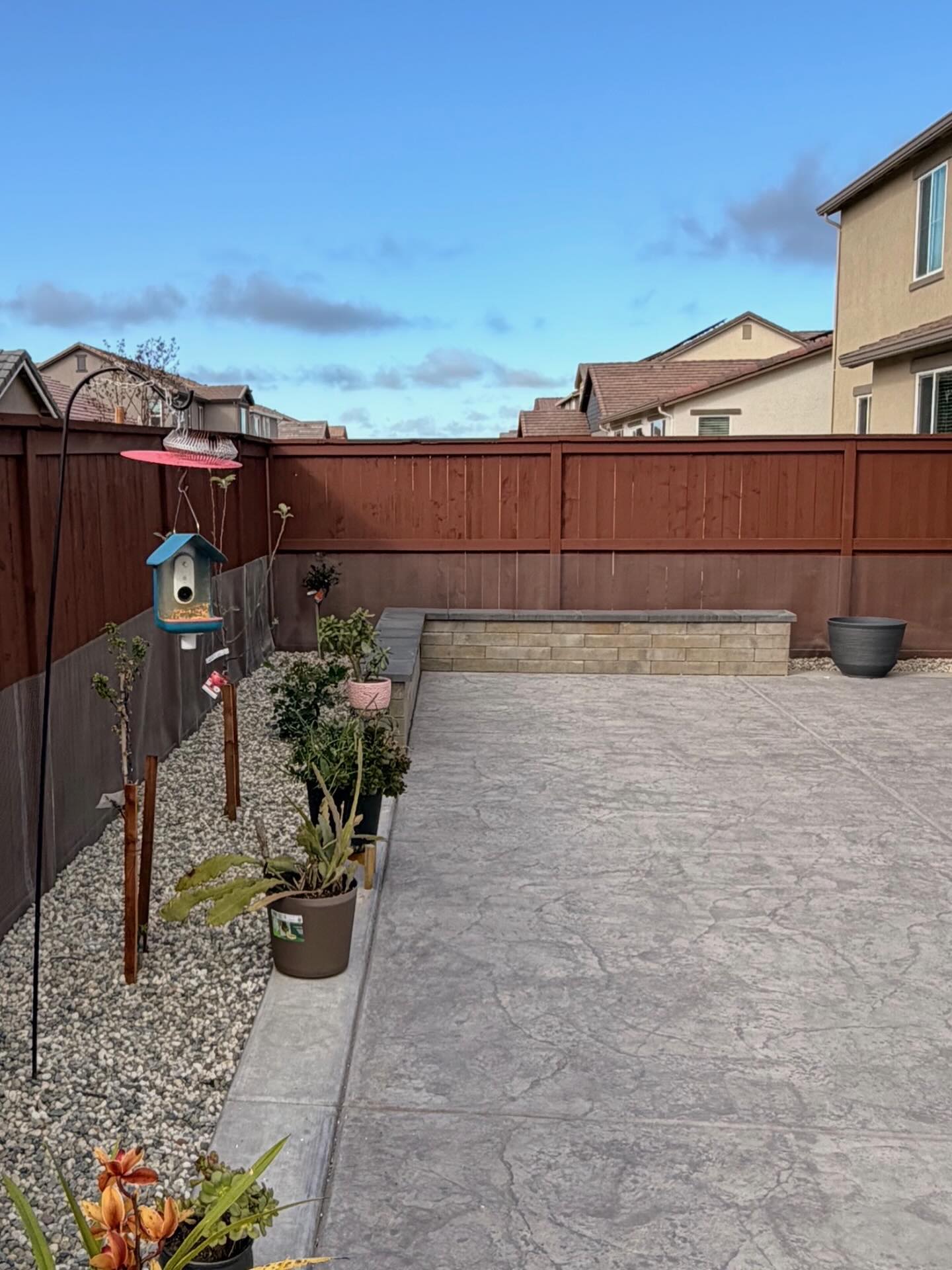
This is a good example of how the area around a stamped concrete patio does as much work as the concrete itself. The surface here is relatively simple — smooth, gray, well-laid — but the red fence, the potted plants in varying heights, and the colorful blooms near the perimeter give the whole space warmth and personality that the concrete alone couldn’t provide.
If you’re working with a limited budget and can only spend so much on the concrete work itself, this shows how much of the finished result depends on what you do around it afterward. A basic stamped surface with good planting and a few well-chosen accessories can look far better than an elaborate concrete job surrounded by nothing.
3. Flagstone-Pattern Stamped Concrete With a Curved Lawn Edge
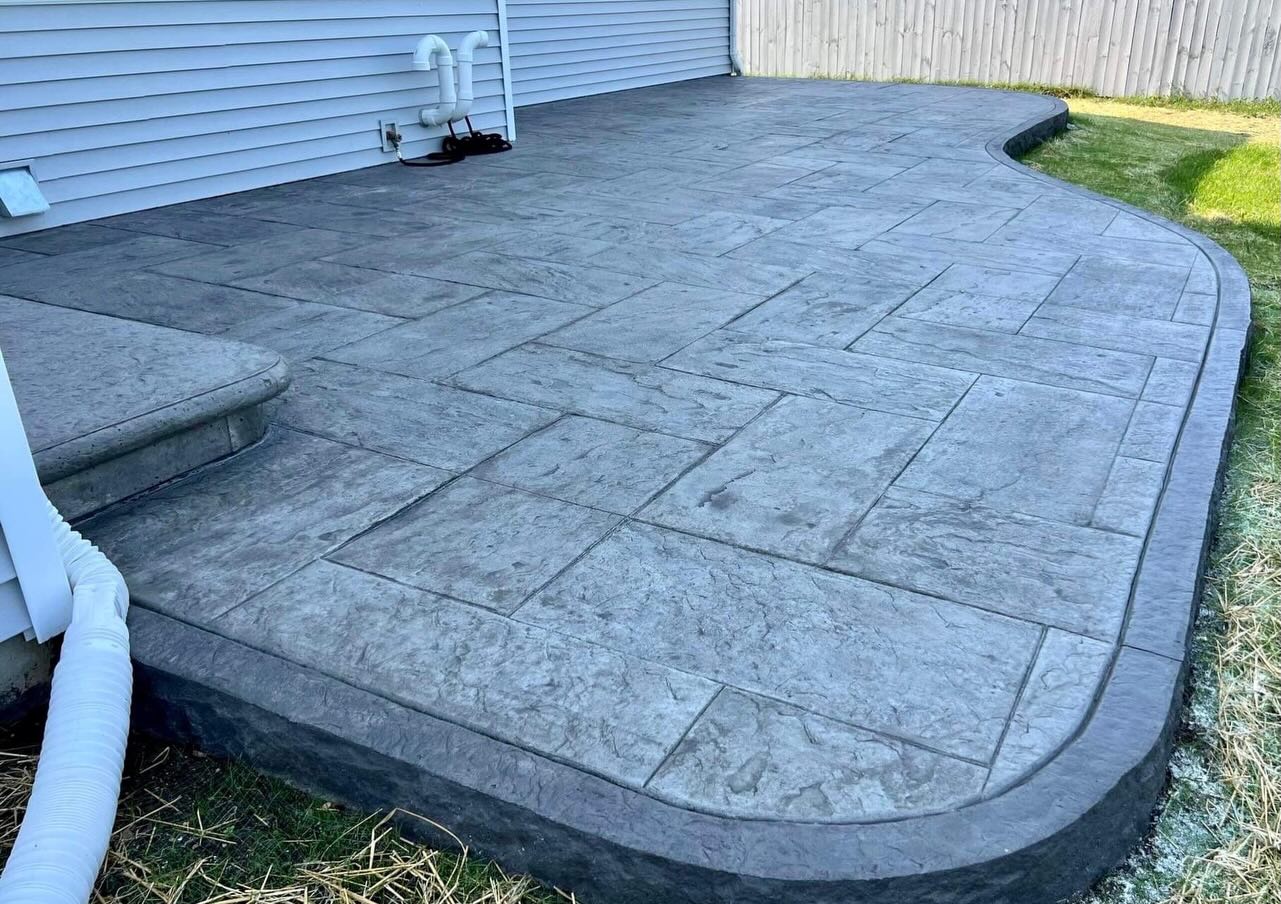
The flagstone pattern is one of the most popular stamped concrete options for a reason: it looks like the real thing from any normal viewing distance, and it costs significantly less. The gray tones here are close to what you’d get from genuine slate or limestone, which is exactly the point. Up close you can tell it’s concrete. From a garden chair or a kitchen window, you probably wouldn’t.
The curved edge meeting the grass is a detail that makes installation slightly more complex but is genuinely worth it. Straight-edged patios can feel a bit like a car park; a sweeping curve that follows the natural flow of the yard makes the patio feel like it was designed for the specific space rather than just placed in it.
4. Stamped Concrete Pathway With a Dark Border and Young Planting
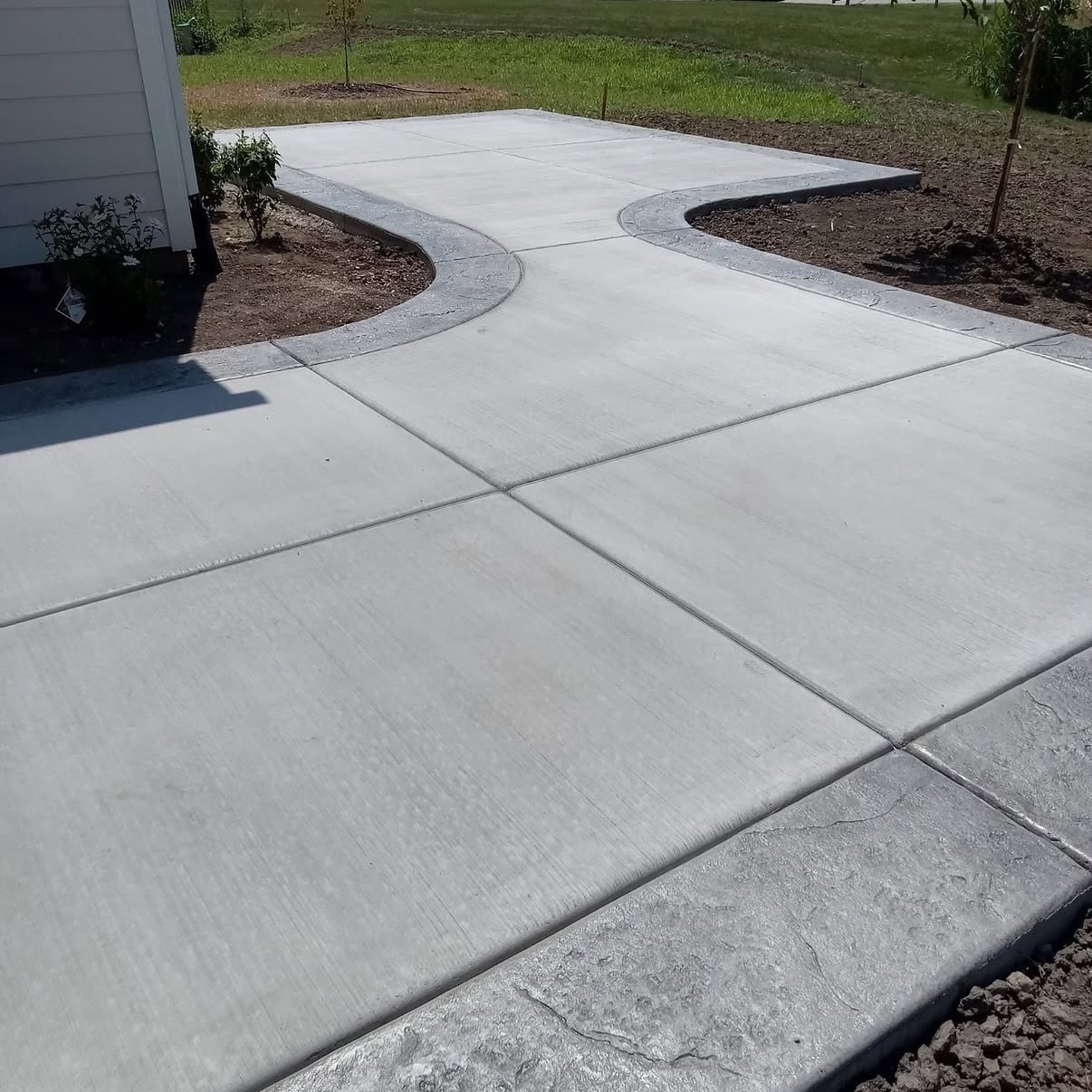
Stamped concrete works just as well for pathways as it does for patios, and the dark border detail here shows how much difference a simple contrast edge makes. Without it, the path would blend into the surrounding soil and grass; with it, the whole thing reads as a deliberate design choice rather than just a poured strip of concrete.
The young plants alongside are worth pointing out because they show this garden at an early stage. It’s easy to look at finished garden photos and feel like you’d need everything mature and established from day one. A newly laid stamped concrete path with fresh planting alongside it is a completely legitimate starting point, and it’ll look better with each growing season.
5. Stone-Effect Stamped Concrete With Pebble and Mulch Borders
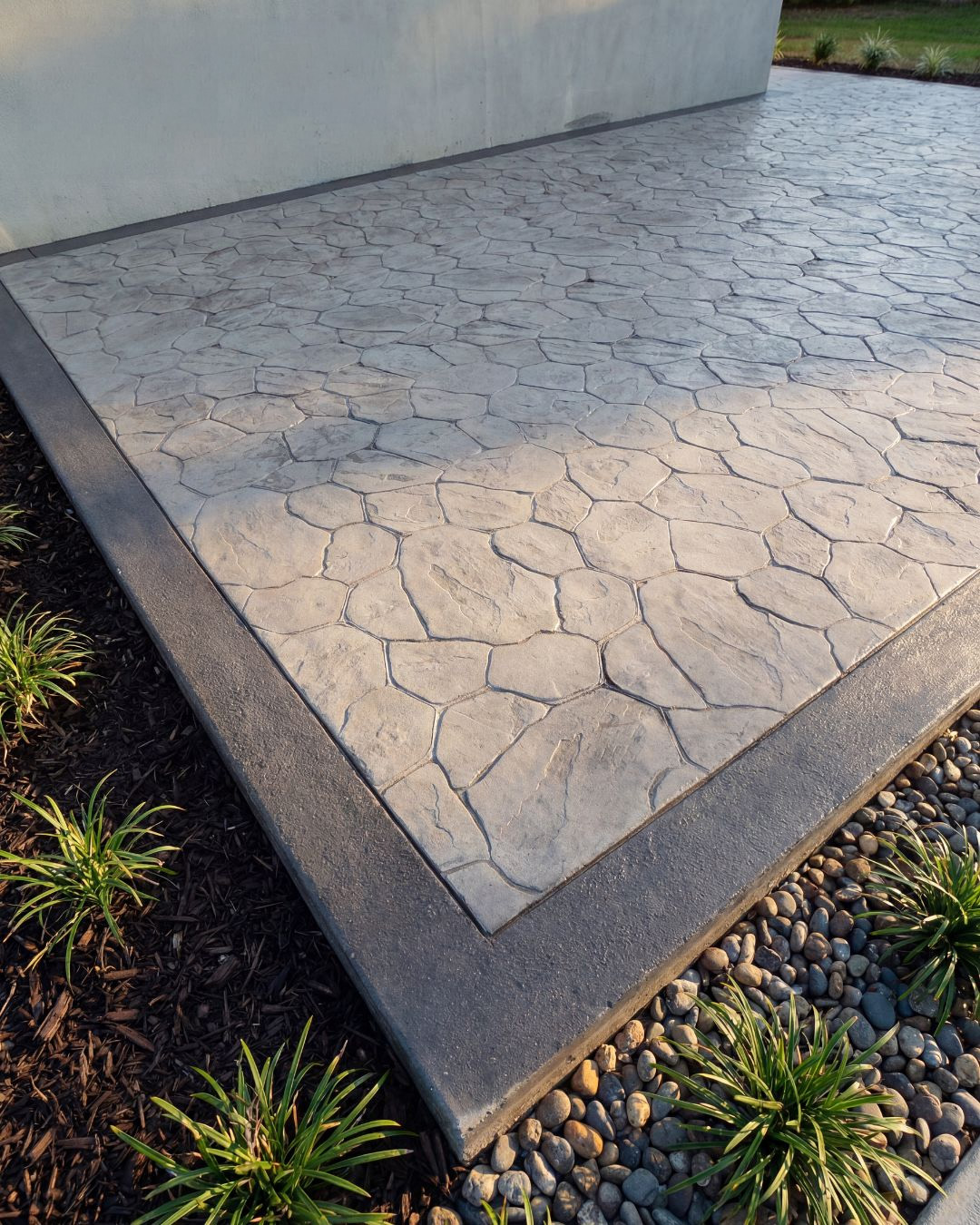
The combination of stamped concrete with pebble and mulch borders is practical as well as good-looking. The pebble strip alongside the concrete acts as a drainage channel, reducing the amount of water that sits on the patio surface after rain, and the mulch beds alongside keep the planted areas tidy without requiring much ongoing maintenance.
The lighter gray shade of the concrete here is worth considering if your house has warm-toned brick or siding. Pale gray concrete tends to reflect rather than absorb warmth, which can make a smaller patio feel brighter and larger than it is. It also shows less dirt than darker surfaces, which is a minor but genuinely useful practical advantage.
6. Large-Format Stamped Concrete With a Dark Stone Border in a New Development
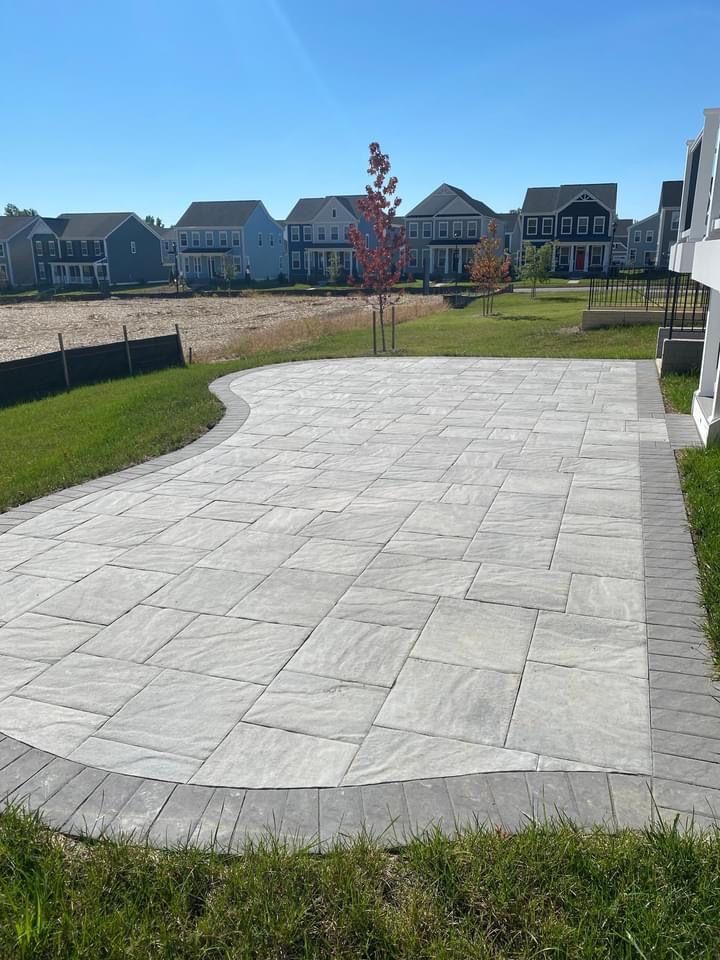
Large-format stamped concrete — bigger individual “stones” in the pattern — tends to look more contemporary than the smaller, more traditional flagstone styles. This works well in newer developments where the architecture is clean and relatively minimal. The crisp dark border creates a frame that stops the patio from looking unfinished at the edges, which is especially important on an open rear garden like this one.
The young trees with red leaves at the back show good thinking about the long-term picture. A patio surrounded by nothing looks quite exposed; planting that will eventually provide some vertical interest and seasonal color is worth planning from the start, even if it takes a few years to establish. The stamped concrete provides the immediate, usable surface; the trees will do their job gradually.
7. Textured Slate-Effect Concrete Opening Straight Into the Garden
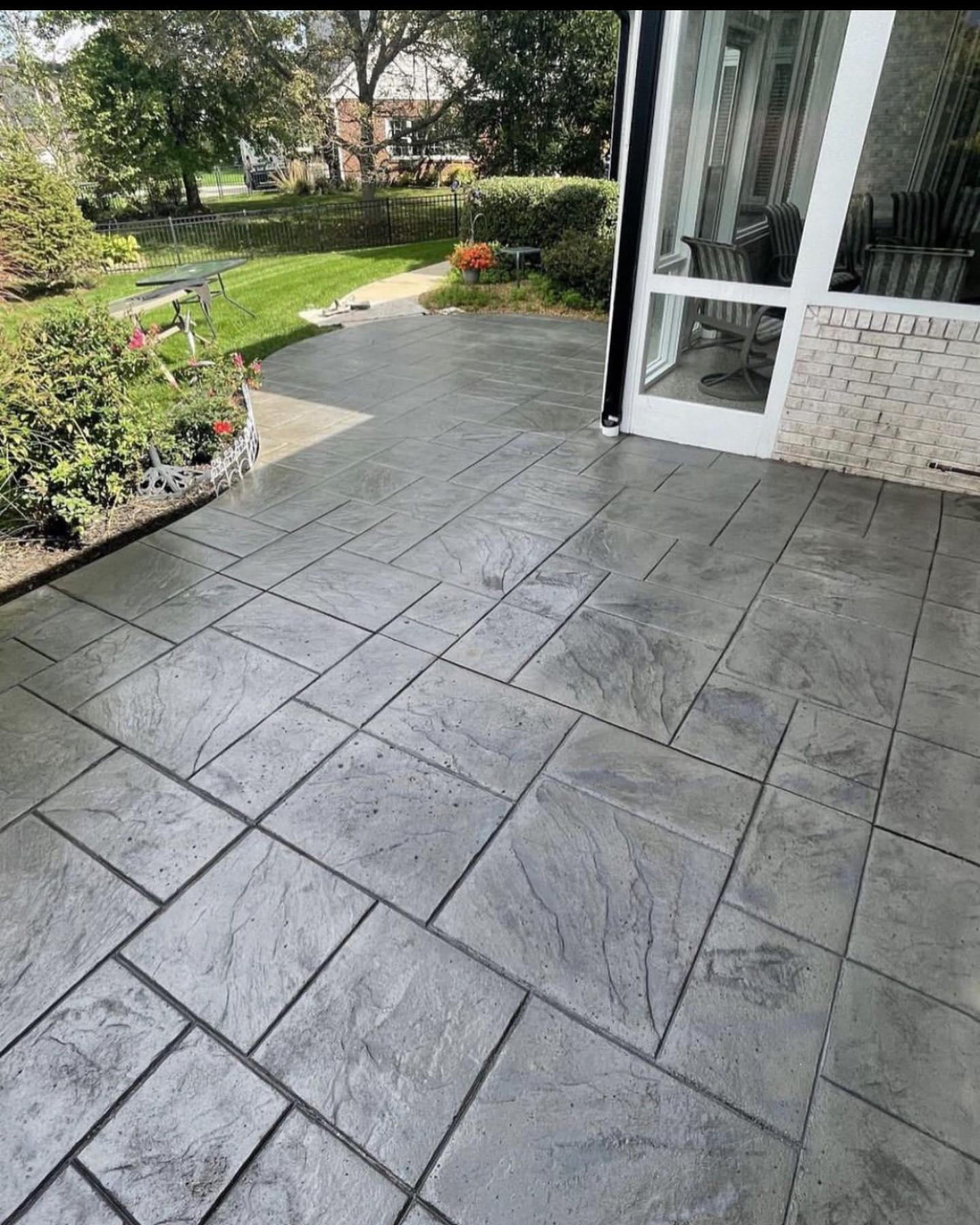
One of the things stamped concrete does well is create a soft transition between the patio and the garden beyond. This surface meets the surrounding grass with a gentle, almost organic edge, and the planting right at the patio border adds to the sense that the hard and soft landscaping are connected rather than separate. It doesn’t feel like you’re stepping off a platform into the garden; it feels like you’re moving from one part of the yard into another.
The small table and single chair alongside suggest this particular spot gets morning sun — exactly the kind of detail that should inform where you put a patio in the first place. Before you pour anything, spend a few days watching how the light moves across your yard. The best stamped concrete patio in the world won’t get used if it’s in shade all afternoon.
8. Stamped Concrete Around a Fire Pit: Getting the Most Out of the Surface
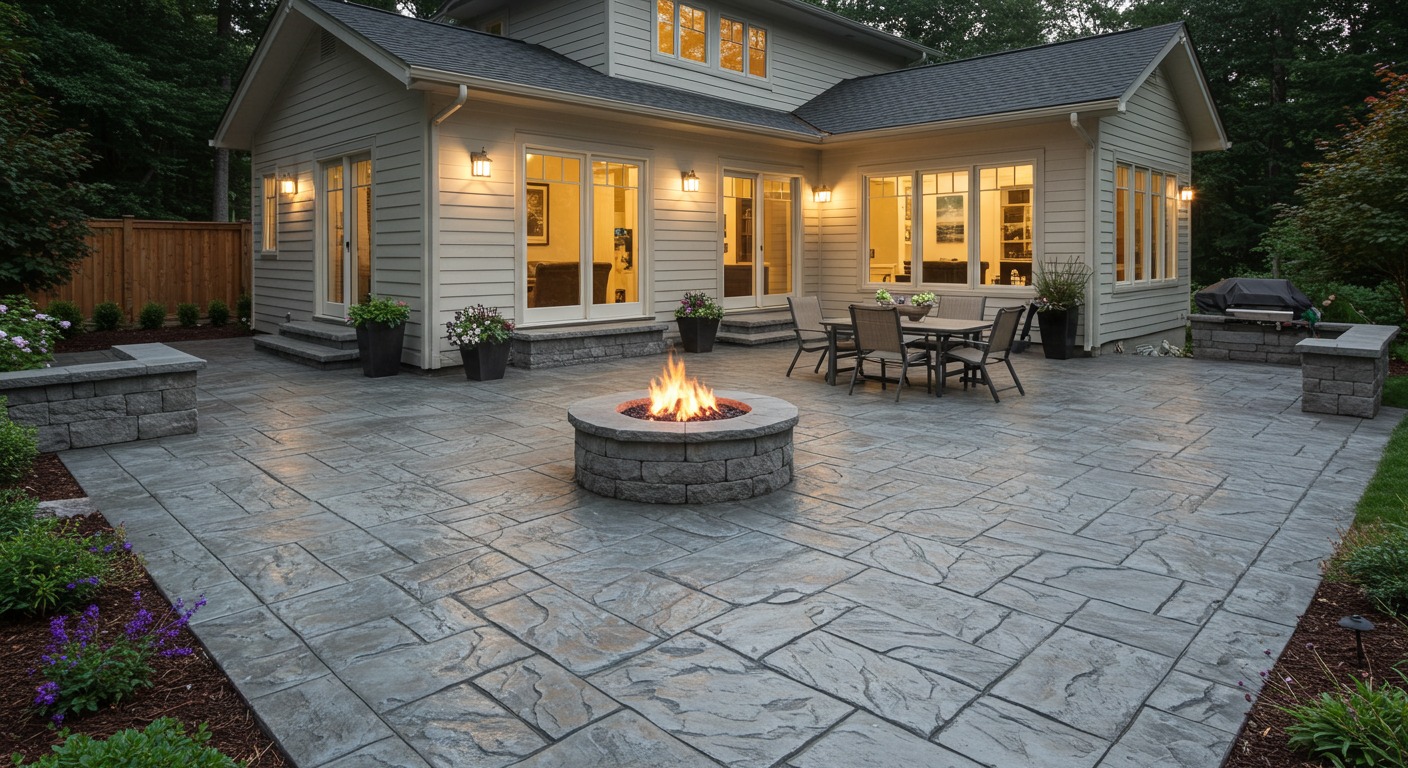
Stamped concrete and a fire pit is a practical combination that doesn’t get mentioned enough. The concrete is completely non-combustible, so you don’t have to worry about sparks landing on decking or artificial grass, and the hard surface around the fire pit stays clean and is easy to sweep. A wood deck in the same situation would need much more careful management.
The way this patio is set up — a generous surface with the fire pit as the focal point, chairs arranged around it, the house providing a warm lit backdrop — shows how much a stamped concrete patio changes the usability of a backyard in the evenings. Without the patio, this would just be a lawn with a fire pit sitting in it. With it, the whole space has a sense of organization and purpose that makes people actually want to be out there.
9. Gray Stamped Concrete With Red Umbrellas: Proof That the Furniture Matters Too
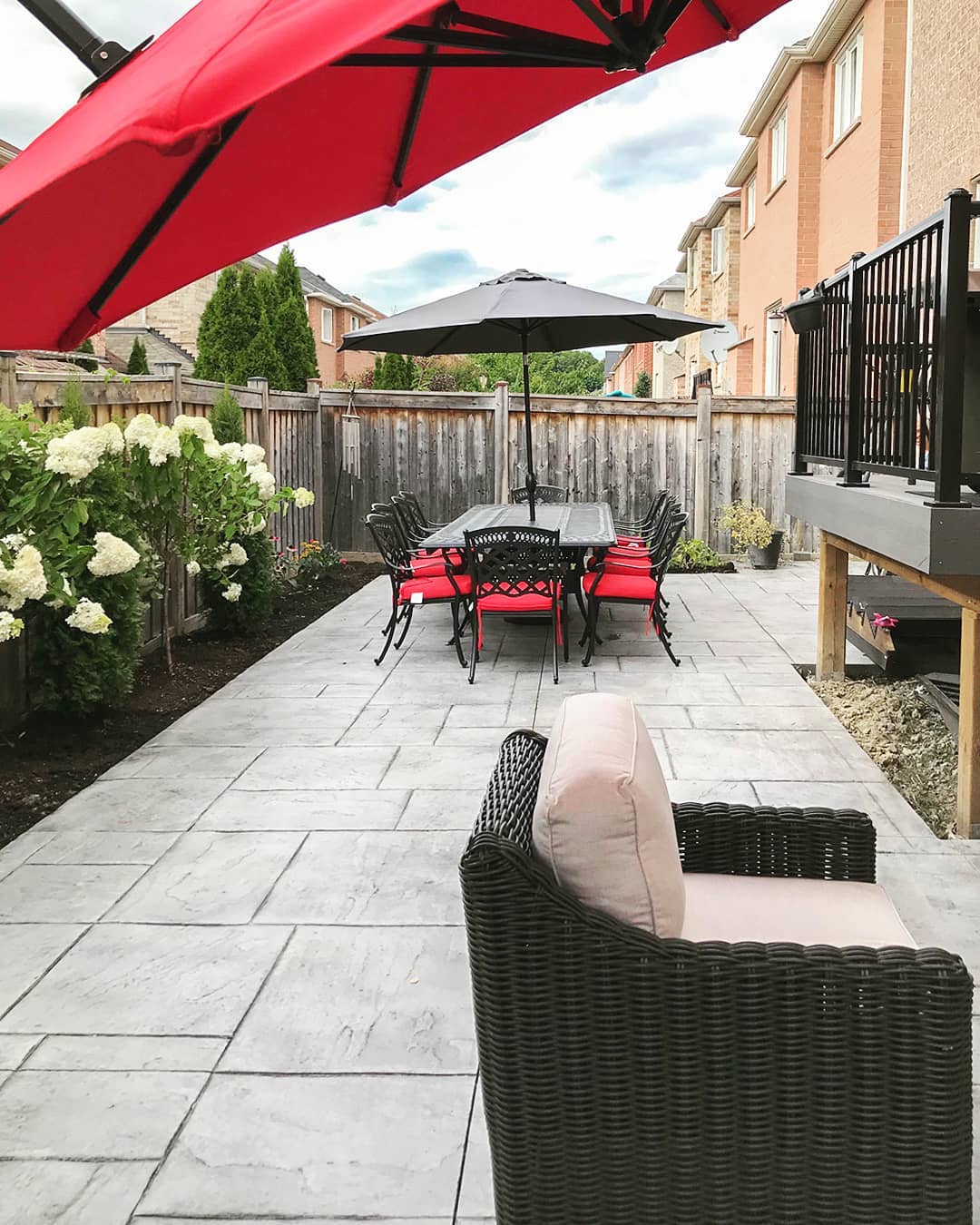
The concrete here is relatively understated — gray, textured, well-laid — but the red umbrellas and cushions make the whole space feel lively and inviting in a way that the surface alone never could. This is worth keeping in mind when you’re budgeting for a stamped concrete project: the money you spend on good outdoor furniture and a few accessories often has more impact on how the finished space feels than an extra upgrade to the concrete pattern or color.
The flower border alongside the fence is also doing quiet but important work. It softens the hard edge where the concrete meets the fence line, adds seasonal color, and makes the patio feel connected to the rest of the garden rather than cordoned off from it. A narrow planting strip like this costs very little and makes a noticeable difference to the overall impression.
10. Freshly Laid Stamped Concrete Matching the House Siding
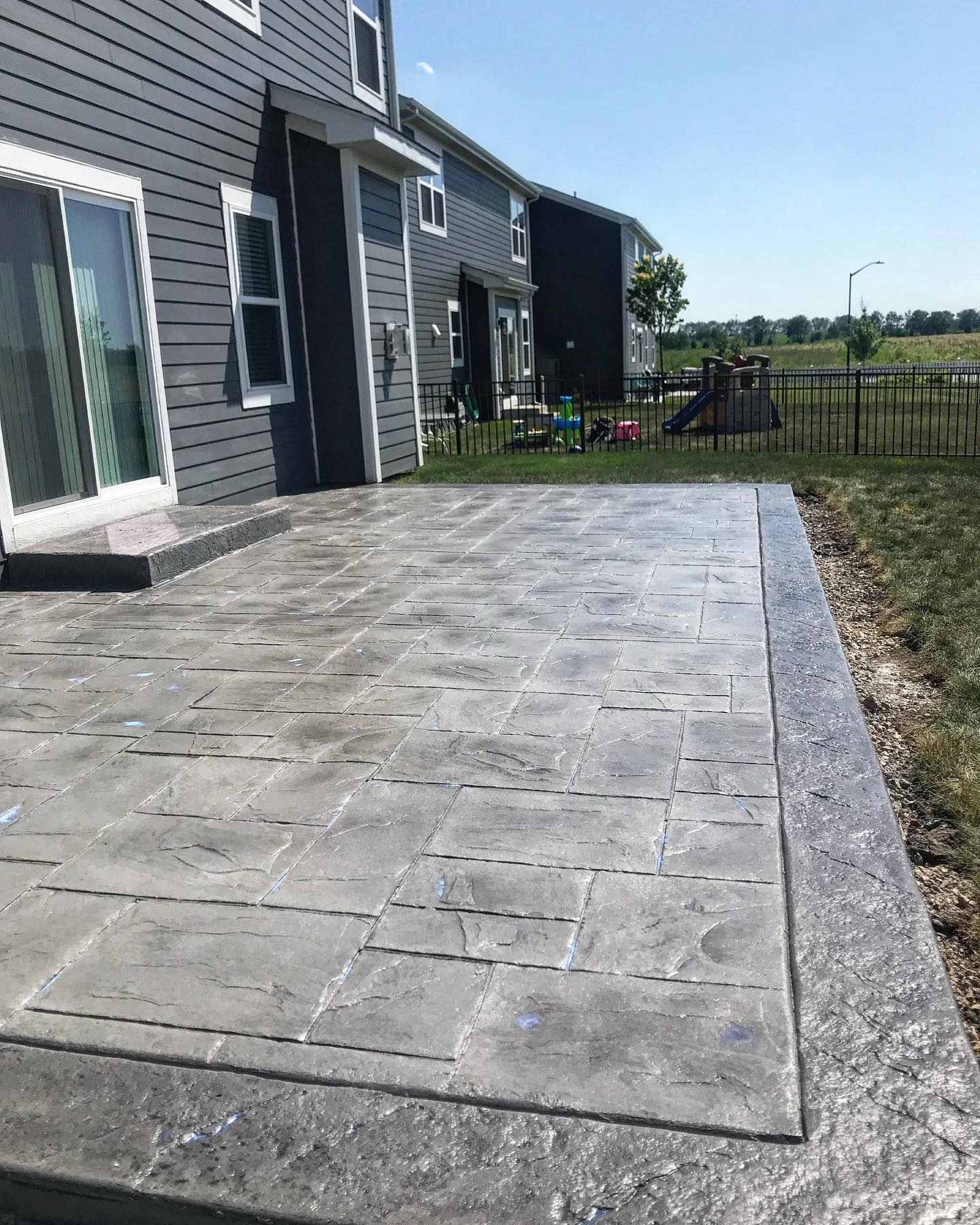
Choosing a concrete color that echoes the tone of your house siding is a straightforward way to make a new patio feel like it was always meant to be there. The gray concrete here and the gray house siding work together in a way that a contrasting color wouldn’t, and the result is a backyard that looks considered rather than assembled from separate decisions made at different times.
The open expanse here with the black fence beyond is a good example of a patio that’s been sized generously. It’s easy to underestimate how much space you’ll want when the furniture is out and people are moving around. A patio that feels big enough when it’s empty often feels too small when it’s actually being used. If you have the yard for it, erring on the larger side tends to be the right call.
11. Wood-Grain Stamped Concrete: The Low-Maintenance Alternative to Decking
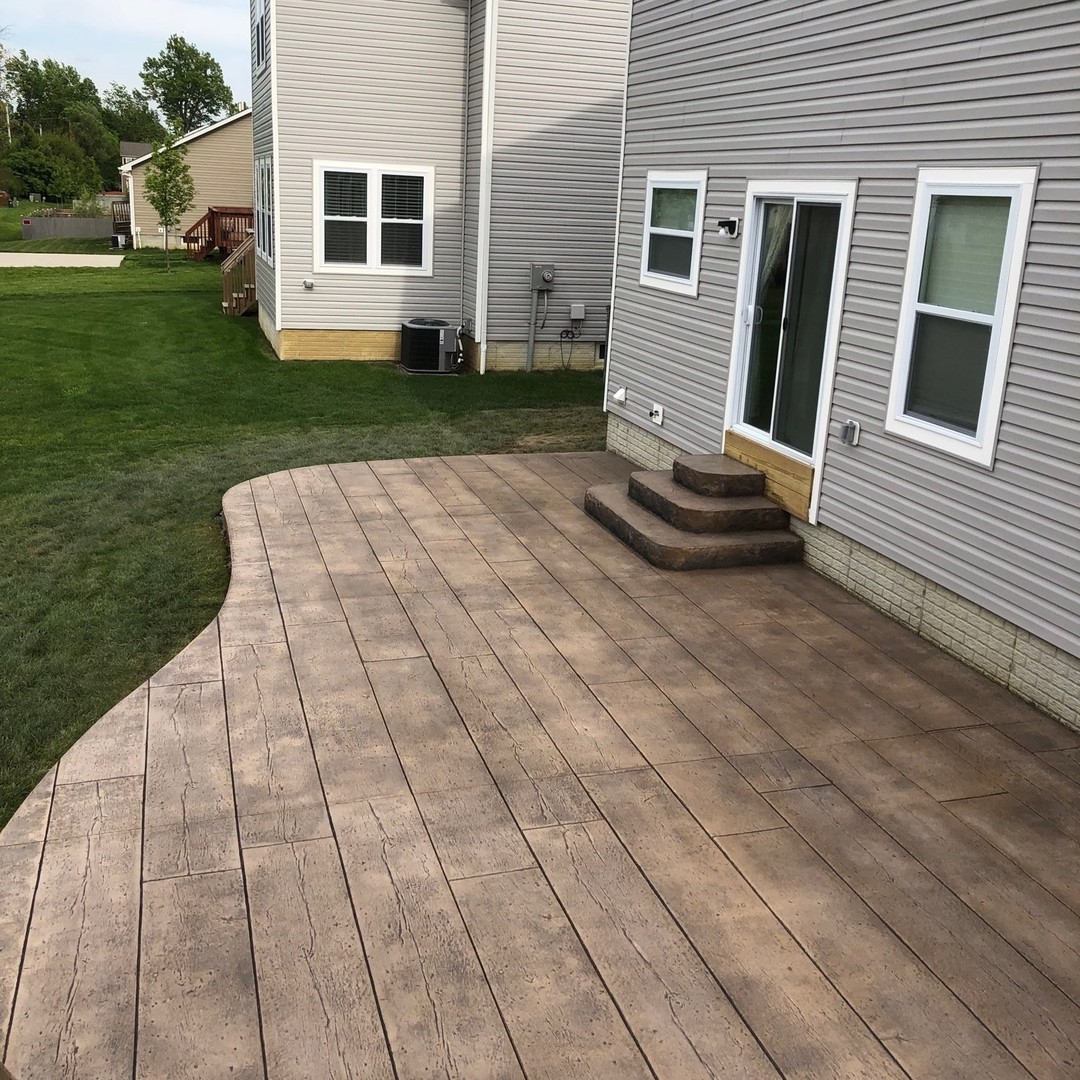
Wood-grain stamped concrete is the option that makes the most sense for anyone who likes the look of a timber deck but doesn’t want the ongoing maintenance. Real wood decking needs sanding, staining, checking for rot, replacing boards — the list is long. Stamped concrete in a wood-plank pattern gives you a very similar aesthetic without any of that. It won’t warp, it won’t splinter, and it doesn’t need annual treatment.
The curved edge meeting the lawn here is the detail that makes this work so well. A rectangular wood-effect concrete slab would look flat and a bit odd; the curve echoes the organic quality of real timber in a way that the straight-edged version wouldn’t. The warm brown tones against the green lawn and gray siding give the whole backyard a cohesive look that’s hard to fault for what is essentially a practical surface.
12. Beige Stamped Concrete With a Curved Stone Wall and Flower Borders
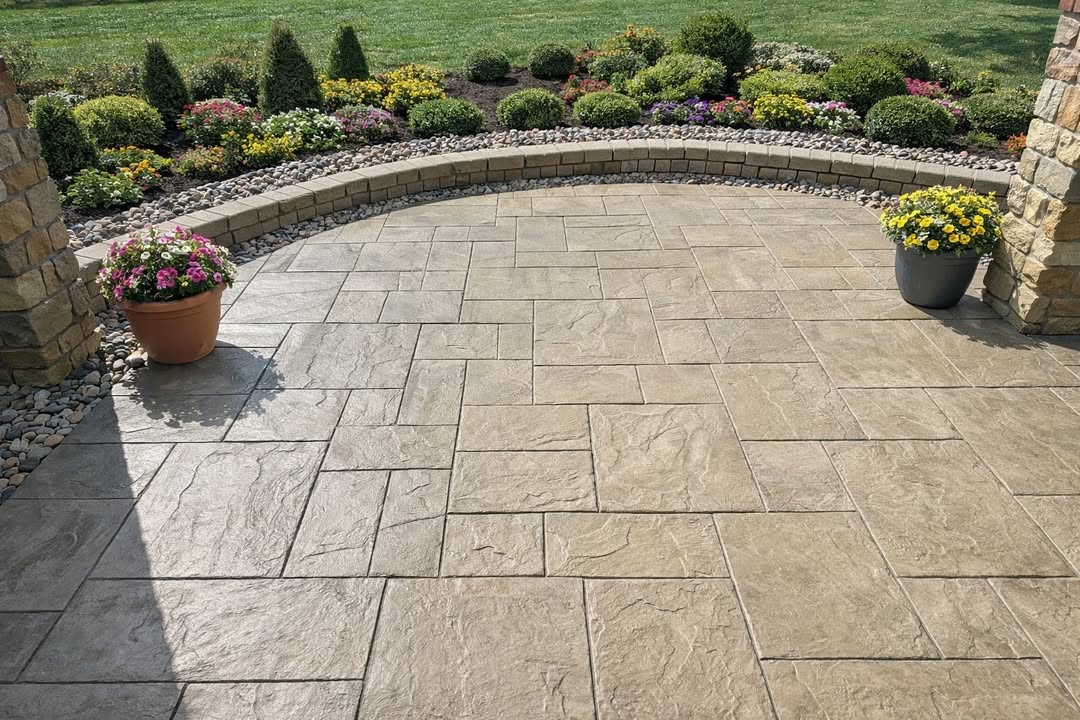
Beige or sand-toned stamped concrete sits in the warmer end of the color spectrum and works particularly well alongside natural stone walls and colorful planting. The light, warm tone of this patio surface picks up the stone of the curved retaining wall beside it, and the pink and yellow potted plants on the corners stop the whole scene from feeling too neutral.
The polished stone edging between the concrete tiles and the garden bed is a finishing detail that’s worth including in any stamped concrete project. It creates a clean transition that makes both the patio and the planting bed look more intentional than they would with an unfinished edge. Details like this add very little to the overall cost but make a visible difference to the finished result.
13. Wood-Plank Stamped Concrete in a Rural Setting
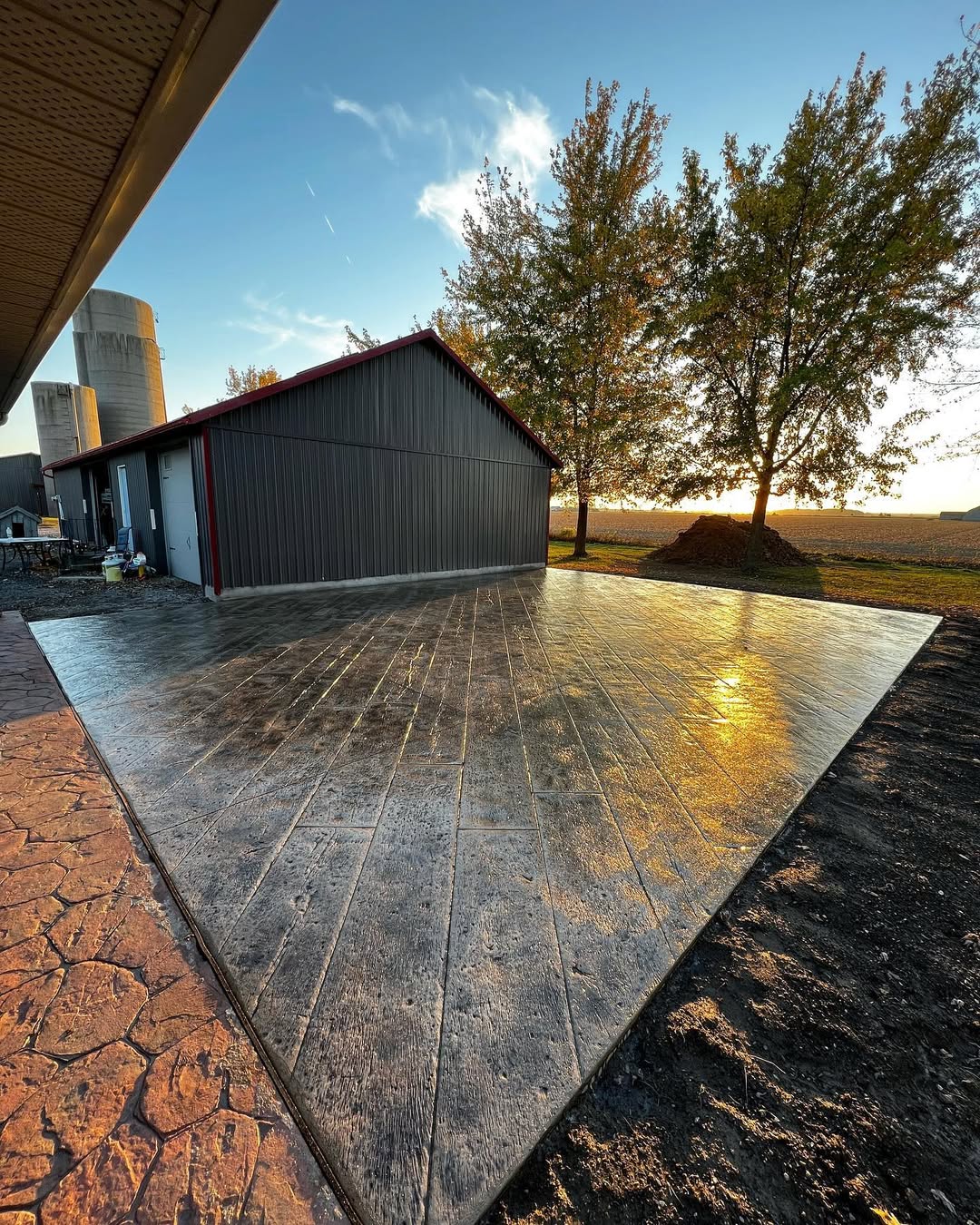
The wood-plank pattern in stamped concrete is one of the more convincing imitations available. In direct sunlight, with the grain pattern picking up the light at an angle, it reads as timber from any distance that most people would actually view it from. For a rural property like this one, that warm, natural-looking surface suits the surroundings far better than a plain gray concrete slab would.
The scale of the patio here is worth noting. It’s large enough to set up a proper outdoor space with room to move around, which is the practical reality of how patios get used. A small stamped concrete slab can feel like an afterthought; a generous one becomes a genuine extension of the living space. The morning light catching the textured surface is a reminder that a good patio looks different at different times of day.
14. Dark-Pattern Stamped Concrete That Adds Character Without Shouting
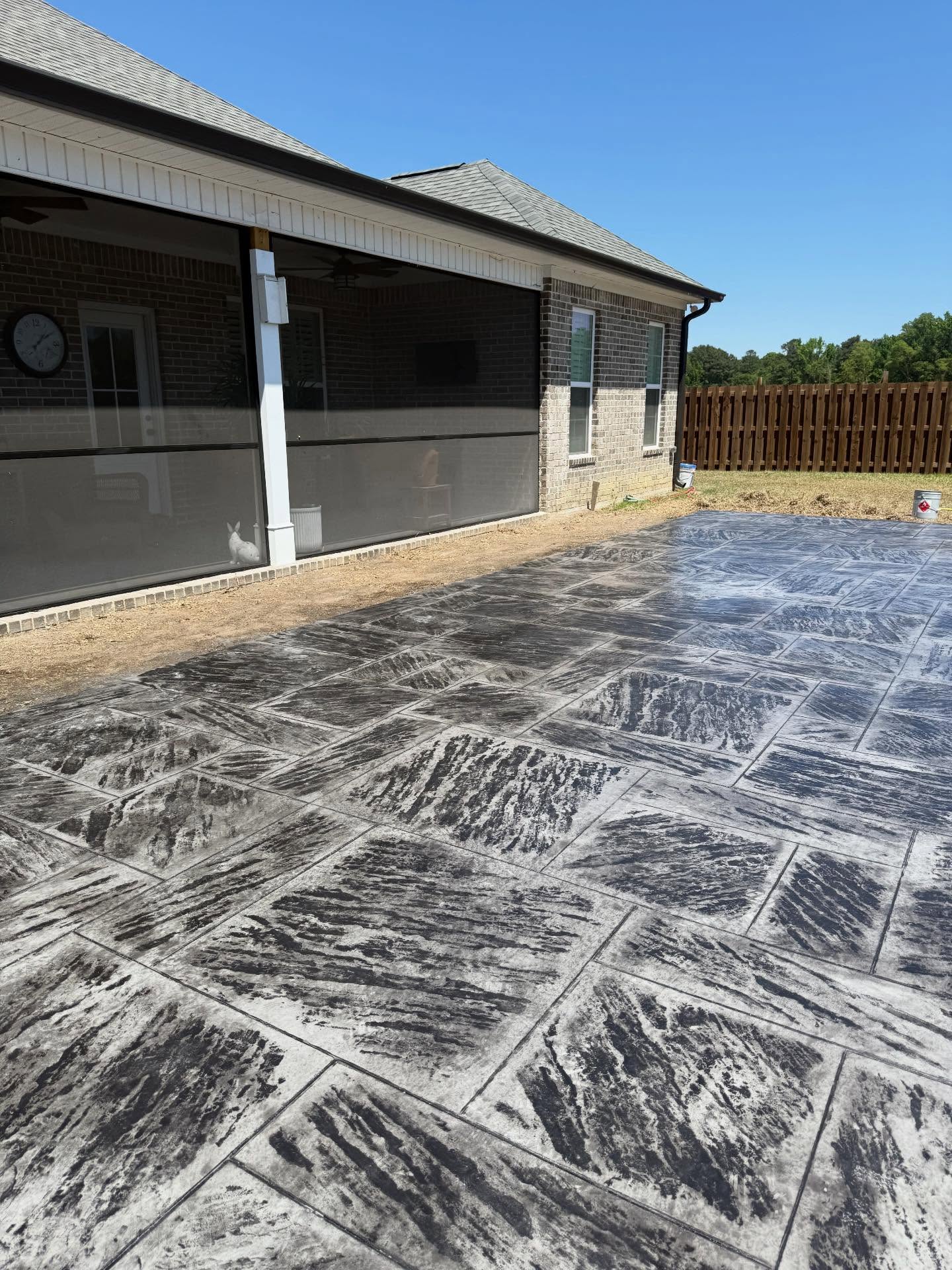
The two-tone approach here — a light gray base with a darker pattern pressed into it — creates considerably more visual depth than a single-color surface would. It’s still clearly a patio, not a mosaic, but the contrast between the base color and the stamped detail gives the surface a quality that reads as considered rather than purely functional.
This kind of darker, bolder patterning also has a practical advantage: it shows less dirt and general wear than a plain light gray surface. A patio that gets heavy use will develop scuff marks and general grime over time, and a surface with some visual complexity in its pattern disguises that far better than a clean, uniform tone. It’s worth factoring into your choice of pattern and color combination from the start.
15. Slate-Gray Stamped Concrete With a Sliding Door Transition
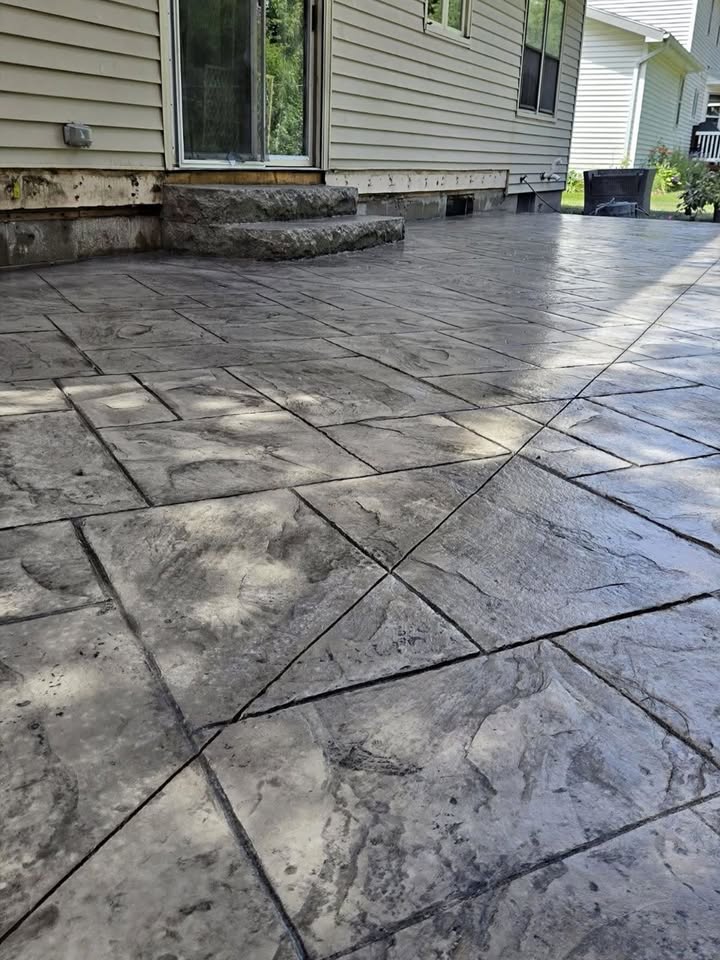
One of the most useful things a stamped concrete patio can do is create a seamless visual transition between the interior floor and the outdoor surface. When the tones and textures align — as they do here, where the slate-gray concrete echoes the flooring visible through the sliding glass door — the two spaces feel connected in a way that makes both feel larger.
The stone steps between the door threshold and the patio level are a small but important detail. A direct drop from the door to the patio would be both a trip hazard and a jarring visual break; the steps resolve both problems neatly. If you’re planning a patio adjacent to a back door, it’s worth getting the level relationship between the two surfaces right from the start rather than retrofitting steps afterward.
16. Freshly Poured Stamped Concrete With String Lights Already Planned In
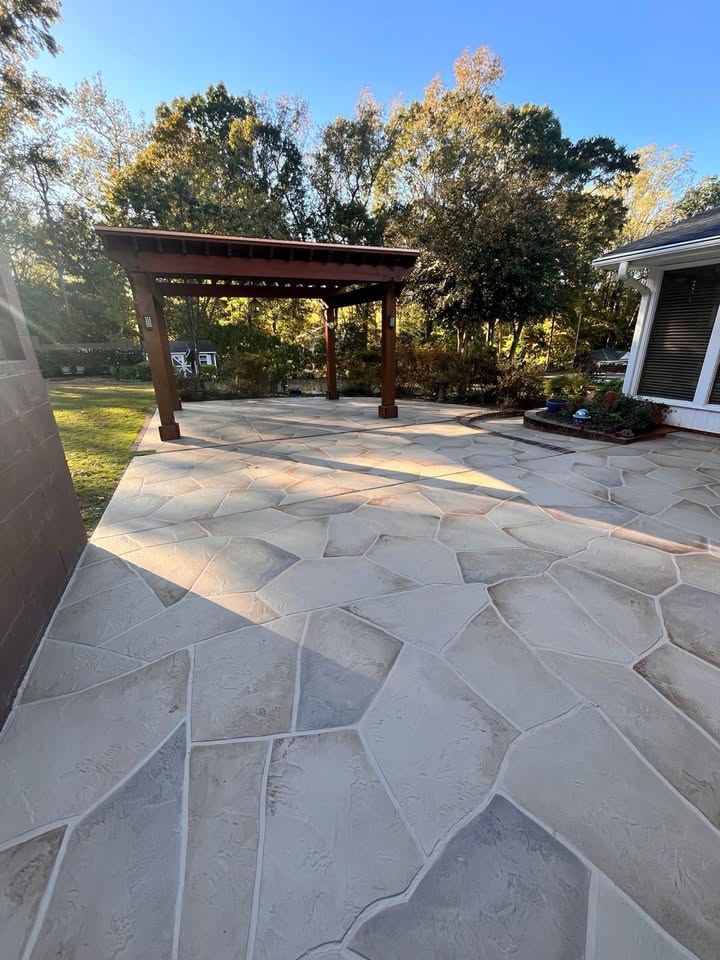
The string lights strung across this newly laid patio show good forward thinking. A freshly poured concrete patio without any furniture or accessories on it can look quite bare, but the lights are already suggesting what the space will feel like in the evenings when it’s in use. If you’re installing a patio from scratch, it’s worth thinking about the electric supply for outdoor lighting before the concrete goes down — running cable through a conduit buried underneath is far simpler at that stage than trying to manage it afterward.
The grass border encircling the patio and the planting visible in the background show a yard that’s being developed gradually, which is how most outdoor spaces actually come together. The stamped concrete provides a permanent, finished surface that the rest of the garden will grow around over time. Getting the hard landscaping right at the start means everything else has something solid to work with.
17. A Large Open Stamped Concrete Patio With Space for Everything
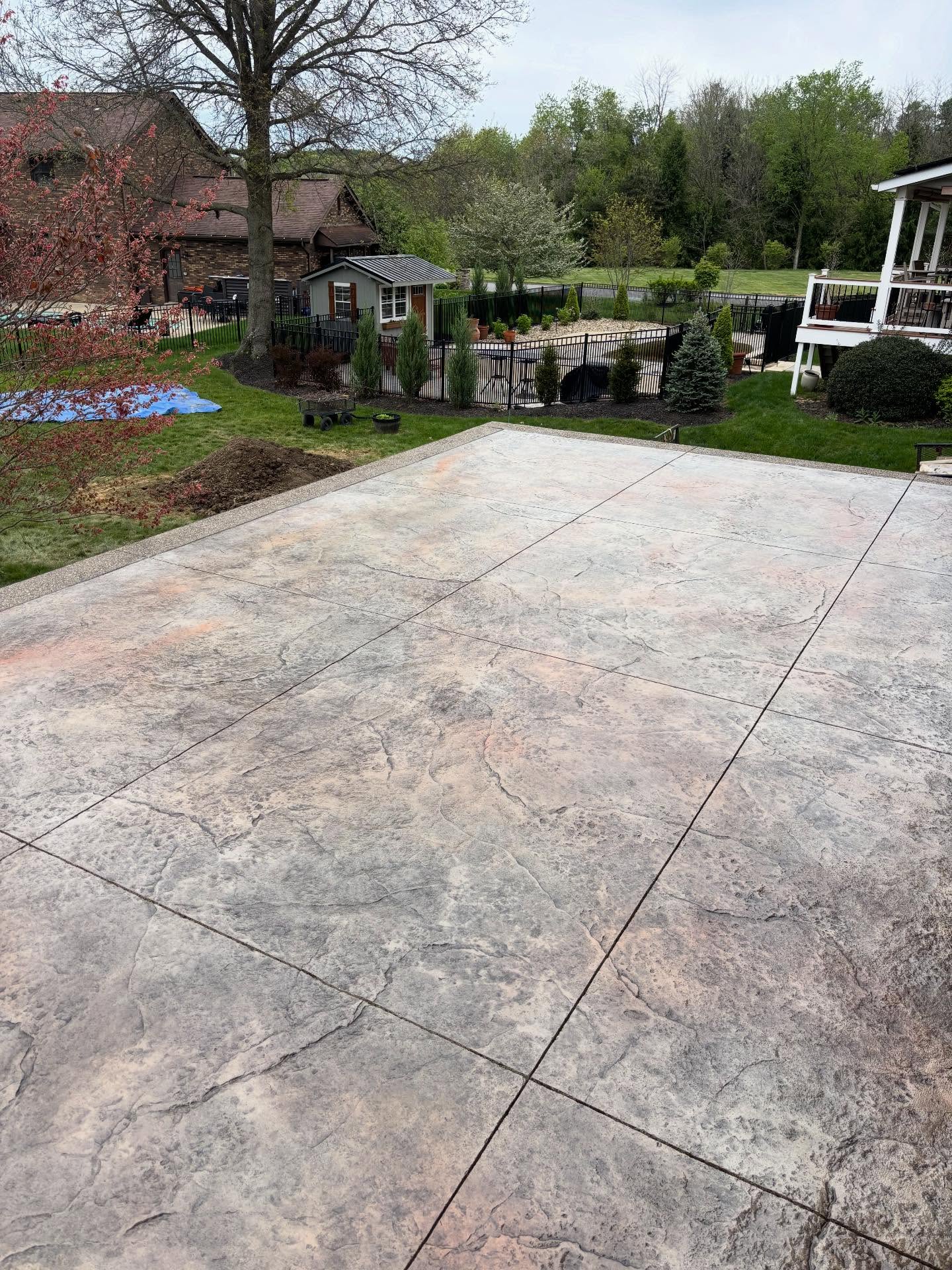
There’s something to be said for a large, open stamped concrete patio that doesn’t try too hard. The subtle mix of gray and earthy tones here provides enough visual texture to keep things interesting without the surface competing with the surrounding yard. The result is a versatile outdoor space that works for whatever you want to do with it.
The tree, shrubs and fence creating the perimeter show what a generous concrete area needs around it to feel like a garden rather than a car park. Stamped concrete by itself is just a surface; the planting and structures around it are what turn it into a place. The shed visible at the back and the mature trees beyond the fence give this backyard a layered, established quality that the concrete base makes possible.
18. Dark Stamped Concrete Deck Beside a Charcoal House With a Fire Pit
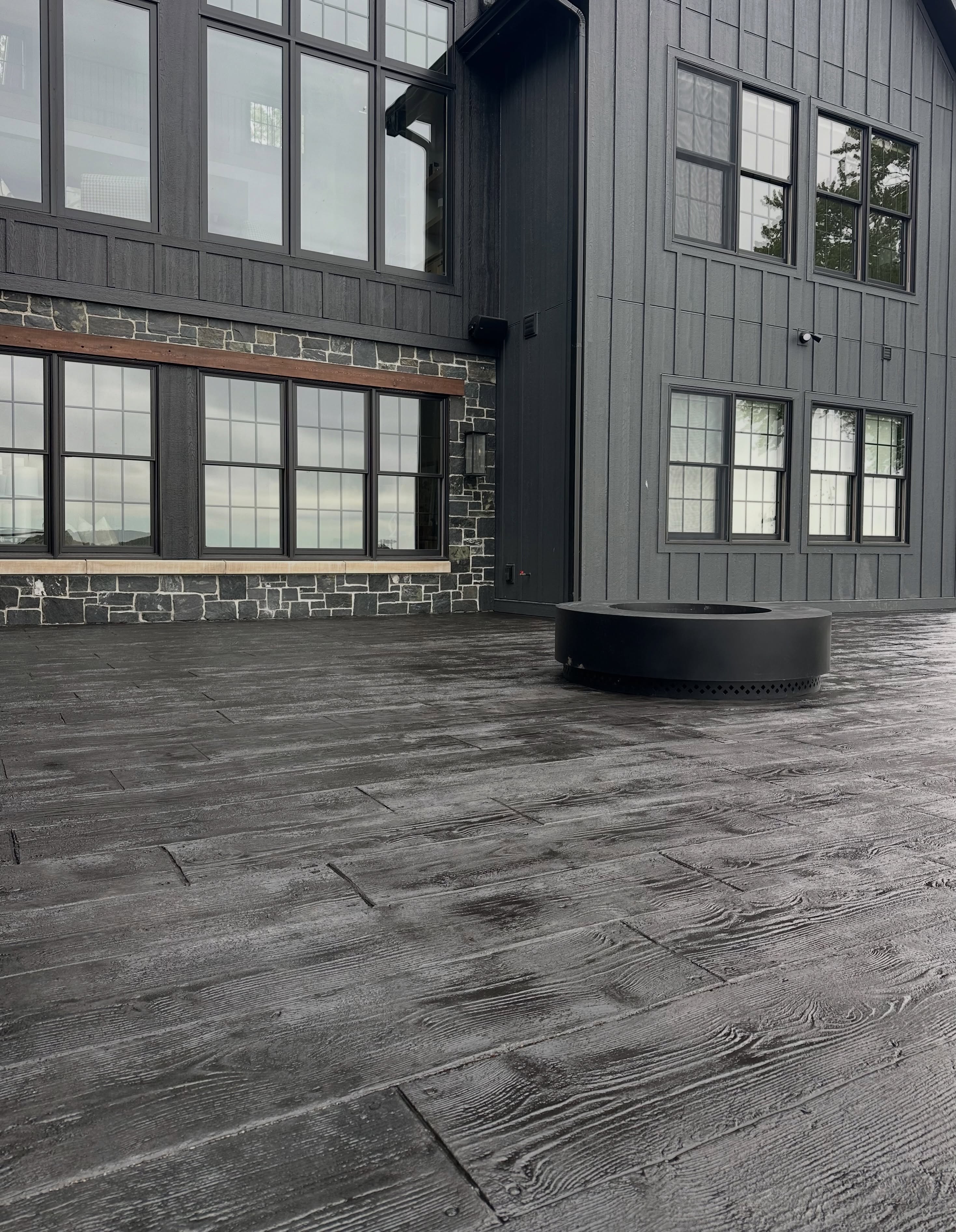
Dark-toned stamped concrete alongside dark house cladding creates a coherent, moody aesthetic that works well on contemporary builds. The matching tones between the deck surface and the exterior walls give the whole space a unified quality that’s hard to achieve when the patio and the house exterior are very different in color. If you have a dark-clad house and are considering stamped concrete, leaning into the same tonal range rather than contrasting it is usually the stronger design decision.
The circular fire pit as a focal point on a stamped concrete surface is a practical and visually effective choice. On a dark surface, the fire itself becomes the light source in the evening, which creates a genuinely dramatic effect. The concrete surrounds also mean you don’t need to worry about fire safety in the way you would on a timber deck or artificial grass surface.
19. Gray Flagstone-Effect Concrete on a New Build Patio
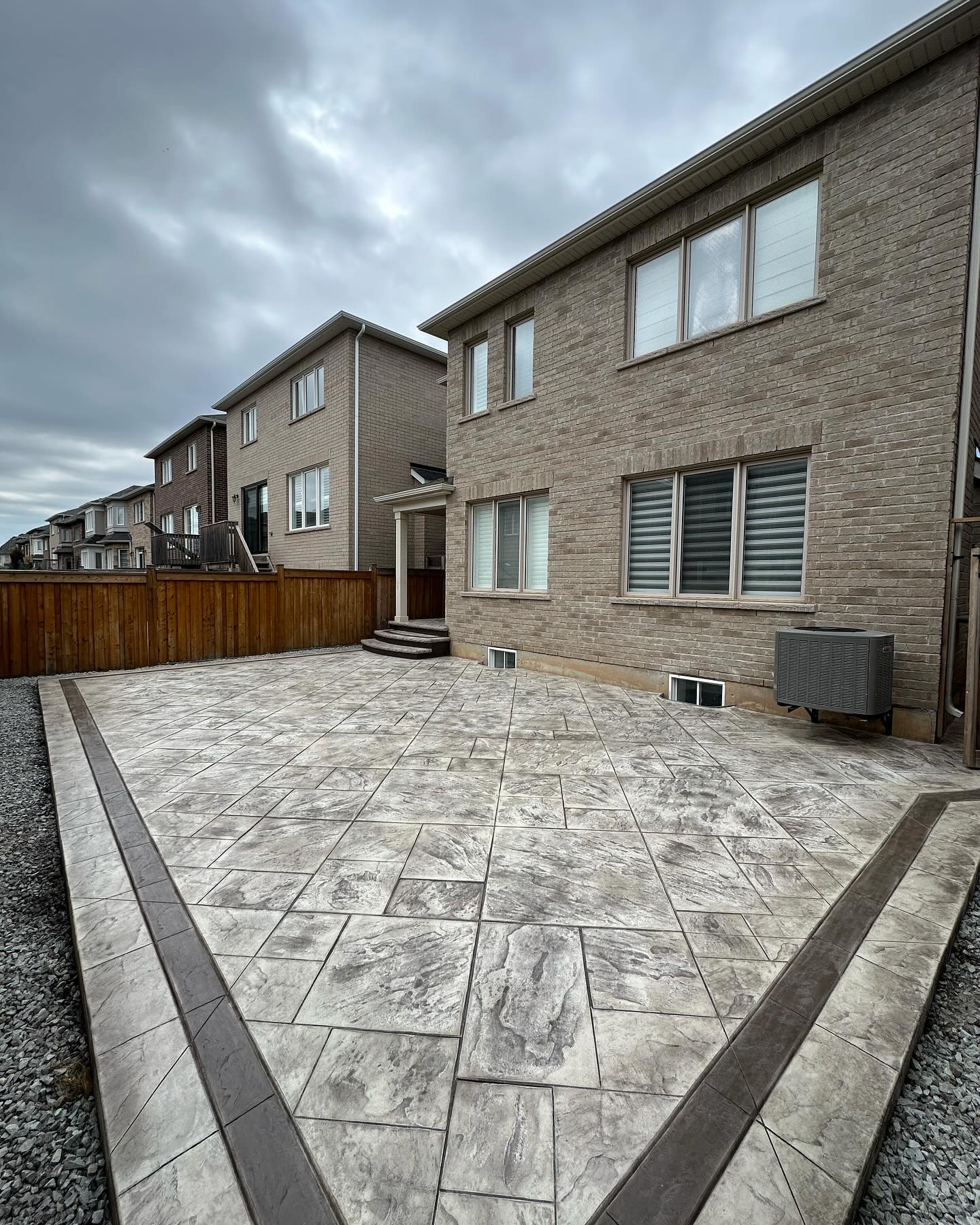
New build gardens often start with nothing but a small square of concrete at the back door, and this shows what happens when that’s replaced with something properly considered. The flagstone-effect stamped concrete stretches the full width of the yard and provides a generous usable surface that the original builder’s slab never would have. The darker border lines give it structure and stop it reading as a single gray slab.
The wooden fence providing privacy and the open yard beyond show the kind of backyard situation where stamped concrete makes particular sense: a blank canvas that needs a defined outdoor living area before it can be properly used. Once the concrete is down, everything else — the furniture, the planting, the accessories — has somewhere to go.
20. Stone-Pattern Stamped Concrete With String Lights Overhead
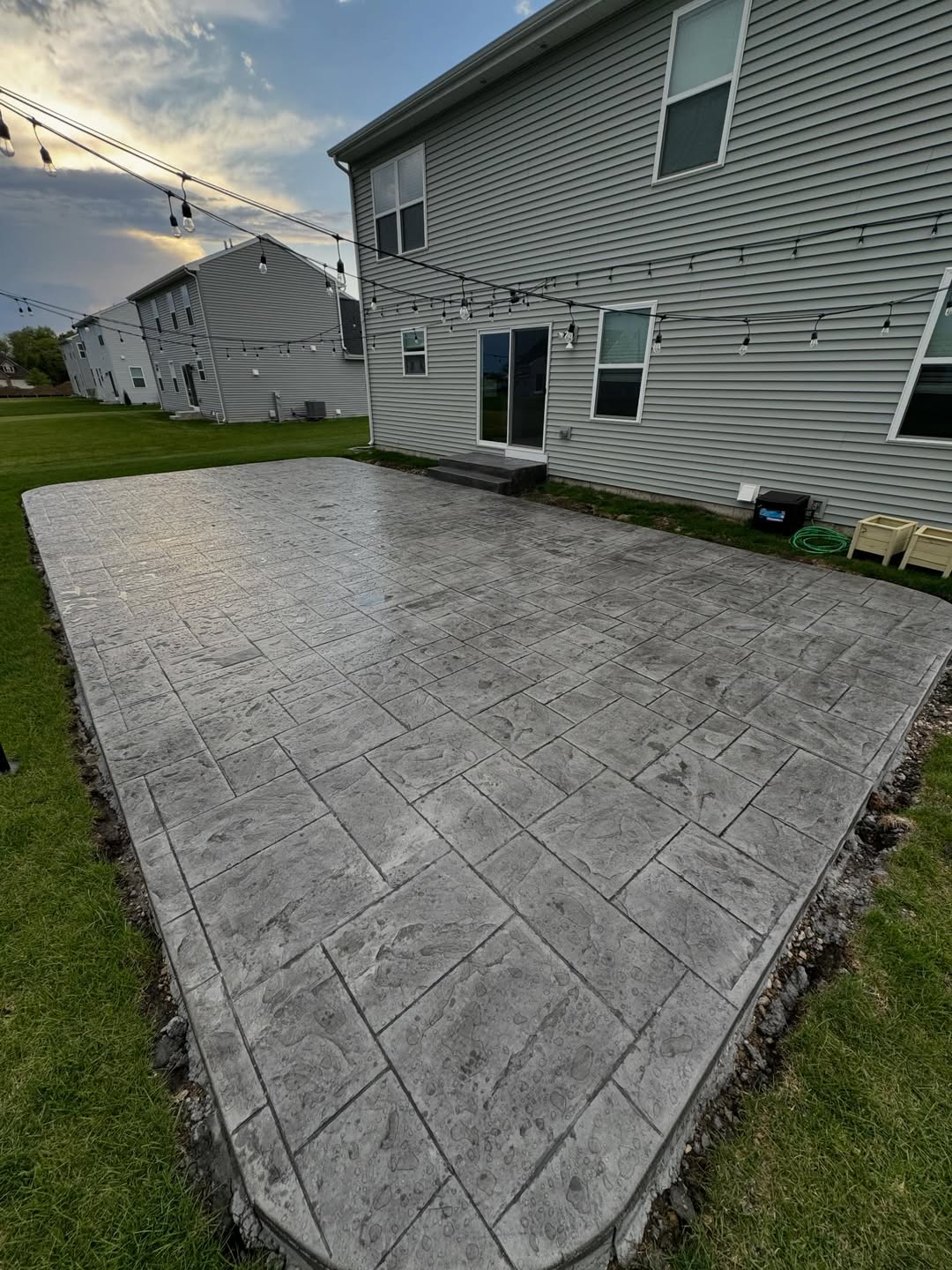
String lights above a stamped concrete patio extend the time you can actually use the space in a way that changes how you think about the yard entirely. Without lighting, a patio becomes unusable once the sun goes down. With it, evenings in summer become some of the best times to be outside. The cost of a string light setup is genuinely low relative to the difference it makes to how the space gets used.
The sliding glass door placement right alongside this patio makes the indoor-outdoor flow effortless, which is the ideal arrangement for a backyard patio. The grass border softening the edges and the minimalist house exterior keep the overall picture clean and uncluttered. This is a patio that’s been designed to be used rather than admired, which is exactly the right priority.
21. Freshly Poured Stamped Concrete Along the Side of the House
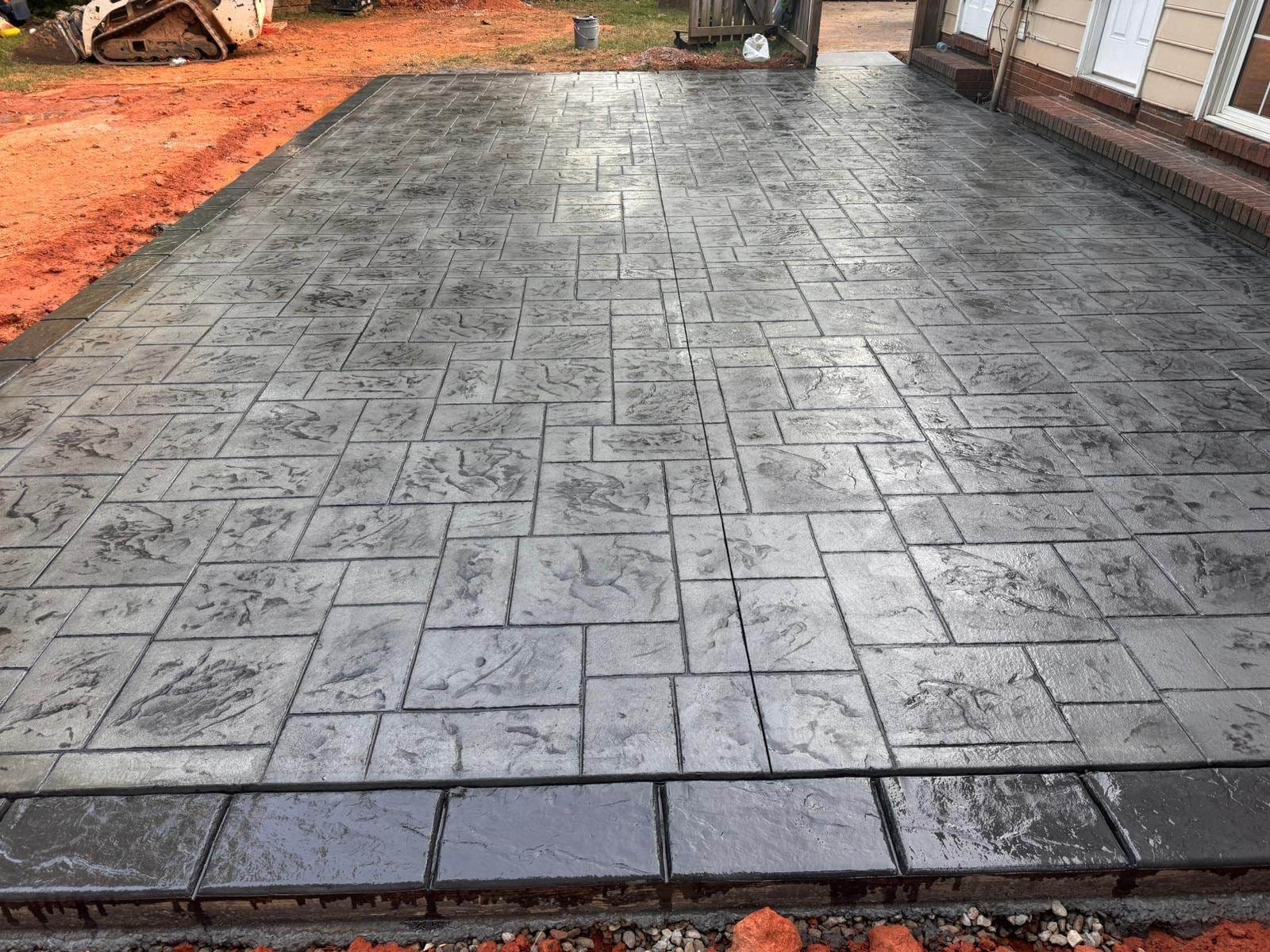
Stamped concrete works just as well for a side-of-house area as it does for a rear patio, and this is a use case that often gets overlooked. The side passage or driveway approach is frequently an afterthought — plain concrete or tarmac that gets no visual attention at all. A stamped finish in the same tone as the house brings even a functional access area into the overall design of the property.
The slightly darker border here frames the concrete neatly and defines the edge where the poured surface meets the surrounding soil. Fresh soil visible at the edge shows this was recently completed, and it’s easy to picture how the space will look once planting goes in alongside it. The orderly pattern and the clean finish suggest a job done properly, which is the most important thing with any concrete work.
22. Stamped Concrete Alongside an Artificial Lawn: Two Low-Maintenance Surfaces Working Together
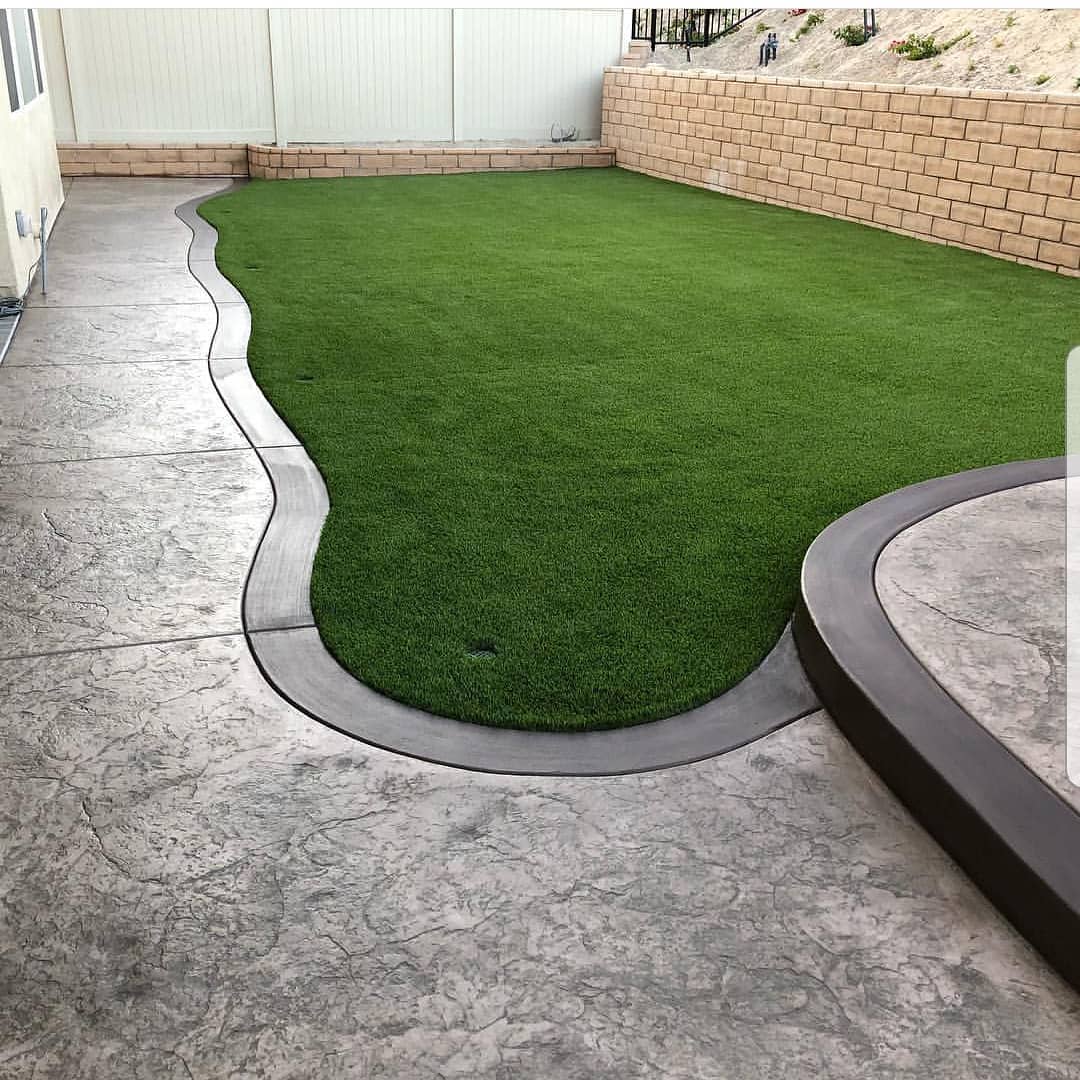
Pairing stamped concrete with artificial lawn is a combination that makes a lot of practical sense for a low-maintenance outdoor space. Neither surface needs cutting, treating, or replacing anytime soon, and together they give you a yard that stays looking presentable with minimal effort. The organic curved shape of the artificial grass panel softens the hard edge of the concrete in a way that a straight join never would.
The muted gray tones of the concrete and the bright green of the artificial grass provide exactly the kind of contrast that makes both surfaces look better than they would on their own. The brick wall and white fence in the background keep the enclosure simple and private. It’s an honest, practical backyard design that prioritizes usability — and there’s nothing wrong with that being the main goal.