
Small garden doesn’t mean no trees. You just have to pick carefully. 🌳
The challenge with compact spaces isn’t finding a tree – it’s finding one that won’t outgrow its spot in five years. That beautiful specimen you plant near the patio can become a problem when it starts blocking light, lifting paving, or bumping into the house. Mature width matters more than height in a tight garden.
A few flowering trees genuinely stay small enough to work. Ace of Hearts Eastern Redbud gives you those gorgeous spring blooms without taking over – perfect for a narrow front garden. Little Poncho Kousa Dogwood stays even more compact if space is really tight. And if you’ve got a bit more room to play with, White Fringetree offers fragrant flowers and a lovely loose, spreading shape.
The key is checking the mature size before you buy, not just the label. “Small tree” means different things to different nurseries – some would swallow a typical front garden whole. 🌸
Let’s look at the best options.
Quick picks:
- Smallest spaces: Little Poncho Kousa Dogwood.
- Compact spring color: Ace of Hearts Eastern Redbud.
- Fragrant flowers: White Fringetree.
- Warm-climate summer blooms: Acoma Crape Myrtle.
1. Ace of Hearts Eastern Redbud
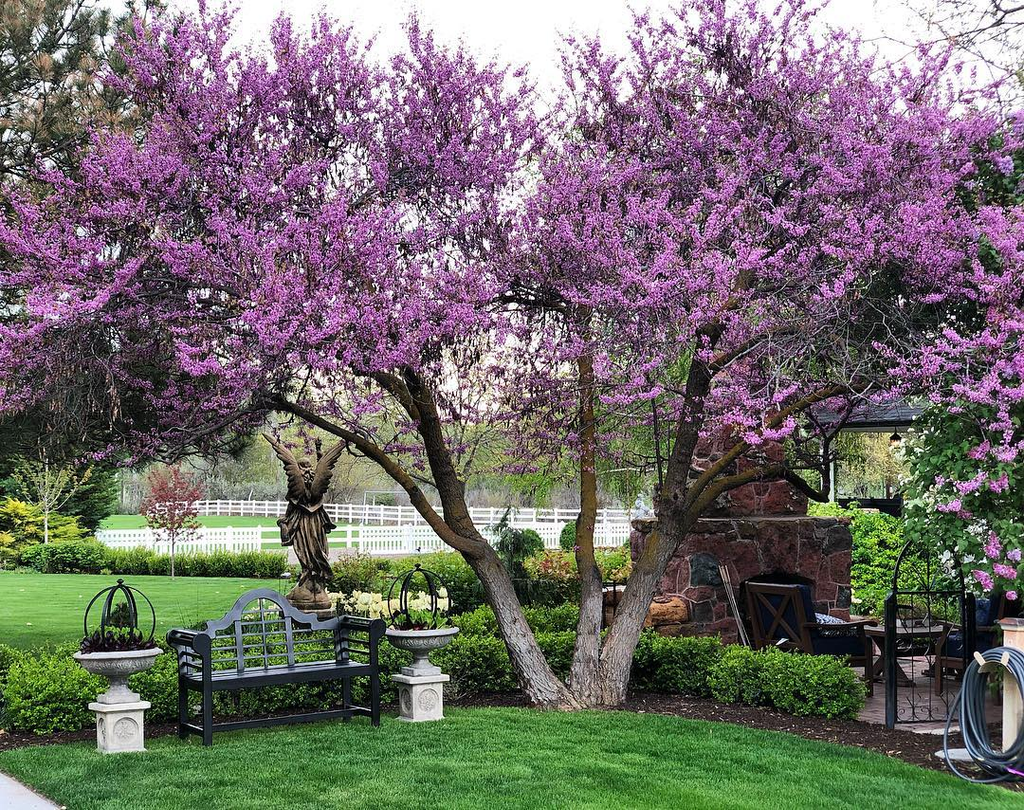
You get the familiar pink-purple flowers of Eastern Redbud on a much smaller tree with ‘Ace of Hearts.’ Plan for roughly 9–12 feet tall and 10–15 feet wide, with a rounded crown and tightly spaced, heart-shaped leaves.
In USDA Zones 5–9, you’ll see flowers along bare branches in early spring. Give your tree full sun to partial shade and well-drained soil; afternoon shade helps in hot locations.
Leave room for its sideways growth near a walkway. You’ll also want to choose its permanent spot carefully, since established redbuds resent root disturbance.
2. White Fringetree
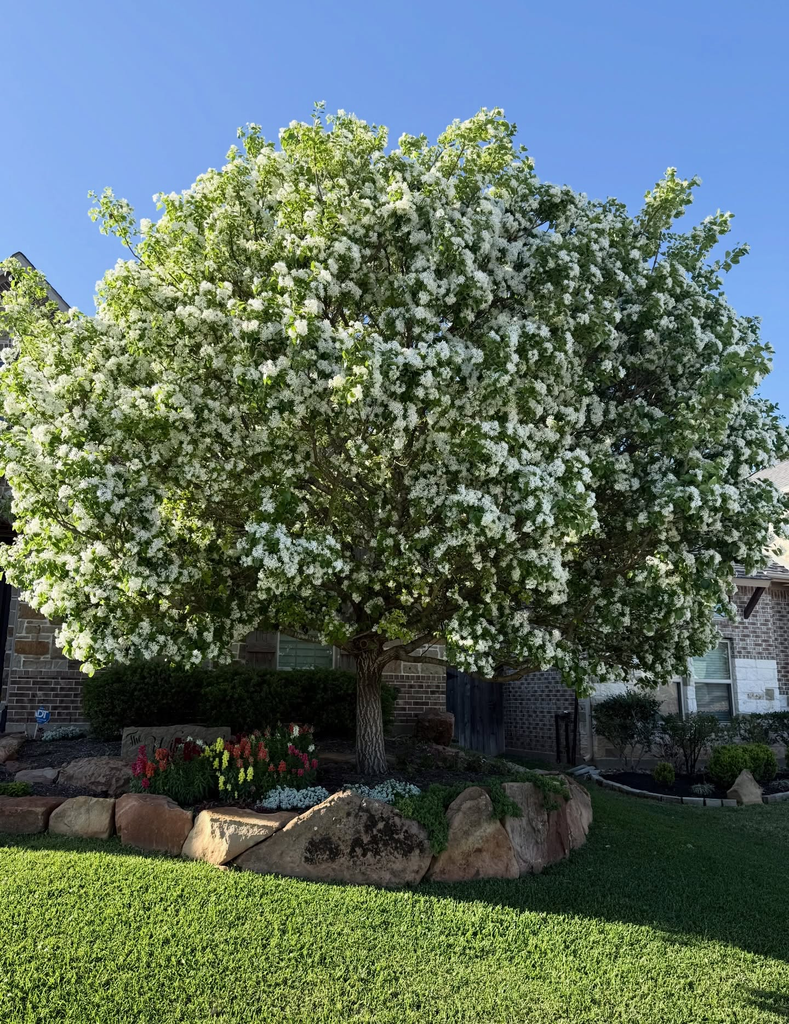
With White Fringetree, you bring fragrant, fringe-like white flowers into your yard in late spring. Allow 12–20 feet of height and spread, making this a choice for a generous planting bed.
You can grow this eastern U.S. native in Zones 3–9, in full sun or partial shade. Moist, well-drained soil supports its best growth.
Expect a naturally multistemmed shape unless you buy a tree-form specimen. If you want blue-black fruit for birds, choose a female plant and provide a nearby male for pollination. In emerald ash borer territory, include fringetree in your pest checks because the insect also attacks this species.
3. Little Poncho Kousa Dogwood
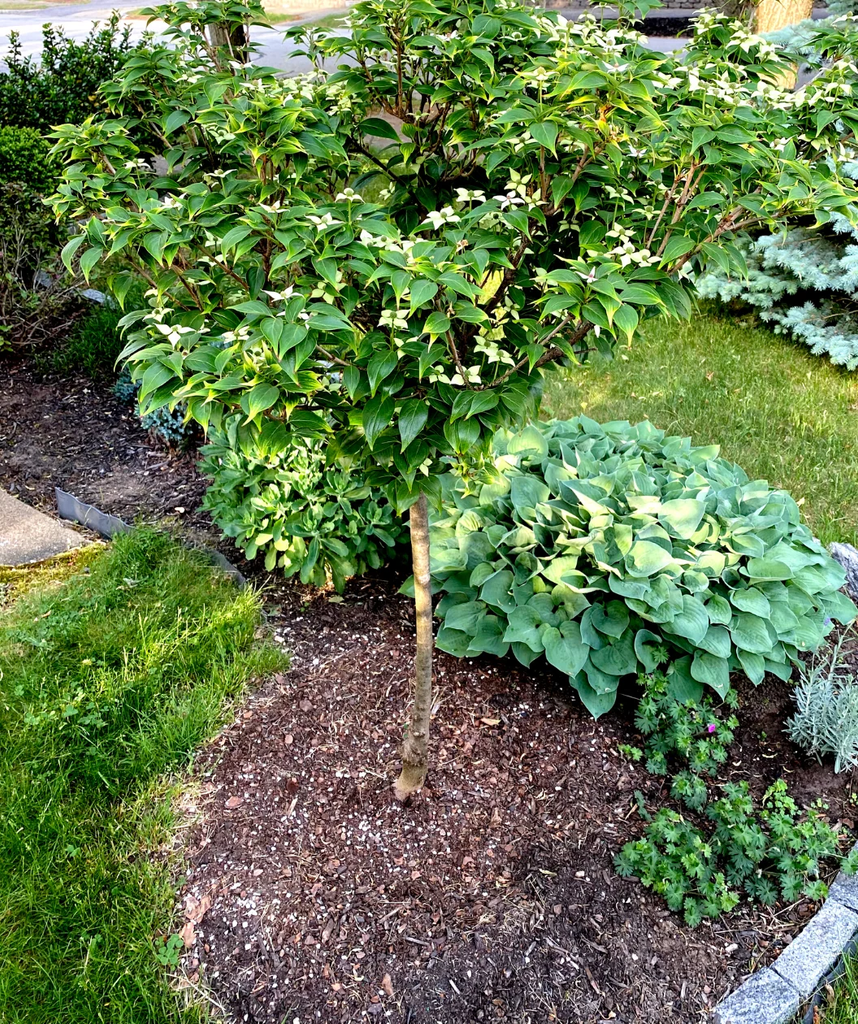
‘Little Poncho’ gives you dogwood flowers without committing your yard to a full-size canopy. Budget about 8–10 feet tall and wide, though an older specimen in favorable conditions deserves extra room.
In Zones 5–8, you’ll enjoy white, pointed flower bracts in late spring or early summer. These showy structures surround the small true flowers. Choose full sun to partial shade and moist, acidic, well-drained soil.
You gain better resistance to dogwood anthracnose than you get with flowering dogwood. Keep fallen, raspberry-like fruit in mind when placing your tree beside paving.
4. Autumn Brilliance Serviceberry
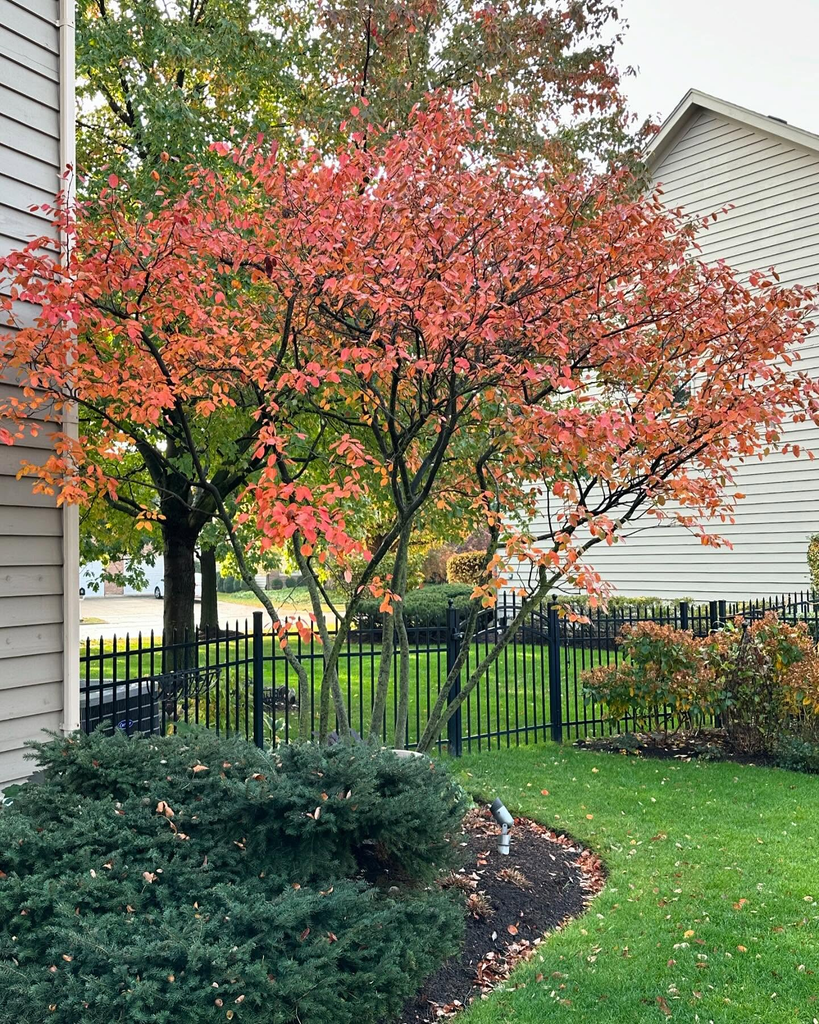
Choose ‘Autumn Brilliance’ when you want spring flowers, edible fruit, and strong fall color from the same planting. At 20–25 feet tall and 15–25 feet wide, it belongs in your larger small-yard spaces.
You’ll get white flowers in early spring, followed by purple fruit that attracts birds. Grow your serviceberry in Zones 4–9, with full sun to partial shade and well-drained soil.
Place it over a planted bed or lawn where dropped berries are manageable. Beside a pale patio or driveway, fruit litter and bird droppings create extra cleanup. You’ll also need to remove basal shoots if you want a clear-trunked form.
5. Royal Star Magnolia
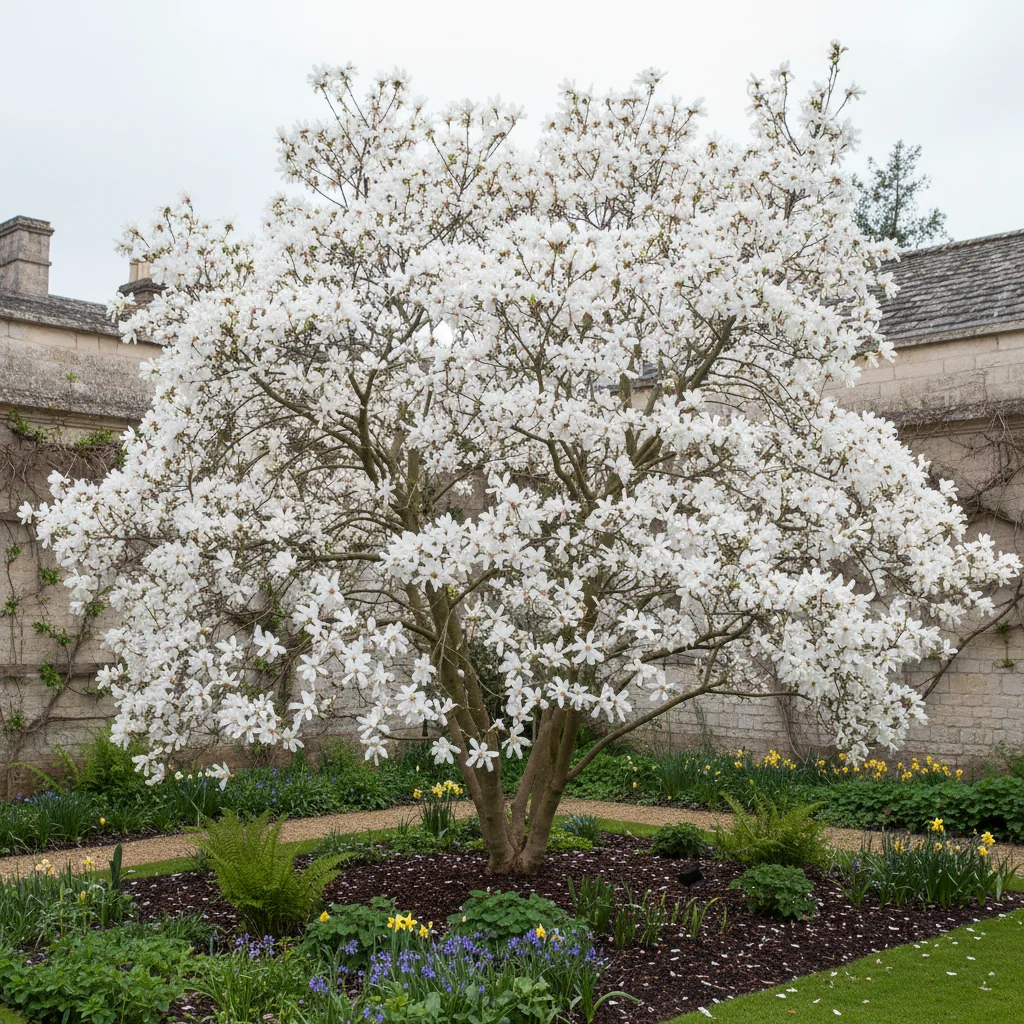
For fragrant white flowers early in the season, give ‘Royal Star’ magnolia a sheltered spot in your yard. Expect 10–20 feet tall and 8–15 feet wide, with a dense, rounded habit.
You can grow it in Zones 4–8, in full sun to partial shade. Its early-spring flowers open before the leaves, making the branching structure part of the display.
Choose moist, slightly acidic soil with good drainage. A location away from a heat-reflecting south-facing wall helps reduce premature bloom during winter warm spells. Late freezes still damage open flowers, so your spring display will vary with the weather.
6. Prairifire Flowering Crabapple
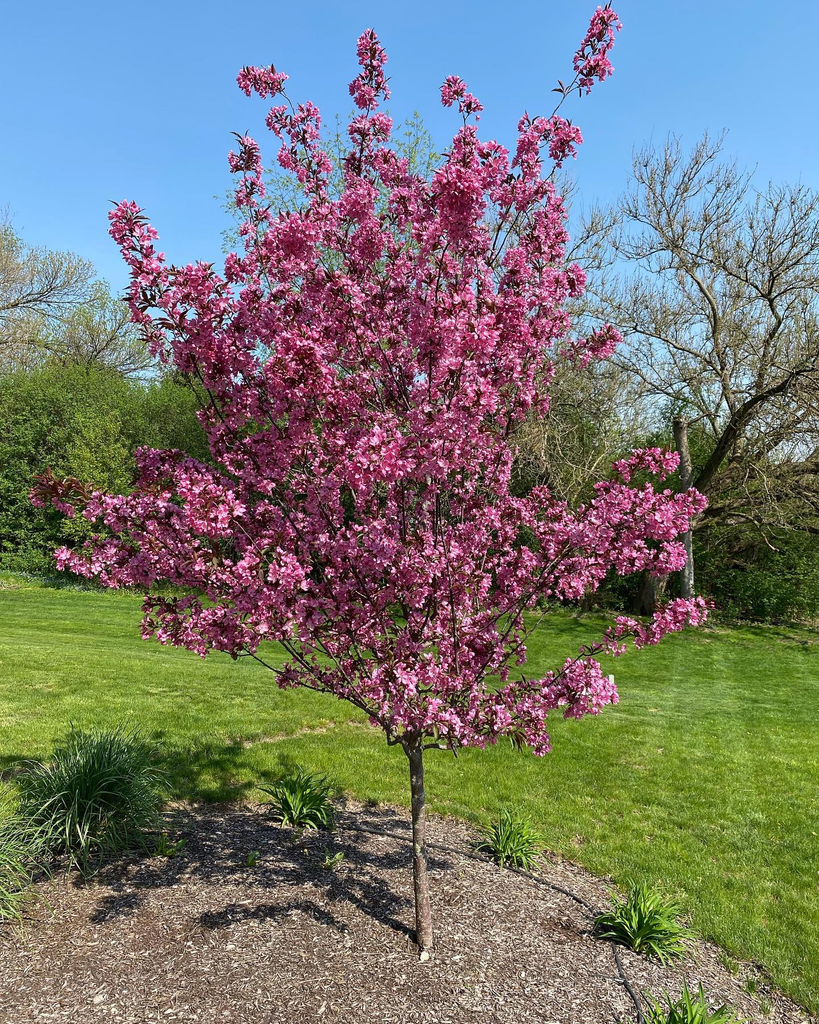
‘Prairifire’ earns its space when you want deep pink spring flowers followed by small, persistent fruit. Allow 15–20 feet tall and wide, enough room for a rounded crown.
In Zones 4–8, give your crabapple full sun and well-drained soil. You’ll also get purple-tinted new foliage that matures toward green.
You benefit from good resistance to several common crabapple diseases, although local disease pressure still deserves attention. Check regional recommendations before buying, especially where apple scab is severe. Set your tree where fallen fruit is easy to collect, and remove shoots that emerge below the graft.
7. Cloud 9 Flowering Dogwood
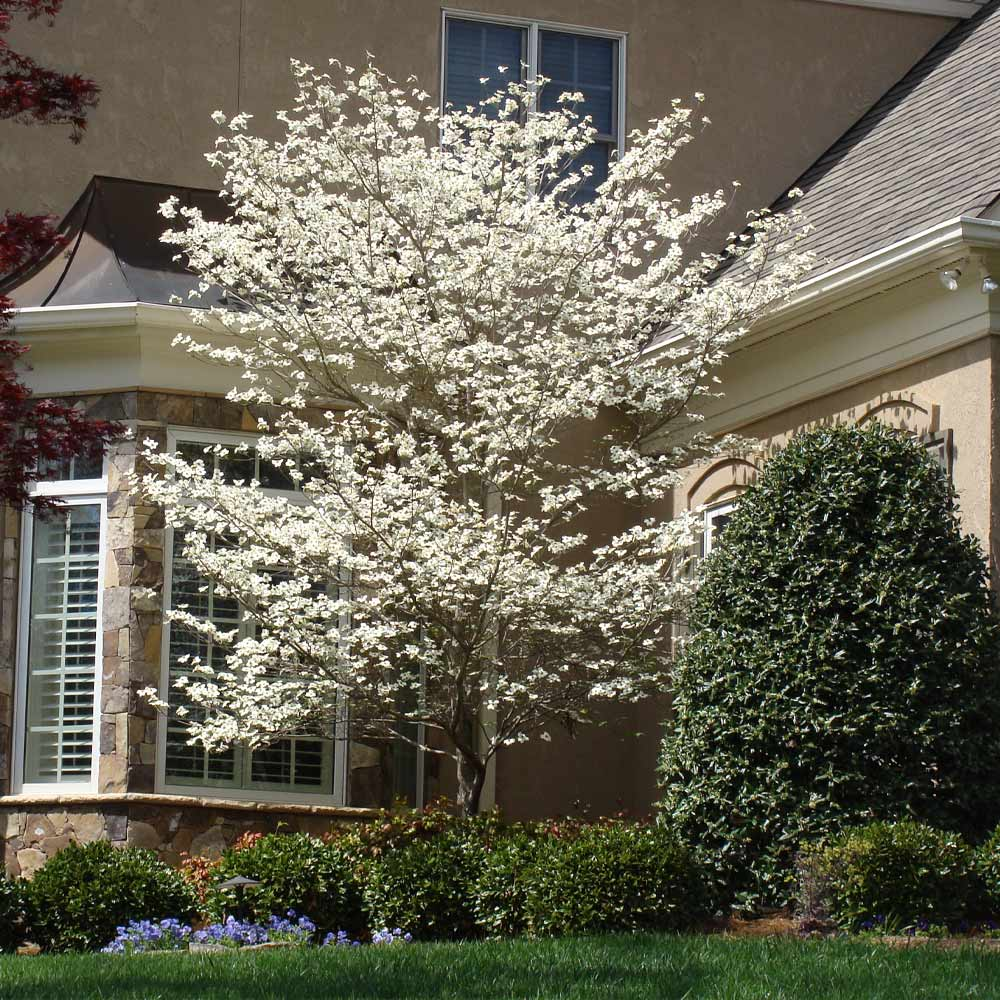
‘Cloud 9’ gives you a heavy spring display of white flower bracts on a native flowering dogwood. Reserve approximately 15–20 feet of height and spread.
For Zones 5–9, choose partial shade with morning sun, particularly toward the warmer end of that range. Your tree needs acidic, well-drained soil that stays evenly moist.
Take disease risk seriously before planting. Flowering dogwood is susceptible to dogwood anthracnose and powdery mildew, and ‘Cloud 9’ should not be treated as a disease-resistant selection. If those problems are common locally, ask your extension office about resistant dogwood cultivars suited to your area.
8. Snow Fountains Weeping Cherry
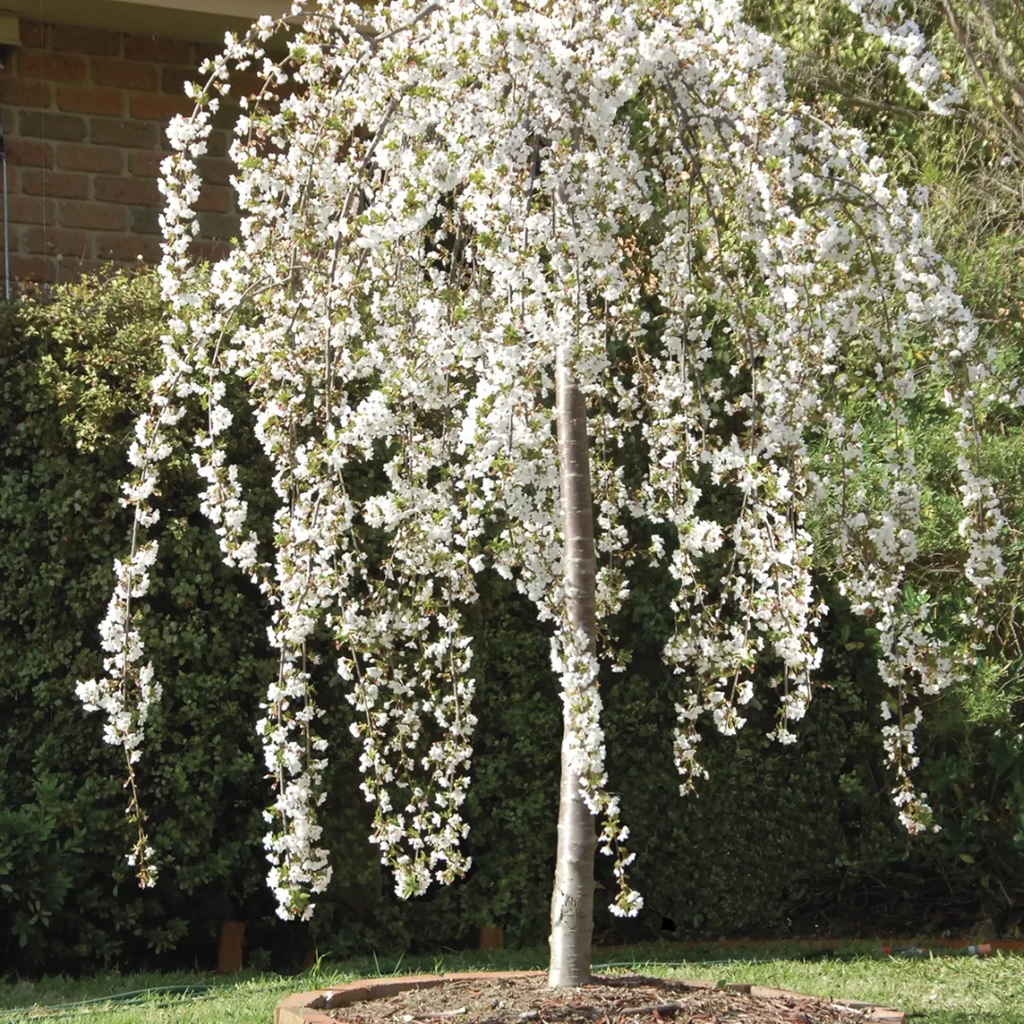
You get a compact, cascading spring display with Snow Fountains Weeping Cherry. Allow roughly 8–15 feet tall and 6–8 feet wide, and check the nursery label because graft height affects its form.
Give your tree full sun in Zones 5–8, along with well-drained soil. White flowers cover the hanging branches in early to midspring.
Place the canopy where it has room to drape without blocking your path. Remove shoots growing from below the graft and upright reversions that disrupt the weeping shape. Keep lawn equipment away from the trunk, since bark wounds add stress to a tree already vulnerable to borers and canker.
9. Ivory Silk Japanese Tree Lilac
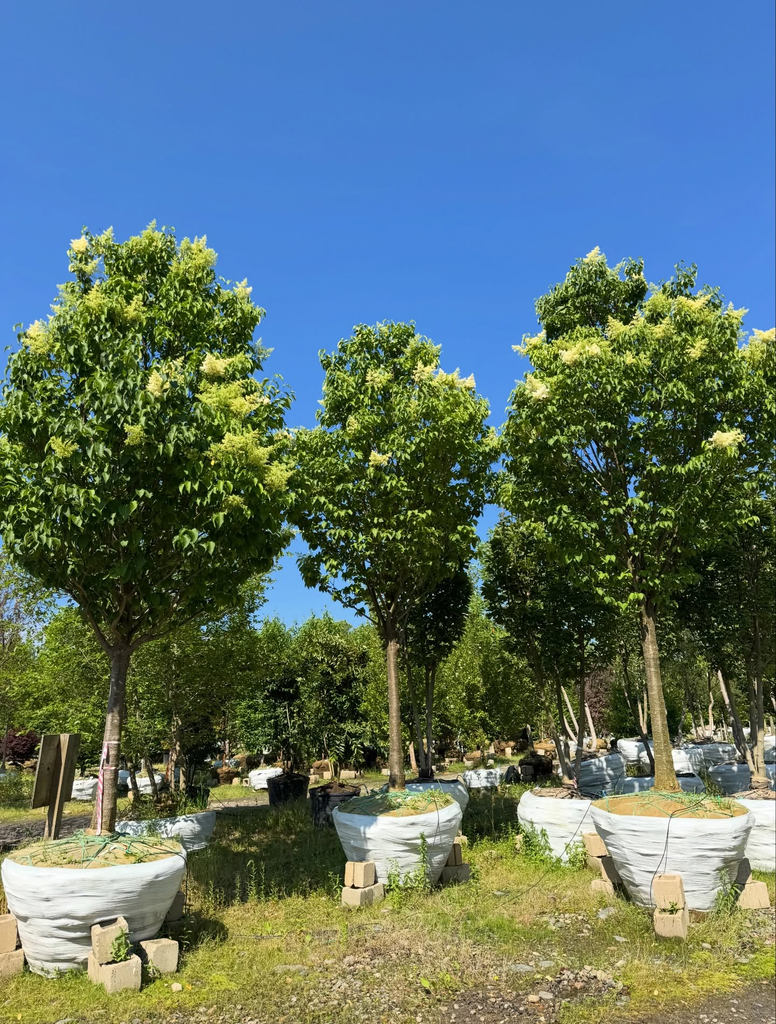
‘Ivory Silk’ extends your flowering season into early summer with large clusters of creamy white blooms. At 20–25 feet tall and 15–20 feet wide, you’ll need meaningful clearance around this upright tree.
You can grow it in Zones 3–7, making it useful where cold winters narrow your choices. Full sun supports the strongest flowering, and well-drained soil helps maintain healthy roots.
Expect a scent different from the familiar fragrance of common lilac. Position your tree where flower drop is easy to sweep, and leave space to enjoy its attractive bark as the trunk matures.
10. Evening Light Japanese Snowbell
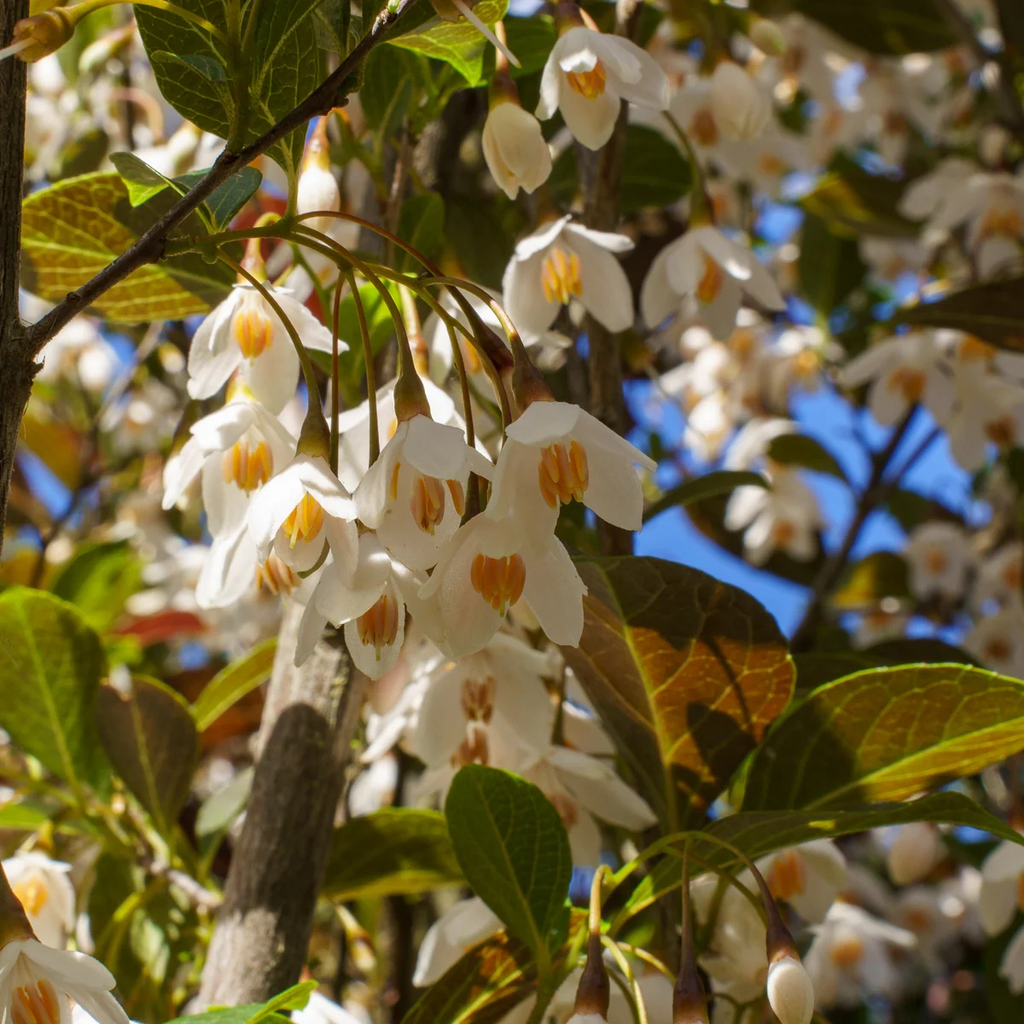
With ‘Evening Light,’ you get white, hanging flowers set against dark purple foliage. Plan for about 15–20 feet tall and 10–15 feet wide.
In Zones 5–9, choose sun to partial shade and moist, acidic, well-drained soil. Your late-spring to early-summer flowers show best where you can look slightly upward into the branches.
Give this snowbell protection from drying winds and intense reflected heat. In hot climates, afternoon shade helps protect the foliage, although deeper shade reduces its purple coloring. Avoid a dry parking-strip location where pavement heats the root zone.
11. Acoma Crape Myrtle
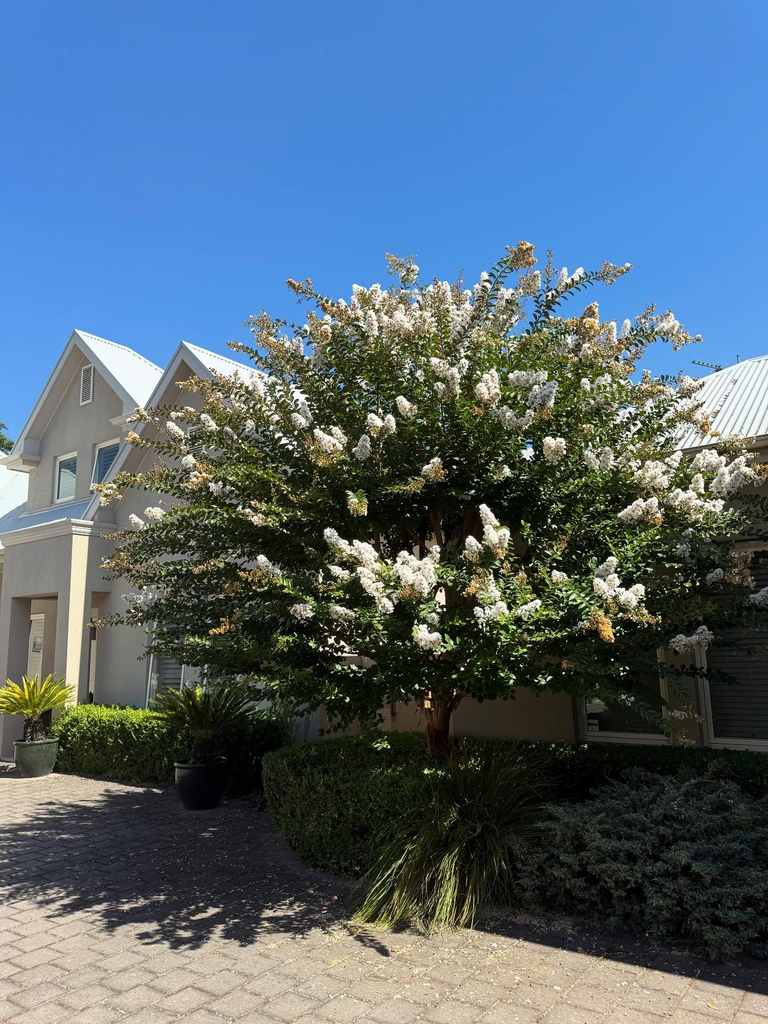
‘Acoma’ gives your warm-climate yard white summer flowers on a broad, arching plant. Expect approximately 6–10 feet tall and wide, with larger specimens reaching beyond that range in favorable conditions.
Choose full sun in Zones 7–9 and provide well-drained soil. You’ll get exfoliating bark as the stems mature.
Treat ‘Acoma’ as a large shrub or small multistemmed tree. If you want clearance underneath, select its main stems while young and remove low growth gradually. Avoid annual topping, which spoils the branch structure and encourages weak shoots. In cooler locations, winter injury affects the size and shape you achieve.
12. Seven-Son Flower
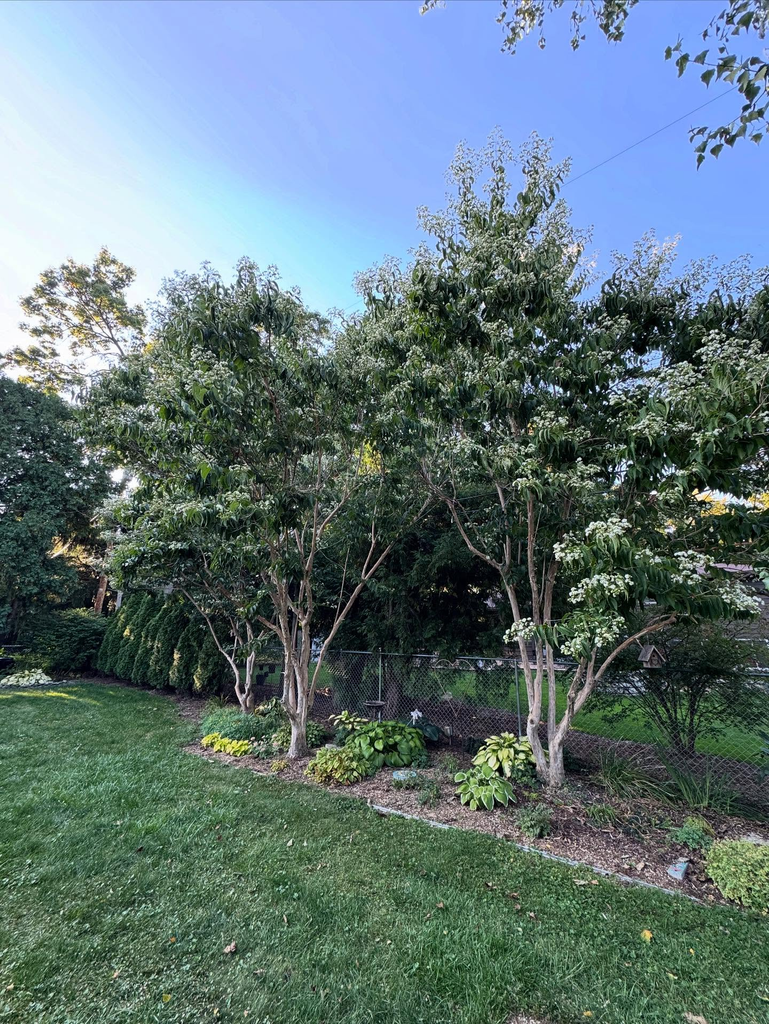
Seven-Son Flower brings fragrant white blooms to your yard in late summer, when many flowering trees have finished. Give it 15–20 feet of height and 10–15 feet of spread.
You can grow it in Zones 5–9, in full sun to partial shade. After flowering, the rosy-red structures around the developing fruit extend your color into fall.
Expect a large, multistemmed shrub unless you train it as a small tree. Choose the main trunks early and remove unwanted basal shoots as they develop. Position your plant where you can see the peeling bark during winter, while keeping its broad framework clear of a narrow entrance.
13. Franklin Tree
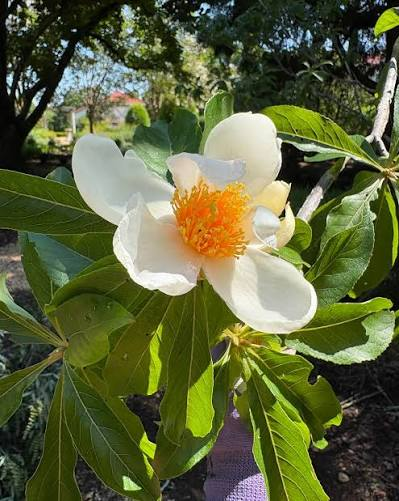
Choose Franklin Tree if you have acidic soil and want fragrant white flowers in late summer. In cultivation, you’ll commonly need room for 10–20 feet tall and 6–15 feet wide.
Your best prospects are in Zones 5–8, with full sun to partial shade. The flowers overlap with developing red fall foliage, giving you an unusual late-season display.
Site preparation deserves extra care with this tree. Provide humus-rich soil that holds moisture while draining freely, and avoid compacted ground. Franklin Tree is vulnerable to root disease in poorly drained conditions and struggles with prolonged heat, making it a demanding choice for much of the Deep South.
14. Toba Hawthorn
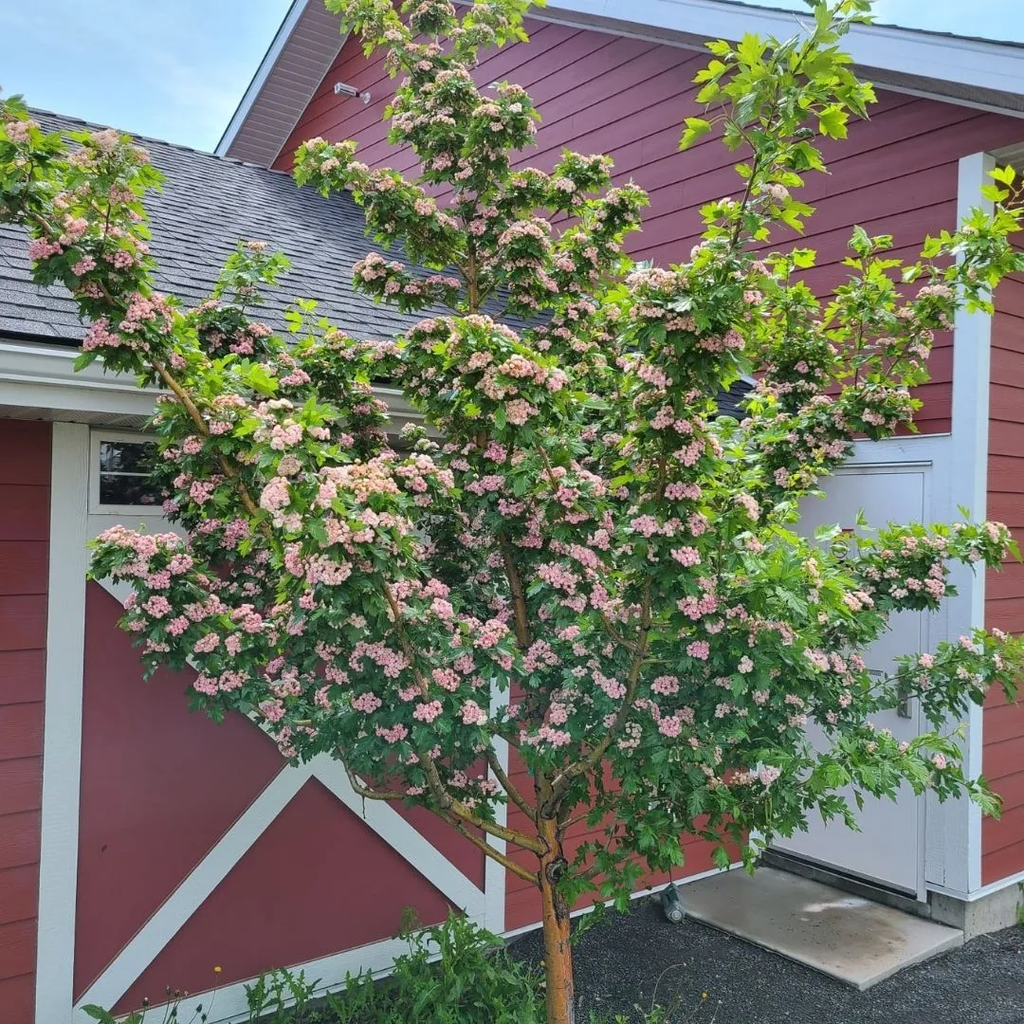
‘Toba’ gives you double flowers that open pale and deepen toward pink in late spring. Allow 15–20 feet tall and 12–18 feet wide for its rounded crown.
For a cold-climate yard in Zones 3–7, provide full sun and well-drained soil. You’ll also get an interesting twisted appearance in older trunks.
Check local disease experience before selecting this hawthorn. Fire blight and rust deserve attention, especially near other susceptible plants. Although ‘Toba’ is sold as nearly thornless, inspect branches before placing it beside a frequently used path. A lawn or broad planting bed gives you more working room around the canopy.
15. Shoal Creek Chaste Tree
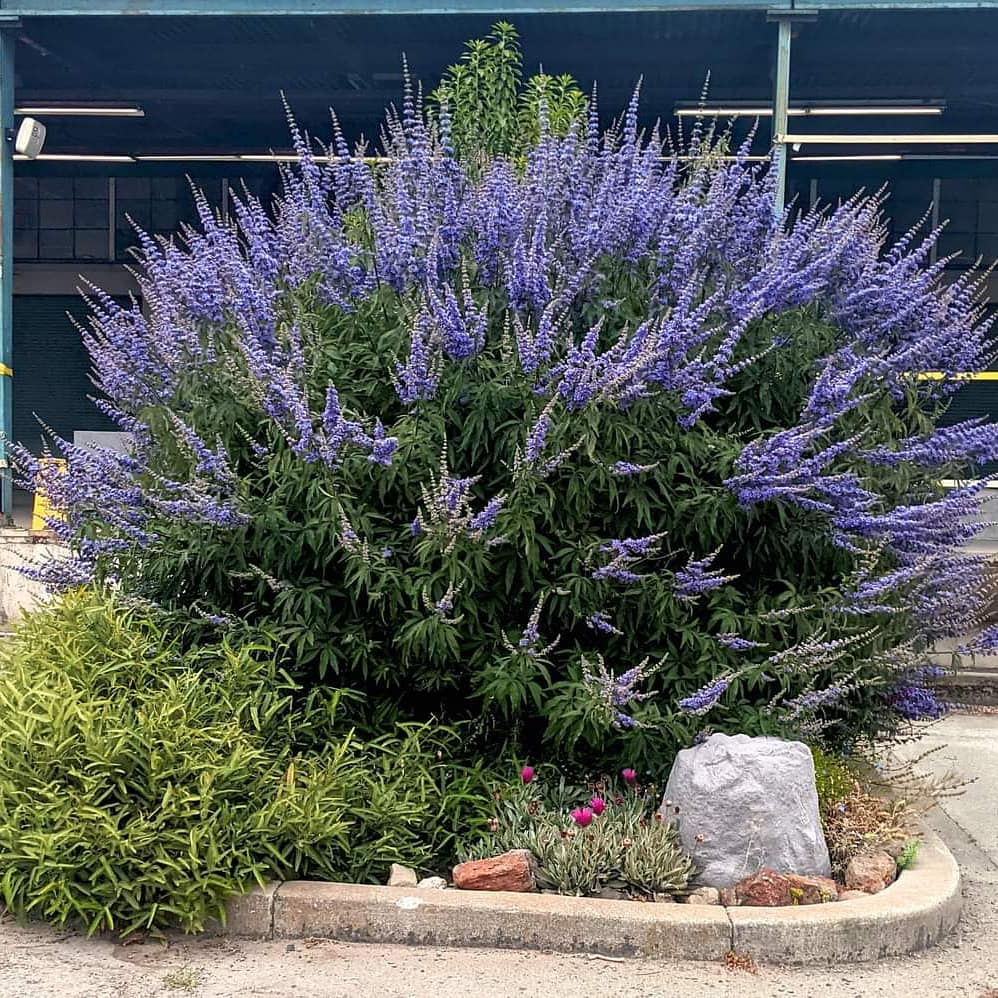
‘Shoal Creek’ gives your sunny yard upright spikes of violet-blue flowers in summer. In warm climates, allow 10–15 feet tall and wide, with additional space where growing conditions encourage larger plants.
You can grow it in Zones 6–9, but its form changes with winter temperatures. In colder areas, expect stem dieback and a shrub-like plant that regrows from low on the framework.
Use sharply drained soil and avoid wet winter sites. Check your state’s invasive-plant guidance before buying: chaste tree escapes cultivation in parts of the South. Where it is invasive or discouraged, choose a locally suitable alternative.
16. Arnold Promise Witch Hazel
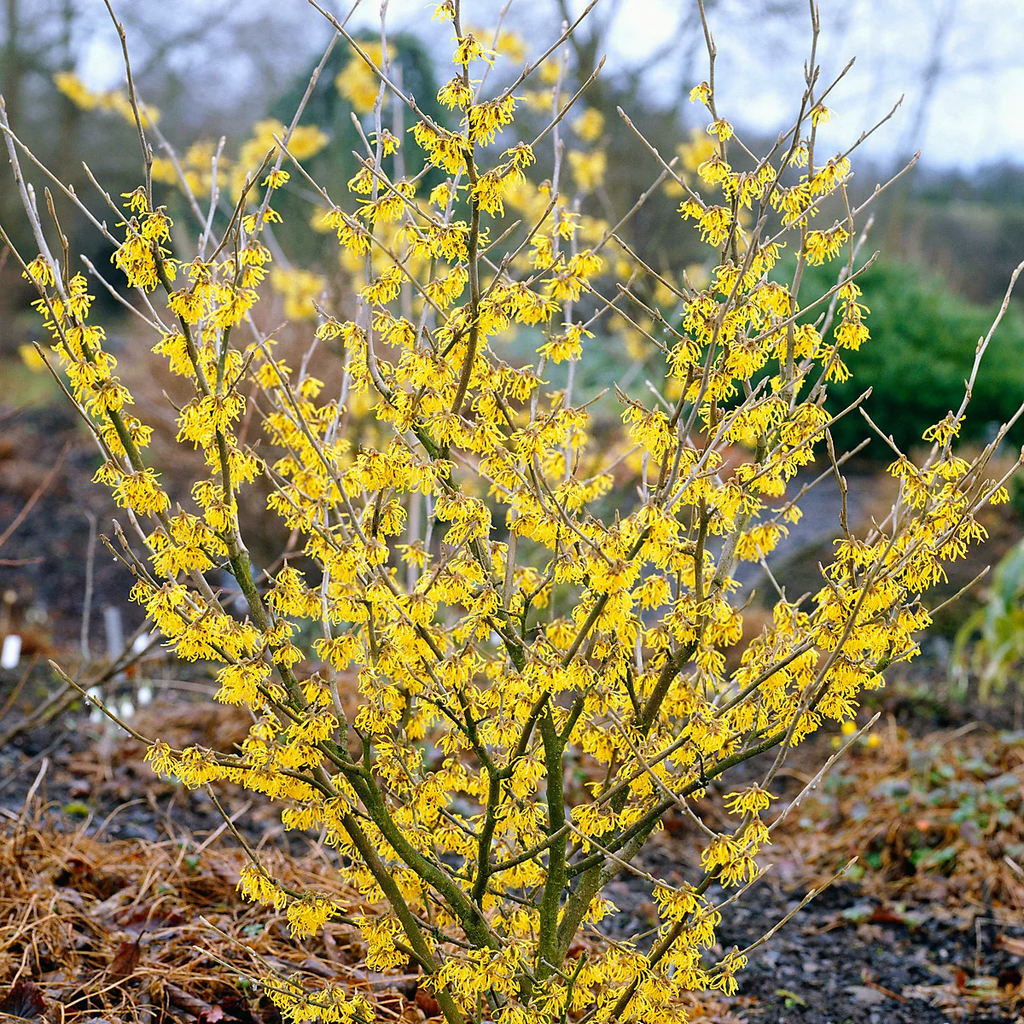
‘Arnold Promise’ gives you fragrant yellow flowers in late winter to early spring, before most trees begin blooming. Reserve 12–15 feet tall and wide for its upright, spreading form.
In Zones 5–8, choose full sun to partial shade and moist, acidic, well-drained soil. You’ll also enjoy yellow to orange fall foliage.
Treat this witch hazel as a large shrub or small multistemmed tree. Place it where you’ll notice the narrow flower petals from a winter window or regularly used path. If your plant is grafted, remove shoots arising below the graft so the rootstock does not take over.
17. Purpleleaf Sand Cherry
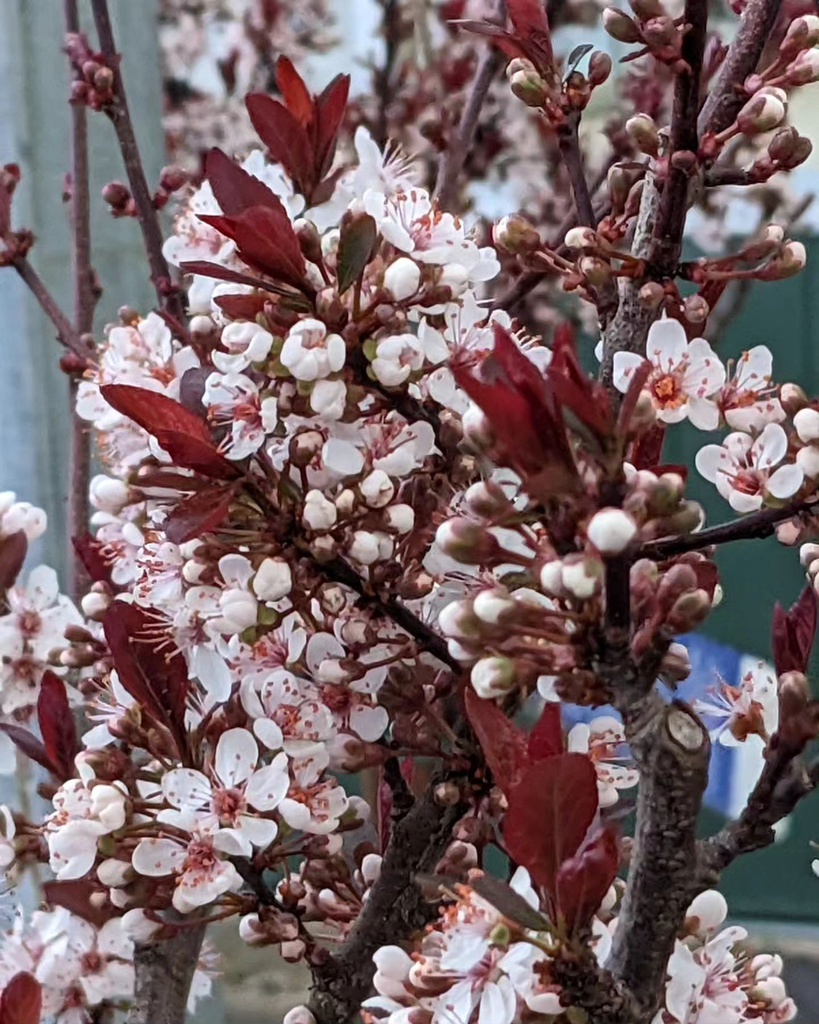
Purpleleaf Sand Cherry gives you pinkish-white spring flowers and purple foliage in a compact footprint. Plan for 7–10 feet tall and 5–8 feet wide.
You can grow it in Zones 2–8, with full sun producing the strongest leaf color. Provide well-drained soil and room for its naturally shrubby branching.
Choose it with a replacement plan in mind. You’ll face a comparatively short lifespan, commonly around 10–15 years, along with susceptibility to borers and several diseases. A tree-form specimen also needs attention to basal growth. Use it as a small ornamental accent where eventual removal will be straightforward.
How to Choose a Flowering Tree for a Small Yard
You’ll make a better choice by matching mature spread and growing conditions before comparing flower color. Use these planning ranges to narrow your options, then confirm the label on the exact cultivar you buy.
| Tree | Mature height × width | USDA zones | Bloom season | Light |
|---|---|---|---|---|
| Ace of Hearts Eastern Redbud | 9–12 × 10–15 ft. | 5–9 | Early spring | Sun–part shade |
| White Fringetree | 12–20 × 12–20 ft. | 3–9 | Late spring | Sun–part shade |
| Little Poncho Kousa Dogwood | 8–10 × 8–10 ft. | 5–8 | Late spring–early summer | Sun–part shade |
| Autumn Brilliance Serviceberry | 20–25 × 15–25 ft. | 4–9 | Early spring | Sun–part shade |
| Royal Star Magnolia | 10–20 × 8–15 ft. | 4–8 | Early spring | Sun–part shade |
| Prairifire Flowering Crabapple | 15–20 × 15–20 ft. | 4–8 | Spring | Full sun |
| Cloud 9 Flowering Dogwood | 15–20 × 15–20 ft. | 5–9 | Spring | Part shade |
| Snow Fountains Weeping Cherry | 8–15 × 6–8 ft. | 5–8 | Early–midspring | Full sun |
| Ivory Silk Japanese Tree Lilac | 20–25 × 15–20 ft. | 3–7 | Early summer | Full sun |
| Evening Light Japanese Snowbell | 15–20 × 10–15 ft. | 5–9 | Late spring–early summer | Sun–part shade |
| Acoma Crape Myrtle | 6–10 × 6–10 ft. | 7–9 | Summer | Full sun |
| Seven-Son Flower | 15–20 × 10–15 ft. | 5–9 | Late summer | Sun–part shade |
| Franklin Tree | 10–20 × 6–15 ft. | 5–8 | Late summer–early fall | Sun–part shade |
| Toba Hawthorn | 15–20 × 12–18 ft. | 3–7 | Late spring | Full sun |
| Shoal Creek Chaste Tree | 10–15 × 10–15 ft. | 6–9 | Summer | Full sun |
| Arnold Promise Witch Hazel | 12–15 × 12–15 ft. | 5–8 | Late winter–early spring | Sun–part shade |
| Purpleleaf Sand Cherry | 7–10 × 5–8 ft. | 2–8 | Spring | Full sun |
How Much Mature Height and Spread Can Your Yard Accommodate?
Measure the usable planting area at ground level and above it. Include your roof overhang and the space needed to walk past mature branches. Use the upper end of the listed spread when laying out your planting.
Your nursery tag describes expected growth under a particular set of conditions, not a permanent size limit. Give slower-growing selections extra room for old age, and choose a smaller cultivar if keeping the canopy in bounds would require repeated cutting.
Also decide how much trunk clearance you need. A naturally low-branched shrub trained as a tree requires different upkeep from a nursery-grown, single-trunk specimen.
Which Trees Suit Your Climate, Sunlight, and Soil?
Start with your USDA hardiness zone, then account for summer heat and local weather. A cold-hardiness rating tells you about winter survival; it does not guarantee success beside a hot driveway.
Track direct sunlight across the proposed planting spot during the growing season. Full sun means at least six hours of direct sun daily, while partial shade offers fewer hours or filtered light.
Test your soil’s pH before selecting acid-loving trees. After heavy rain, check how quickly standing water disappears. If drainage is poor, choose a tree suited to wet soil or address the site before planting.
Do You Want Native Habitat Value, Fragrance, or Seasonal Color?
If supporting local wildlife leads your wish list, start with trees native to your region. You’ll get the strongest match by checking the species’ natural range, since a U.S.-native tree is not native to every state.
For fragrance, place your selection near a seating area with enough clearance for its mature branches. Smell a flowering specimen at a nursery when possible; your preference for lilac or snowbell fragrance is personal.
For a longer season of interest, pair bloom timing with foliage or bark. Your winter view deserves consideration too, especially when the tree sits directly outside a main window.
Which Choices Have Disease, Maintenance, or Invasiveness Concerns?
Check your county extension recommendations before purchasing, especially for trees in the rose family and flowering dogwoods. Local disease pressure gives you a clearer picture of likely care than a broad “disease-resistant” label.
Ask the nursery whether your specimen is grafted and whether its tree form requires ongoing shoot removal. Inspect the trunk for wounds and look for roots circling tightly inside the container.
Check state invasive-plant lists as well as local planting restrictions. If you garden beneath utility lines or along a public street, confirm the approved tree list before paying for delivery.
Planting and Establishment Essentials
Give your flowering tree a broad planting area, correct planting depth, and steady moisture while its roots establish. Good early care protects the compact form and seasonal display you selected.
How Far Should You Plant From Buildings and Utilities?
Use the tree’s mature canopy radius as your starting point for building clearance, then add working space. For a tree expected to spread 12 feet, you need about 6 feet from its center just to accommodate that side of the canopy.
Increase the distance where branches would reach siding or block access. Keep the root zone clear of foundations and buried infrastructure according to local requirements.
Call 811 before digging so participating utilities mark buried lines. Arrange separate checks for private lines, such as irrigation and some electrical connections. Follow your utility provider’s rules for overhead-wire clearance.
When Should You Plant Your Tree?
Plant during a cool period when you can keep the root ball watered consistently. Early spring works well in cold-winter regions, while fall offers a useful window in many temperate climates.
In areas with mild winters and hot summers, fall planting gives roots time to grow before summer stress. Avoid frozen or waterlogged soil, and postpone planting during extreme heat.
Keep a newly purchased tree shaded and watered until planting day. Lift it by the container or root ball when moving it, and protect the trunk from straps and rough handling.
How Should You Water, Mulch, and Prune a Young Tree?
Find the root flare, where the trunk widens into the main roots, before setting your planting depth. Position that flare at ground level or slightly above it, and dig a hole roughly two to three times the root ball’s width.
Backfill with the soil you removed, then water slowly to settle it around the roots. Check moisture inside the root ball during establishment; surrounding soil and container mix dry at different rates. Water when the root ball begins to dry, adjusting for rainfall and heat.
Spread 2–3 inches of mulch over the planting area while keeping it several inches away from the trunk. At planting, prune broken or dead branches and preserve healthy canopy growth. Stake only when needed for stability, and remove ties once the roots hold the tree securely.