
That strip of ground along your fence? It’s prime real estate. 🌴
In warmer climates, a bare fence line is a missed opportunity. With the right plants, it becomes a lush backdrop – layered palms, bold leaves, splashes of colour that actually thrive in the heat instead of wilting the moment summer arrives.
This list covers eight plants that do the job properly. No fussy varieties that need constant attention, just reliable performers that fill out, look good, and handle the conditions.
We’ve focused on USDA Zones 9–11 here – so Florida, South Texas, Southern California, Hawaii, and similar climates. But if you’re gardening somewhere cooler, don’t click away just yet. Every plant on this list grows happily in a container, which means you can still get that tropical look for most of the year and just bring them inside when the cold arrives. 🌿
Here’s what to plant.
1. Areca Palm
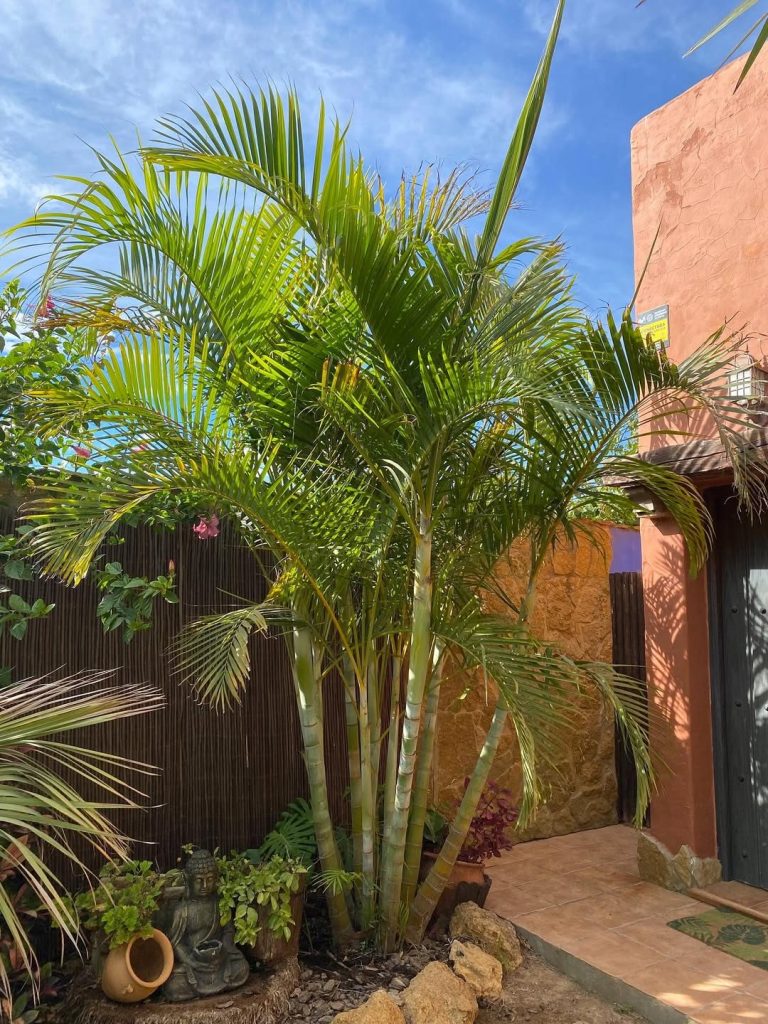
Areca palm is the plant that sets the whole scene. It grows 8 to 15 feet tall with graceful, arching fronds that give a fence line instant height and movement.
Plant it in full to part sun and space a few together for a natural clumping look rather than a single stiff trunk. It’s one of the faster-growing palms, which matters if you want privacy sooner rather than later.
2. Hibiscus
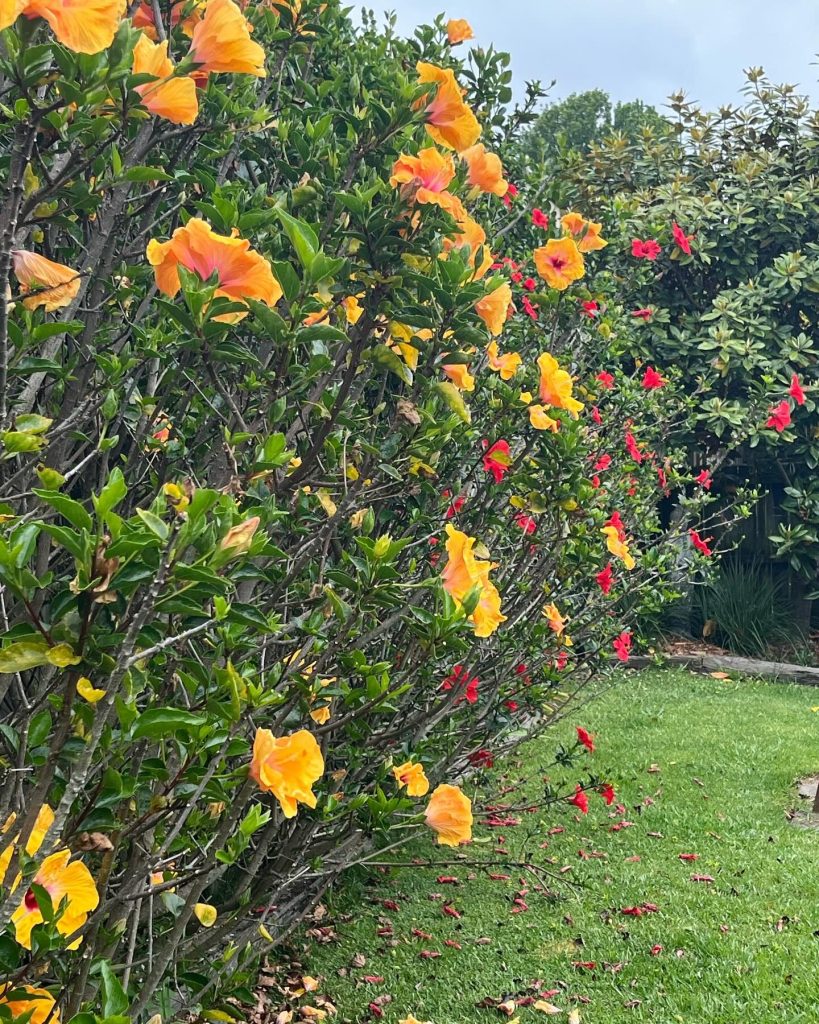
Few plants deliver color like hibiscus. The blooms are often compared to dinner plates, and in full sun, this shrub will flower nearly all season long.
Each bloom only lasts a day, but a mature hibiscus pushes out new flowers constantly, so you’re never looking at a bare shrub. It also takes well to pruning, so you can keep it in bounds along a fence without losing next season’s blooms.
3. Ti Plant
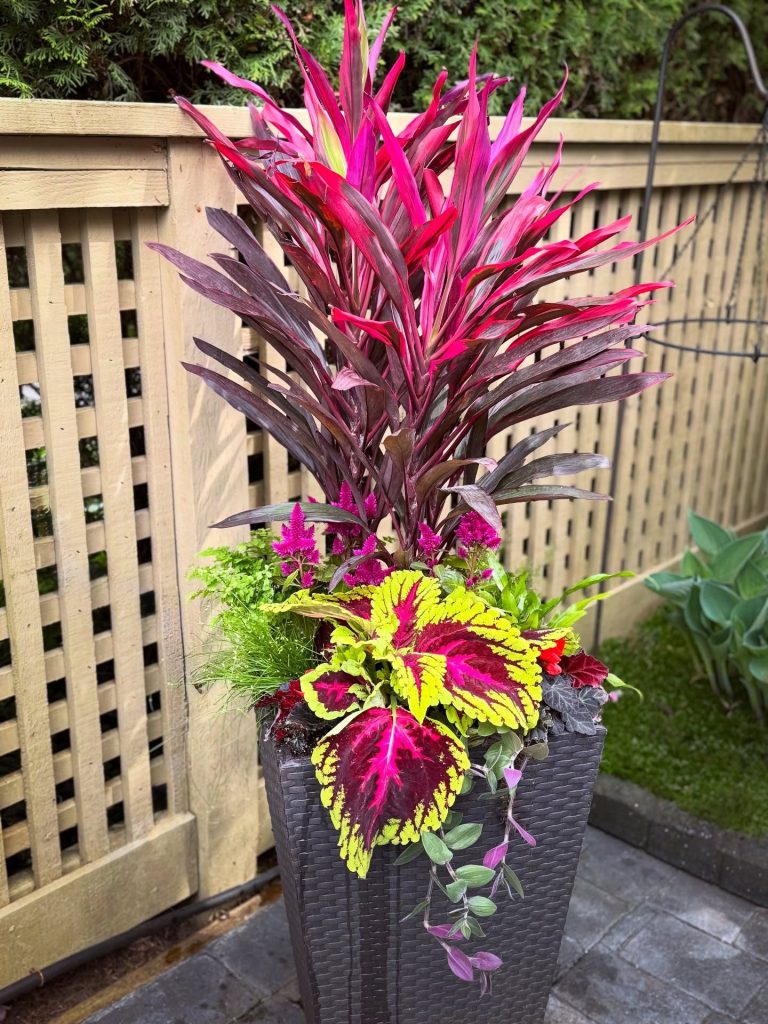
Ti plant earns its spot for foliage alone. The leaves come in deep magenta and burgundy tones that hold their color year-round, no flowering required.
It handles part sun to shade, which makes it useful for the parts of your fence line that don’t get full sun all day. Use it to break up the greens from your palms and add depth to the planting.
4. Bird of Paradise
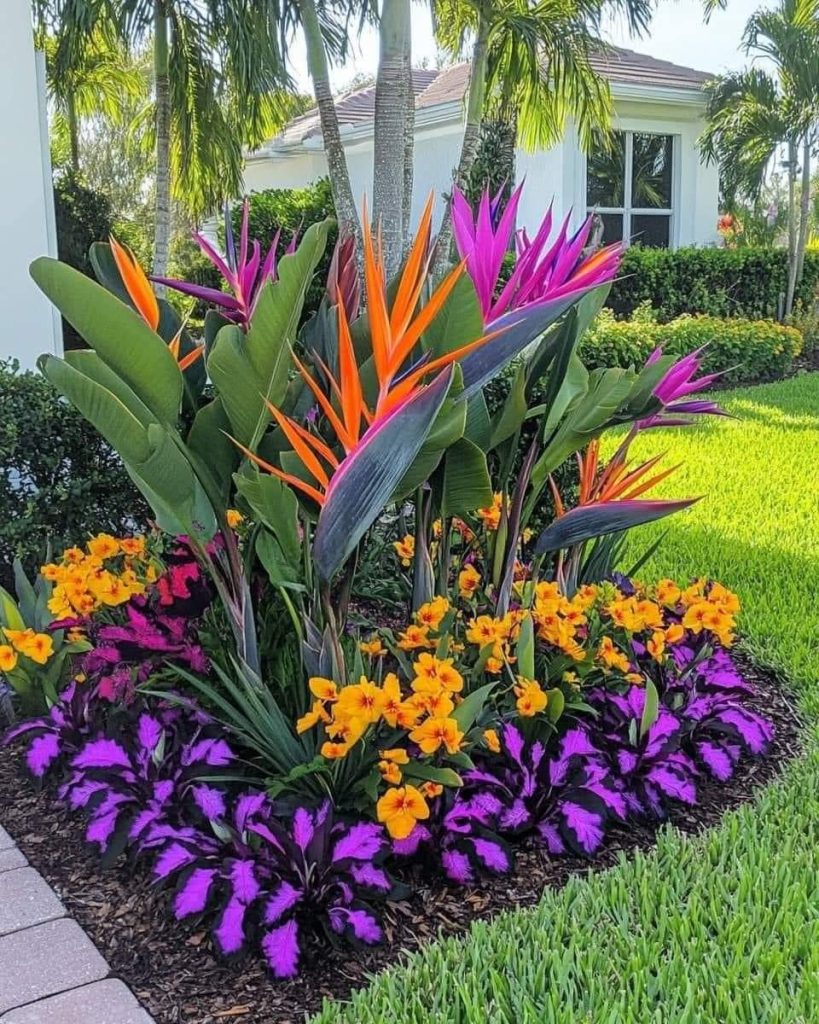
Bird of paradise is the plant people photograph. Its orange and blue blooms look almost unreal, and it’s become the go-to symbol for tropical landscaping in the US.
It wants full sun and takes a couple of years to mature into flowering size, so plant it early and be patient. Once established, it’s a low-water, low-fuss performer.
5. Croton
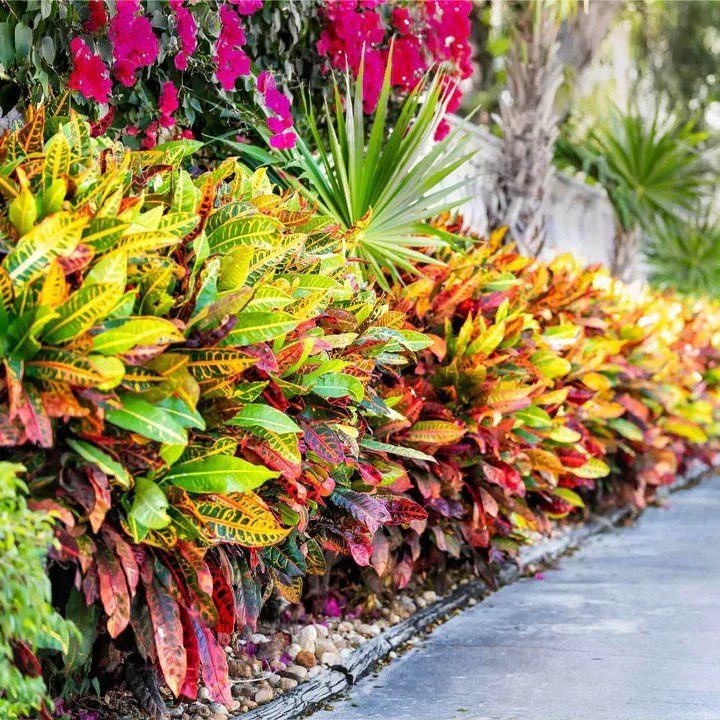
Croton is where you can really go wild with color. There are over 800 varieties, and the leaves alone come in combinations of red, orange, yellow, and green without a single flower involved.
Full sun brings out the most intense coloring. Because the color comes from the foliage rather than blooms, croton gives you consistent visual interest through every season, not just when it happens to flower.
6. Dwarf Ixora
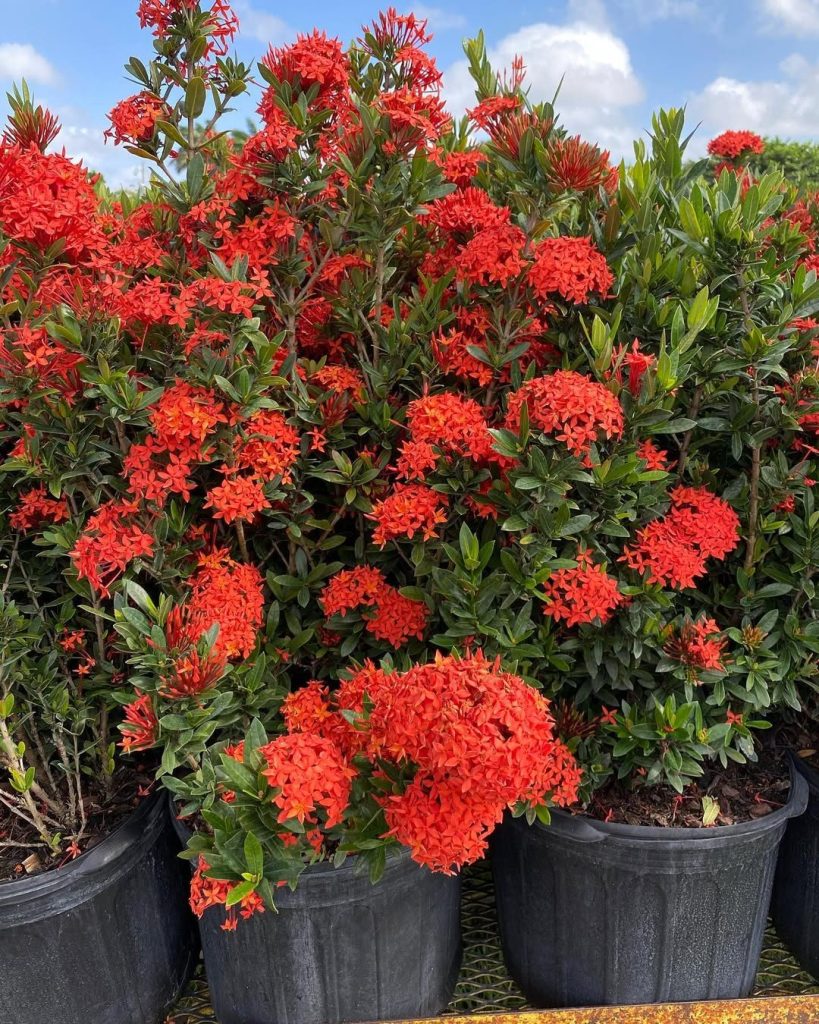
Dwarf ixora is a compact, dense shrub that stays tidy without constant pruning, which makes it a good choice for filling in lower gaps along a fence line.
In full sun, it produces clusters of small blooms in shades of orange and red that contrast nicely against the darker foliage of croton and ti plant nearby.
7. Pentas
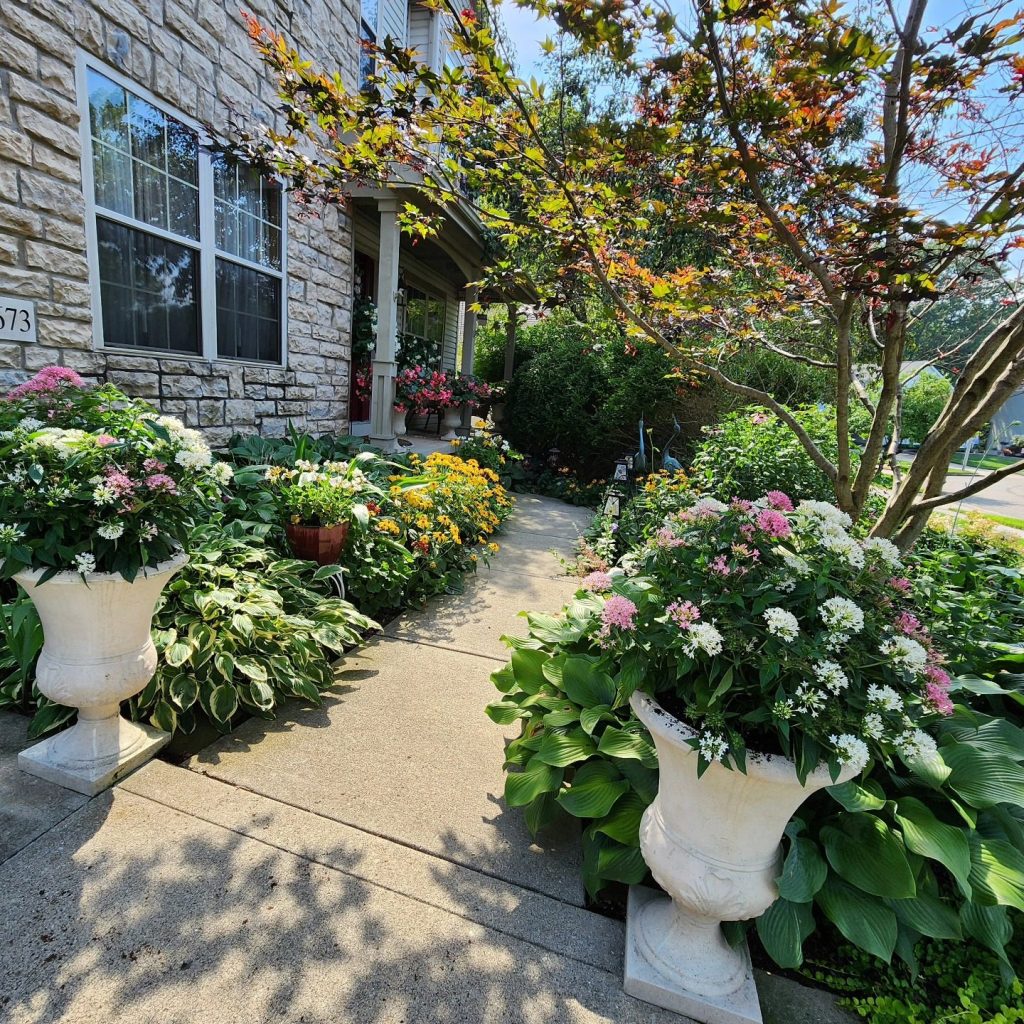
If you want pollinators in your garden, pentas is the plant to add. It’s a genuine butterfly magnet, and monarchs in particular are drawn to its clustered pink, red, and white blooms.
Plant it in full sun toward the front of your border, both for the visual layering and because you’ll want a clear view of the butterfly activity it attracts.
8. New Guinea Impatiens
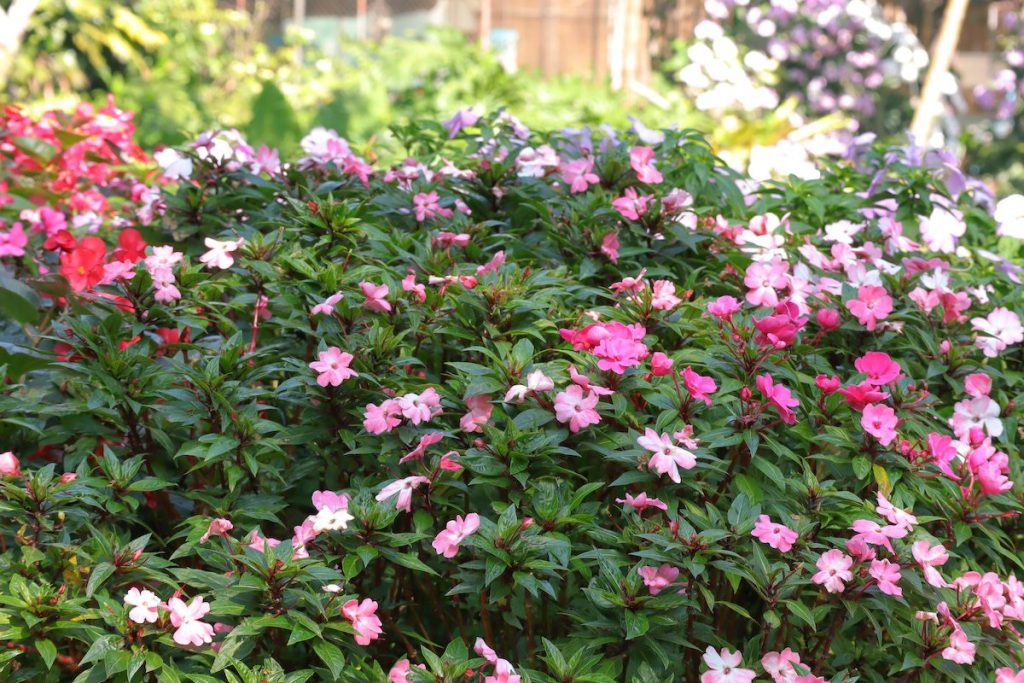
For the shadier stretches along your fence, New Guinea impatiens fills the gap that most sun-loving tropicals can’t. It thrives in part to full shade and still delivers strong pink and magenta color, so you don’t end up with a dull patch just because that section of fence doesn’t get much light.
It’s rated for Zones 10-11, one zone tighter than most of the others on this list, so check your zone before relying on it outdoors.
How to Layer These Plants Along a Fence
The most common mistake with fence line gardens is planting everything at the same height in a single row. That reads flat, even with great plants. Instead, think in three layers.
- Back layer: Areca palm for height and movement against the fence itself.
- Middle layer: Bird of paradise, ti plant, and croton for structure and bold color at eye level.
- Front layer: Dwarf ixora, hibiscus, and pentas along the border, with New Guinea impatiens filling any shaded pockets.
This layering gives the eye somewhere to travel, from tall palms down to ground-level color, and it mimics how these plants actually grow together in their native tropical settings.
Five Things to Get Right After Planting
- Mulch 3 to 4 inches deep. In hot climates, mulch isn’t optional. It keeps roots cool through summer heat and holds moisture in the soil between waterings, which matters a lot for a bed this densely planted.
- Deep water weekly rather than a little every day. Frequent light watering encourages shallow roots that struggle in heat and wind. A deep, less frequent soak trains roots to grow down, which makes the whole bed more drought-tolerant once established.
- Prune after bloom, not on a monthly schedule. Many of these tropicals, hibiscus and bird of paradise especially, set next season’s buds on growth you’d be cutting off if you’re pruning too often. Wait until a bloom cycle finishes before you shape the plant.
- Feed in spring and summer with a slow-release tropical fertilizer. These plants are heavy growers during the warm months and need the nutrients to support all that foliage and flowering. Cut back on feeding once temperatures drop and growth naturally slows.
- Give it a full season before judging the results. Tropical plantings look sparse the first few months. By the second growing season, once root systems are established and palms have put on real height, the bed fills in dramatically. Patience here pays off more than almost anything else on this list.
Growing Tropical in a Cooler Climate
If you’re outside Zones 9-11, you can still get most of this look. Grow areca palm, ti plant, and croton in large containers you can move onto a patio or porch for summer, then bring indoors before the first frost.
Hibiscus and bird of paradise also do well as container plants, though bird of paradise will take longer to reach flowering size in a pot than it would in the ground. You’ll lose a bit of the lush, in-ground density, but the color and foliage impact carry over just fine.
The Bottom Line
A tropical fence line garden isn’t about finding one showstopping plant. It’s about layering height, foliage color, and bloom color so that every part of the bed is doing something.
Palms for structure, bold foliage plants like ti plant and croton for color that never fades, and flowering shrubs like hibiscus and pentas for seasonal bursts and pollinator traffic.
Get the layering and care basics right, and that once-bare fence line becomes the part of the yard everyone notices first.