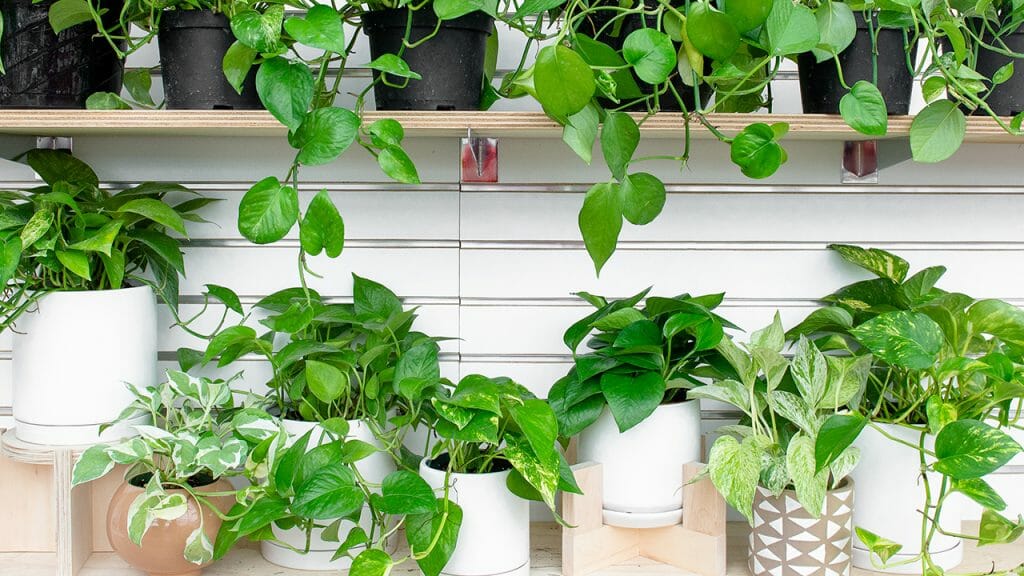

The money tree, lucky bamboo, and jade plant are the three houseplants most traditionally associated with wealth in feng shui, and all three tolerate beginner care well. Each one pairs a prosperity story with forgiving habits, so you get the symbolism without a fussy plant.
🧭 What feng shui actually is
Feng shui is a Chinese practice of arranging your surroundings to support the flow of chi, or life energy. Living plants represent the Wood element, which is linked with growth, vitality, and abundance. Schools and teachers interpret the details differently, so treat these plants as traditional symbols of prosperity and harmony. They are not proven sources of luck, and no plant will change your bank balance.
One practical point applies to every plant below: a thriving plant carries the symbolism, while a struggling one undercuts it. Light and watering come first. You’ll be able to match a plant to your room, your routine, and your household, then place it with intention.
⭐ Quick picks
- Best for wealth symbolism: Money Tree
- Best for low light: Snake Plant or Golden Pothos
- Best pet-safer option: Chinese Money Plant or Moth Orchid
- Best for forgetful waterers: Jade Plant
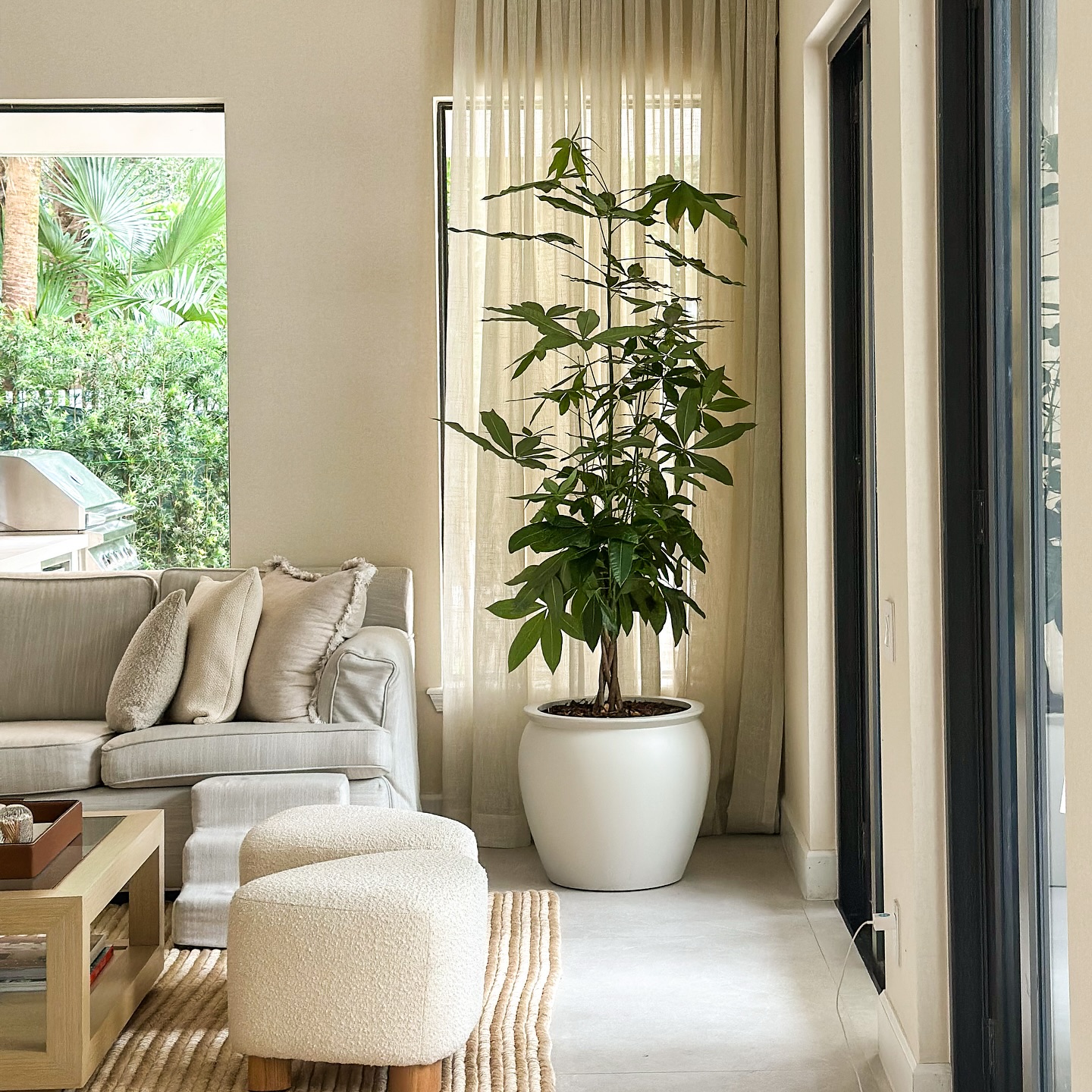
Money Tree
Pachira aquatica
🐾 Pet safe
The money tree is the plant most closely tied to prosperity in feng shui. Its braided trunk is said to “lock in” good fortune, and its leaves usually grow in clusters of five, a number linked to the five elements (Wood, Fire, Earth, Metal, and Water).
Light: Bright, indirect light. An east-facing window or a spot a few feet back from a south or west window works well. Direct afternoon sun scorches the leaves.
Water: Water thoroughly when the top 2 inches of soil feel dry, then let the pot drain completely. Soggy soil is the most common way these plants fail, so a pot with drainage holes is non-negotiable.
Practical tips:
- Rotate the pot a quarter turn every week or two so the canopy grows evenly.
- Dropping leaves after you bring one home is normal; it’s adjusting to new light.
- Keep it away from heating vents and cold drafts.
Pets: The ASPCA lists Pachira aquatica as non-toxic to cats and dogs, which makes it one of the friendlier wealth plants for busy households.
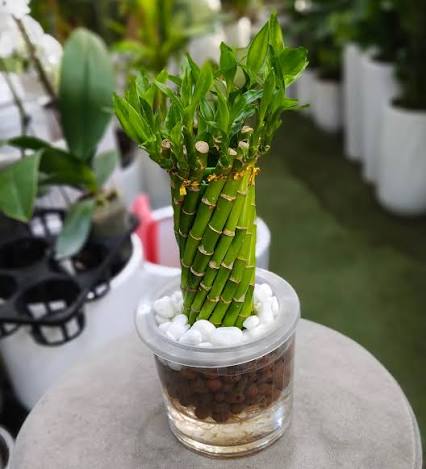
Lucky Bamboo
Dracaena sanderiana
🐾 Toxic to pets
Lucky bamboo belongs to the genus Dracaena. True bamboo is a grass, and the two aren’t related, even though the segmented stalks look alike. In feng shui, the number of stalks carries meaning: two for love, three for happiness and long life, five for wealth. Four is traditionally avoided because the word sounds like “death” in Chinese.
Light: Moderate, indirect light. Strong sun yellows the leaves quickly.
Water: Grow it in water or soil. In water, keep roots covered and change the water every week or two. Filtered or distilled water helps if your tap water is heavily treated, since lucky bamboo is sensitive to chlorine and fluoride, which show up as brown leaf tips.
Practical tips:
- A few pebbles in the vase steady the stalks and add the Earth element.
- Rinse the vase when you change the water to slow algae.
- A yellow stalk won’t recover; remove it so the others stay healthy.
Pets: Dracaena species are toxic to cats and dogs, causing vomiting and drooling, so set arrangements on a high shelf if you have animals.
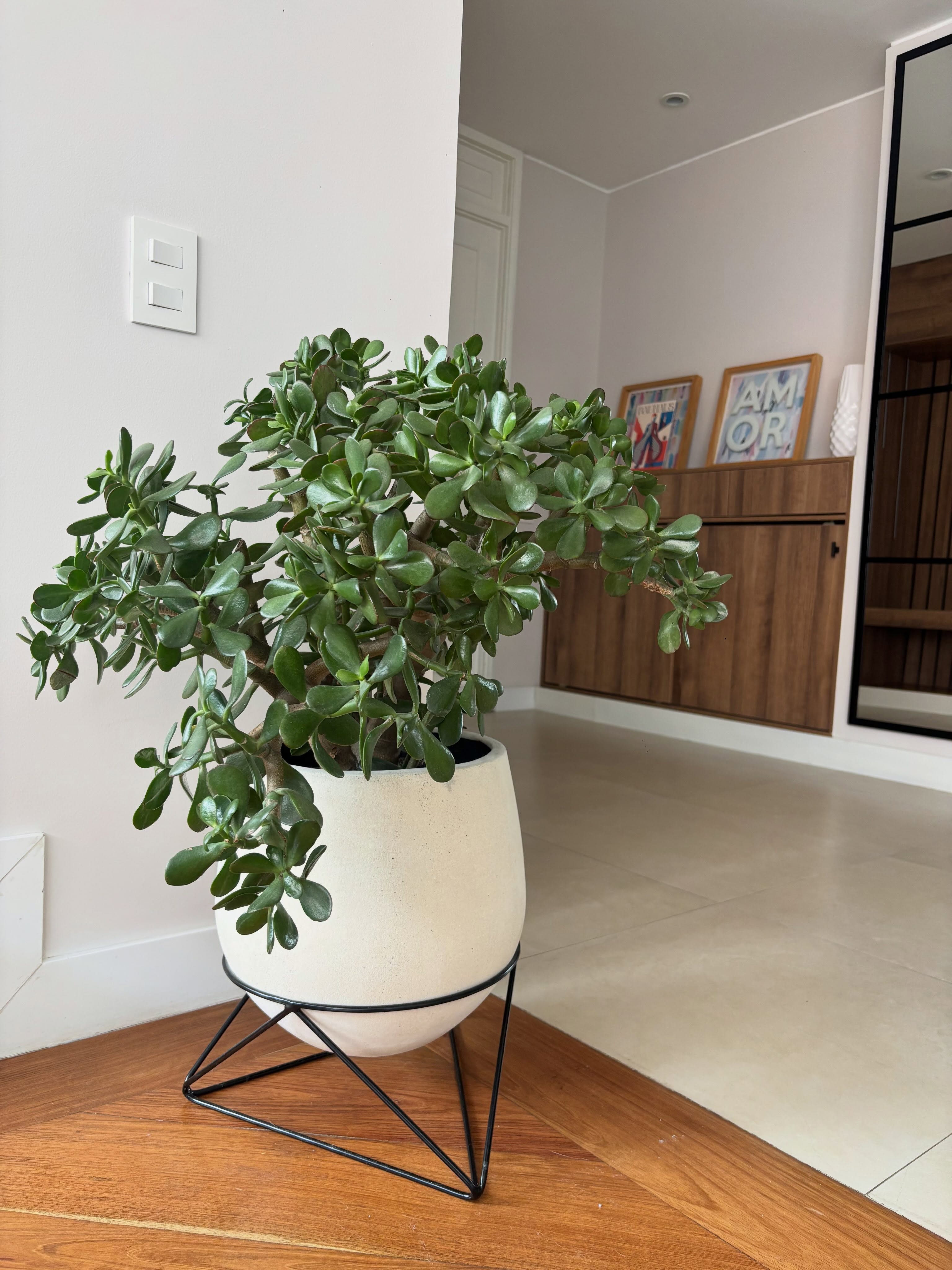
Jade Plant
Crassula ovata
🐾 Toxic to pets
Round, coin-shaped leaves earned the jade plant its nickname, the “money plant,” and its association with steady, accumulating wealth. Because it’s a succulent that lives for decades, it also symbolizes long-term growth, which suits a gift for a new home or business.
Light: At least four hours of bright light, including some direct sun. A south- or west-facing window is ideal. In low light, jade stretches and turns leggy.
Water: Water deeply, then wait until the soil is fully dry. In winter that might mean once every three or four weeks. Wrinkled leaves mean it’s thirsty; soft, translucent leaves mean too much water.
Practical tips:
- Use a cactus or succulent mix in a terracotta pot, which wicks away excess moisture.
- Jade gets top-heavy, so choose a pot that’s wide and stable.
- Pinch growing tips to encourage a fuller, tree-like shape.
Pets: Jade is toxic to cats and dogs and can cause vomiting and lethargy. Keep it out of reach, especially around curious kittens.
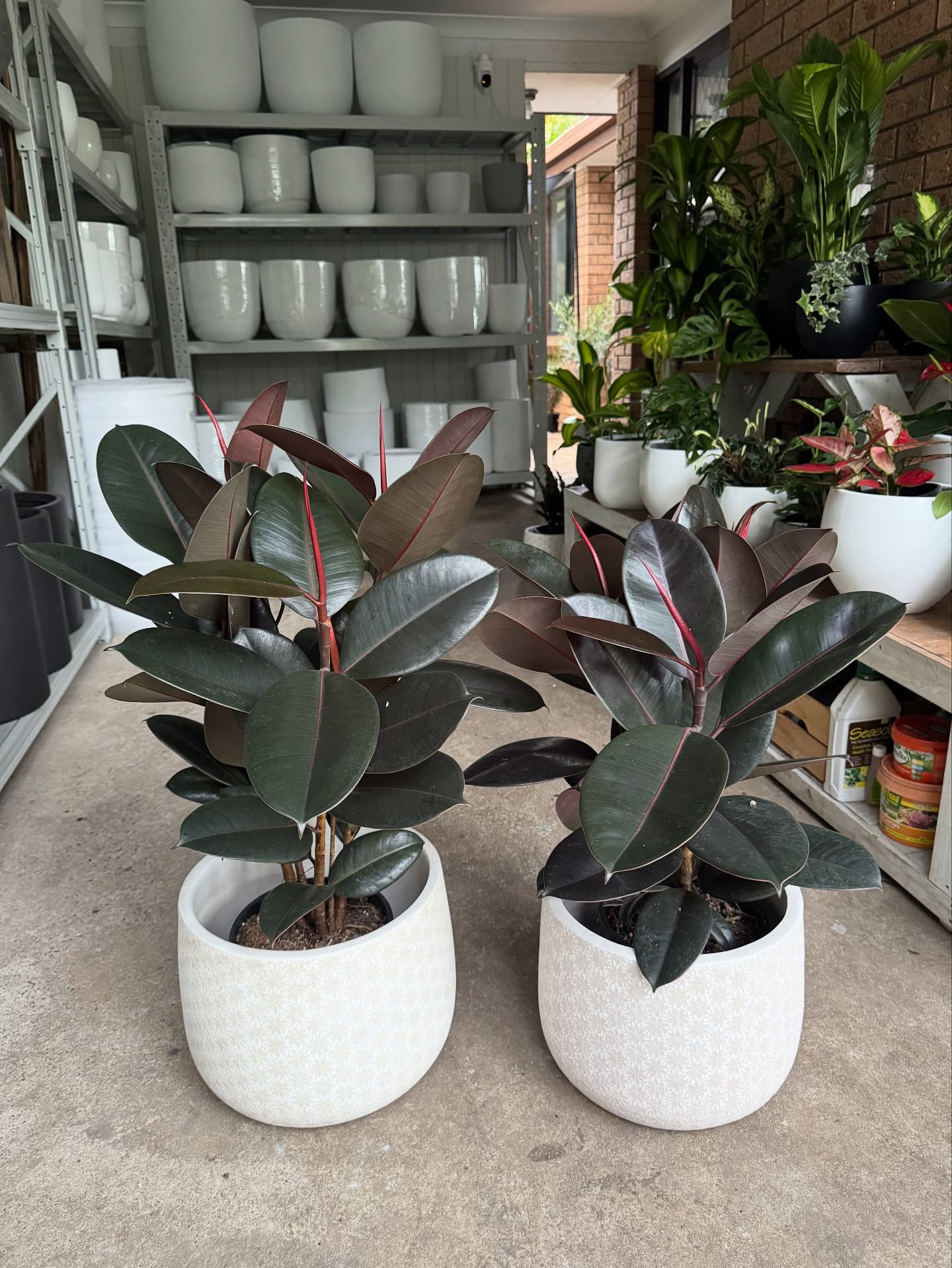
Rubber Plant
Ficus elastica
🐾 Toxic to pets
Feng shui practitioners favor the rubber plant for its broad, rounded leaves, which echo the coin symbolism of jade on a much larger scale. Its glossy foliage is also said to reflect light and energy around a room, and it makes a strong floor-plant statement in a living room corner.
Light: Bright, indirect light. Burgundy and variegated varieties need more light than plain green ones to hold their color.
Water: Water when the top inch or two of soil is dry. Sudden leaf drop usually points to a change in light, temperature, or watering, so keep its conditions steady.
Practical tips:
- Wipe the leaves with a damp cloth every few weeks. Dust blocks light, and clean leaves keep that shine feng shui fans like.
- Wear gloves when pruning; the milky sap irritates skin.
- Stake taller plants so they grow upright.
Pets: Ficus elastica is toxic to cats and dogs. The sap causes mouth irritation and stomach upset, so place it where pets can’t chew the leaves.
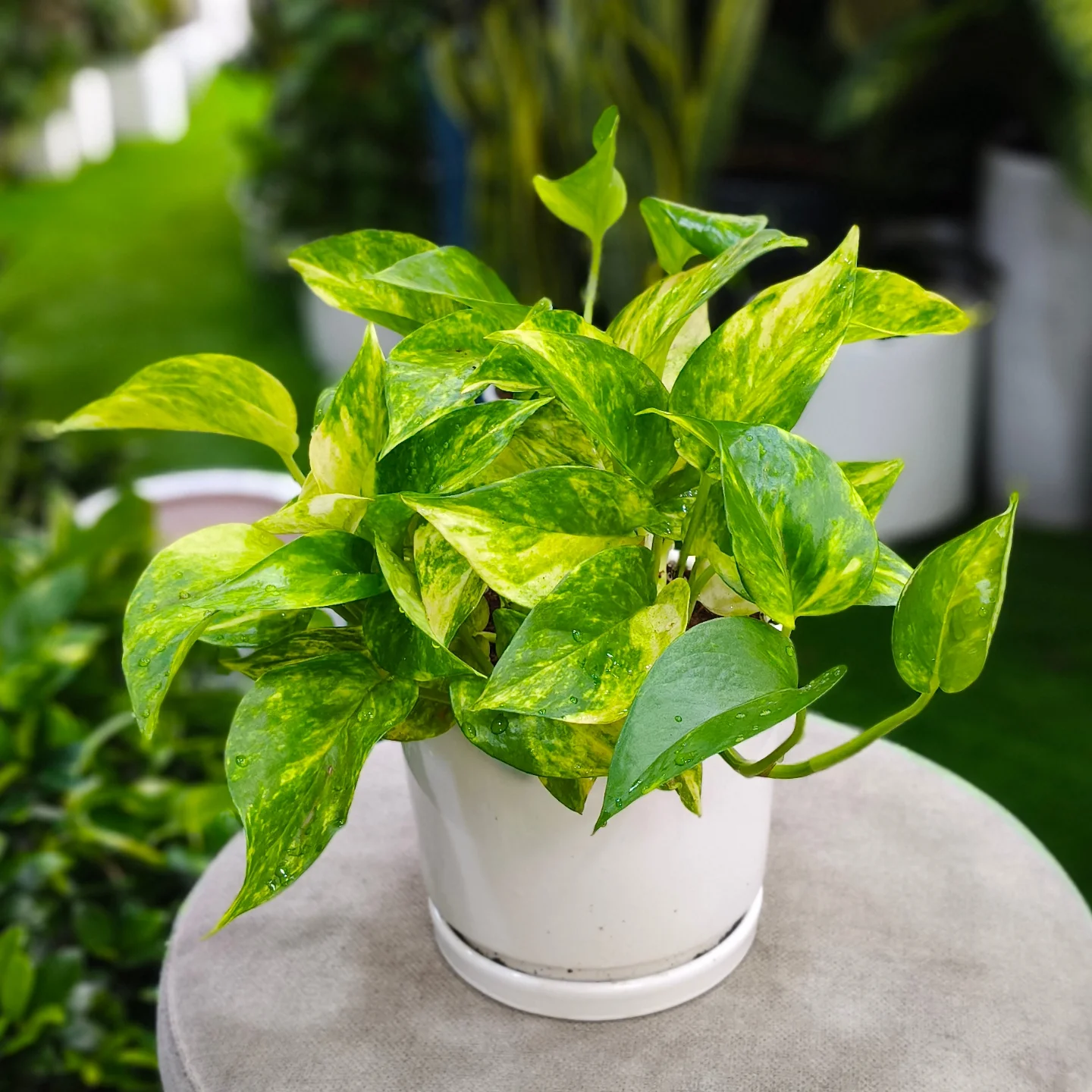
Golden Pothos
Epipremnum aureum
🐾 Toxic to pets
Golden pothos represents persistence and abundance in feng shui, thanks to vines that keep growing even in tough conditions. Trailing plants are traditionally used to soften sharp corners and to keep energy moving through awkward spots like the top of a bookshelf or kitchen cabinet.
Light: It handles low to bright indirect light. More light brings out the golden variegation; dim rooms produce greener, slower growth.
Water: Let the top half of the soil dry before watering. Drooping leaves perk up within hours of a drink, which makes pothos a forgiving teacher if you’re still learning your watering rhythm.
Practical tips:
- Snip long vines just below a node and root them in water to fill out the pot or share with friends.
- Trim vines that drag on the floor; overgrown, tangled plants read as stagnant.
- A hanging planter keeps it tidy and out of reach.
Pets: Pothos contains calcium oxalate crystals and is toxic to cats and dogs, causing mouth irritation, drooling, and vomiting.

Snake Plant
Dracaena trifasciata
🐾 Toxic to pets
Snake plant is the most debated plant on this list. Some feng shui teachers value its upright leaves as protective energy that suits entryways and offices. Others caution that sharp, pointed leaves create “cutting” energy and keep it away from bedrooms and seating areas where people rest. Both views are traditional, so choose based on the school you follow and how the plant feels in your space.
Light: Tolerates low light and also grows happily in bright indirect light.
Water: Water only when the soil is completely dry, often every two to four weeks. Overwatering causes mushy bases and root rot.
Practical tips:
- A heavy, wide pot prevents tall varieties from tipping.
- Cultivars like ‘Hahnii’ (bird’s nest) have shorter, rounder rosettes if pointed leaves bother you.
- Popular claims about purifying a room’s air don’t hold up at home scale; you’d need far more plants than any house holds.
Pets: Snake plant is toxic to cats and dogs, causing nausea and vomiting.
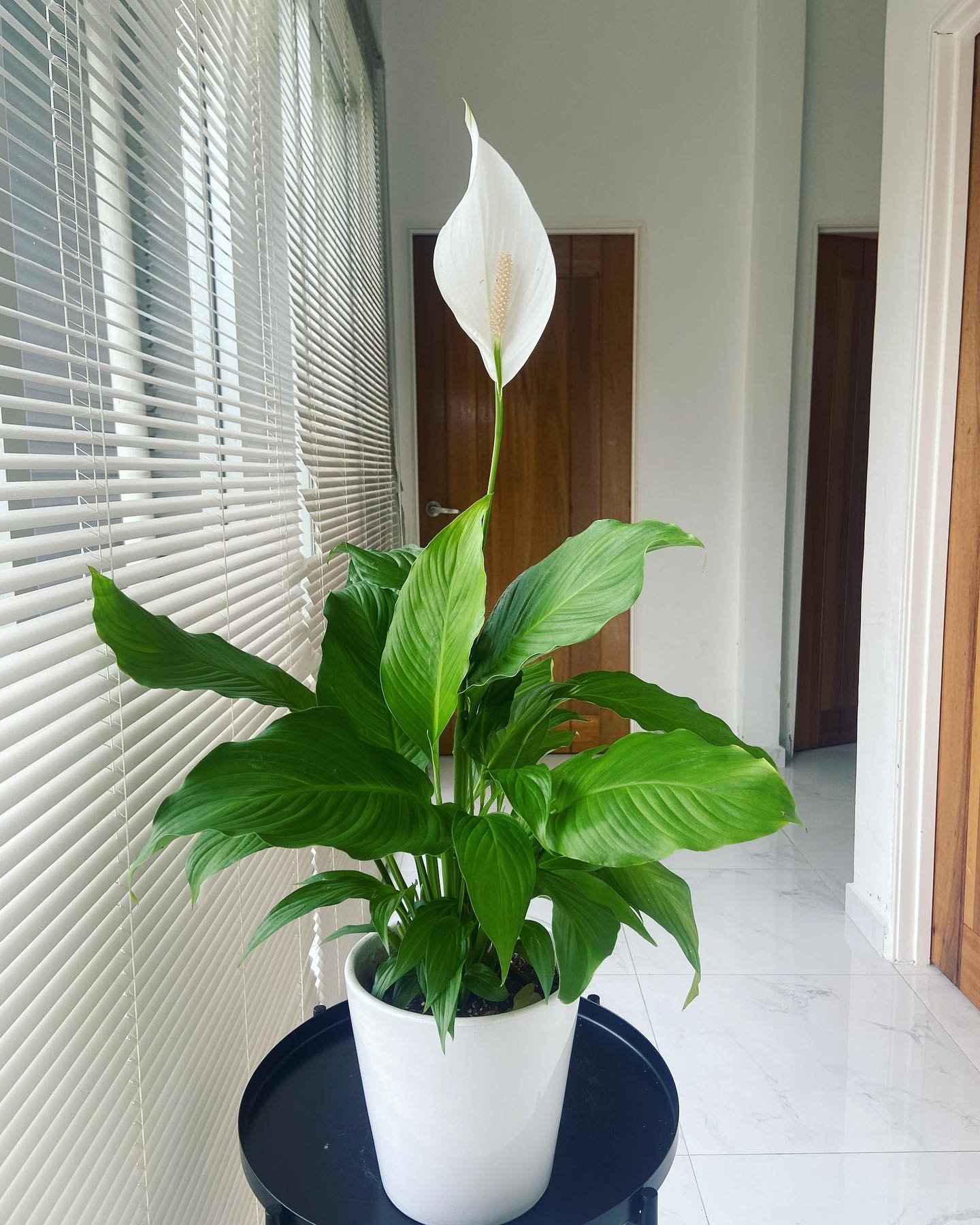
Peace Lily
Spathiphyllum
🐾 Toxic to pets
White blooms make the peace lily a traditional symbol of calm, harmony, and fresh starts. Many people place one in a living room or home office after a stressful stretch, and it’s a common sympathy gift for the same reason.
Light: Medium to low indirect light. It survives dim corners, but you’ll get more flowers in brighter filtered light.
Water: Keep the soil lightly moist. The plant wilts dramatically when thirsty, then recovers within a few hours of watering, so it signals its needs clearly.
Practical tips:
- Remove spent flowers at the base of the stalk to keep it looking fresh.
- Brown leaf tips often come from dry air or mineral-heavy tap water.
- Repot when roots circle the pot; crowded peace lilies dry out fast.
Pets: Despite the name, peace lily isn’t a true lily, so it doesn’t carry the kidney danger that Lilium species pose to cats. It still contains calcium oxalate crystals and causes painful mouth irritation and drooling in cats and dogs, so keep it out of reach.
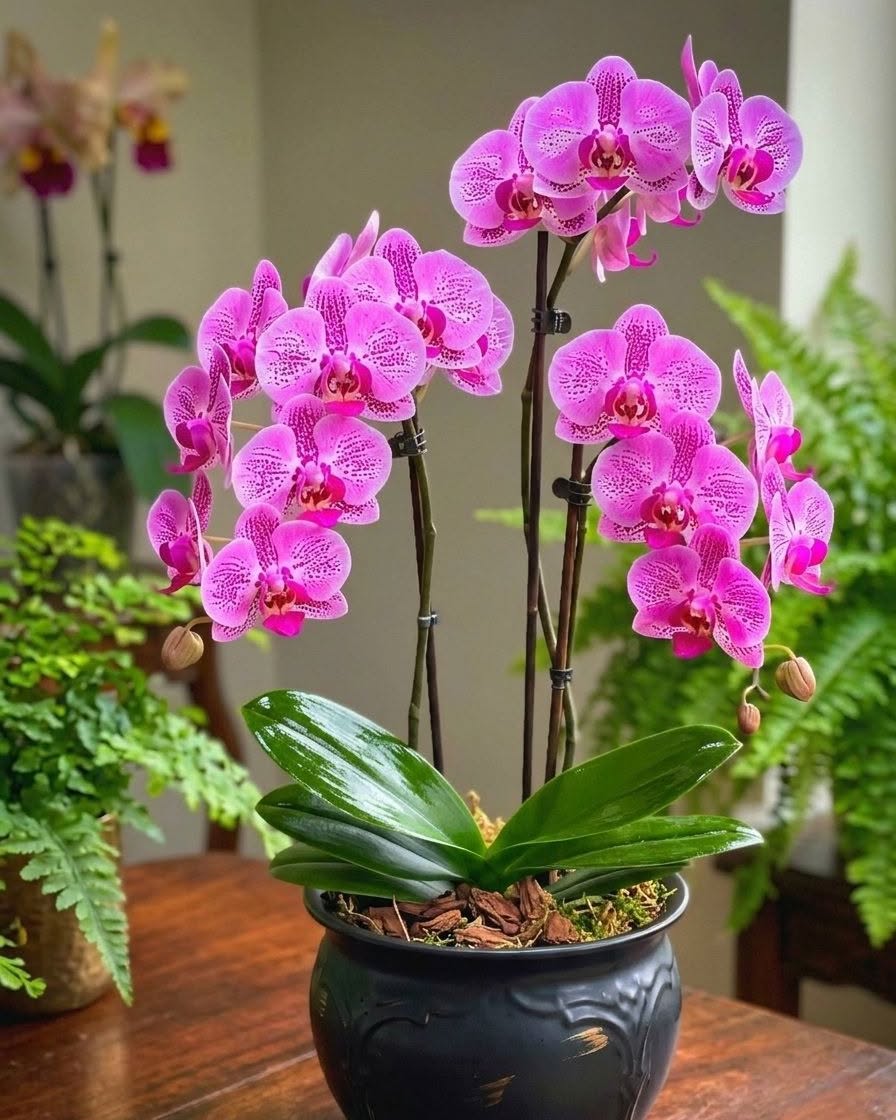
Moth Orchid
Phalaenopsis
🐾 Pet safe
Moth orchids are traditionally linked with love, fertility, and refinement in feng shui, which makes them a favorite for bedrooms and the relationship area of the home. Their long-lasting blooms, often holding for two to three months, also make them an easy way to add color without much effort.
Light: Bright, indirect light, such as an east-facing window. Dark green, floppy leaves suggest too little light; yellowish, reddish leaves suggest too much.
Water: Water when the bark mix is nearly dry, roughly once a week, and let it drain fully. Never let the roots sit in water. Silvery roots mean it’s time to water; green roots mean it’s fine.
Practical tips:
- Grow it in orchid bark or sphagnum moss, never regular potting soil.
- After blooms drop, cut the spike above a node to encourage a second flush, or remove it entirely so the plant rests.
- A drop in night temperature in fall helps trigger reblooming.
Pets: The ASPCA lists Phalaenopsis orchids as non-toxic to cats and dogs, so they’re a safe choice for a pet-friendly bedside table.
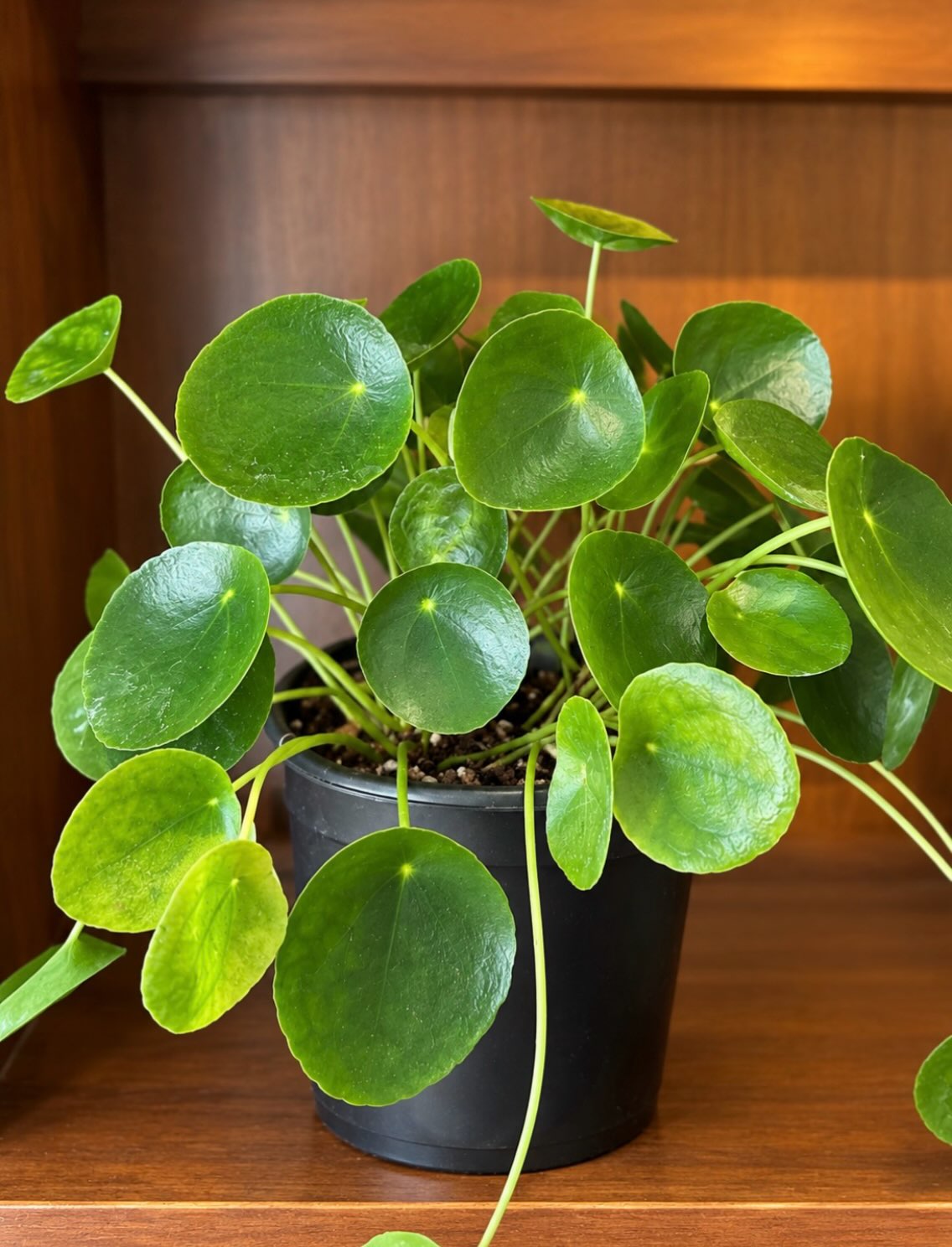
Chinese Money Plant
Pilea peperomioides
🐾 Pet safe
The Chinese money plant and the money tree are different plants. Pilea peperomioides is a small, bushy plant with round, pancake-like leaves on thin stems, while the money tree (Pachira aquatica) is a tropical tree with a braided trunk. Pilea’s coin-shaped leaves give it its prosperity symbolism, and its habit of producing baby plants links it to sharing and growing abundance.
Light: Bright, indirect light. It leans hard toward the window, so rotate it weekly to keep it symmetrical.
Water: Water when the top inch or two of soil is dry. Curling or drooping leaves usually mean too much or too little water, so check the soil before reacting.
Practical tips:
- Separate offsets once they have a few leaves and pot them up; giving them away fits the plant’s generous symbolism.
- Avoid harsh direct sun, which bleaches the leaves.
- A compact size suits desks and narrow windowsills.
Pets: Pilea is considered non-toxic to cats and dogs, making it a good small-space pick for pet owners.
Start with your light, then your schedule, then your household. A plant that suits all three stays healthy, and a healthy plant is the whole point in feng shui.
| Plant | Light Needs | Watering | Care Level | Pet Safe (ASPCA) |
|---|---|---|---|---|
| Money Tree | Bright indirect | When top 2″ dry | Easy | Yes |
| Lucky Bamboo | Moderate indirect | Change water every 1-2 weeks | Easy | No |
| Jade Plant | Bright, some direct | When fully dry | Easy | No |
| Rubber Plant | Bright indirect | When top 1-2″ dry | Moderate | No |
| Golden Pothos | Low to bright | When half dry | Very easy | No |
| Snake Plant | Low to bright | When fully dry | Very easy | No |
| Peace Lily | Low to medium | Keep lightly moist | Easy | No |
| Moth Orchid | Bright indirect | Weekly, drain fully | Moderate | Yes |
| Chinese Money Plant | Bright indirect | When top 1-2″ dry | Easy | Yes |
How Much Natural Light Does Your Space Receive?
Spend a day noticing where sunlight lands. In US homes, south-facing windows get the strongest, longest light, west windows bring hot afternoon sun, east windows offer gentle morning light, and north windows stay dim but steady.
Use a simple test: hold your hand a foot above the spot at midday. A crisp, sharp shadow means bright light; a soft, fuzzy shadow means medium; barely any shadow means low light.
- Bright spots: jade plant, rubber plant, money tree, moth orchid, Chinese money plant
- Medium spots: lucky bamboo, peace lily
- Low spots: snake plant, golden pothos
If your best window is limited, a basic LED grow light on a timer for 10 to 12 hours a day opens up more options.
Which Plants Fit Your Care Routine?
Be honest about your habits. If you travel often or forget to water, choose plants that store water: jade and snake plant can go weeks between waterings.
If you like a regular check-in, peace lily and Chinese money plant reward weekly attention and tell you clearly when something is off. Moth orchids suit people who enjoy a small ritual, like soaking the pot and draining it on the same day each week.
Overwatering kills more houseplants than neglect does. When in doubt, push a finger into the soil before you pour, and use pots with drainage holes. If a plant struggles, don’t take it as a bad omen; adjust the light or watering and give it a few weeks.
Which Plants Are Safer Around Pets and Children?
Three plants on this list are listed as non-toxic to cats and dogs by the ASPCA: the money tree, moth orchid, and Chinese money plant. Start with those if you share your home with animals.
The other six (lucky bamboo, jade, rubber plant, pothos, snake plant, and peace lily) are toxic to pets. Most cause mouth irritation, drooling, or vomiting if chewed. The same plants can irritate a toddler’s mouth or stomach, and rubber plant sap bothers sensitive skin.
You can still enjoy them with a few precautions:
- Use hanging planters or high shelves for trailing and toxic plants.
- Pick up fallen leaves promptly.
- Keep the ASPCA Animal Poison Control Center number, (888) 426-4435, and Poison Control, 1-800-222-1222, saved in your phone.
Put wealth-associated plants in your home’s wealth area, then use other plants to welcome energy at the entrance and soften busy rooms. Where you place a plant depends partly on which feng shui method you follow, so pick one approach and use it consistently.
How Do You Find Your Wealth Area With a Bagua Map?
The bagua is a grid of nine areas, each linked to a part of life such as wealth, relationships, or career. Two common methods locate them differently.
Western (BTB) bagua: Stand at your front door looking in. Lay a three-by-three grid over your floor plan with the bottom row along the front wall. The far-left corner is the wealth and prosperity area. You can apply the same grid to a single room, using its doorway.
Compass (classical) bagua: Use a compass to find directions. The southeast part of your home, or of a room, is associated with wealth.
Many Western readers start with the BTB method because it doesn’t require a compass reading. Either way, a money tree, jade plant, or five-stalk lucky bamboo is the classic choice for this spot. Purple or green pots echo the wealth area’s traditional colors.
Where Can Plants Complement Entrances and Living Spaces?
Feng shui treats the front door as the “mouth of chi,” where energy enters. A pair of healthy plants flanking the door, or one inside the entry, gives a welcoming feel. Snake plants are a common entry choice for those who see their upright leaves as protective.
In living rooms, rounded leaves suit gathering spaces: a rubber plant in a corner or a peace lily near seating. Golden pothos softens sharp corners and the tops of tall furniture.
Bedrooms call for calm. Many practitioners keep the number of plants modest there and favor soft shapes, such as a moth orchid on a nightstand. If you follow the view that pointed leaves create cutting energy, keep snake plants out of the bedroom.
When Should Plant Health Take Priority Over Symbolic Placement?
Plant health comes first every time. A jade plant languishing in a dark wealth corner sends the opposite message from the prosperity it’s meant to represent, and most feng shui teachers advise removing dying or dead plants promptly.
If your wealth area gets little light, try these options:
- Choose a low-light plant like golden pothos or snake plant for that corner.
- Rotate two plants between the wealth area and a bright window every week or two.
- Add a small grow light, styled to blend in.
- Use a symbolic stand-in such as a healthy plant photo, a wooden object, or green decor, and keep the live plant where it thrives.
Check new placements after two to three weeks. New growth and firm leaves mean the spot works; yellowing, drooping, or leggy stems mean it’s time to move the plant somewhere brighter or adjust your watering.