You know that thing where some houses just look right, but you can’t quite put your finger on why? Often, it’s the planting around the base. 🏡
Foundation planting is what softens the transition between your house and the ground. Without it, buildings can look a bit stark – like they’ve been plonked down without much thought. But add the right mix of shrubs, perennials, and maybe a small tree or two, and suddenly everything feels more settled, more intentional, more like home.
The good news is you don’t need to be a garden designer to get this right. It’s mostly about choosing plants that suit your conditions (sun, shade, soil type) and thinking about heights and textures. A few well-chosen shrubs can make a bigger difference than a whole garden full of random plants.
We’ve put together a guide to foundation plants that actually work – covering different styles, sizes, and growing conditions. Whether your front garden is sunny or shady, large or tiny, there’s something here that’ll suit. 🌿
Let’s get into it.
1. The Border That Proves Grasses and Flowers Were Made for Each Other

Mixing flowering perennials with ornamental grasses in a foundation border gives you colour and structure at the same time. The grasses hold their shape all year while the flowers do the seasonal work, and the combination feels more dynamic than either would alone. It’s the kind of planting that looks good in June and still looks interesting in November.
The brick edging here is doing something important that often gets overlooked: it creates a clean line between the border and the lawn, which makes even an informal planting look intentional. Without it, everything blurs together and the garden loses its definition. A simple mowing edge like this takes an afternoon to install and makes a permanent difference to how the whole front looks.
2. Dark Siding and Prairie Planting: One of the Best Combos in Front Garden Design
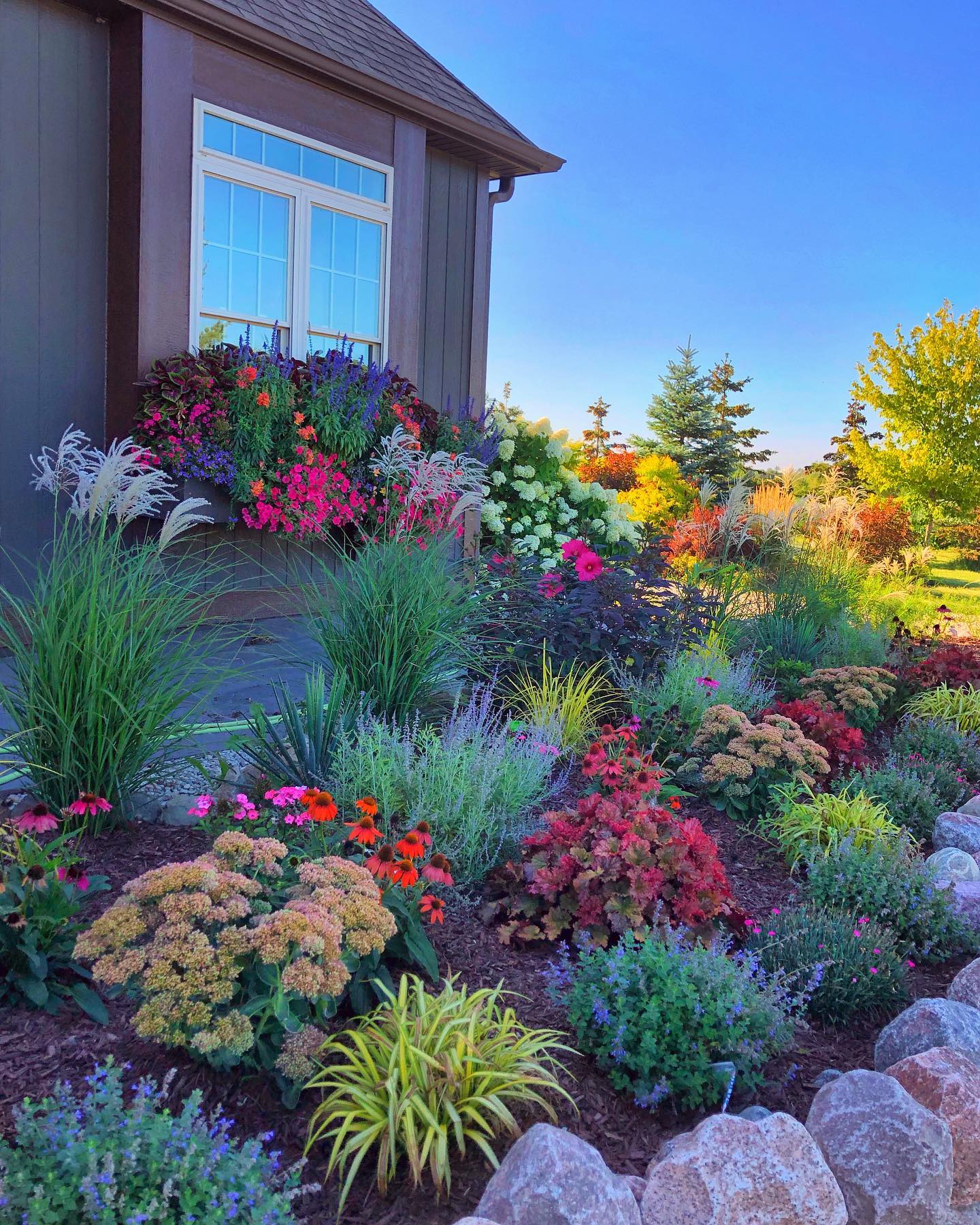
Dark-coloured house exteriors have become increasingly popular, and this planting shows exactly why they work so well with naturalistic foundation planting. The echinacea, sedums and ornamental grasses seem to glow against the deep siding in a way they simply wouldn’t against pale render or white clapboard. The contrast does all the work.
Prairie-style planting is one of the lower-maintenance approaches to foundation borders. These plants largely look after themselves, they flower for months, and they bring insects and birds into the garden throughout the season. The window box above echoing the colours below is a small but satisfying detail that ties the whole exterior together.
3. How Layered Planting Makes a Front Garden Look Designed Rather Than Planted
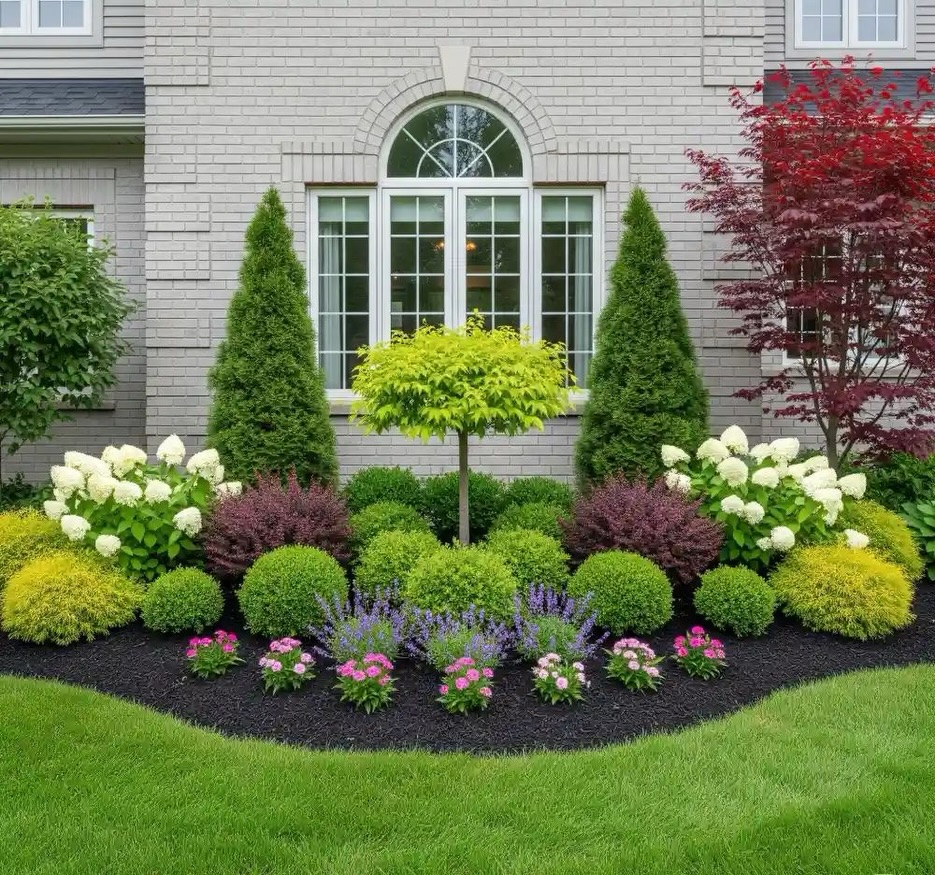
The thing that separates a well-designed foundation border from a random collection of plants is layering: tall at the back, medium in the middle, low at the front. It sounds simple because it is, but it’s the single most effective principle in front garden planting and the reason this setup looks so polished compared to borders that haven’t applied it.
The tall evergreens at the back provide year-round structure. The hydrangeas in the middle tier carry the summer colour. The compact shrubs at the front hold the edge and tie everything to the ground. Dark mulch between the plants suppresses weeds and makes every colour read more vividly — a finishing detail that takes minutes to apply and makes an immediate difference.
4. Alliums and Box Balls: Unexpected Neighbours That Work Brilliantly
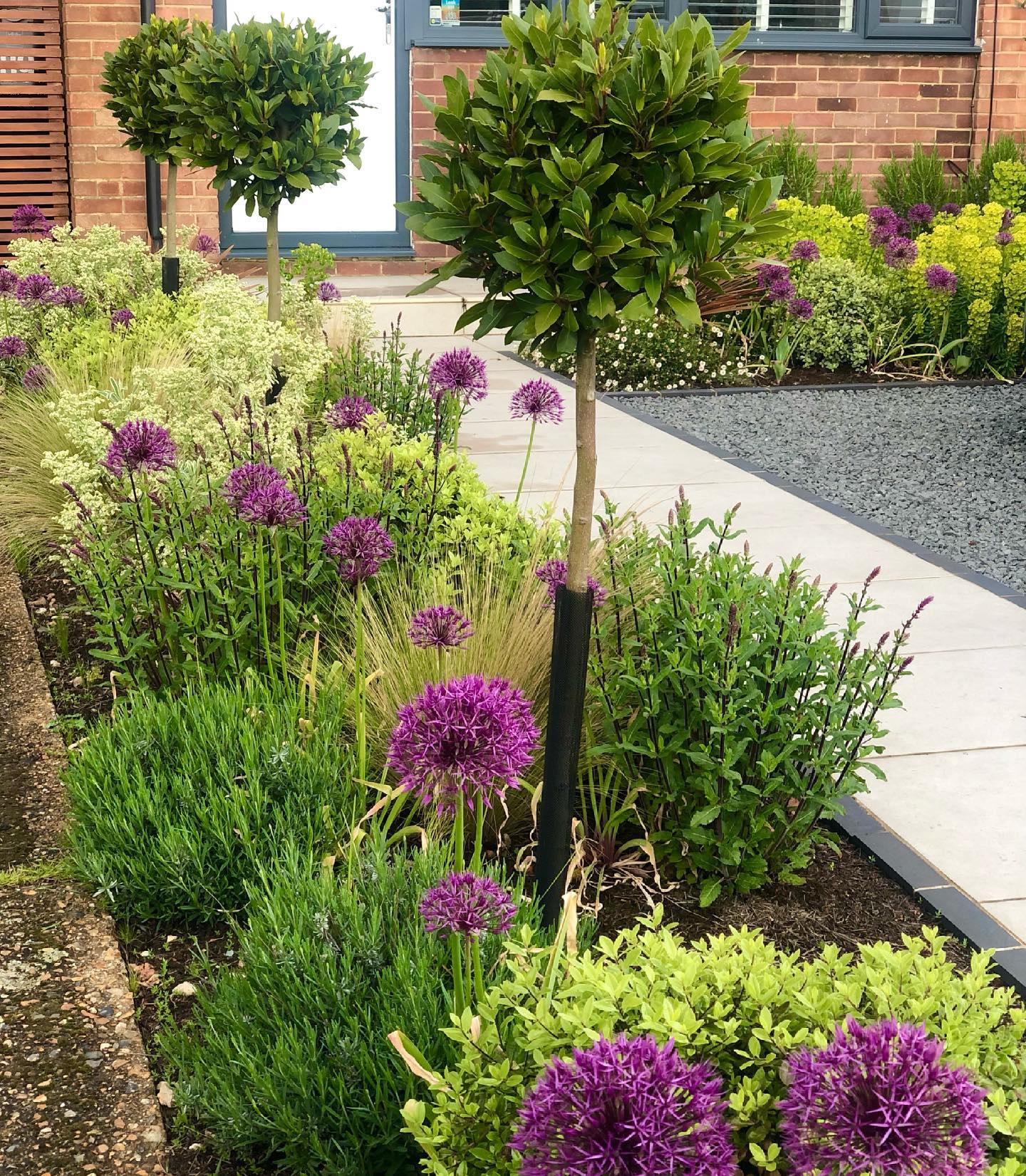
Clipped box provides the bones of a planting — evergreen, architectural, reliably present throughout the year — while alliums provide the seasonal surprise. This combination works so well because the contrast is so complete: one restrained and geometric, the other exuberant and organic. The purple globes floating above the clipped green spheres is a pairing that looks considered without being complicated.
Alliums are one of the most underused plants in front gardens. They’re easy to grow from bulbs planted in autumn, extremely long-lasting in flower, and the seedheads remain ornamental well into autumn. Push them in between your established shrubs in October and by late spring you’ll have this kind of display with almost no effort on your part.
5. Why Every Porch Needs a Flowering Tree Alongside It
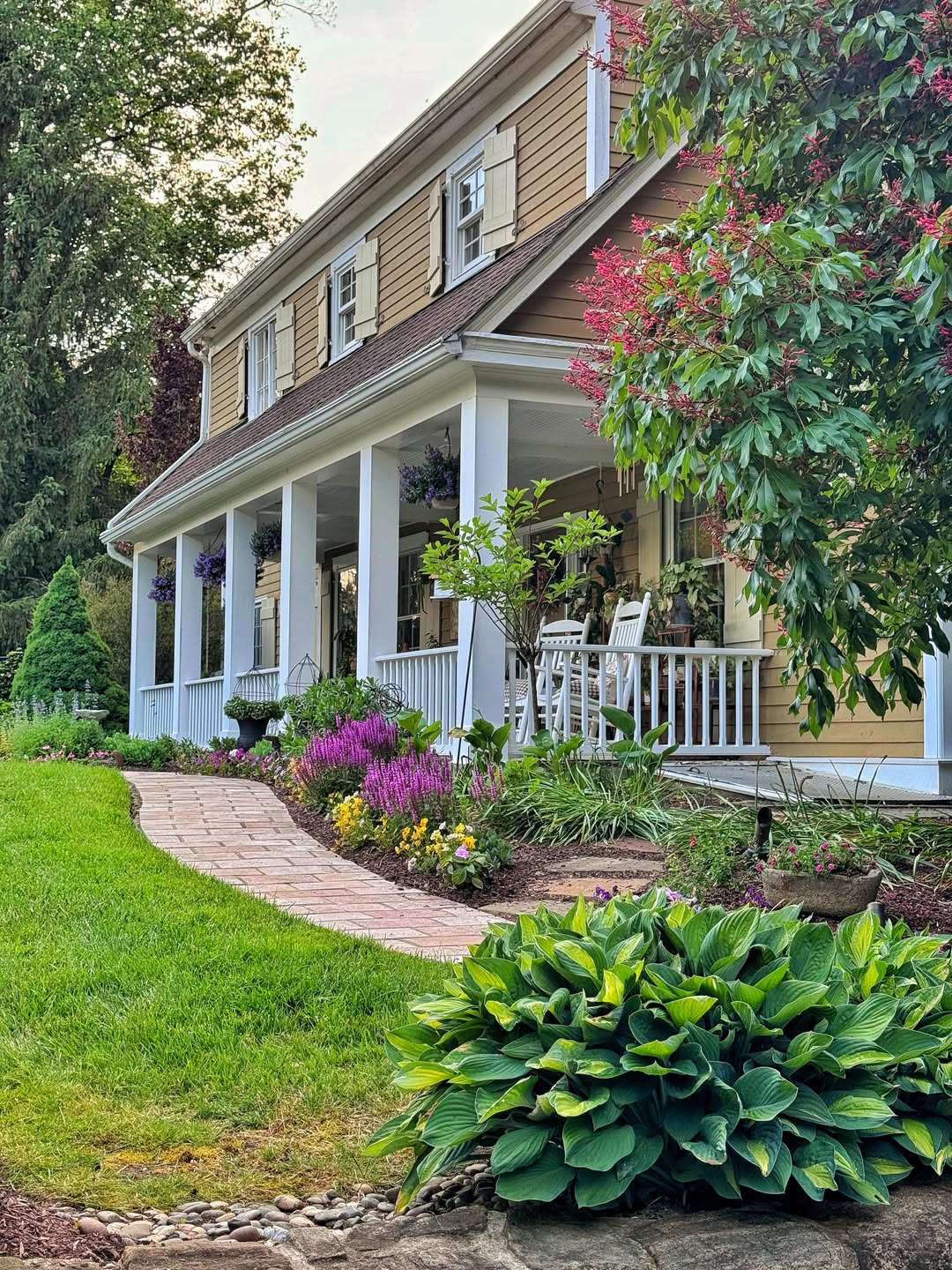
A porch without planting either side can feel exposed and unfinished, like the architecture is floating above the ground rather than growing out of it. Substantial shrubs on either side of the steps solve this immediately — they root the structure visually and create a sense of arrival that a bare path never achieves.
The flowering tree with red blossoms here provides a seasonal focal point that a border of shrubs alone couldn’t deliver. One well-chosen small tree — a crab apple, amelanchier, or ornamental cherry — in the right position can transform the whole character of a front garden while taking up very little space. If your front garden is missing a tree, it’s probably missing its centrepiece.
6. The Quiet Power of a Well-Maintained Evergreen Border
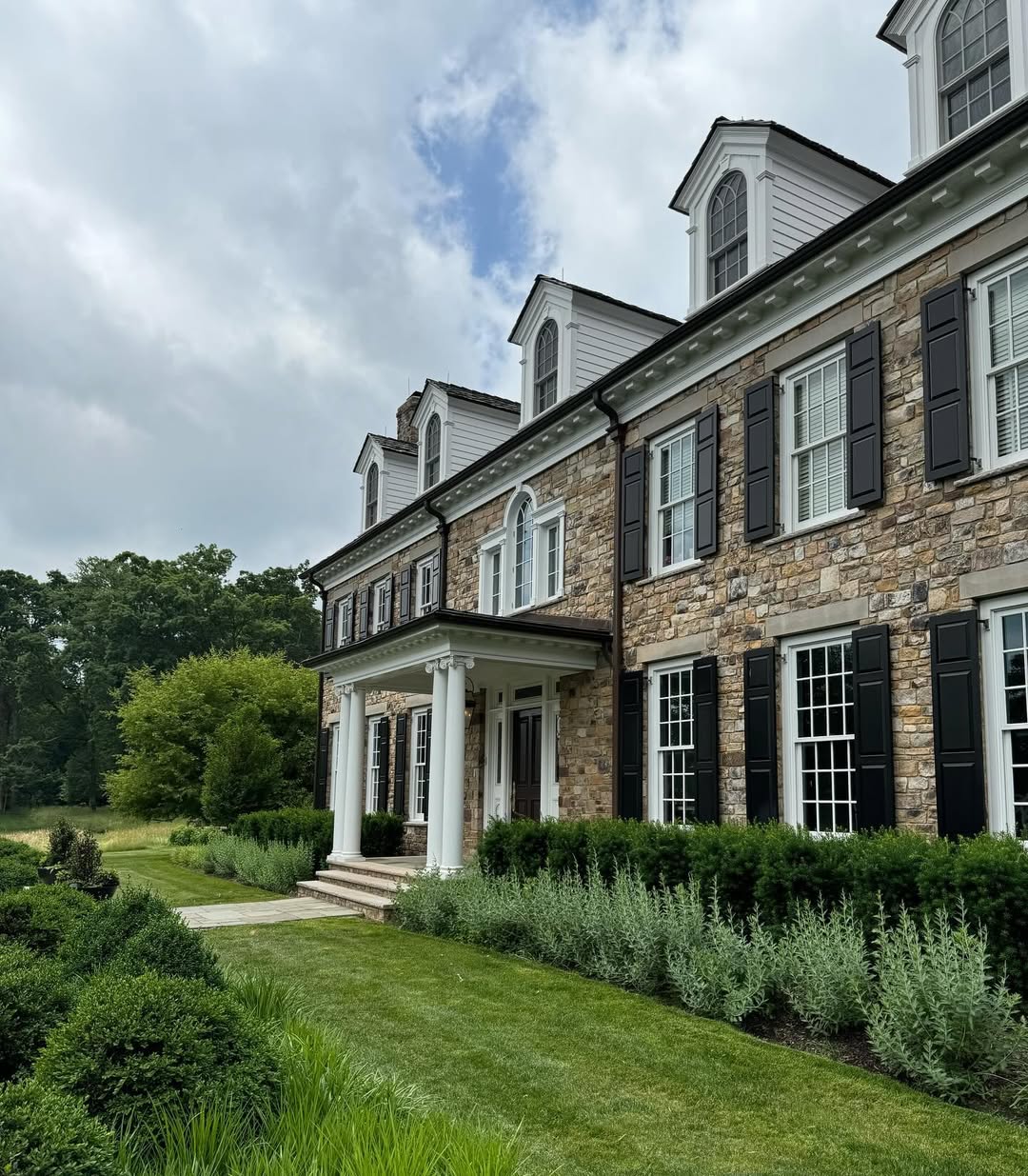
Sometimes the most effective foundation planting is the least showy. A well-maintained row of evergreen shrubs running along the base of a house — clipped, consistent, unfussy — gives a property a finished quality that’s genuinely hard to achieve any other way. The house looks settled. Permanent. Like it belongs exactly where it is.
This approach works particularly well with traditional architecture because it echoes the formal planting schemes these houses were designed to sit within. The dense trees providing a natural boundary on the left are doing important work too — framing the composition and giving the front garden a sense of enclosure without fencing it off entirely. Half an hour with a pair of shears twice a year is the entire maintenance requirement.
7. Hydrangeas Against Timber Siding is a Classic for a Reason
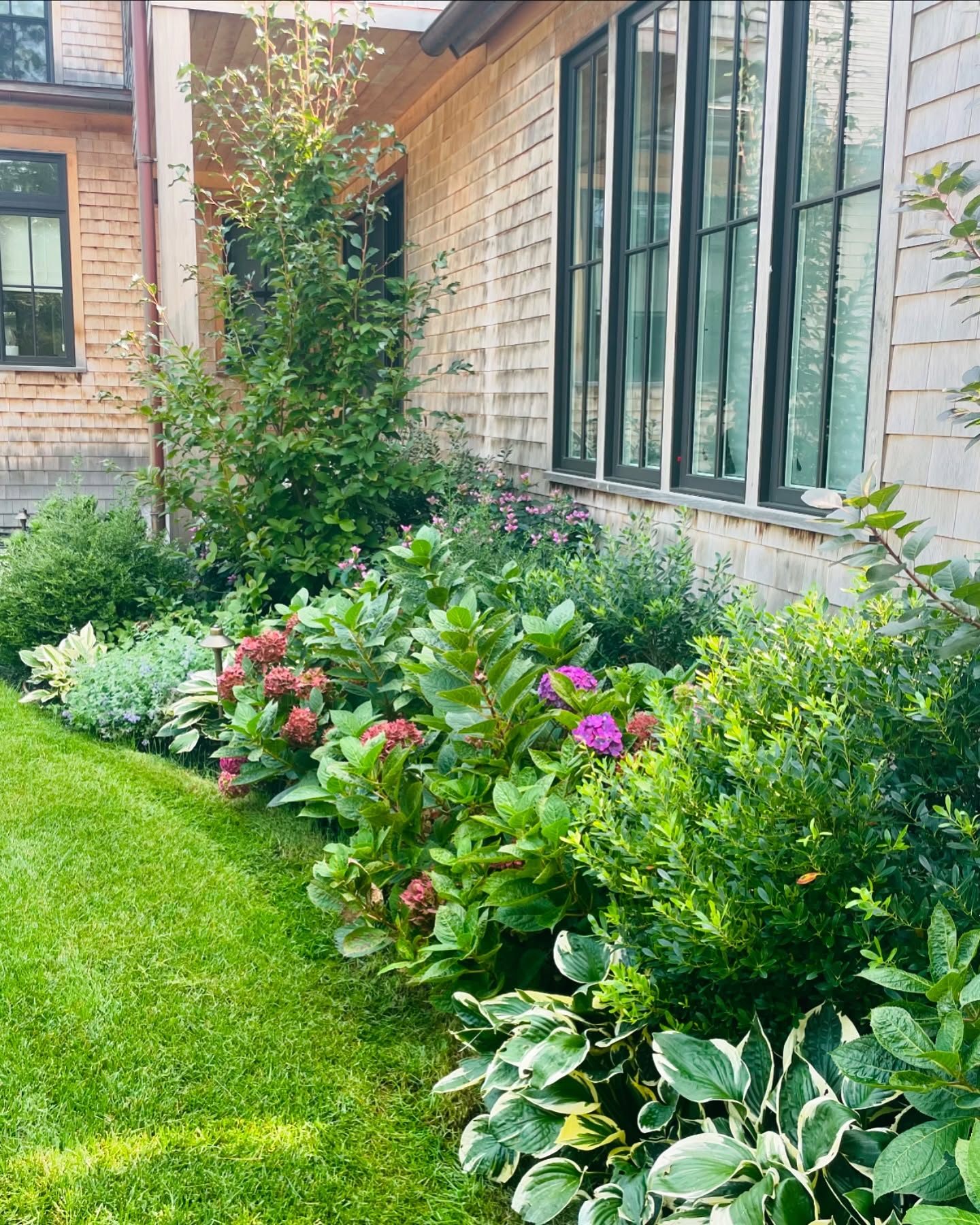
Hydrangeas are one of the most reliable foundation plants precisely because they’re generous — big plants, big flowers, long season of interest. Against wooden siding they look completely at home, the warm tones of the timber and the cool pinks and purples of the blooms naturally complementary in a way that takes no effort to achieve.
The variety of plant heights and textures in this border prevents the hydrangeas from feeling predictable. Mixing large-leaved shrubs with finer-textured plants and taller specimens with lower groundcover creates depth and movement. The border reads differently from different distances and at different times of day — which is the mark of a planting that has been genuinely thought about rather than just planted and left.
8. When Three Trimmed Buxus Balls Do More Than a Full Border
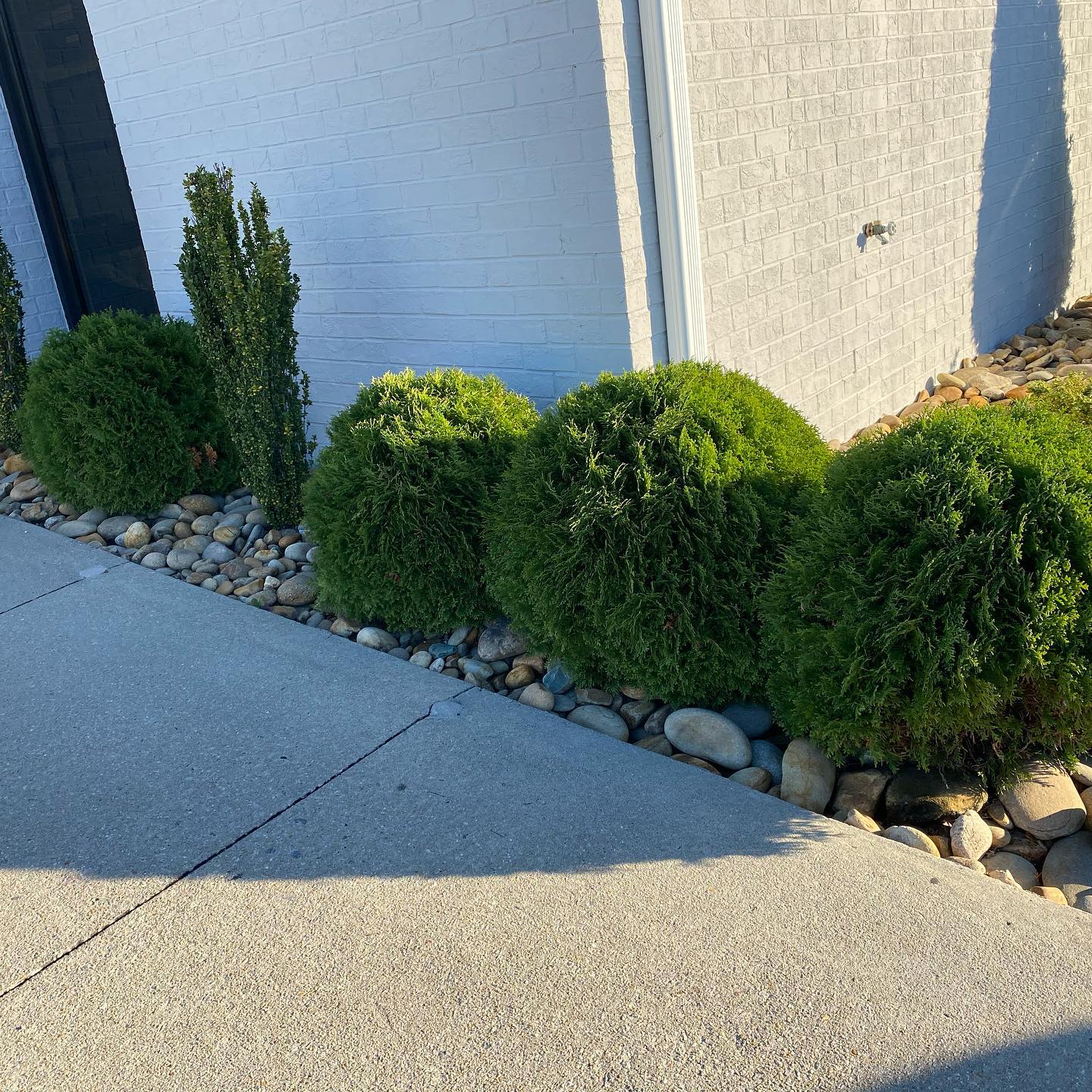
Not every foundation planting needs to be lush and overflowing. A minimalist approach — a few tightly clipped buxus balls, a gravel or stone mulch, clean edges — can look just as considered as a complex mixed border and takes considerably less maintenance. This approach is particularly well-suited to contemporary architecture where the clean lines of the building and the planting reinforce each other.
The key with a minimal scheme like this is precision. Clipped evergreens live and die by the quality of the clipping and the crispness of the edges. Half an hour with a pair of hand shears twice a year is all it takes to keep this looking sharp — making it one of the most time-efficient foundation planting approaches available, and one of the most reliably smart-looking.
9. Three Plants, White Siding, and a Border That Gets Everything Right
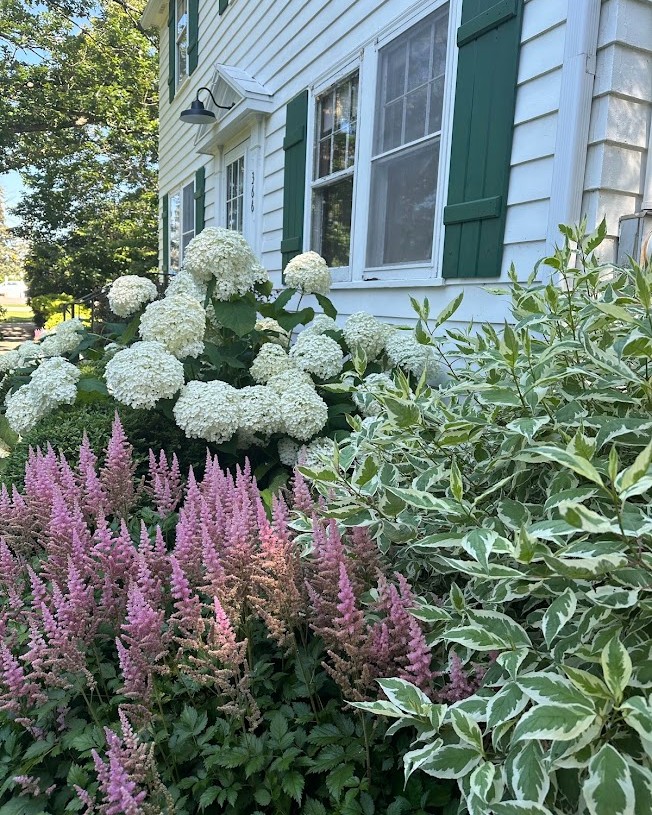
You don’t need a complex plant palette to create an effective foundation border. Three plants chosen for complementary colours, contrasting textures and different heights will do the job beautifully. The white hydrangeas here provide the bulk and the height; the pink astilbe adds a lighter, feathery quality at the front; the variegated foliage plant gives the border year-round interest even when neither is in flower.
Against white siding and green shutters, this colour palette — cool whites, soft pinks, green and white foliage — is perfectly sympathetic to the house. That relationship between the planting palette and the building colours is worth thinking about before you buy anything. The best foundation plantings feel like they were chosen for their specific house, not just dropped in front of whatever happened to be there.
10. One Magnificent Shrub Beats Ten Mediocre Ones Every Time
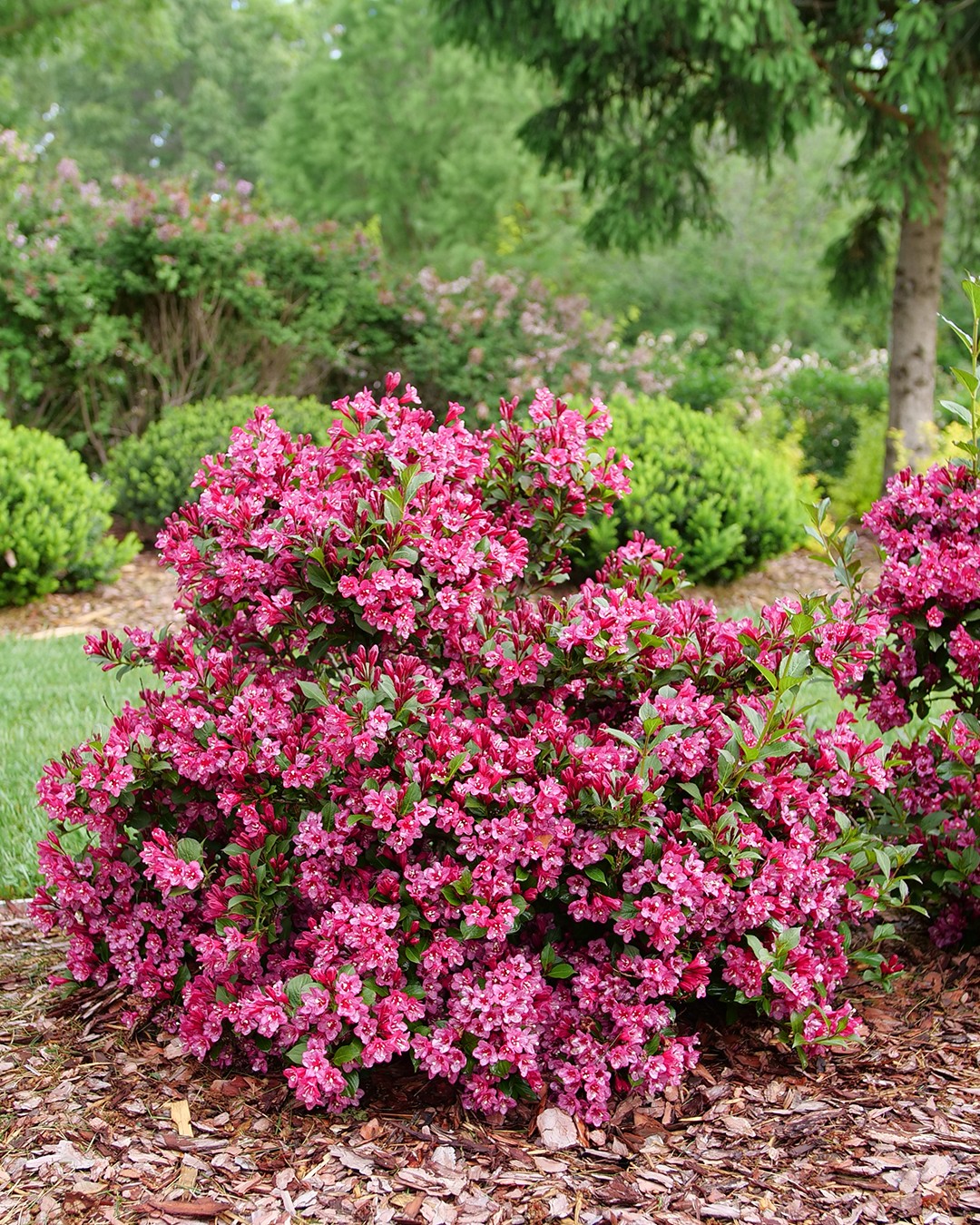
There’s a temptation when planning a foundation border to fill every inch with different plants. This is usually a mistake. A single large, well-established flowering shrub in the right position does more for a front garden than a scattered collection of smaller plants ever will. It has presence, it has impact, and it looks like it belongs rather than like it was recently purchased and placed.
The mulched bed here keeps the surrounding area simple and lets the shrub be the statement. The layered evergreen planting behind provides depth and permanence. Buy a decent-sized specimen rather than the cheapest option, give it room to grow, and within a couple of seasons it will have completely transformed the feel of the front of the house. Patience here is very well rewarded.
11. Lavender at the Driveway Edge is One of Those Ideas You Wonder Why You Didn’t Try Sooner
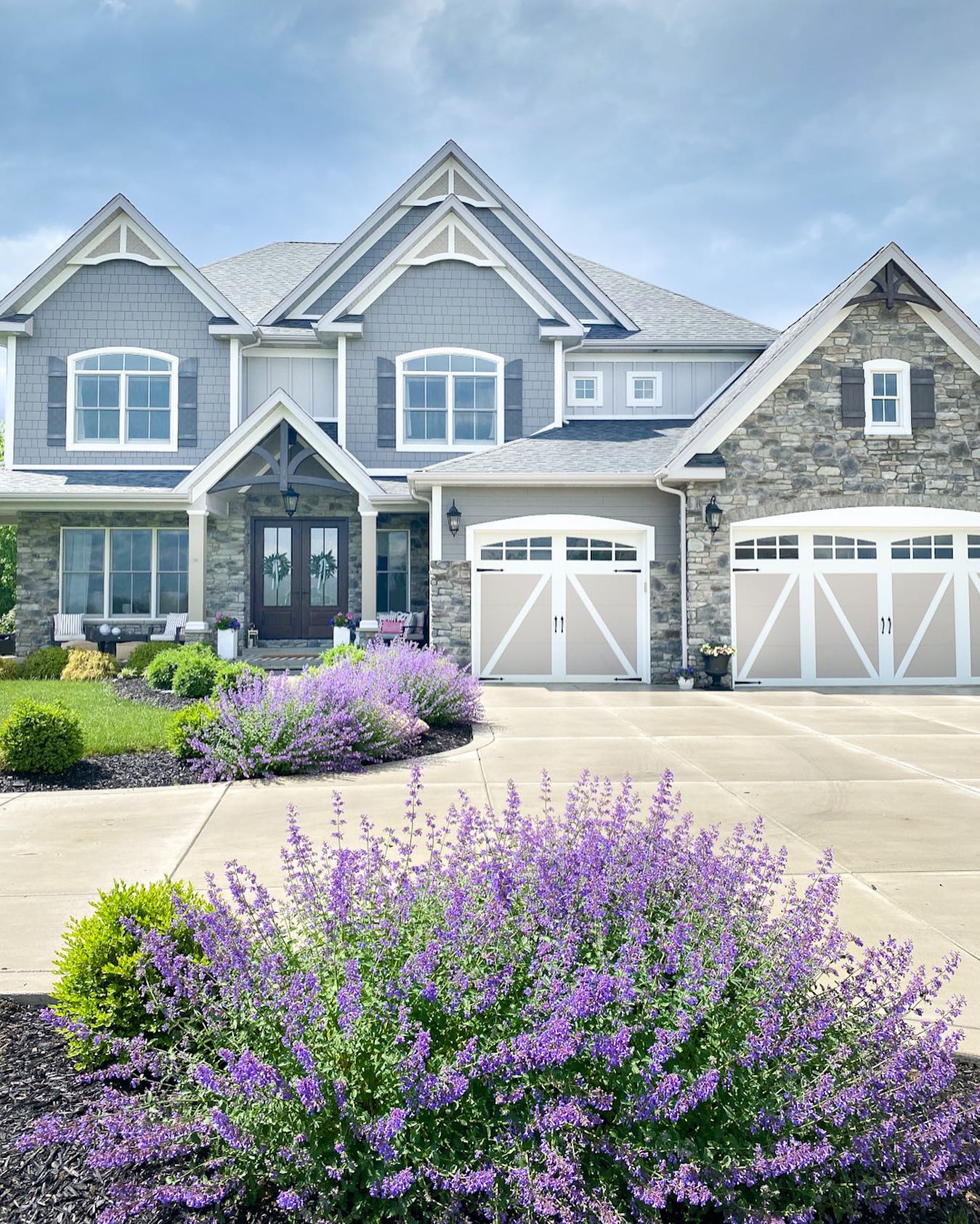
Lavender along a driveway edge solves several problems at once. It tolerates the reflected heat from hard surfaces, thrives with minimal watering once established, smells wonderful every time you brush past it getting out of the car, and flowers for months. As a low-maintenance, high-reward foundation plant it’s very hard to beat — and yet it’s still underused in most front gardens.
The rounded hedging and trimmed shrubs running alongside the walkway give the whole front a structured quality that makes the house look well cared for without demanding constant attention. That combination of reliable evergreen structure and seasonal flowering colour — lavender providing both — is the dependable formula for a front garden that always looks good, whatever the season.
12. Why Every Front Garden Needs at Least One Flowering Tree
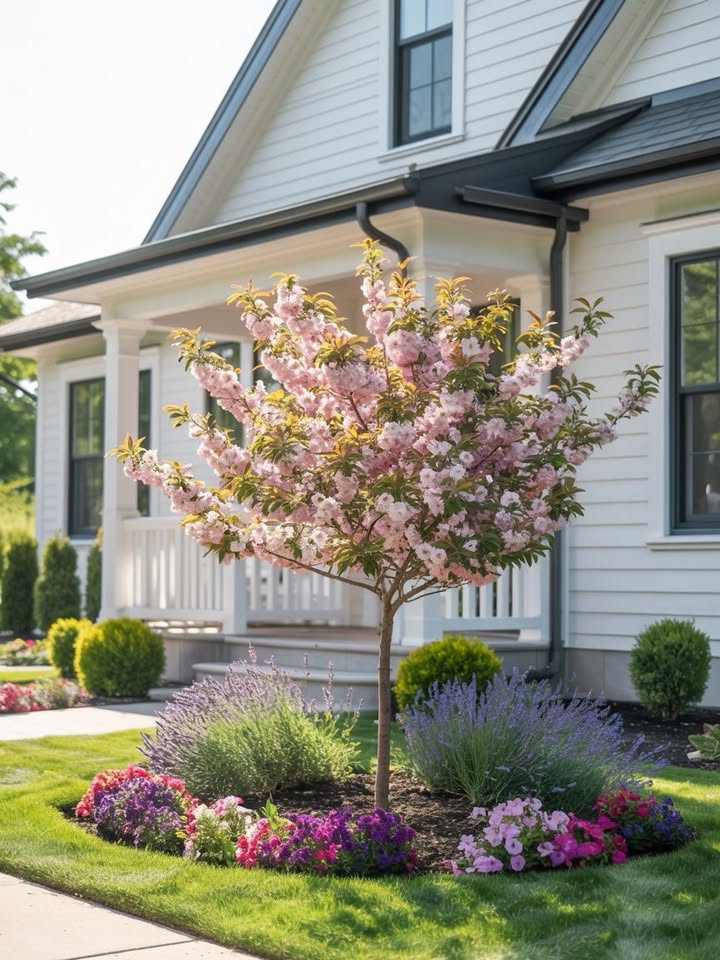
A single well-chosen small tree does something that no amount of ground-level planting can achieve: it gives a front garden a vertical focal point that draws the eye and gives the whole space a sense of scale. Without a tree of some kind, even a beautifully planted front garden can feel flat. The flowering specimen here changes the entire character of the garden from the street.
The lavender and petunias around the base provide complementary colour and keep the ground-level interest going when the tree isn’t in full flower. If you’re choosing a flowering tree for a front garden, amelanchier, ornamental cherry, and crab apple are all excellent options — compact enough to suit most gardens, spectacular in flower, and genuinely beautiful across more than one season.
13. A Phlox Colour Gradient Along the Path That Makes People Stop Walking
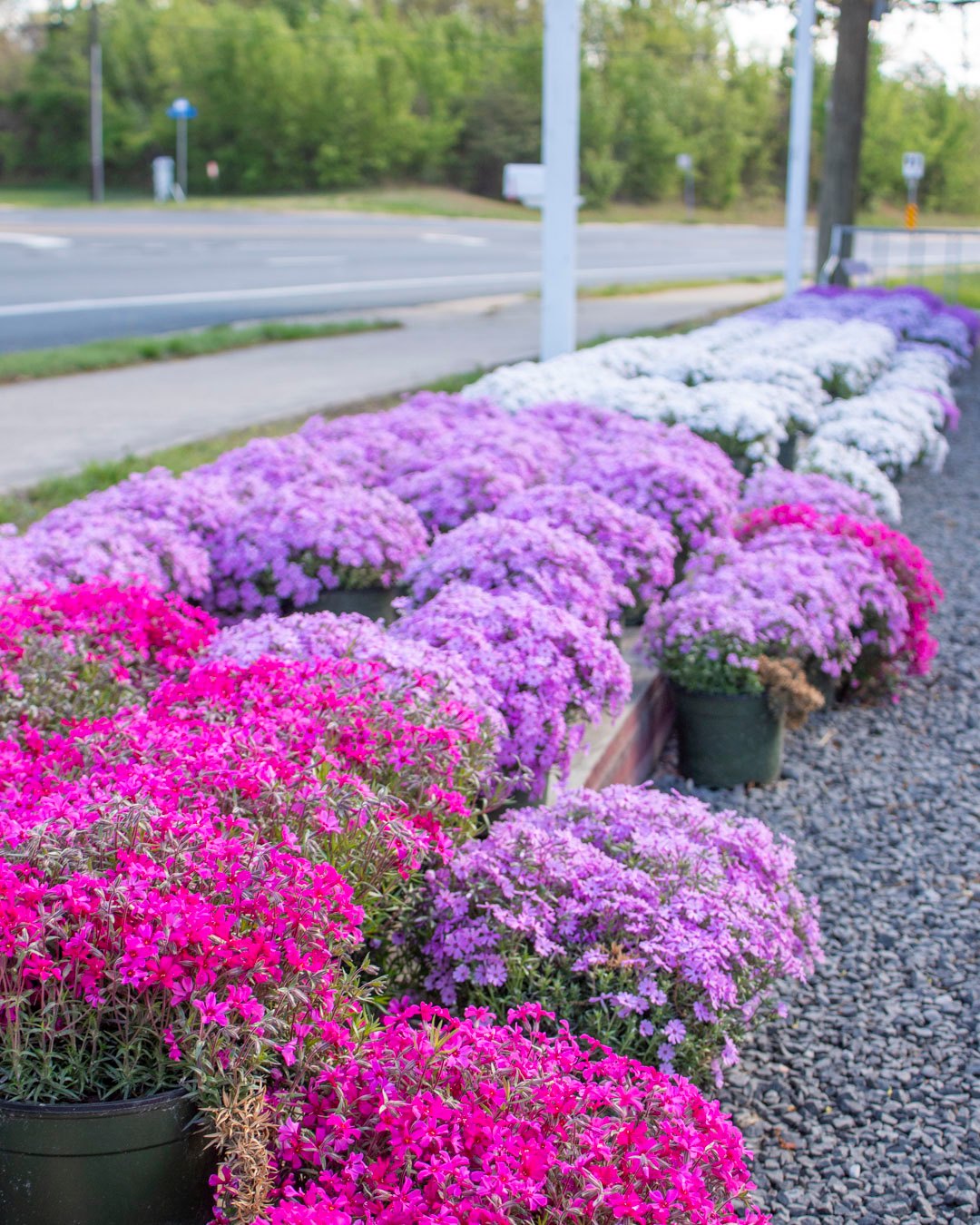
Running a sequence of colours along a pathway — from deep magenta phlox through to soft lavender to white — is a planting technique that creates a sense of flow and movement. The eye travels along the border naturally, following the gradient, which makes the path itself feel like more of a journey and the whole front garden feel more considered.
Using pots rather than an open border gives flexibility — you can adjust the arrangement, swap out individual plants as they finish flowering, and bring everything inside for winter if needed. For anyone who rents or isn’t ready to commit to permanent planting, a container-based approach like this delivers all the visual impact with none of the permanence. Phlox in particular is a brilliant choice for this — long-flowering, fragrant, and genuinely beautiful.
14. What Happens When Foundation Planting Has Had Years to Settle In
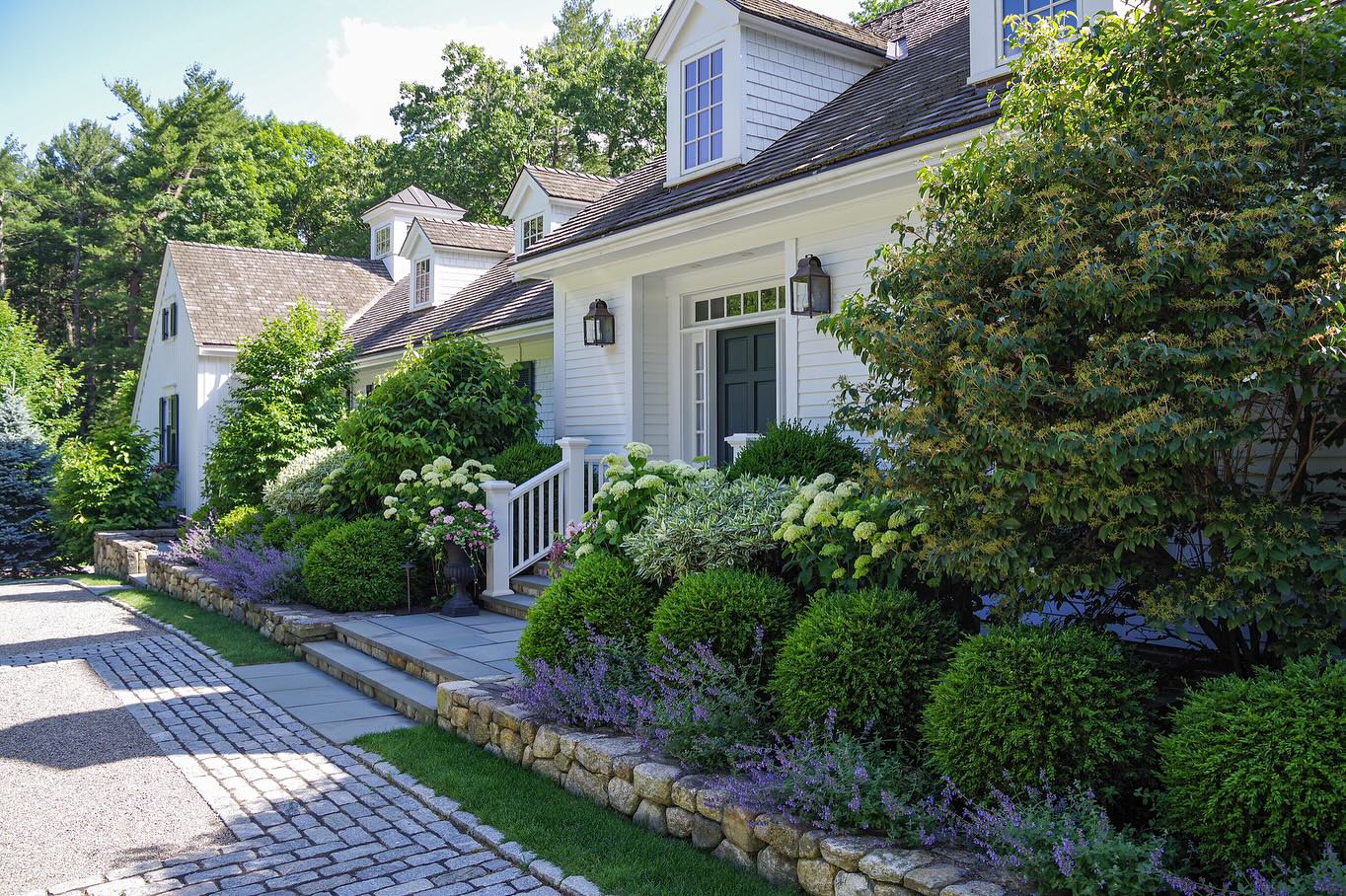
There’s a quality to well-established foundation planting that can’t be rushed — the sense that the plants and the house have settled into each other over time, that the garden has grown up alongside the building. This front garden has clearly been looked after for years, and the result is a kind of permanence and belonging that newly planted schemes simply can’t replicate.
The stone pathway is doing quiet but important work here. It’s practical, durable, and has the same quality of age as the planting around it. Materials that weather and patinate — stone, brick, timber — always sit better in a garden than those that stay looking new. If you’re starting from scratch, choose path materials that will improve with age rather than deteriorate, and the whole scheme will grow into itself beautifully.
15. Lavender, Roses and Topiary: The Holy Trinity of Cottage Foundation Planting
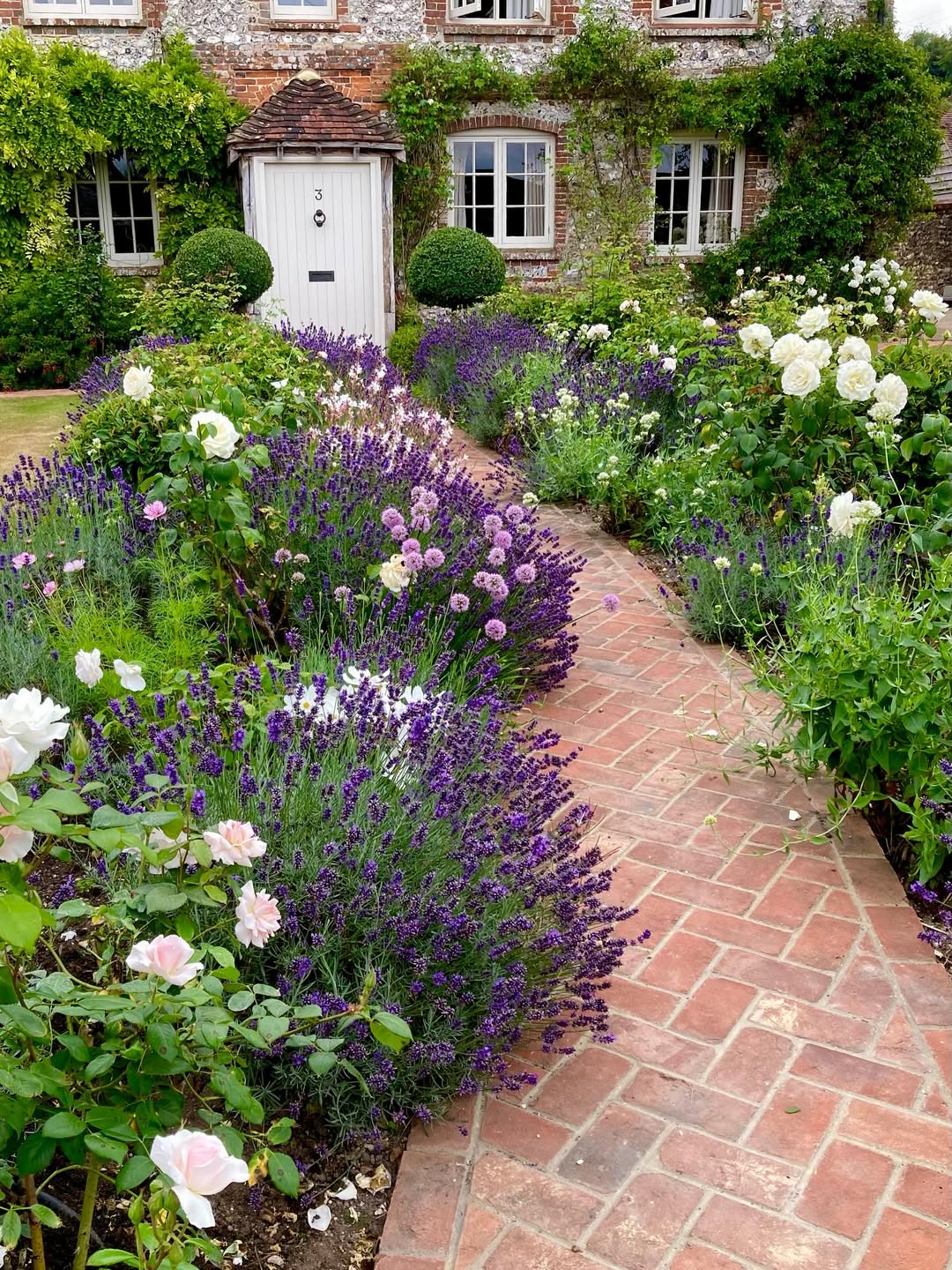
Lavender, roses and clipped topiary is one of those plant combinations that has worked in English cottage gardens for centuries, which is a reasonable indicator that it will continue to work. The lavender softens edges and spills naturally onto paths; the roses provide height and seasonal drama; the topiary balls give year-round structure that holds the whole scheme together when neither is flowering.
The climbing plants on the cottage walls are an extension of the foundation planting principle — using plants to soften and integrate the building with the garden. A wall covered in well-established climbers looks rooted in a way that a bare wall never does. If you want your house to look like it genuinely belongs in its garden, start by clothing the walls as well as the base and the effect compounds quickly.
16. Lavender Lining the Path is Fragrant, Beautiful and Almost Zero Maintenance
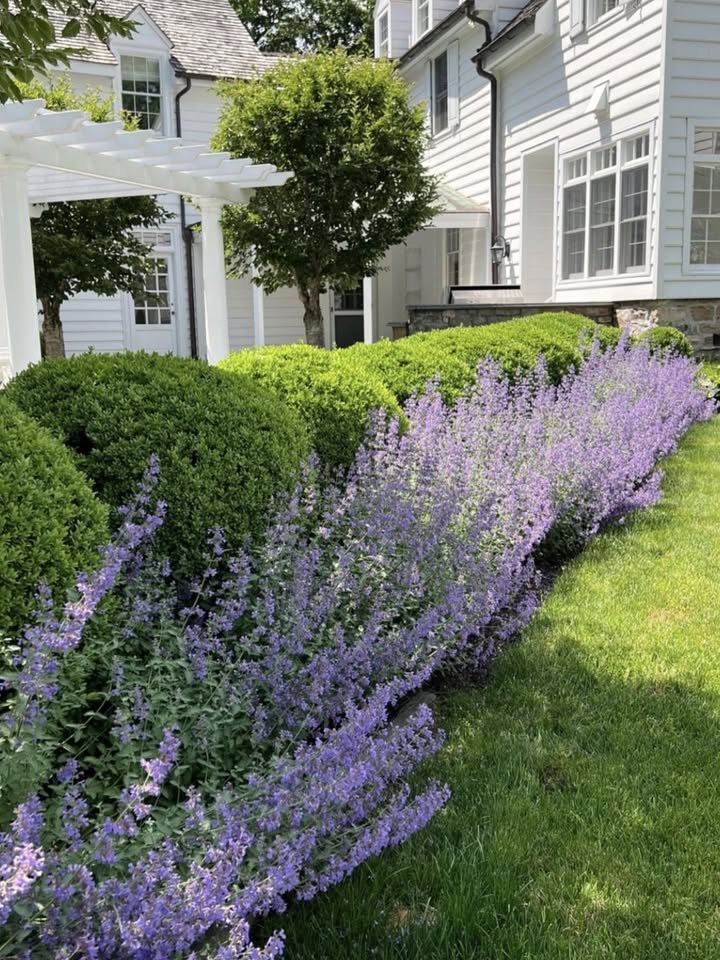
A path lined with lavender is one of the most sensory-rich foundation planting choices you can make. Every time someone walks to your front door they brush past the plants and release that scent — it’s a detail that elevates a front garden from something you look at to something you actually experience. That’s a rare quality and lavender delivers it reliably every summer.
Against white architecture, the purple of lavender in full flower is genuinely striking — the contrast is clean and bold without being garish. Lavender also attracts bees throughout the summer, which adds movement and life to the front garden in a way that purely structural planting simply can’t provide. Cut it back hard after flowering each year and it stays compact, bushy and productive for a decade.
17. Getting the Balance Right Between Tidy and Natural
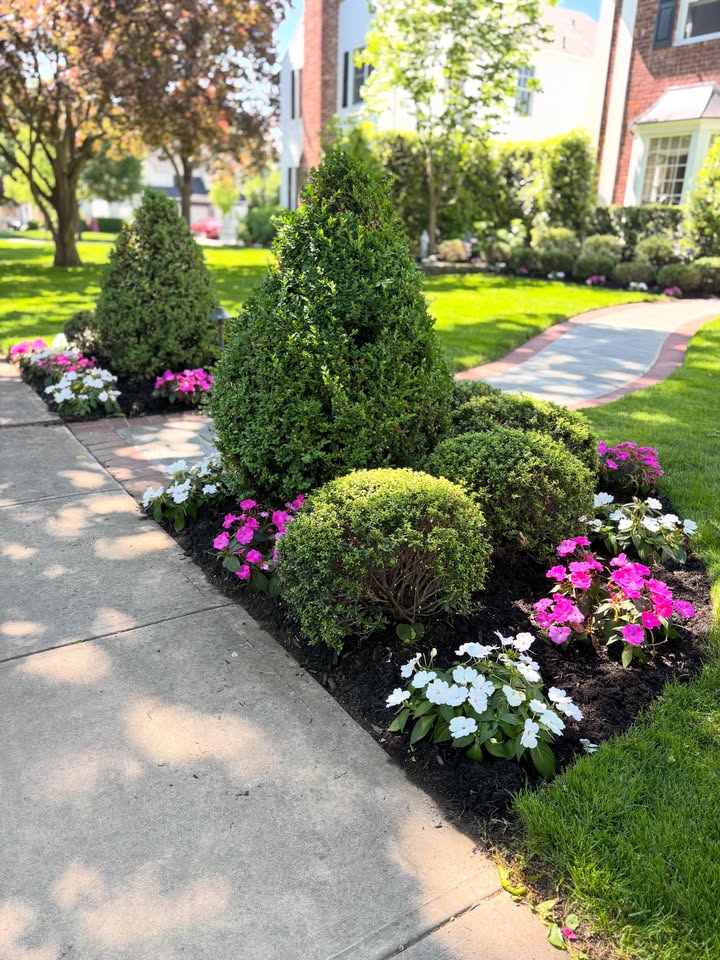
The challenge with front garden foundation planting is striking the balance between tidy enough to look cared for and relaxed enough to feel like a proper garden rather than a car park with some plants in it. This border gets that balance right — the clipped shrubs provide the structure and neatness, the flowering perennials provide the life and informality that stops it feeling corporate.
Dark mulch between the plants is worth the small investment for two reasons: it suppresses the weeds that would otherwise require constant attention, and it makes the plant colours pop in a way that bare soil or grass never does. In a front garden where first impressions matter, those kinds of finishing details make a real difference to how considered the whole scheme looks.
18. Hydrangeas in Drifts Along a Stone Path: Summer Sorted
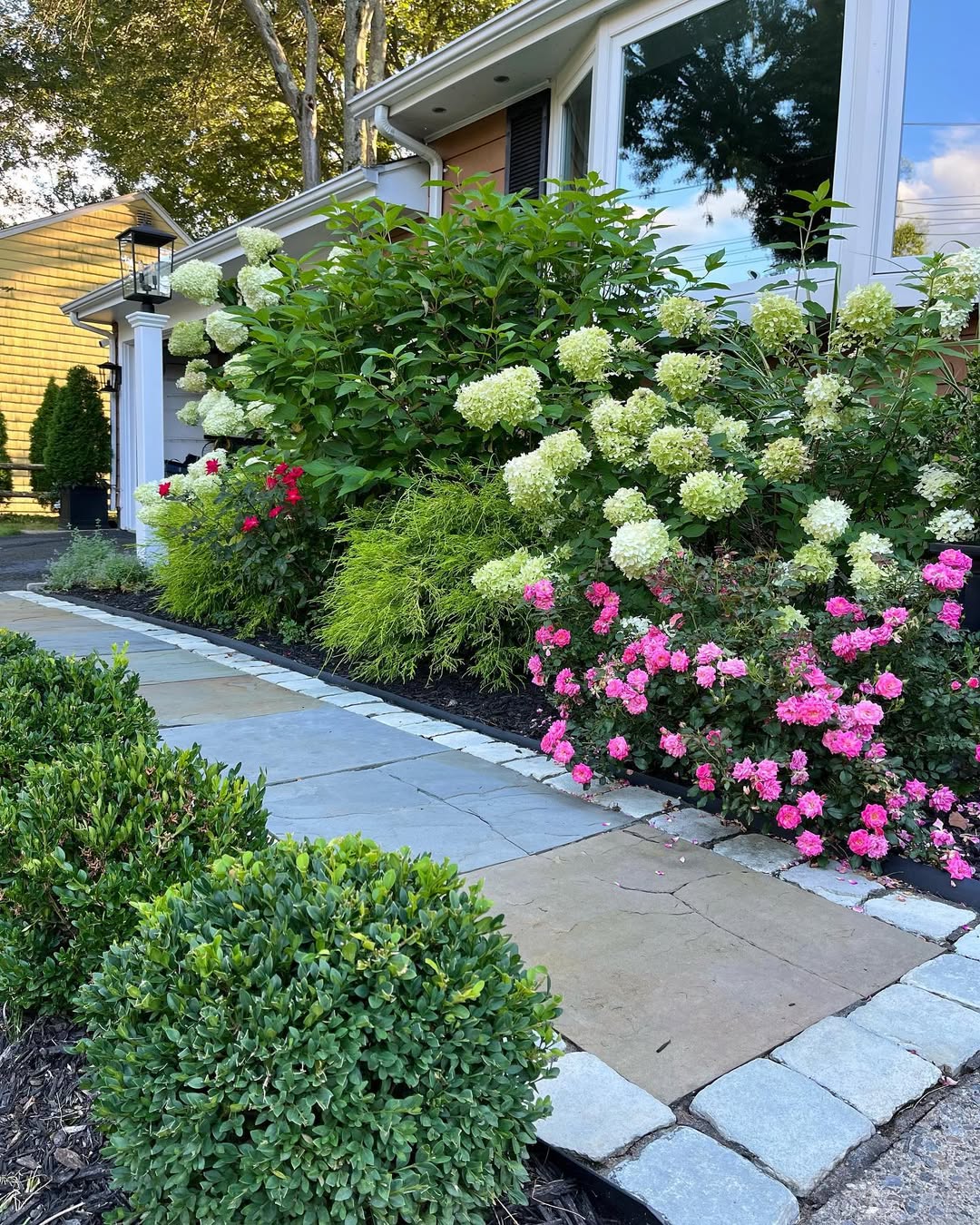
Hydrangeas are arguably the most reliable large flowering shrub for foundation planting — they tolerate shade, they flower for months, and a well-established plant in full bloom is genuinely spectacular in a way that few other shrubs can match. The key is giving them enough room to reach their natural size rather than cramming them in and constantly cutting them back into submission.
Planting in drifts rather than isolated specimens — three of one thing, five of another — creates the kind of confident planting that looks intentional rather than collected. The white hydrangeas providing contrast here prevent the border becoming a single-colour block, and the stone path gives a clean division between border and lawn that lifts the whole front garden from pleasant to genuinely polished.
19. Buddleja is the Foundation Plant That Brings the Garden to Life Every August
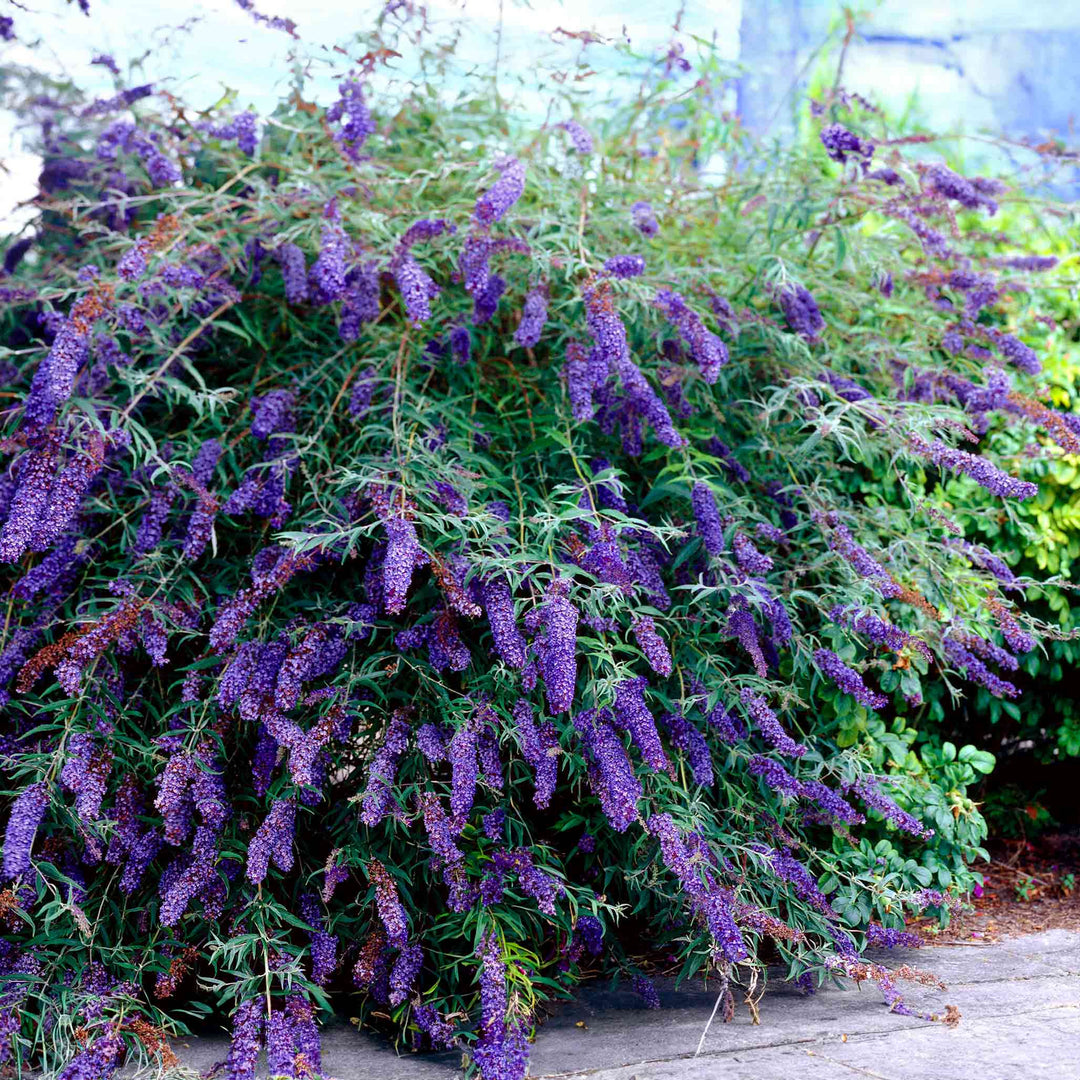
Buddleja — the butterfly bush — earns its space every single summer. The arching purple flower spikes are beautiful in their own right, but what makes this a genuinely joyful garden plant is the wildlife it attracts. A buddleja in full flower on a warm August afternoon will have more butterflies on it than any other plant in the garden. If you’ve never grown one, that spectacle alone is reason enough to start.
As a foundation plant it’s fast-growing, tolerant of poor soils and dry conditions, and requires only an annual hard cut in early spring to keep it productive and well-shaped. The slightly wild, arching quality of the growth is part of its charm — it softens the base of a building in a way that neat clipped plants can’t, and in a wildlife-friendly garden it’s close to essential.
20. Dense Planting at a Deck Edge That Makes the Whole Garden Feel Considered
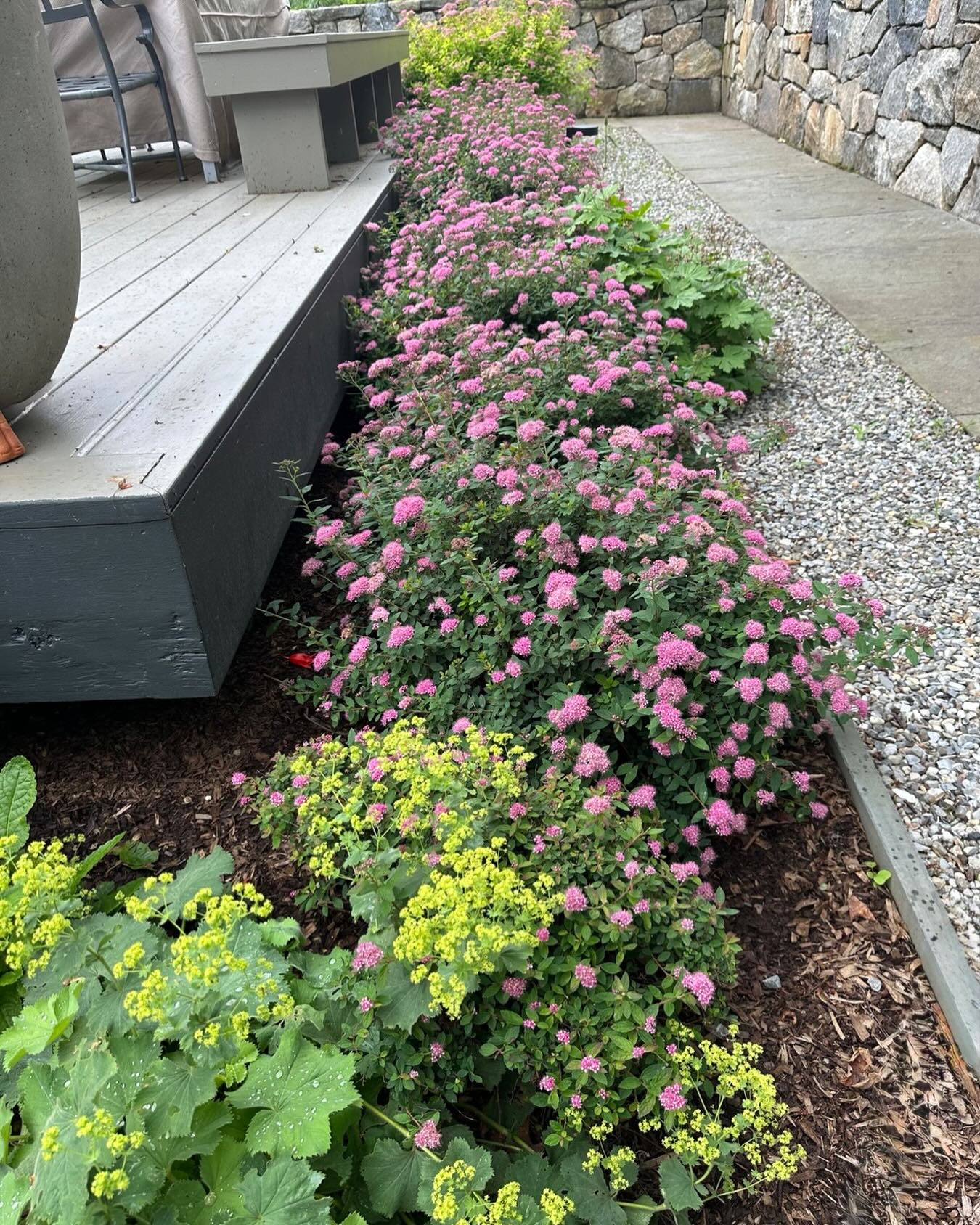
Foundation planting doesn’t have to mean a border along the front of the house. The same principle — softening the transition between a hard structure and the ground — applies to any built element in a garden. A deck, a raised terrace, a stone wall — all of these benefit from planting at their base that makes them feel integrated rather than imposed on the garden.
The dense, generous planting spilling against the deck edge here transforms what could be a stark timber boundary into something that feels organic and settled. The stone wall alongside anchors the composition and provides the vertical element that stops the planting from feeling flat. This is foundation planting thinking applied across the whole garden rather than just the house frontage — and the result is a space that feels genuinely put together.
21. Azaleas Against Brick: One of Those Combinations That Just Works
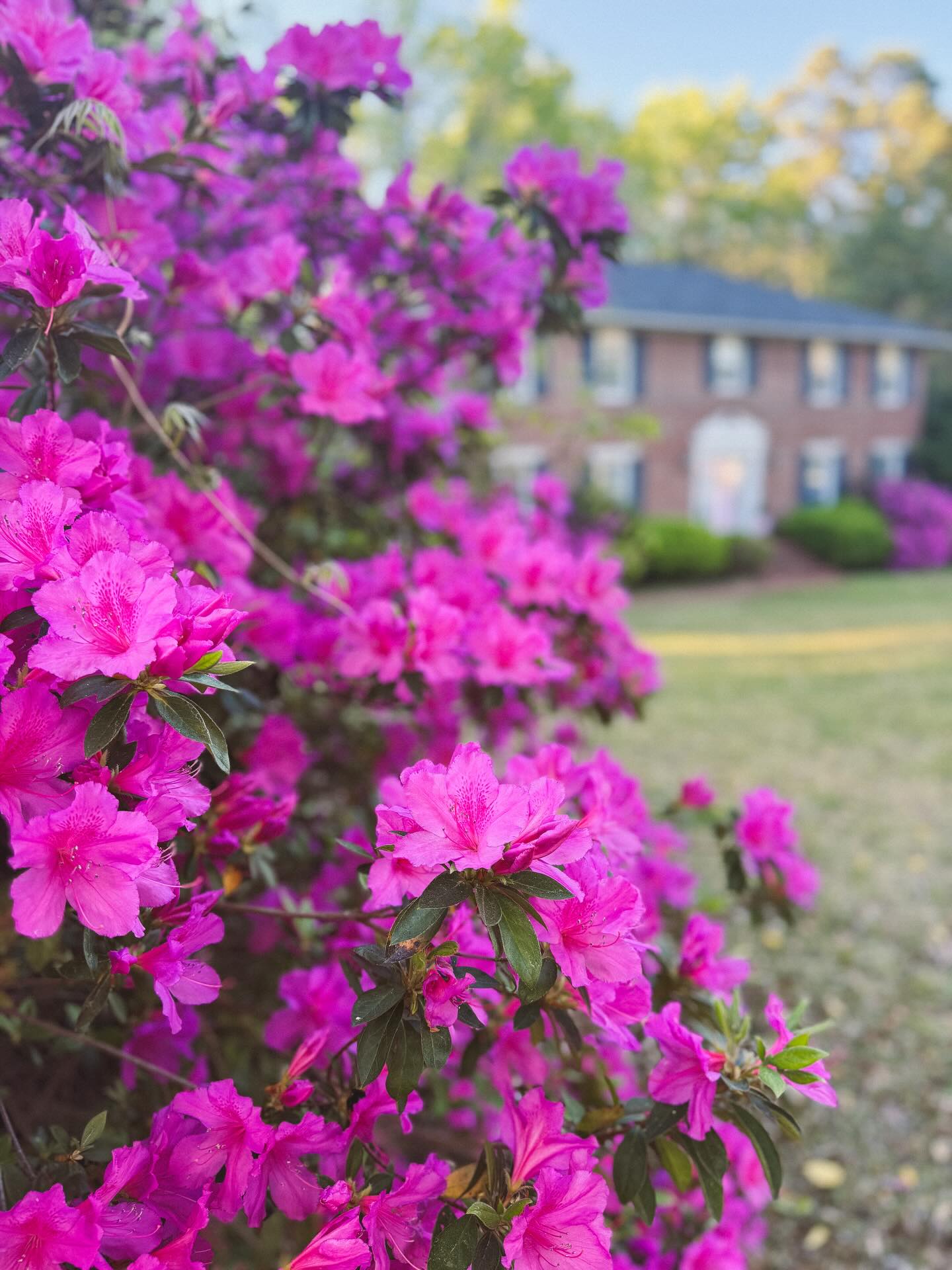
Azaleas against red brick is a pairing that garden designers have relied on for good reason — the vivid pink flowers against the warm terracotta tones of the brick is a combination that looks simultaneously vibrant and harmonious. It shouldn’t work as well as it does on paper, but it consistently delivers and the spring display when it arrives is genuinely hard to beat.
Azaleas are acid-loving, so they need the right soil conditions or a raised bed with ericaceous compost, but in the right situation they’re among the most rewarding foundation shrubs available. The flowering season is relatively short, but the glossy evergreen foliage provides year-round structure and the flower display is spectacular enough to justify building the whole scheme around it.
22. The Flowering Shrub That Looks Like It Always Grew There
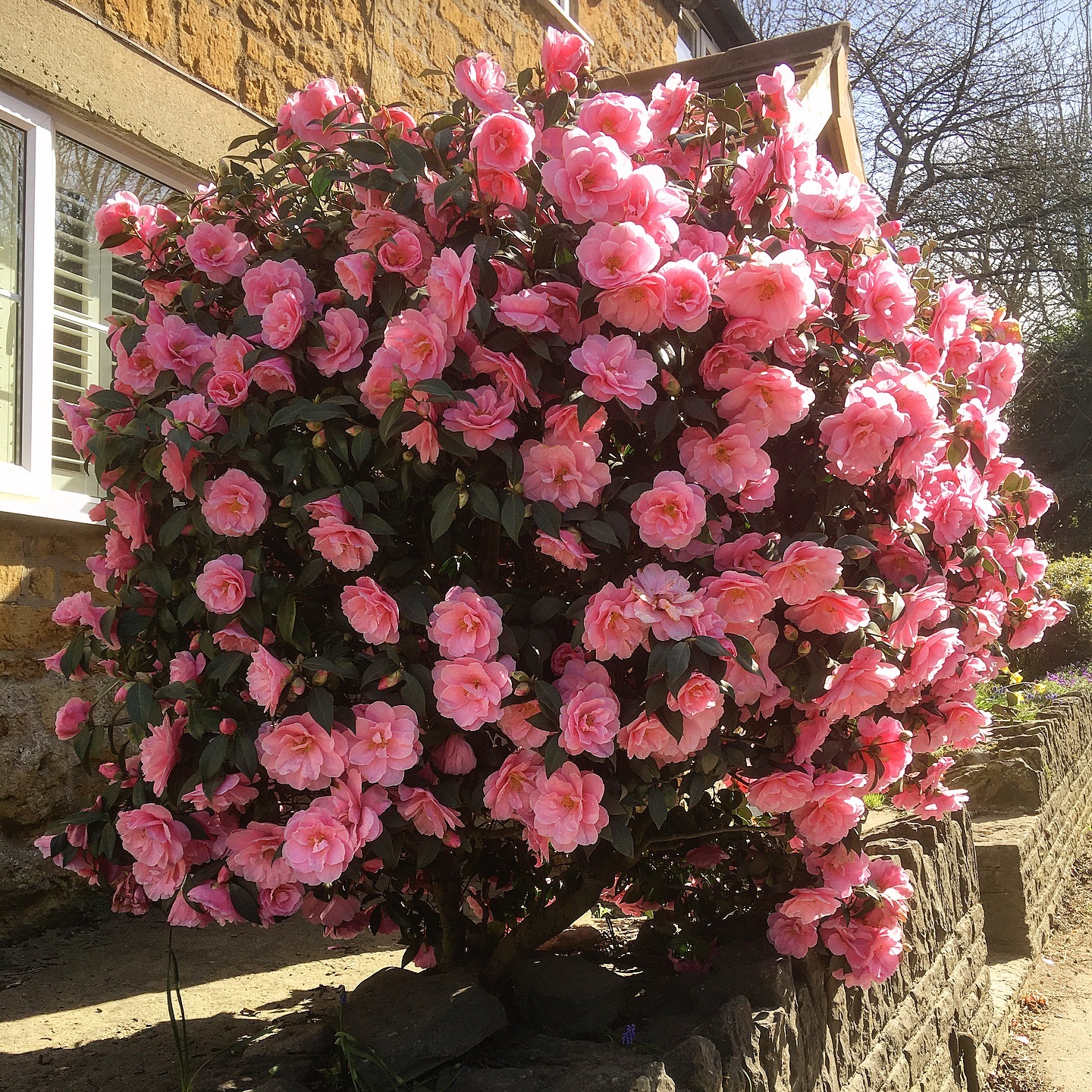
There’s a category of planting that looks like it chose its own location — like the plant grew there naturally and the wall was built around it. That quality of inevitability is what separates good foundation planting from something that looks recently placed. This shrub overflowing with pink blooms against a stone wall has exactly that quality, and it’s something that can’t be faked with new plants.
The key is allowing the plant to express its natural form rather than clipping it into submission. Shrubs like rhododendron, viburnum, and philadelphus have naturally beautiful growth habits that reward being left to do their thing. A well-grown specimen like this becomes the main event in a front garden — the thing that makes people slow down as they walk past.
23. Tall Evergreens Along a White Fence That Earn Their Space Year Round
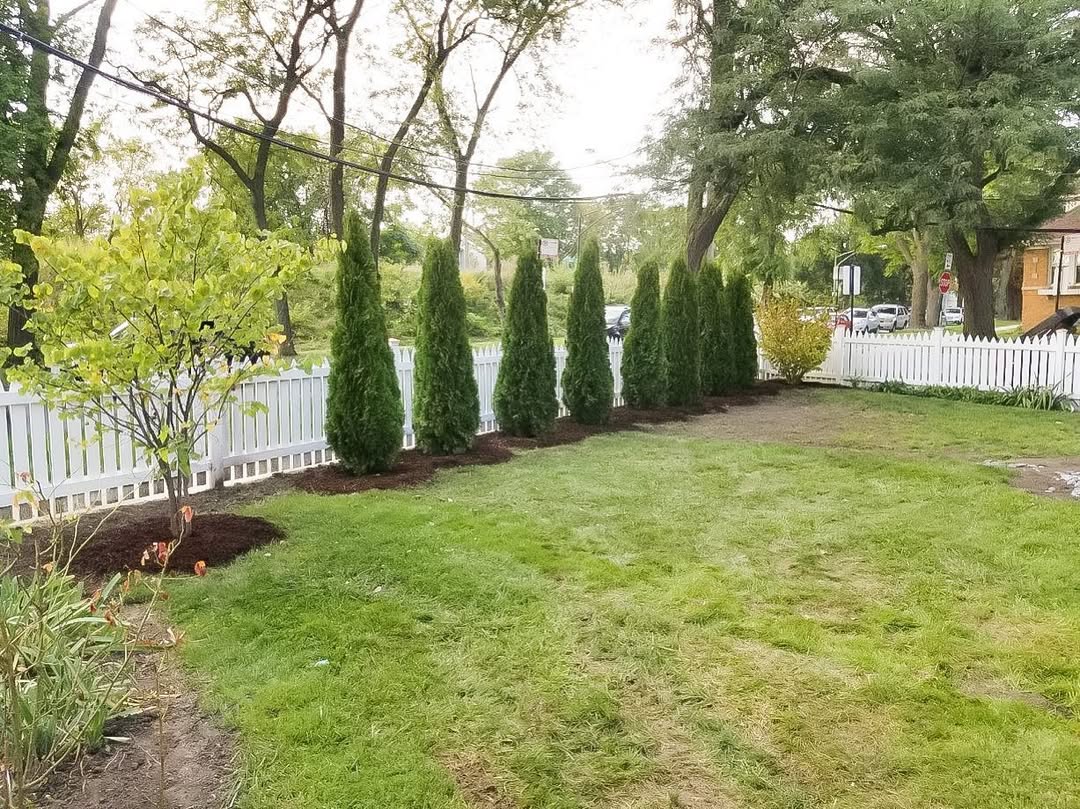
Tall evergreens along a fence line solve two problems at once: they provide the year-round privacy and screening that most front gardens need, and they give the space a sense of enclosure and definition that a bare fence simply can’t deliver. The white fence and the deep green of the trees is a classic combination — clean, simple, and reliably effective regardless of the style of house behind it.
The lighter-toned small tree in the foreground breaks up what could otherwise be a uniform wall of dark green. That contrast of foliage colours and textures within an otherwise simple scheme is the kind of detail that makes a planting feel considered rather than functional. Start with the evergreen backbone and add lighter, more varied elements in front to create the depth that makes a border genuinely interesting.
24. A Foliage Border in Red and Green That Doesn’t Need a Single Flower
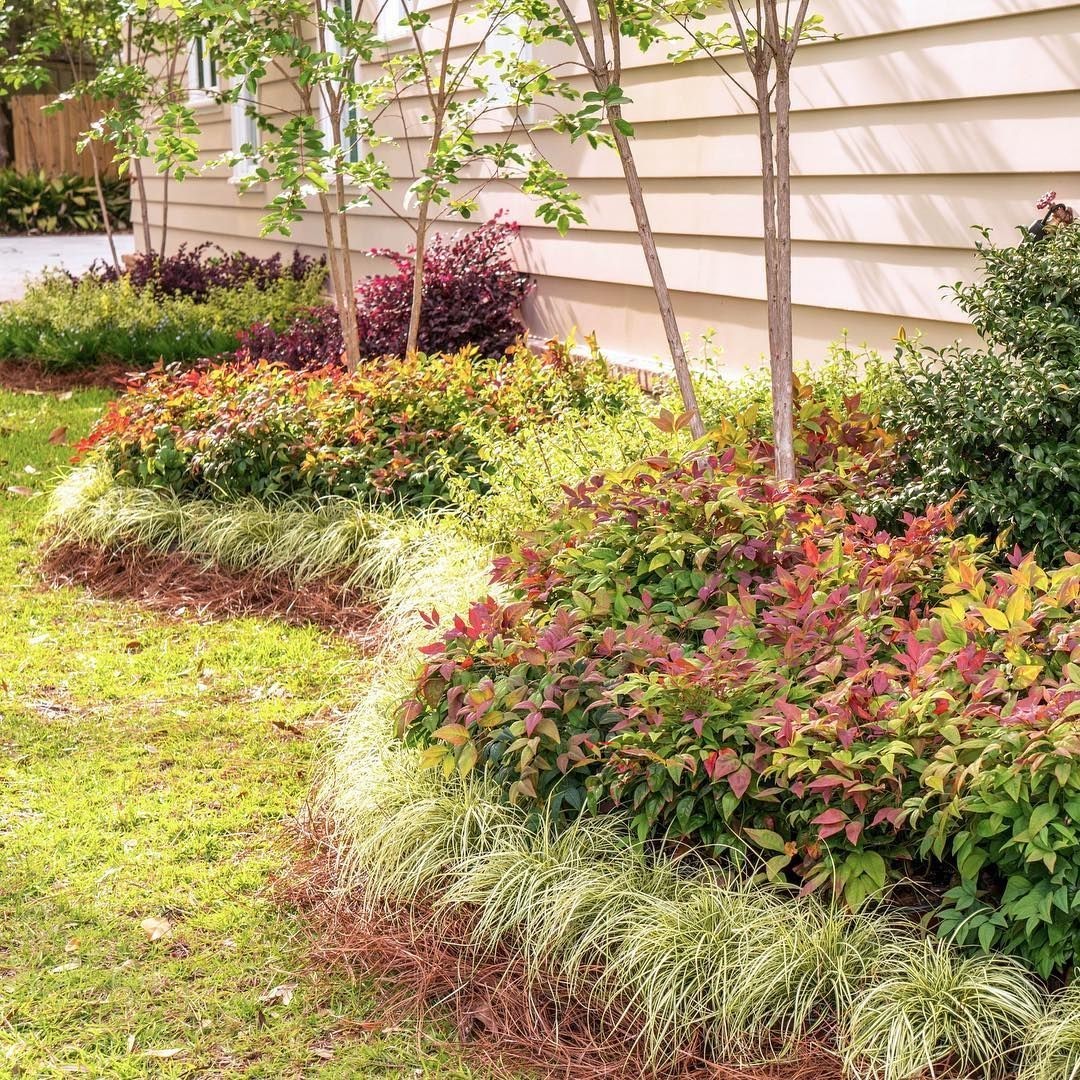
Foundation planting doesn’t require flowers to be colourful. A border built around contrasting foliage — deep burgundy red against fresh green, dark against light — can be just as striking as one full of blooms, with the considerable advantage that it looks good for twelve months rather than a few weeks. Heucheras, cotinus, physocarpus and acers are all worth considering for this kind of scheme.
The tall, slender trees providing vertical interest here without taking up much horizontal space are a smart solution for a relatively narrow border. Fastigiate trees — those that grow upright rather than spreading — are an underused option in front gardens where space is limited but height is needed. They give scale and permanence without the shadow and root spread of a full-sized specimen.
25. The Plants Right by Your Front Door Are the Ones That Matter Most
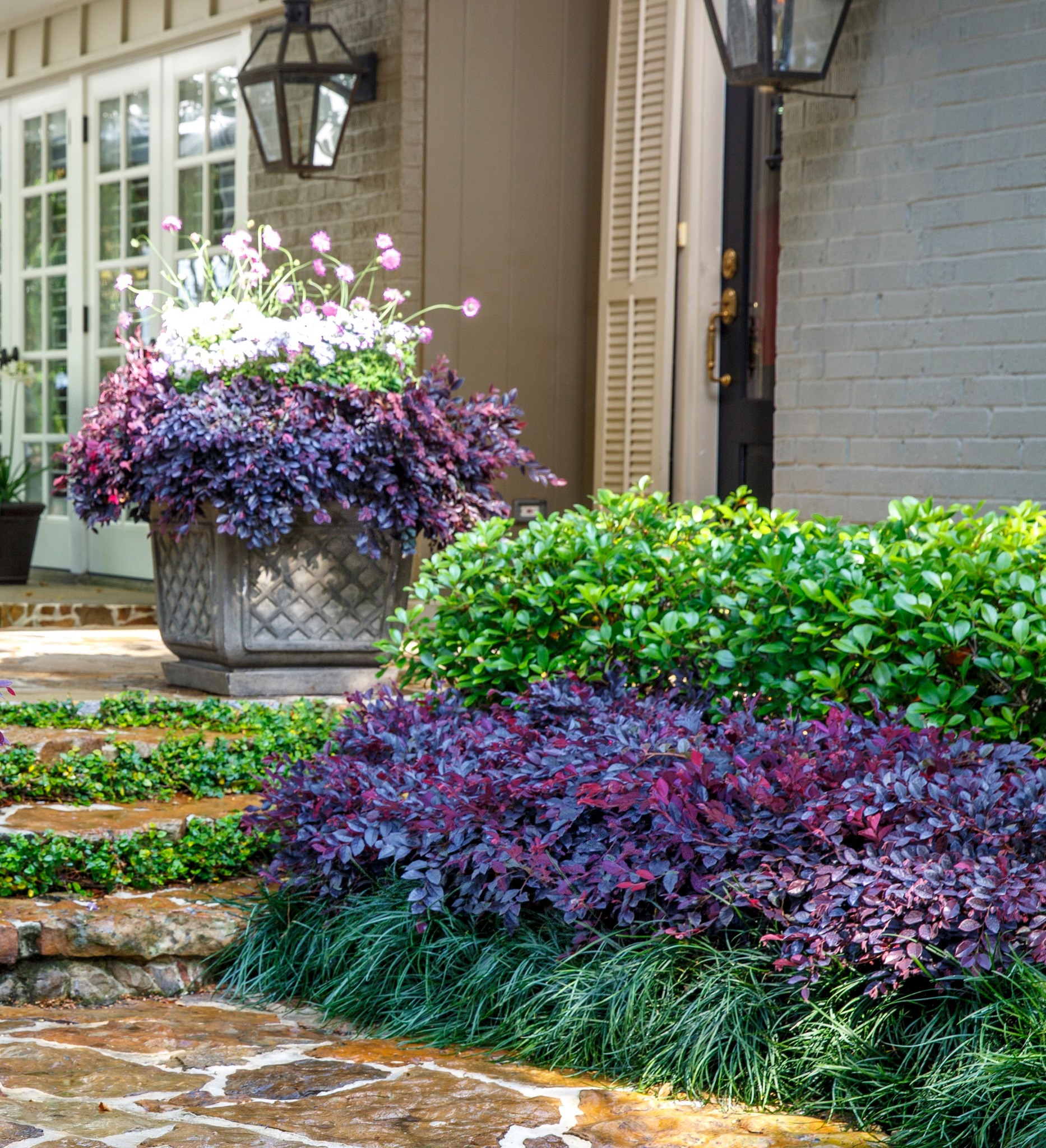
The area immediately around a front door is the most important planting zone in a garden — it’s what visitors see up close, what you see every day coming and going, and what sets the tone for the whole property. Getting the planting right here repays the effort many times over, and it’s an area where even a small amount of thought produces a disproportionately good result.
Purple-leaved plants — heucheras, pittosporum, purple sage — are excellent choices for entrance planting because they provide year-round colour and look equally good in both contemporary and traditional settings. Mixing them with green-leaved plants in pots and borders creates contrast that reads beautifully at close range. The warm stone path and hanging lanterns here complete an entrance that feels genuinely welcoming rather than just planted up.